
A 2-mic karaoke system is usually enough for solo singing, duets, couples, and small-family karaoke. A 4-mic karaoke system makes more sense when group singing is common, your home hosts family parties often, or more than two people regularly want to sing at the same time.
Written by Toan Ho — Tittac editorial team.
Who this guide is for: This guide is for home karaoke buyers deciding between a 2-mic and 4-mic karaoke system and trying to match microphone capacity to real family use instead of overbuying or feeling limited later.
How this guide was prepared: This guide was refreshed around the practical factors that matter most in real home karaoke use: family size, duet singing, group participation, party flow, setup effort, charging, storage, wireless management, and long-term value.
Choosing between a 2-mic and 4-mic karaoke system is not just about the number of microphones in the box. It affects how naturally people sing together, how often someone waits for a turn, how easy the system is to keep ready, and whether the setup feels simple or slightly more involved every time you use it.
The right choice depends on your normal karaoke night, not the biggest party you can imagine once a year. If your home mostly sings solo songs and duets, two microphones may be the cleanest fit. If your home often becomes a group-sing environment with kids, adults, relatives, and guests joining in, four microphones can make karaoke feel more open and relaxed. If you want the broader buying framework first, start with our complete home karaoke system guide.
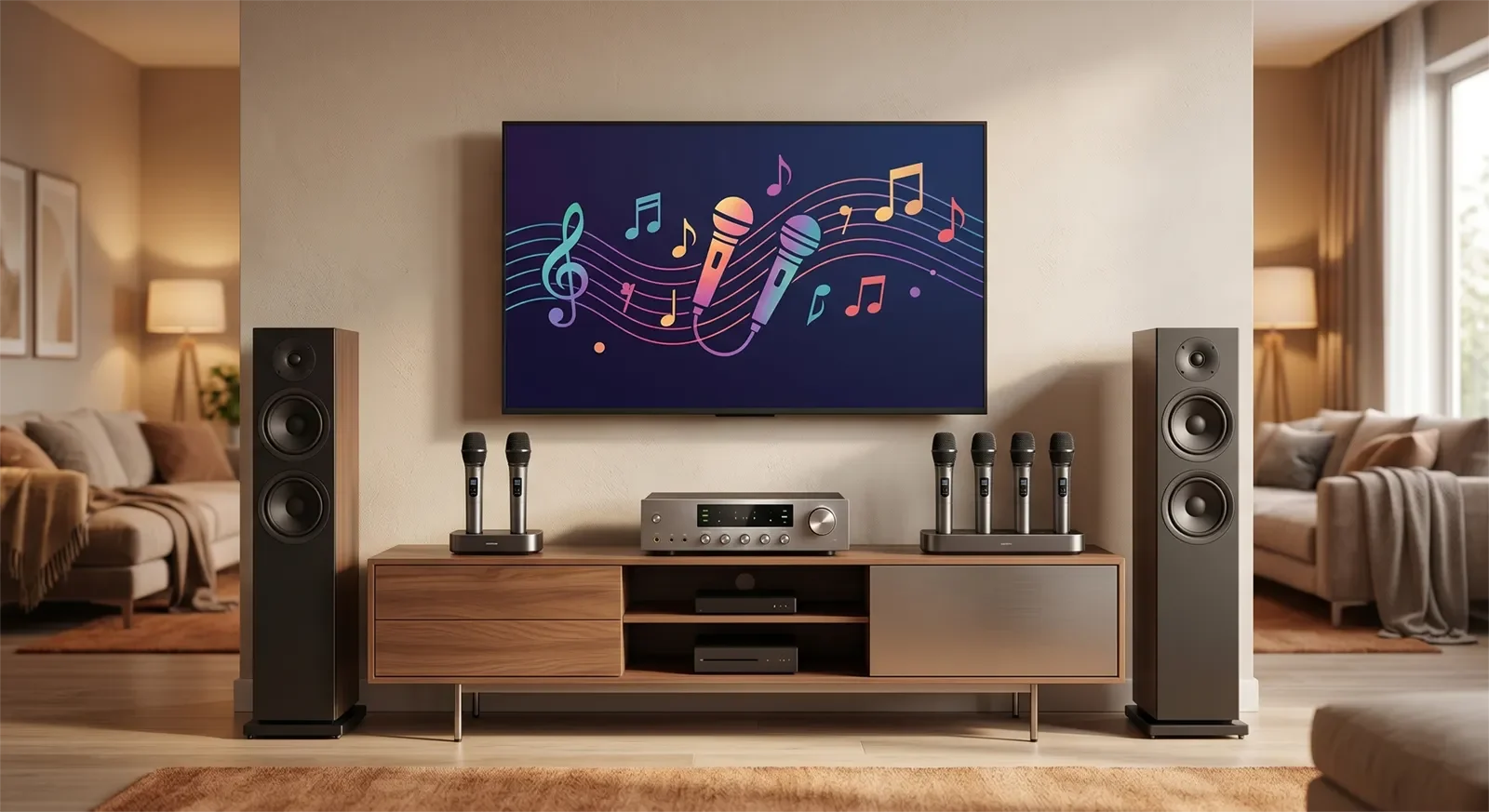
Table of Contents
Quick Answer
Choose a 2-mic karaoke system if your home karaoke is mostly solo singing, duets, couples, small-family use, or casual weekend singing. Two microphones are easier to charge, easier to store, easier to manage, and enough for many homes.
Choose a 4-mic karaoke system if your karaoke nights often involve larger families, parties, kids and adults singing together, group choruses, or several people wanting to join at once. Four microphones can make the night flow better when group participation is part of the normal routine.
For most buyers, the better choice is the mic count that matches normal use. Two mics usually win on simplicity. Four mics usually win on social capacity.
2-Mic vs 4-Mic Karaoke Systems: The Real Difference
A 2-mic karaoke system gives you enough microphone capacity for one singer, two singers, or a duet. A 4-mic karaoke system gives more people a chance to sing at the same time, which can help during parties, family gatherings, and group songs.
The trade-off is management. More microphones can make karaoke more social, but they also add more charging, storage, receiver setup, wireless coordination, and equipment to keep ready. That extra effort is worth it only when the extra microphones are used often enough to improve the experience.
| Mic Count | Best For | Main Strength | Main Trade-Off |
|---|---|---|---|
| 2 microphones | Solo singing, duets, couples, small families, casual use | Simpler setup and easier maintenance | Can feel limited during group singing or parties |
| 4 microphones | Larger families, parties, group songs, mixed-age gatherings | More participation and smoother group flow | More charging, storage, and mic management |
What Matters Most at Home
Normal Number of Singers
The most important question is not how many people might be in the house. It is how many people usually want to sing at the same time. If most songs are solo songs or duets, a 2-mic system is usually enough. If three or four people regularly want to sing together, a 4-mic system becomes more practical.
Do not buy only for the most crowded scenario. Buy for the pattern that happens again and again. That is where the system’s real value shows up.
Family and Party Style
Some homes use karaoke quietly: one singer at a time, a duet here and there, and simple family fun. Other homes use karaoke as a group activity where kids, parents, grandparents, and guests all join in. Those two homes do not need the same mic count.
If karaoke in your home naturally becomes a party activity, four microphones can reduce waiting and make people feel included. If karaoke is more relaxed and duet-focused, four microphones may add more equipment than real value.
Setup and Maintenance
A 2-mic system is usually easier to live with. There are fewer microphones to charge, store, test, and keep organized. That matters if you want karaoke to feel simple enough to use often.
A 4-mic system is not automatically difficult, but it does require more attention. One mic may be uncharged, misplaced, muted, or set differently from the others. If the extra microphones solve a real participation problem, that extra management can be worth it. If not, it can make the system feel more complicated than necessary.
Wireless Management
Most modern home karaoke systems use wireless microphones. With more wireless microphones, you also have more pieces working together: receivers, channels, batteries, charging, and signal behavior.
If you are planning a multi-mic wireless setup, make sure the system is designed for it. Do not assume that adding more microphones later will always be simple. If you are comparing microphone setup options, our guide on how to connect multiple wireless microphones can help you understand the practical side.
| Factor | Why It Matters | Common Mistake |
|---|---|---|
| Normal number of singers | Helps match mic count to real home use | Buying for one rare party instead of the weekly routine |
| Setup effort | More microphones usually mean more charging and management | Assuming extra mics create no extra work |
| Family size and guests | Changes how often people wait for a microphone | Ignoring how social karaoke really gets in the home |
| Storage and readiness | The system needs to stay easy to use over time | Choosing more gear than the household wants to maintain |
| Long-term satisfaction | The right mic count makes karaoke feel natural | Confusing more capacity with automatically better value |
Which Mic Count Fits Your Karaoke Setup?
Choose a 2-Mic Karaoke System If...
Best for: Couples, small families, duet-heavy karaoke nights, casual home use, and buyers who want a cleaner setup with less microphone management.
Why it works: Two microphones cover the way many homes actually sing. One person can sing solo, two people can sing a duet, and the setup stays simple. There is less to charge, less to store, and less to troubleshoot before karaoke starts.
Not ideal if: Your home regularly hosts larger family gatherings, kids and adults often want to sing together, or waiting for microphones already feels like part of the problem.
Choose a 4-Mic Karaoke System If...
Best for: Larger families, frequent parties, mixed-age gatherings, group songs, and homes where more than two people often want to sing at the same time.
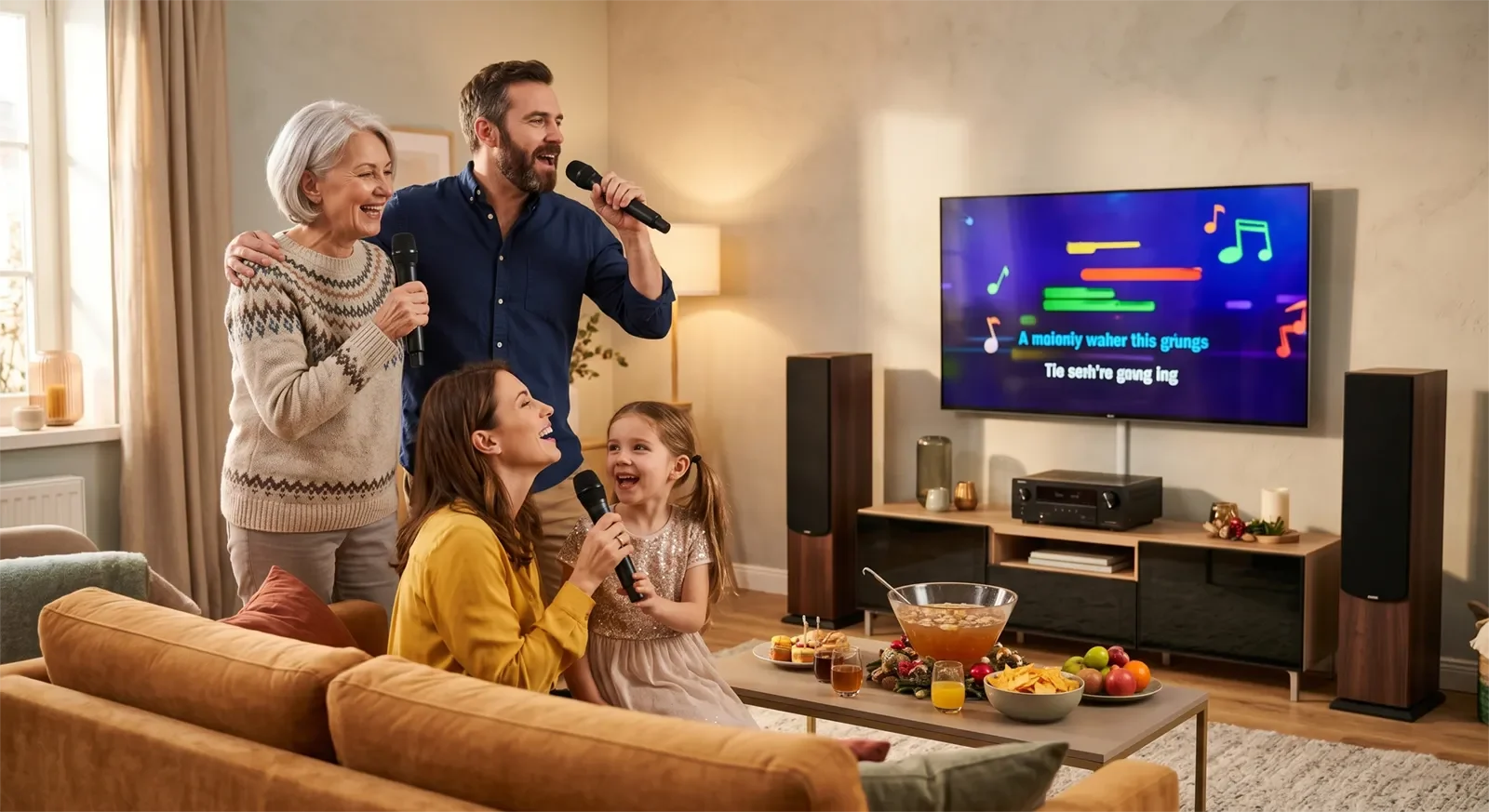
Why it works: Four microphones can make karaoke feel more social. Instead of passing two microphones back and forth, more people can join naturally. This is especially useful for birthday parties, family gatherings, holiday nights, and homes where karaoke is more of a group activity than a one-singer performance.
Not ideal if: Karaoke is usually one or two singers at a time and the extra microphones would sit unused most of the year.
Should You Start Simple or Buy More Now?
If your karaoke use is still developing, starting with two microphones can be the cleaner path. You avoid extra cost and extra management while learning how your household really uses the system.
If your home already has a clear group-singing pattern, buying four microphones from the beginning can prevent frustration. In that case, the extra capacity is not “just in case.” It is part of the way your home actually enjoys karaoke.
If karaoke is mainly for parties, also compare our guide to the best karaoke systems for family parties before deciding by mic count alone.
Budget, Room Size, and Setup Trade-Offs
For many homes, “enough” means buying the mic count that fits the normal night, not the most crowded night. A 2-mic system often gives better value when karaoke is casual or duet-focused because the lower complexity is part of the benefit. You are not just saving money. You are also saving effort.
Spending more on a 4-mic system makes sense when those extra microphones actually improve the flow of the evening. If family gatherings happen often enough that two microphones keep slowing things down, the extra capacity is doing real work. But if four microphones mostly create more charging, storage, and wireless management than actual singing value, the bigger setup is not the smarter one.
| Scenario | Usually Best | When to Spend More | When Not To |
|---|---|---|---|
| Couples or small families | 2-mic karaoke system | When guests join often enough that two mics feel limiting | When you are buying extra capacity just in case |
| Duet-heavy home karaoke | 2-mic karaoke system | When group songs become part of the normal routine | When most songs are still solo or duet songs |
| Regular family karaoke with kids and adults | 4-mic system can improve flow | When multiple singers often join at the same time | When group singing is rare most nights |
| Party-focused home use | 4-mic karaoke system | When hosting is part of the normal routine | When the party scenario only happens once in a while |
| Buyer wants easiest maintenance | 2-mic karaoke system | When simplicity matters less than group participation | When added management will reduce how often the system gets used |
Common Buying Mistakes
Mistake 1: Buying for the Biggest Possible Gathering
Some buyers choose four microphones because they imagine the most crowded party scenario. But if that situation happens rarely, the extra microphones may not add much value during normal use.
Buy for how karaoke happens most of the time. Occasional edge cases should not control the entire purchase.
Mistake 2: Ignoring the Extra Management
More microphones usually mean more charging, storage, wireless coordination, and small things to check before singing. That does not make four microphones a bad choice, but the extra capacity should solve a real problem.
If two microphones already cover your normal routine, four may create more management than benefit.
Mistake 3: Underbuying for a Social Home
The opposite mistake is buying two microphones when your home is clearly group-focused. If kids, adults, and guests often want to sing together, two microphones can feel limiting fast.
In that case, the issue is not room size. It is participation flow. Four microphones may make the whole night feel easier.
Mistake 4: Choosing Mic Count Before Checking the System
Microphone count is only one part of the karaoke system. The receiver, mixer, amplifier, speakers, room size, and wireless behavior still matter. Four weak microphones are not better than two microphones that work well for your room and routine.
Choose the mic count after you understand the full setup, not before.
How to Choose in 60 Seconds
- Count normal singers: If karaoke is usually solo or duet-based, choose two microphones. If three or four people often sing together, consider four.
- Check the routine: If you want the easiest setup to maintain, two microphones usually fit better.
- Think about gatherings: If family parties are part of normal life, four microphones may improve the flow.
- Look at storage and charging: More microphones are useful only if your household will keep them ready.
- Buy for real use: Do not buy the biggest mic count just because it sounds safer. Buy the count your home will actually use.
If you only remember one thing, remember this: choose two microphones for simplicity and duets; choose four microphones when group participation is part of your normal karaoke experience.
Frequently Asked Questions
Is a 2-mic karaoke system enough for most homes?
Yes. For many homes, two microphones are enough because karaoke is usually solo singing, duets, or casual family use. If more than two people rarely sing at the same time, a 2-mic system keeps the setup simpler without giving up much.
When is a 4-mic karaoke system worth it?
A 4-mic system is worth it when group singing is common. Larger families, party-heavy homes, and mixed-age gatherings often benefit from four microphones because more people can join without waiting or constantly passing microphones around.
Do four microphones make setup harder?
Usually, yes, at least a little. Four microphones mean more charging, more storage, and more things to keep ready. That extra work can be worth it when the household uses all four microphones often.
Can I start with two microphones and upgrade later?
Yes. Starting with two microphones can be smart if your current use is mostly solo singing or duets. Upgrade later when group singing becomes part of your regular routine rather than an occasional special event.
Does a bigger room mean I need four microphones?
Not always. Room size affects speaker coverage more than microphone count. The mic count depends more on how many people sing at the same time. A large room with duet-style singing may still be fine with two microphones.
Final Recommendation
If your home karaoke is mostly solo singing, duets, couples, and casual family use, a 2-mic karaoke system is usually the smarter buy. It keeps the setup simpler, cleaner, and easier to manage without creating a real limit for the way many households actually sing.
If your karaoke nights regularly become group events, a 4-mic karaoke system makes more sense. It improves flow, reduces waiting, and lets more people join naturally.
The main trade-off is simple: two microphones usually win on simplicity, while four microphones usually win on social capacity. The better choice is the one that matches your real routine, not the most crowded version of karaoke you can imagine.
Need help choosing the right microphone count for your room, budget, and family use?
Start with the complete home karaoke system guide, compare hosting needs in best karaoke systems for family parties, or read how to connect multiple wireless microphones.
Visit the Tittac showroom · Contact Tittac for help choosing the right microphone setup