
For most home karaoke singers, the best microphone position is close enough to keep the voice full, steady enough to stay consistent, and slightly off-center so breath and sharp consonants do not hit the mic too aggressively.
Who this guide is for: Home singers who want clearer, steadier vocals without sounding thin, harsh, breathy, or difficult to balance.
How this guide was prepared: This guide was written around real home karaoke behavior: microphone distance, angle, vocal body, harshness, breath impact, feedback risk, and how small placement changes affect the way the voice enters the system.
Many home singers think their vocal sounds weak, sharp, or inconsistent because of the mixer, speakers, or microphone itself. Sometimes that is true. But very often, the bigger issue is simply where the microphone sits in relation to the mouth.
Small changes in distance and angle can quickly change how full, clear, harsh, or stable the vocal feels in a real home karaoke room. This guide focuses on that position-basics layer: where the mic should sit, how it should be angled, and why a clean starting position often improves the whole vocal chain. For broader plain-English context around how technical ideas affect home singing, see our Karaoke Technical Guides.
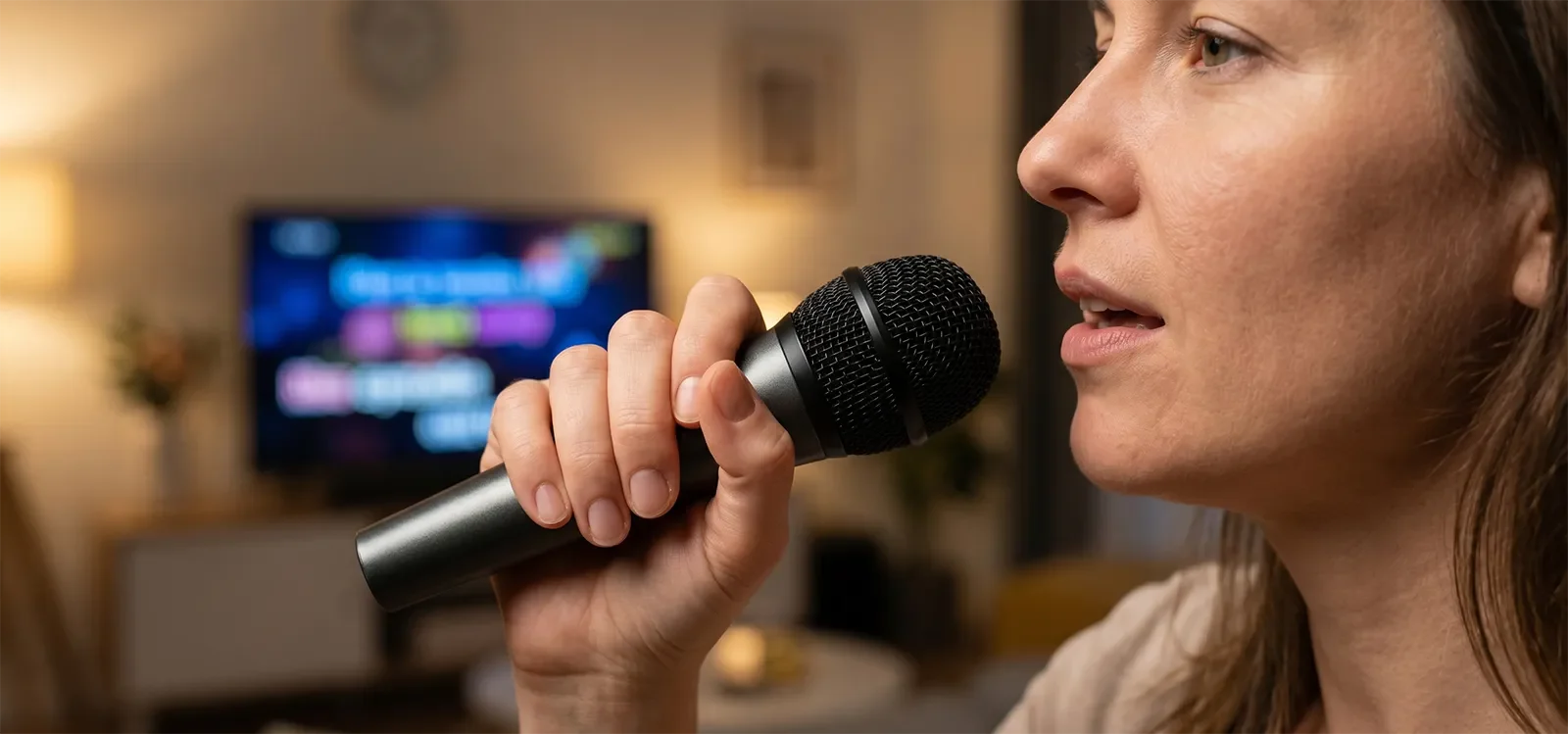
Table of Contents
- Quick Answer
- Why mic position changes vocal clarity
- A simple starting distance and angle for most singers
- How small position changes affect harshness, breath, and feedback risk
- What wrong positioning sounds like
- A quick position check before you sing
- How to stay consistent during a song
- Conclusion
- Frequently Asked Questions
- Related Posts
Quick Answer
For most home karaoke singers, the best starting point is a short, steady microphone distance with the mic aimed slightly off-center toward the mouth instead of straight into the strongest breath path. This usually gives a fuller, smoother, and more controlled vocal than holding the mic too far away or pressing it too close.
When the microphone is too close, the voice can sound harsh, breathy, crowded, or too aggressive. When it is too far away, the vocal often becomes thin, weak, or buried behind the music. In real home use, the biggest improvement usually comes from starting with one clean, believable position and making only small placement changes when the voice clearly needs them.
Why mic position changes vocal clarity
Microphone distance and angle matter because the microphone does not hear your voice the same way your own ears do. It reacts strongly to how directly your voice and breath hit it, how far the sound travels before reaching it, and how much extra room sound joins the signal.
That is why two singers can use the same system and still sound very different. A singer whose microphone sits in a cleaner position usually gives the system a stronger and more usable vocal signal. A singer whose mic is too far away, too close, or aimed in a harsh direction often creates a vocal that feels weaker, sharper, or harder to place.
At home, this matters even more because karaoke is rarely controlled like a studio. People turn toward the lyric screen, laugh between lines, move with the song, or shift their head without realizing how much the mouth-to-mic relationship changed. Good position basics help the system receive the voice more consistently before the mixer or speaker has to work harder.
A simple starting distance and angle for most singers
For most home singers, the best starting point is close, steady, and slightly off-center. The mic should be near enough to capture vocal body, but not so close that every breath, pop, or sharp consonant hits the microphone too strongly.
The practical goal is not finding one perfect inch measurement. The goal is finding a short working position that feels natural and repeatable. Once that position is right, the voice usually sounds fuller, clearer, and easier to keep balanced from song to song.
A slight off-center angle often works better than pointing the microphone directly into the strongest breath path. The mic still needs to aim at the voice, but it does not need to sit in the harshest possible line of air. This small angle change can make the vocal feel smoother without making it disappear.
This also helps explain why microphone behavior can feel different from one model to another. If you want the broader explanation of why some mics react more tightly or loosely around the singer, see Why Microphone Pickup Pattern Matters for Home Karaoke.
How small position changes affect harshness, breath, and feedback risk
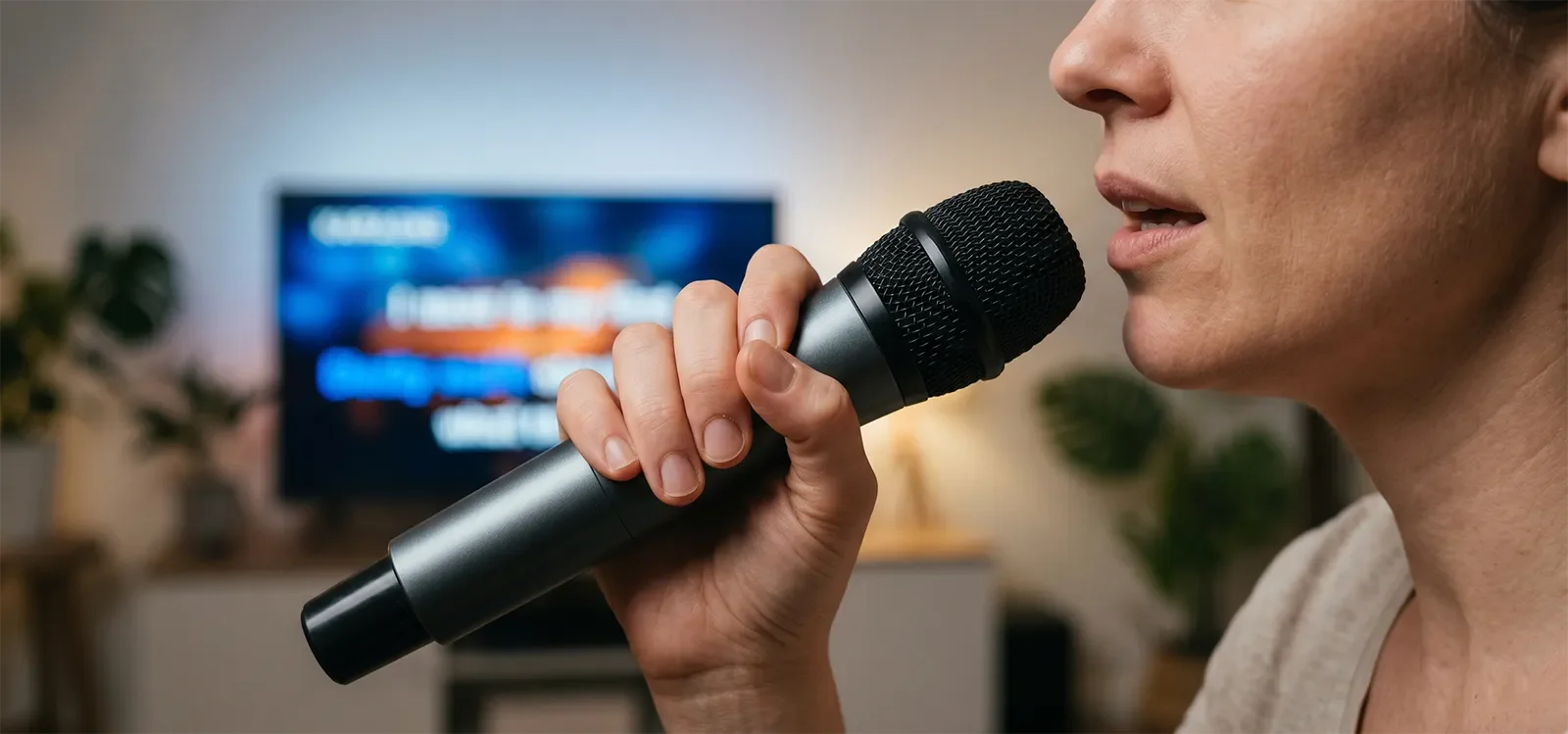
Small position changes can alter the vocal faster than many home users expect. If the microphone moves too close, the voice often starts sounding crowded, breathy, or overly forceful. If the angle becomes too direct, sharp consonants can feel more aggressive than they should. If the mic shifts too far away, the voice usually loses body and becomes less stable in the mix.
That is why position changes are not only about volume. They also affect tone. A small shift in angle can make the vocal feel smoother or harsher. A small shift in distance can make the singer seem more present or more fragile. These changes often happen before users think of them as technical at all.
Position also affects feedback risk, but it is only one part of the feedback picture. A microphone aimed cleanly at the voice and less carelessly into the room usually behaves more predictably. That does not mean position solves every feedback problem by itself. It means careless placement can make the system harder to manage than it needs to be.
What wrong positioning sounds like
The most common wrong-position symptom is a vocal that sounds thinner and weaker than it should. That often happens when the mic is simply too far away. The singer may still be audible, but the voice no longer has enough body to feel easy and centered in the mix.
The opposite problem is a vocal that sounds too crowded, breathy, sharp, or pushed. That usually happens when the microphone is too close or too directly aimed into the strongest breath path. Instead of sounding stronger, the voice starts feeling more aggressive and less natural.
Wrong positioning can also sound inconsistent. One phrase feels clear, the next feels duller, and the next feels strangely edgy even though the system itself did not change. In many home setups, that inconsistency is not the mixer or the speaker. It is the microphone no longer staying in a clean relationship with the mouth.
This is why position basics matter so much. Wrong placement usually sounds like unnecessary struggle: the singer is there, but the vocal does not arrive with the same ease, balance, or stability that a better position would have given it.
A quick position check before you sing
A simple position check works better than overthinking the microphone. Before the first line, bring the mic to one short, natural working distance instead of starting too far away and trying to correct after the song begins.
Then check the angle. Aim the microphone toward the voice, but slightly off-center rather than straight into the strongest breath path. That usually keeps the vocal present while reducing some of the harshness and breath impact that can make home karaoke sound rough.
Once the song starts, listen for the basic result. If the vocal feels weak or easy to bury, the starting position is probably too far away. If it feels crowded, breathy, or sharper than it should, the mic may be too close or too direct. In many cases, a small adjustment is enough to bring the voice back into a cleaner place.
How to stay consistent during a song
The hardest part is not finding a good position once. It is keeping the microphone close to that position while the song is moving. Many singers start well, then drift away from the mic when they look at the lyric screen, turn toward family members, or relax between phrases.
A simple habit helps: let the microphone follow your mouth, not your eyes. You can look at the screen without letting the mic drop. You can turn your head slightly without letting the mic aim away from your voice. You can sing louder without pulling the mic so far away that the vocal suddenly disappears.
Small movement is normal. Big movement creates problems. The more consistent the mouth-to-mic relationship stays, the easier it is for the system to keep the vocal clear and balanced without constant adjustment.

Conclusion
The best microphone distance and angle for clear home karaoke vocals are not about performance tricks. They are about starting the voice from a cleaner position.
The trade-off is simple: too close and the vocal can become harsh, breathy, or crowded; too far and it can become weak, thin, or buried. For most home singers, the safest starting point is a short working distance with a slightly off-center angle.
That position gives the voice enough body to stay present while keeping breath and harsh consonants under better control. Once the microphone position becomes steadier, the rest of the karaoke system becomes easier to balance.
Frequently Asked Questions
Should I move the microphone farther away when I sing louder?
Yes, but only a little. Louder phrases often need a small position change so the vocal stays controlled instead of turning sharp or crowded. The mistake is making a big dramatic move that suddenly weakens the signal and makes the vocal harder to keep present in the mix.
Why does my voice disappear when I look at the lyric screen?
This usually happens because your head moves but the microphone no longer stays aligned with your mouth. Some singers also lower the mic without noticing it while reading. The useful fix is to keep the microphone returning to the same basic starting position even when your eyes shift away.
Is singing straight into the microphone always the clearest option?
Not always. A slight off-center angle often sounds smoother and more controlled because it reduces the direct hit from breath and sharp consonants. The goal is still to aim at the voice, just not in the harshest possible way.
Can microphone angle help reduce feedback risk at home?
Yes. Good angle placement helps because the microphone stays aimed at your voice instead of picking up as much unwanted room and speaker sound. It will not solve every feedback problem on its own, but careless placement can definitely make the system harder to manage.
Why does my voice sound different even when I use the same microphone?
The microphone may be the same, but your distance and angle may not be. A small change in how close the mic is, where it points, or how steady it stays can change vocal fullness, brightness, breath impact, and consistency.
Need help understanding the right setup for your home? Better mic position makes the rest of the vocal chain easier to control.
The next helpful step is learning the broader mic behaviors that explain why some microphones react differently around the singer.
Continue with microphone pickup-pattern behavior here.