
Better microphone technique in karaoke means keeping the mic signal steady from line to line. A secure grip, controlled movement, consistent aim, and feedback-aware handling often improve home karaoke vocals before you touch any mixer setting.
Who this guide is for: Casual and regular home singers who want steadier karaoke vocals without turning microphone use into something complicated.
How this guide was prepared: This guide was written around real home karaoke behavior: grip, movement control, aim, consistency, feedback awareness, and how mic handling affects vocal clarity in family-room setups.
Many karaoke vocals sound uneven not because the singer lacks talent, but because the microphone keeps receiving a different signal from line to line. A loose grip, drifting hand, or careless movement can make the voice seem weak in one phrase and harsh in the next, even on the same home system.
That is why microphone technique matters in home karaoke. It is not about stage performance or singing style. It is about handling discipline that keeps the vocal signal steadier, easier to hear, and easier to control. For broader plain-English context around how technical ideas affect home singing, see our Understanding Karaoke Signal Flow Without the Jargon.

Table of Contents
- Quick Answer
- Why handling consistency changes the sound
- Grip, aim, and movement habits that keep vocals stable
- What careless mic handling does to the signal
- Common handling mistakes during real home singing
- A short routine for steadier mic control
- What microphone technique is not
- Conclusion
- Frequently Asked Questions
- Related Posts
Quick Answer
Better microphone technique in karaoke means handling the mic in a way that keeps the vocal signal steady from line to line. In practice, that means holding the mic securely by the handle, keeping the top area clear, controlling hand drift, returning the mic to a consistent singing direction, and avoiding careless aim toward the room or speakers.
These habits matter because home karaoke systems respond best when the vocal arrives cleanly and predictably. When mic handling keeps changing, the voice becomes harder to balance, easier to bury, and more likely to sound sharp, weak, or unstable. For most home singers, better technique is simply better control.
Why handling consistency changes the sound
Microphone technique changes the sound because the microphone is the first place where your voice enters the karaoke system. If that input is stable, the rest of the system has a better chance of sounding clear and controlled. If that input keeps changing, the mix becomes harder to manage before echo, EQ, or level settings can help.
This is why two singers can use the same home setup and still sound very different. One person may sound clear and easy to follow simply because the mic stays controlled from line to line. Another may sound thin, jumpy, or inconsistent because the mic keeps drifting, turning away, or dropping between phrases.
In home karaoke, technique is really a handling discipline. It helps the voice arrive in a more predictable way so the system does not have to chase it. That is what makes simple mic control so useful: it improves the signal before you start trying to fix the result.
Grip, aim, and movement habits that keep vocals stable
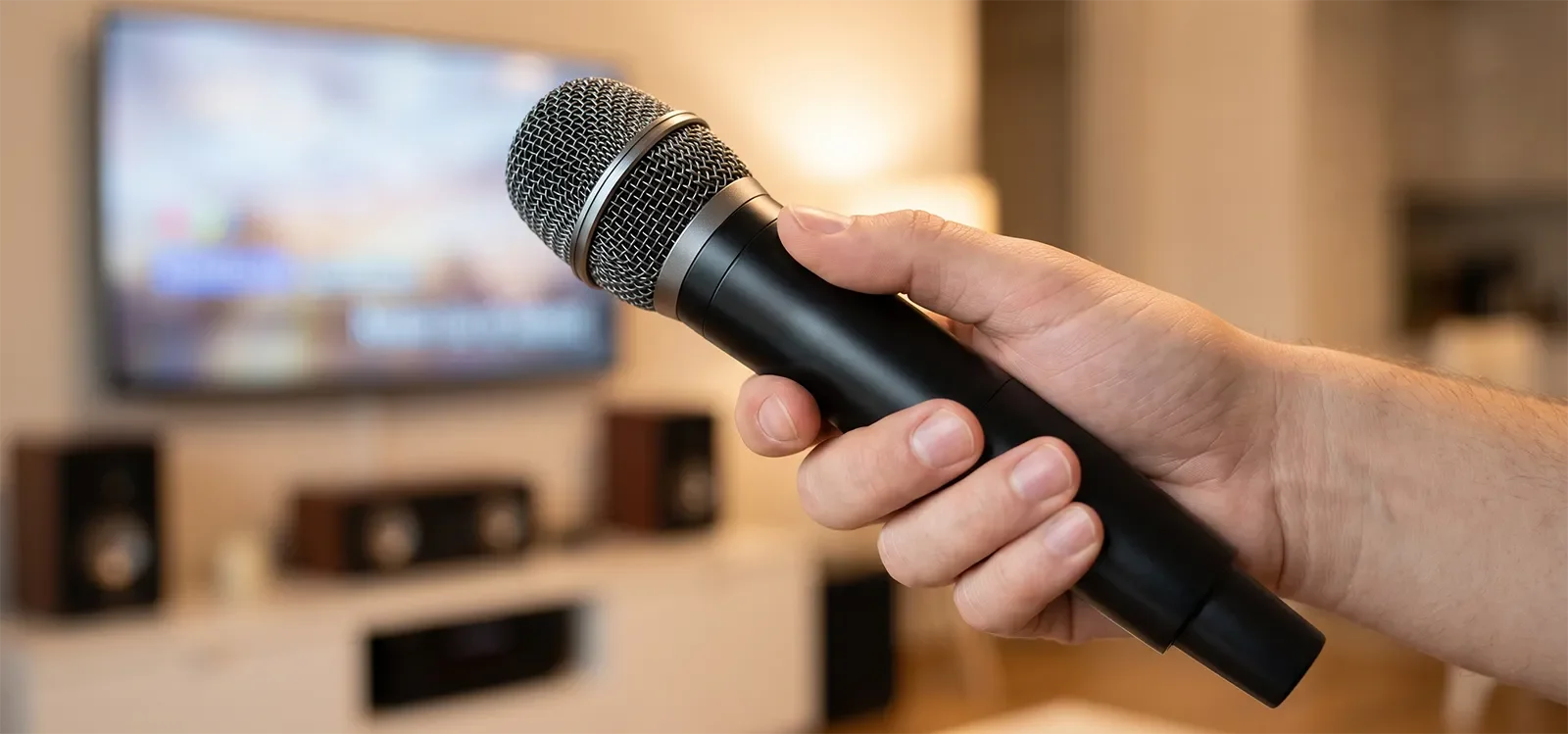
The best starting habit is simple: hold the mic securely by the handle, keep the top grille area clear, and bring the mic back to the same useful direction each time you sing. That basic control makes a bigger difference than many home users expect because the system receives a more consistent vocal level and tone.
The goal is not to grip the microphone stiffly. It is to hold it with enough control that it does not wander every time you glance at the lyrics, gesture with your hand, or react to the song. A relaxed but intentional grip usually gives the best result because it keeps the vocal steadier without making the singer feel tense.
Aim matters in the same practical way. The singer does not need a frozen pose, but the mic should keep returning to a believable singing direction instead of drifting randomly between lines. The same is true of movement. Turning the head, shifting the body, or reacting to the room is normal. The mic should not become a moving target every few seconds.
If you want the more focused breakdown of physical placement itself, continue with Best Microphone Distance and Angle for Clear Vocals. That guide goes deeper into position basics, while this article stays centered on handling control over time.
What careless mic handling does to the signal
Careless mic handling makes the signal less repeatable. A drifting hand can make the singer sound less present from one phrase to the next. Dropping the mic lower between lines can make the next lyric arrive late or weak. Turning the head without bringing the mic with it can make the vocal feel duller or less centered even though the singer is still in the room.
This is why handling problems often sound inconsistent before they sound obviously wrong. The voice may still be audible, but it becomes less steady, less natural, and less reliable inside the mix. One line feels clear, the next feels thinner, and the next feels sharper — not because the system changed, but because the mic behavior changed.
Careless handling also affects feedback risk. A microphone that drifts loosely around the room or points carelessly toward speakers becomes harder to control in active home setups. Good handling discipline does not guarantee zero feedback, but it keeps the mic more focused on the voice and less likely to behave unpredictably.
In plain English, bad handling makes the karaoke system work harder to interpret a signal that should have been steadier in the first place.

Common handling mistakes during real home singing
The most common mistake is inconsistent movement between lines. When the mic keeps changing direction from phrase to phrase, the voice no longer enters the system in a stable way. That can make the vocal seem buried one moment and too sharp the next, even though the settings never changed.
Another major mistake is holding the mic too high and covering or crowding the top section. That can make the vocal harder to control and less natural in tone. The same is true when people lower the mic while reading lyrics, then bring it back too late after the line has already started.
Turning the head without carrying the mic along is another classic problem in casual home singing. So is letting the hand relax too much between phrases, which causes slow drift without the singer noticing it. These are small movements, but they can have a large effect on vocal stability.
Careless direction also matters. A microphone aimed loosely around the room is more likely to pick up unwanted sound and less likely to keep the vocal centered. The goal is not perfection. It is keeping the mic useful, predictable, and focused on the actual voice through normal real-life movement.
A short routine for steadier mic control
A simple routine works better than overthinking technique. Start each song by setting the mic in the same secure hand position and bringing it back to the same useful singing direction before the first lyric. That one reset already improves consistency for many home singers.
Then try to stay steady through one verse. Make only small movement changes between lines, and return immediately to the same controlled position after louder or more animated phrases. This builds control without making the singer feel mechanical. It also helps the system receive a more even signal across the whole song.
Finally, notice what happens when you move naturally. Turn to the screen, shift your body, laugh, or pass the mic to another person without losing the basic relationship between hand, voice, and mic direction. When those habits become more automatic, karaoke usually sounds clearer and easier without touching any gear.
What microphone technique is not
Good microphone technique does not mean acting like a stage performer. It does not mean copying dramatic concert gestures, pulling the mic far away on every loud note, or constantly moving it for effect. In home karaoke, those habits often make the vocal less stable.
It also does not mean freezing the mic in one exact position for the whole song. Natural movement is fine. The important part is control. The mic should keep returning to a useful relationship with the mouth so the system receives the voice in a predictable way.
For home singers, the best technique is usually quiet and practical. Hold the mic well. Keep the top clear. Aim it toward the voice. Avoid careless direction. Move smoothly. Return to position before each line. Those simple habits are enough to make many karaoke vocals sound more confident and less uneven.
Conclusion
Better microphone technique for karaoke is really about reducing unnecessary variation in how the mic is handled. The trade-off is simple: careless grip and careless movement make the vocal harder to manage, while steadier handling makes the voice clearer, more repeatable, and easier to balance in a home room.
The practical takeaway is to focus on control, not performance flair. A secure grip, less drift, steadier movement, and more careful aim usually improve home karaoke faster than most people expect.
When the microphone sends a cleaner, more consistent signal into the system, the rest of the karaoke chain has a much easier job.
Frequently Asked Questions
Do I need different microphone technique for wired and wireless karaoke mics?
The core handling discipline stays mostly the same. You still want a secure grip, controlled movement, and steadier behavior from line to line. Wireless microphones simply make it easier to drift, swing the mic around, or turn away carelessly, so they demand more awareness if you want the vocal to stay consistent.
Why do my vocals sound uneven even when I keep the same settings?
Because the settings may be stable while your mic handling is not. If your grip, direction, or movement changes from phrase to phrase, the signal entering the system changes too. That often creates a vocal that feels inconsistent even though nothing on the mixer or amplifier was adjusted.
Can bad microphone handling increase feedback risk at home?
Yes. When the mic is pointed carelessly around the room or handled in a way that makes its direction less predictable, unwanted sound can enter more easily. Good handling helps because the microphone stays focused on the voice instead of wandering toward speakers, reflections, or other noise in the room.
Is microphone technique really that important for casual family karaoke?
Yes. Home karaoke depends heavily on repeatability. Better handling habits make it easier for different singers to sound clear without constant setting changes. Even simple improvements in grip and movement control can make the whole system feel more stable and more enjoyable for everyone using it.
Should I cover the top of the microphone while singing?
No. Covering or crowding the top of the microphone can make the vocal harder to control and less natural. Hold the mic by the handle and keep the grille area clear so the microphone can receive your voice more predictably.
Need help understanding the right setup for your home? Better mic handling becomes even easier once the physical position itself feels natural.
The next helpful step is the guide that breaks down distance and angle in a more focused way.
Read the mic distance guide next.