
Microphone pickup pattern matters in home karaoke because it changes how forgiving, focused, and easy a microphone feels when real people sing. A tighter pattern can feel more controlled, but it usually asks for better aim. A wider pattern can feel easier for casual family use, but it may sound less tightly centered on the voice.
Who this guide is for: Home karaoke users who want to understand why some microphones feel easier, stricter, wider, or more focused in everyday use.
How this guide was prepared: This guide was built around real home karaoke behavior: casual singers, imperfect mic handling, shared family use, room reflections, and the way pickup shape changes how the microphone responds around the voice.
Many people think a microphone either sounds good or bad, but at home the bigger difference is often how the microphone behaves. Two microphones can both work, yet one may feel relaxed and easy to sing into while another feels more focused, stricter, or less forgiving when the singer turns away slightly.
That difference often comes from pickup pattern. Before you compare tone, price, brand, or wireless features, pickup pattern helps explain what the microphone pays attention to, how tightly it follows the singer, and how much casual movement it tolerates. For broader plain-English context around how technical audio ideas affect home singing, see our Karaoke Technical Guides.
Quick Answer
A microphone pickup pattern describes the direction and shape of the area where the microphone hears most strongly. In home karaoke, that shape affects how easy the mic feels to use. A tighter directional pattern usually gives a more focused vocal and can reduce unwanted pickup from the sides, but it asks the singer to aim and hold the mic more consistently. A wider pattern usually feels more forgiving for casual singers, but the vocal may feel less locked in. The best pickup pattern is not always the tightest one. It is the one that matches the room, the singers, and how the microphone is actually used at home.
Table of Contents
What pickup pattern actually means
Pickup pattern describes the shape of a microphone’s listening area. In plain English, it tells you where the microphone hears most strongly and where it becomes less sensitive.
For karaoke, this matters because singers rarely stay perfectly still. People look at the lyric screen, move the mic while singing, turn toward family members, pass the mic around, or hold it at slightly different angles from song to song. Pickup pattern affects how gracefully the microphone reacts to those normal habits.
A pickup pattern is not just a technical diagram. It is a behavior clue. It tells you whether a microphone is likely to feel more focused, more forgiving, more demanding, or more relaxed in real home use.
This is why one microphone can feel easy for the whole family while another may sound good only when the singer keeps the mic aimed carefully. The difference is not always tone quality. Sometimes it is the shape of the microphone’s pickup zone.

Common pickup patterns in karaoke microphones
Most handheld karaoke microphones are directional. That means they are designed to hear the singer most strongly from the front of the microphone while reducing some sound from other directions.
Cardioid is one of the most common directional patterns. It usually gives a practical balance between focus and forgiveness. It tends to work well for general home karaoke because it keeps attention on the singer without making the usable zone feel extremely narrow.
Supercardioid and hypercardioid patterns are usually tighter. They can feel more focused and controlled, but they often ask for better mic aim and steadier handling. They may also behave differently around sound coming from behind the microphone, so placement and technique matter more.
Omnidirectional microphones hear more evenly from all directions. That can feel very forgiving, but it is usually less ideal for karaoke because it may pick up more room sound, speaker sound, and background noise.
For most home karaoke users, the important question is not memorizing every pattern name. The useful question is simpler: does this microphone feel easy and stable for the way people actually sing in this room?
How pickup shape changes microphone behavior
A tighter pickup shape usually makes the microphone behave in a more focused way. It tends to reward singers who stay centered in the usable pickup zone. The vocal may feel more controlled because the microphone is paying closer attention to one main direction.
The trade-off is that tighter behavior can be less forgiving. If the singer turns the mic away, drops it too low, or sings across the side of it, the voice may lose strength or consistency more quickly.
A wider pickup shape usually behaves more loosely. It often feels easier for casual home use because the singer does not have to stay locked into such a narrow working zone. This can be helpful when multiple family members sing, especially if not everyone holds the microphone the same way.
The trade-off is that a wider pattern may feel less tightly centered on the voice. It may also allow more room sound or nearby sound into the microphone, depending on the system and room.
This is why pickup pattern affects ease of use before it affects opinions about “good” or “bad” sound. One mic may feel clean but fussy. Another may feel relaxed but less precise. Another may sit somewhere in the middle.
This article focuses on the behavior created by pickup shape. For the broader habits that make any microphone work better over time, see Microphone Technique for Karaoke.
What home users usually notice first
At home, most people do not notice pickup pattern as a technical feature. They notice it as ease of use.
One microphone may still sound acceptable when the singer is casual with mic angle. Another may lose vocal strength quickly when the singer turns slightly toward the lyric screen. One may feel friendly for family use, while another feels better for a more controlled singer.
This difference becomes obvious when people pass the mic around. A more forgiving microphone may keep the performance comfortable even when each person holds it differently. A tighter microphone may sound more focused with a careful singer but less consistent with beginners, kids, seniors, or guests.
Users also notice how centered the voice feels. Some microphones make the vocal feel locked into one main working zone. Others feel more tolerant when the singer shifts slightly. Neither behavior is automatically right or wrong. The better choice depends on the room, the singers, and how disciplined the normal use really is.
What people misunderstand about pickup pattern
A common misunderstanding is that a tighter pickup pattern is always better. It can be better in the right situation, especially when the singer uses the mic consistently. But in a casual home setting, a very tight pattern may feel less forgiving and harder for everyone to use well.
Another misunderstanding is that a wider pickup pattern means the microphone is lower quality. That is not automatically true. A wider pattern may simply behave in a way that feels easier and more relaxed for casual singers.
People also confuse pickup pattern with overall sound quality. Pickup pattern does not tell you whether a microphone is premium or cheap by itself. It tells you how the microphone pays attention around the singer. That shape affects behavior, consistency, and ease of use, but it is not the same thing as total microphone quality.
The most useful way to think about pickup pattern is not “better or worse.” It is “more focused or more forgiving.” Once you understand that trade-off, the spec becomes much easier to apply in real life.
A simple way to test pickup behavior at home
You can test pickup behavior with one familiar song at normal home volume. Hold the microphone in the normal singing position and sing a few lines while keeping the mic aimed at your mouth. Then slightly turn the mic, lower it a little, or move it off-center the way casual singers often do.
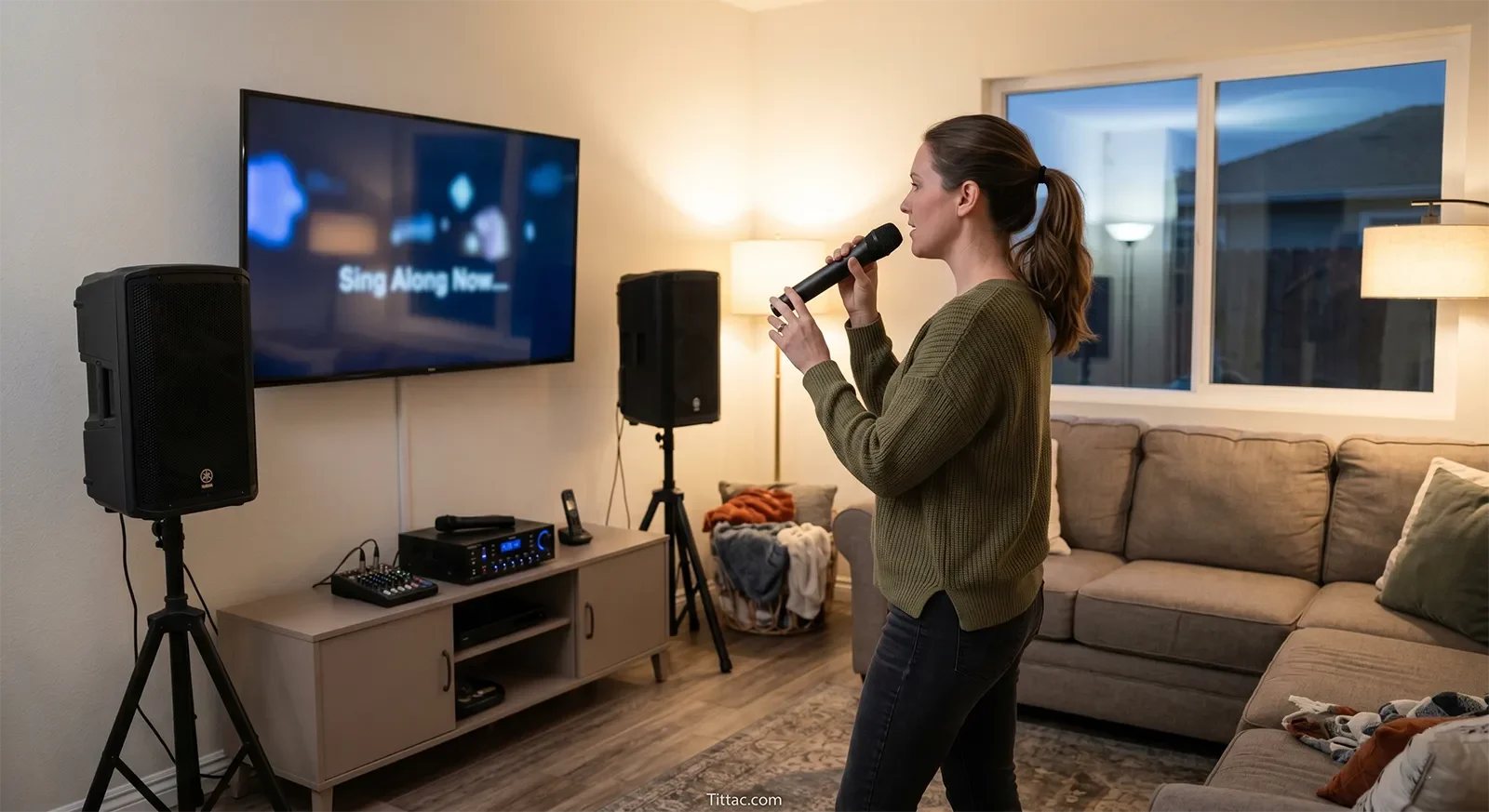
If the vocal drops quickly, the microphone may have a tighter or less forgiving usable zone. If the vocal stays more even as you move slightly, the microphone may feel more forgiving for family use.
Next, listen to how centered the voice feels when the mic is aimed correctly. A more focused microphone may make the vocal feel more locked in. A more forgiving microphone may feel easier but a little less precise.
The goal is not to find a microphone that ignores all handling mistakes. The goal is to choose behavior that fits the people using it. A careful singer may prefer more focus. A family room with mixed singers may benefit from more forgiveness.
After pickup behavior makes sense, the next useful question is mic position: how close the microphone should be and how it should be aimed. That is where Best Microphone Distance and Angle for Clear Vocals becomes the right follow-up.
Conclusion
Microphone pickup pattern matters because it changes how the microphone behaves around the singer. A tighter pattern can feel focused and controlled, but it usually asks for better aim and steadier handling. A wider pattern can feel easier and more forgiving, but it may not center the voice as tightly.
For home karaoke, the best pickup pattern is not the one that sounds most impressive on a spec sheet. It is the one that matches the room, the singers, and the way people actually hold and share the microphone. Once you understand pickup pattern as behavior, it becomes much easier to choose and use a karaoke microphone confidently.
Frequently Asked Questions
Does pickup pattern really matter for casual family karaoke?
Yes. Pickup pattern changes how strict or forgiving the microphone feels. Some microphones make the singer feel more centered and controlled, while others tolerate casual movement better. That difference becomes noticeable quickly when multiple people use the same mic.
Is a tighter pickup pattern always better?
No. A tighter pattern may feel more focused, but it can also be less forgiving if singers drift, turn, or hold the mic inconsistently. For some homes, that is a good trade-off. For others, a slightly more forgiving microphone may be easier to enjoy.
Can pickup pattern affect feedback?
Yes, pickup pattern can affect how much sound from speakers and the room reaches the microphone. Directional microphones can help reduce unwanted pickup when used correctly, but pattern alone does not solve feedback. Speaker placement, mic technique, volume, EQ, and room behavior still matter.
Is pickup pattern the same thing as microphone rejection?
They are related, but not exactly the same. Pickup pattern describes where the microphone hears most strongly. Rejection describes how well it reduces sound from certain directions. To understand that side of the topic more directly, see What Microphone Rejection Means in Real Rooms.
Is pickup pattern the same as microphone sound quality?
No. Pickup pattern does not automatically tell you whether a microphone is better or worse overall. It tells you how the microphone pays attention around the singer. That affects behavior and ease of use, but it is only one part of microphone performance.
If you want more plain-English explanations of how karaoke gear behaves at home, the technical guides can help.