
Microphone rejection means how well a mic reduces sound it is not supposed to focus on. In home karaoke, good rejection helps the singer stay clearer by reducing speaker bleed, room reflections, TV sound, and nearby voices before they get pulled into the vocal signal.
Who this guide is for: Home karaoke users who want to understand why some microphones feel cleaner, calmer, and more predictable in real rooms.
How this guide was prepared: This guide was written around real home karaoke conditions: nearby speakers, TV audio, reflective rooms, family use, room spill, and normal microphone positioning.
Home karaoke users often hear microphone terms like rejection, isolation, or off-axis control, but those words can feel abstract until the microphone is used in a real room. At home, the mic is not only hearing the singer. It is also surrounded by speaker sound, TV sound, room reflections, furniture, and sometimes other voices nearby.
That is why some microphones feel easier to use and more predictable than others. In practical home karaoke terms, microphone rejection helps explain how well a mic avoids picking up the wrong sound from the wrong places. For broader plain-English context around how technical audio ideas affect home singing, see our Karaoke Technical Guides.
Quick Answer
Microphone rejection is the mic’s ability to reduce unwanted sound coming from outside the main vocal area. In home karaoke, that usually means less speaker bleed, room reflection, TV spill, and nearby voices entering the microphone compared with the singer’s voice. Good rejection does not mean the mic hears only the singer. It means unwanted sound is kept more under control. In real rooms, that can make karaoke feel cleaner, more stable, and more predictable, especially when speakers are close, the room is reflective, or several people are nearby.
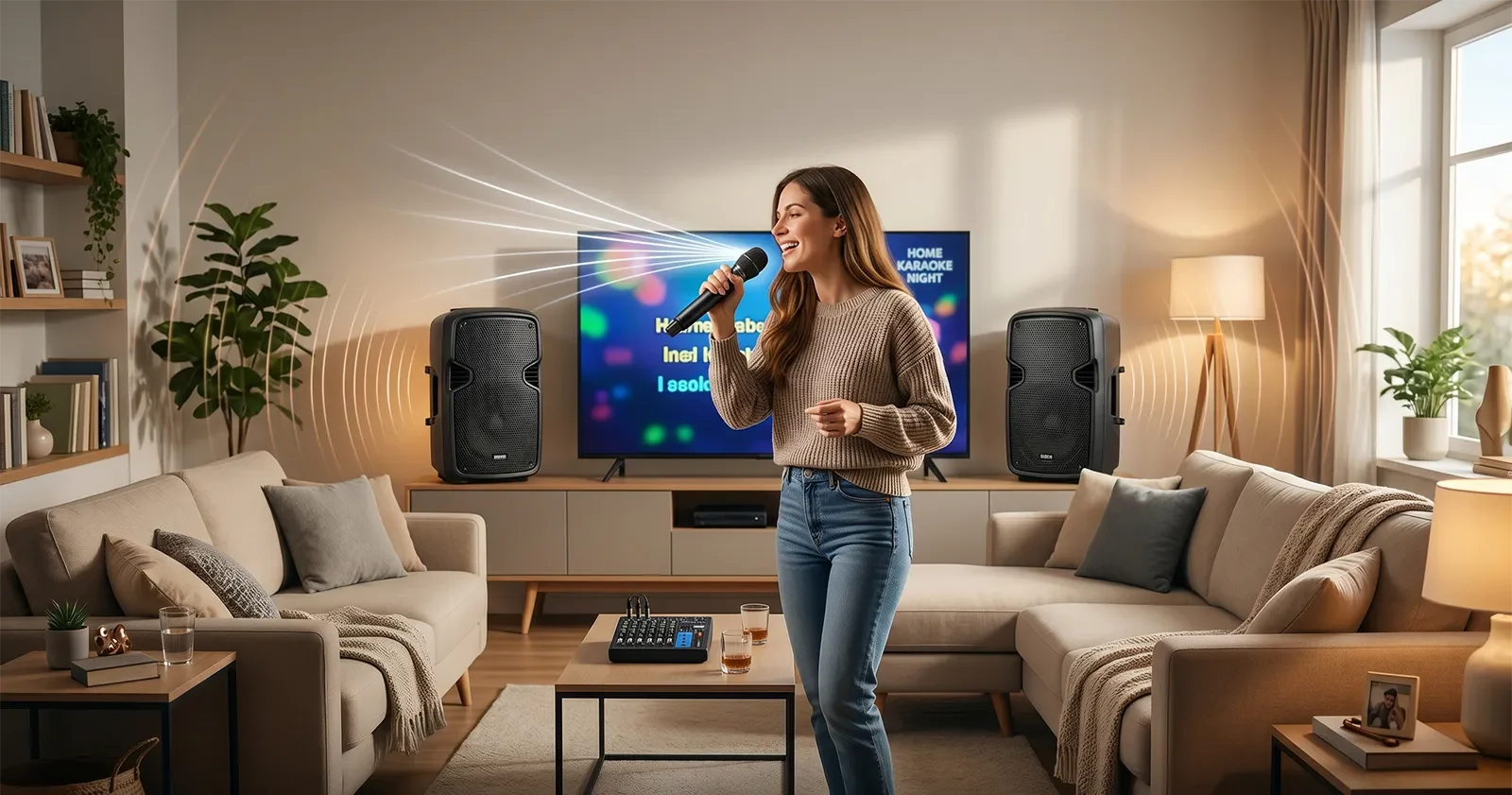
Table of Contents
What microphone rejection actually means
Microphone rejection is best understood as control over unwanted sound. It is not only about what the microphone hears directly in front of it. It is also about what the microphone reduces from other directions or from the surrounding room.
In home karaoke, unwanted sound can include speaker bleed, TV audio, room reflections, background voices, handclaps, and sound bouncing off hard surfaces. If too much of that sound gets into the microphone, the vocal signal becomes less clean before it even reaches the karaoke system.
Good rejection helps the microphone favor the singer more strongly than the room around the singer. It does not create perfect isolation, but it can make the voice feel more separated, more stable, and easier to manage inside the mix.
This is why rejection matters even for casual family karaoke. A microphone with better real-room control can make the system feel calmer because it is not collecting as much extra sound from the environment.
Microphone rejection vs pickup pattern
Microphone rejection and pickup pattern are related, but they are not exactly the same thing.
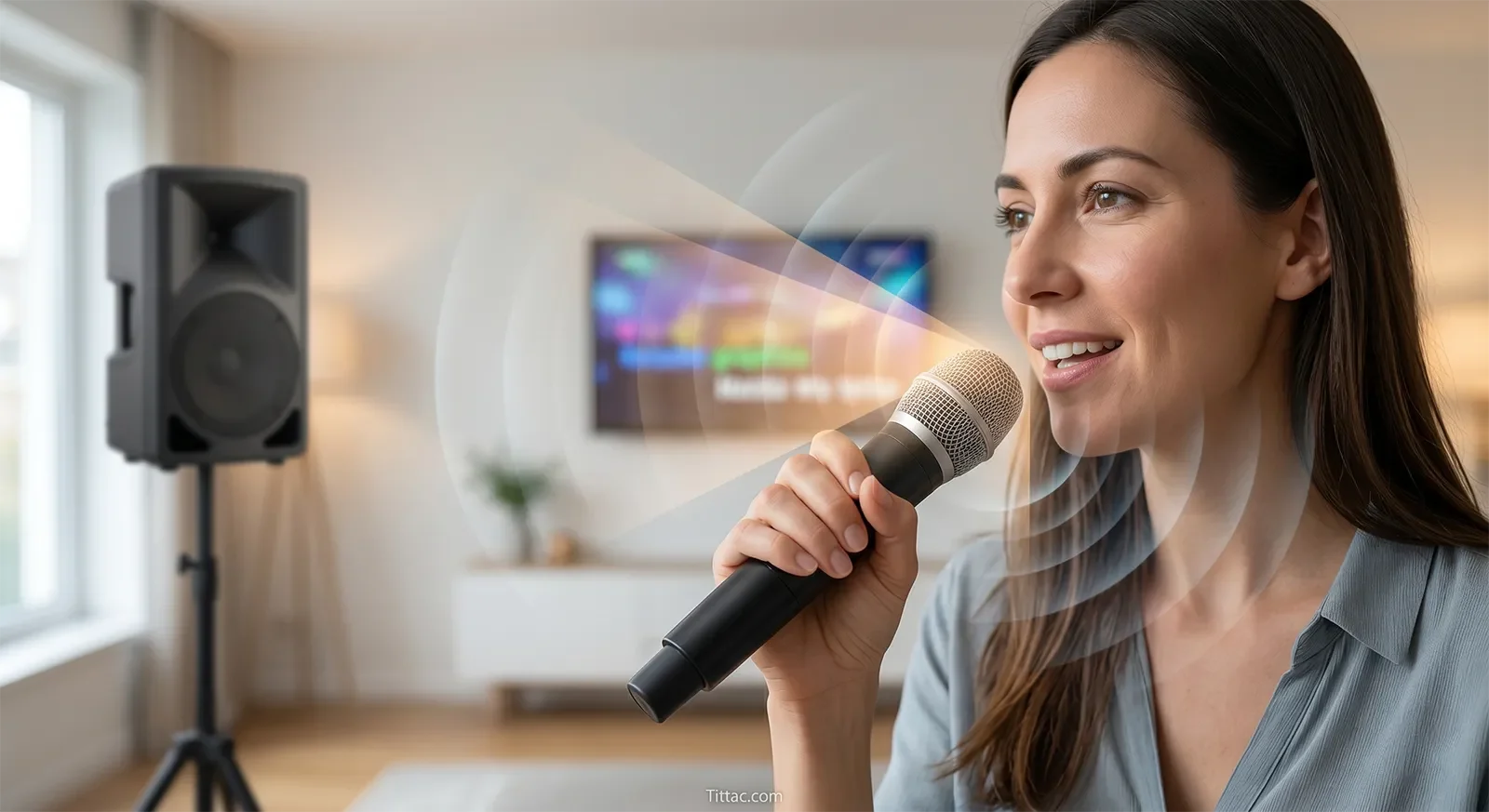
Pickup pattern describes the microphone’s directional shape: where the mic hears most strongly and where it is less sensitive. Rejection describes how useful that directional behavior is when the microphone is used in a real room with speakers, reflections, and nearby sound sources.
A microphone can be directional on paper, but the more useful home question is whether it still controls unwanted spill once the room gets involved. That is why rejection is a practical behavior concept, not just a spec-sheet phrase.
For the broader foundation on directional behavior, see Why Microphone Pickup Pattern Matters in Home Karaoke. This article focuses more narrowly on what happens when that microphone has to reject unwanted sound in a real room.
What rejection changes in real-room behavior
In real rooms, microphone rejection changes how much outside sound gets pulled into the vocal signal. A microphone with useful rejection tends to make the voice feel more direct and more separated from the room.
This matters because home karaoke rooms are rarely neutral. TVs may sit close to singers. Speakers may be placed near the performance area. Hard floors, windows, walls, and furniture can reflect sound back toward the microphone. If rejection is weak, the mic can start behaving as if all of that sound deserves attention.
When rejection works well, the voice remains the main focus. The microphone still hears some room sound, but it does not let the room dominate the vocal path as easily.
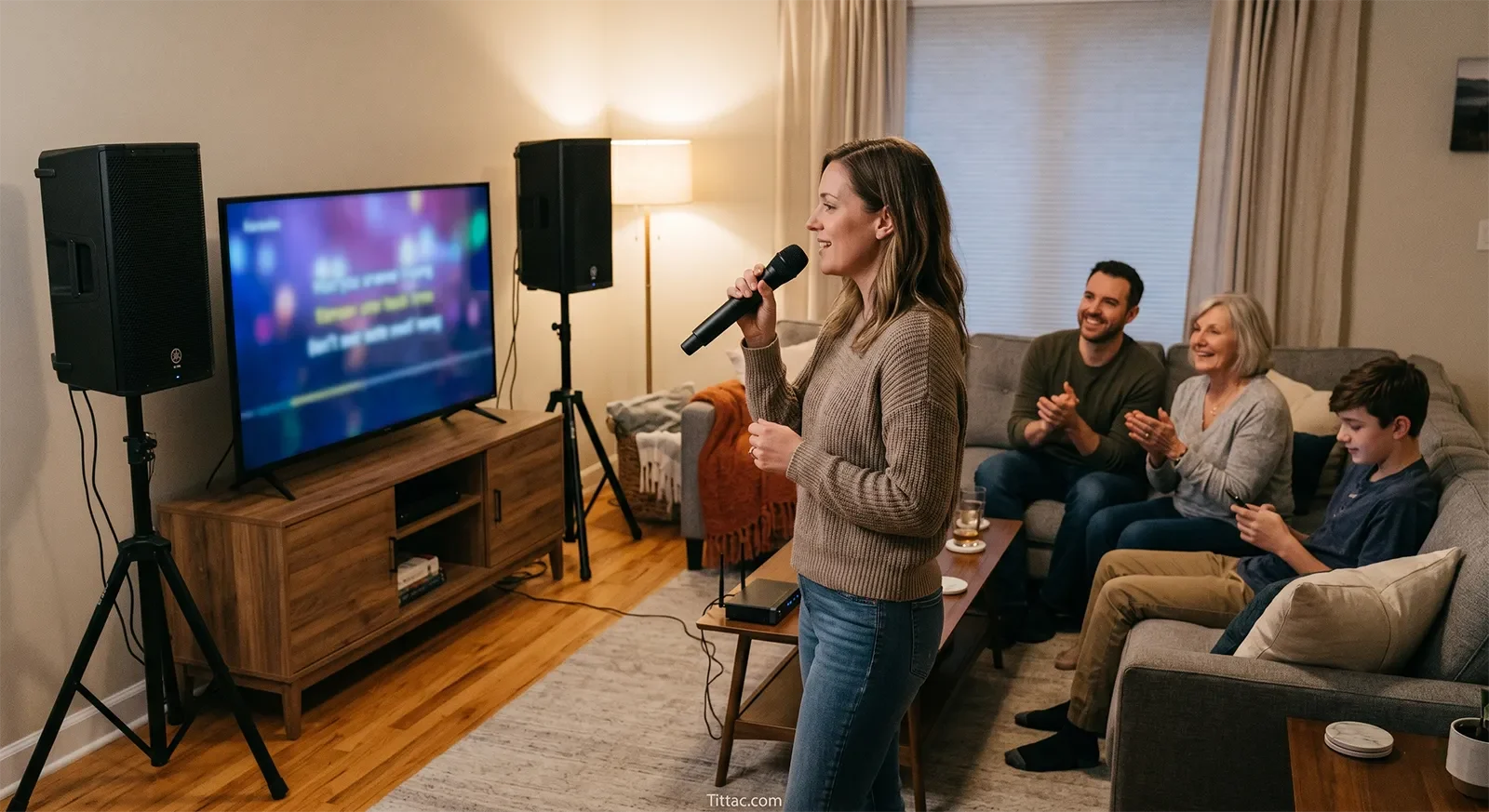
Rejection can also make the system feel more predictable from person to person. In family karaoke, some singers stand too far back, some point the mic slightly off, and some sing while the music is already loud in the room. A mic with better rejection may feel less chaotic because it does a better job keeping the intended voice in front of the extra room noise.
What users actually notice at home
Most home users do not describe rejection in technical language. They describe the result.
They may say the microphone feels cleaner, the voice sounds more separated, or the system feels less messy when music is playing. They may notice that the vocal stays more readable even when the room is active.
Another clue is how the mic behaves in difficult rooms. In a reflective space with nearby speakers, one microphone may still sound fairly focused while another seems to pick up too much of everything. That difference is often real-room rejection at work.
Users may also notice that rejection affects how clearly the singer sits in the system. When unwanted spill is controlled, the voice sounds more intentional. When rejection is weaker, the vocal may feel less defined because room sound and playback keep leaking into the same signal path.
What people often misunderstand
A common misunderstanding is thinking rejection means the microphone will ignore everything except the singer. That is not realistic. Real microphones still hear the room. Rejection simply describes how well the mic reduces unwanted sound compared with the intended voice.
Another misunderstanding is assuming rejection is only about feedback. Rejection can affect how controllable a system feels around speakers, but it is not only a feedback topic. It matters even before feedback starts because it changes how much speaker sound, room reflection, and nearby noise ride along with the voice.
For the feedback-specific explanation, see Why Karaoke Feedback Happens in the First Place. Feedback is one possible result of uncontrolled sound paths, but rejection is a broader microphone behavior concept.
People also sometimes assume that any microphone labeled directional will behave well in every room. That is too simple. The real question is whether the microphone stays controlled under the conditions where it will actually be used.
A practical interpretation rule
A useful way to think about microphone rejection is this: it is not just whether the mic is directional on paper, but whether it behaves with control in a normal room.
Listen for separation and predictability. Does the voice still feel like the center of attention when the speakers are nearby, the TV is active, or the room is reflective? Or does the microphone seem to collect too much of everything around the singer?
That listening difference often tells you more than spec language alone. A microphone with useful rejection keeps the voice more focused while reducing how much of the room rides along with it.
The practical takeaway is simple: microphone rejection is a real-room control concept. It helps explain why some mics feel calmer, cleaner, and easier to work with at home even when the room itself is not perfect.
Conclusion
Microphone rejection in real rooms means how well a mic avoids pulling too much speaker sound, room reflection, TV spill, and nearby noise into the vocal signal. It is less about abstract jargon and more about whether the microphone stays focused on the singer when home conditions are imperfect.
Being directional is part of the story, but useful rejection is what makes that directionality matter in practice. Once you understand rejection as control over unwanted spill, it becomes much easier to understand why some microphones feel more stable, cleaner, and more predictable in everyday home karaoke use.
Frequently Asked Questions
Is microphone rejection the same thing as pickup pattern?
No. Pickup pattern describes the microphone’s directional shape. Rejection describes how well that directional behavior reduces unwanted sound in a real room. They are closely related, but rejection is the more practical home-use concept because it explains what happens around reflections, speaker bleed, and nearby sound sources.
Why does microphone rejection matter in a home karaoke room?
Home rooms are full of nearby sound sources and reflections. TVs, speakers, walls, hard floors, and other voices can all add spill around the microphone. Better rejection helps the mic stay more focused on the main voice, which can make karaoke feel cleaner and easier to manage.
Does good rejection mean the microphone hears only the singer?
No. A real microphone still hears the room to some degree. Good rejection does not create perfect isolation. It simply means the mic does a better job reducing unwanted surrounding sound so the singer remains more clearly favored in the signal.
Can two directional microphones reject sound differently?
Yes. Two microphones can both be directional and still behave differently in the same room. One may keep the voice more focused, while another may let more room spill and playback into the vocal signal. That is why real-room rejection matters beyond simple spec labels.
Can microphone rejection help reduce feedback?
Yes, it can help, especially when the microphone reduces sound coming from speakers or reflective areas. But rejection alone does not eliminate feedback. Speaker placement, volume, EQ, mic technique, and room behavior all affect feedback risk.
If you want to turn this concept into better day-to-day singing results, the next step is learning how positioning and technique help the microphone work with you instead of against you.
Read the best microphone distance and angle for clear vocals