
Good microphones matter in karaoke because the microphone is where the vocal sound starts. If the voice enters the system thin, harsh, buried, or inconsistent, better speakers alone may not fix the problem. For many home karaoke setups, upgrading the microphone can make singing feel clearer, easier to control, and more comfortable before spending money on larger system changes.
Written by Toan Ho — Tittac editorial team.
Who this guide is for: This guide is for home karaoke buyers and owners who want to know whether microphone quality is affecting vocal clarity, comfort, feedback control, and the overall singing experience at home.
How this guide was prepared: This guide was refreshed around the practical factors that matter most in real home karaoke use: vocal clarity, handling comfort, room behavior, feedback resistance, daily usability, and smart upgrade logic.
Many buyers focus first on speakers, song sources, TV setup, or amplifier power, then wonder why the vocals still feel weak or hard to manage. That usually happens because the microphone is not just a small accessory. It is the first step in the vocal chain, and the rest of the system can only work with the vocal signal it receives.
That does not mean every home needs expensive microphones. It means microphone quality deserves attention when the music already sounds acceptable but singing still feels thin, harsh, buried, or tiring. If you want the broader system picture first, start with our complete home karaoke system guide, then use this article to decide whether your microphone is the weak point.
Table of Contents
Quick Answer
Good microphones matter for karaoke when your main problem is the vocal sound: voices feel buried, thin, harsh, inconsistent, hard to balance, or more likely to trigger feedback. In that situation, upgrading the microphone may improve the singing experience more than upgrading speakers first.
You may not need expensive microphones if karaoke is occasional, the room is simple, and your current vocal sound already feels comfortable. But if your system has enough volume and the music sounds fine while the voice still feels disappointing, the microphone deserves serious attention.
Why Microphones Matter in Karaoke
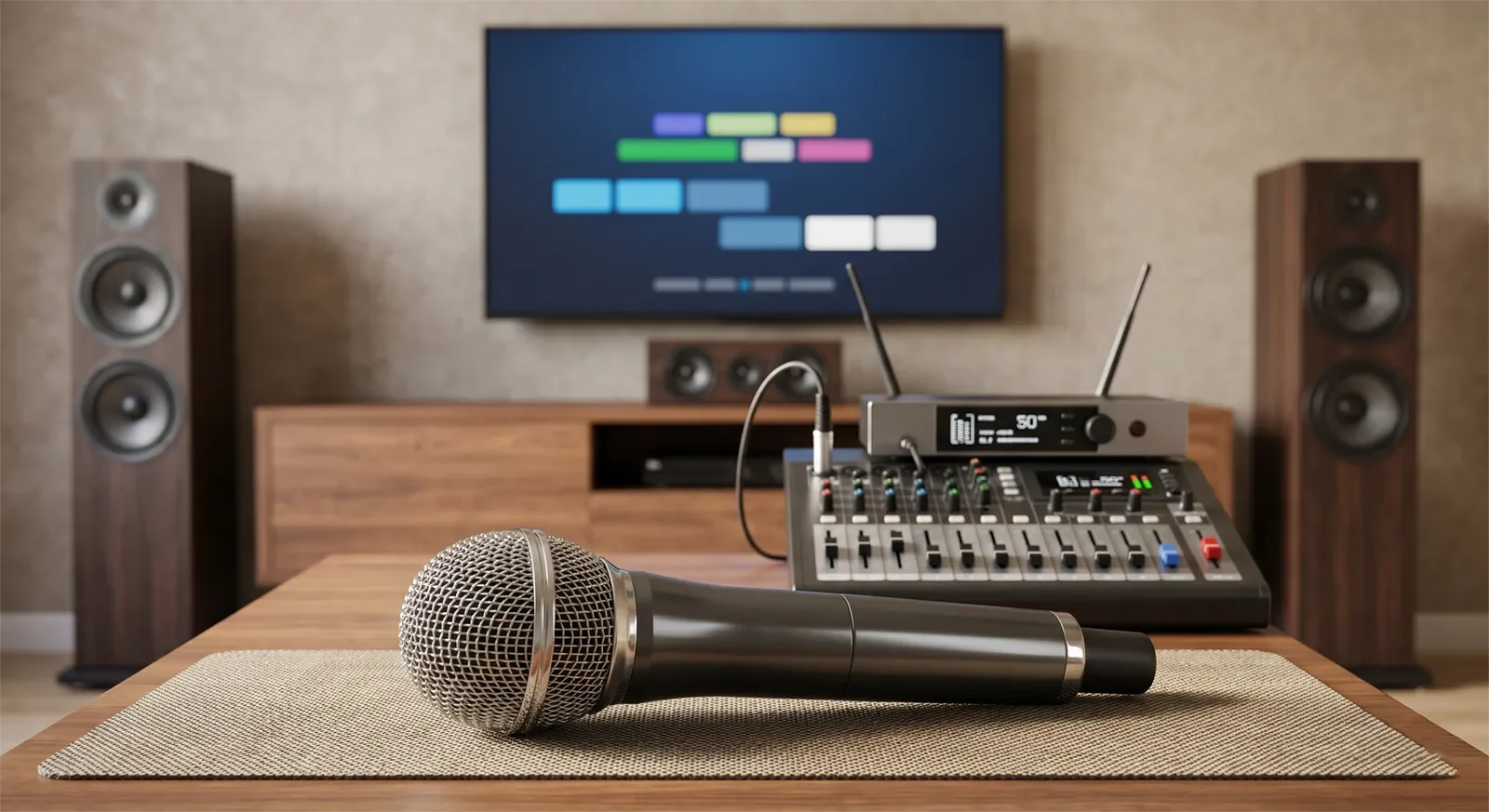
The microphone captures the singer before anything else happens. After that, the vocal signal moves through the receiver, mixer, amplifier, effects, speakers, and room. If the microphone captures the voice poorly, every part after it has to compensate.
This is why a weak microphone can make a good karaoke system feel worse than it should. The voice may need too much gain, too much echo, or constant adjustment just to stay present. A better microphone gives the system a cleaner, more usable vocal signal from the beginning.
| Microphone Quality Affects | What You Notice at Home | Why It Matters |
|---|---|---|
| Vocal clarity | The singer is easier to hear over the music | Karaoke depends on the voice feeling present and natural |
| Handling comfort | Singers hold and use the mic more naturally | Comfort affects confidence and singing behavior |
| Feedback control | The system is easier to run at usable singing levels | Feedback is often made worse by poor mic control and room behavior |
| Consistency | Different singers are easier to balance | Family karaoke needs the system to work for more than one voice |
| Upgrade value | The vocal experience improves without replacing the whole system | A mic upgrade can be the smarter first step when the voice is the issue |
What Matters Most in a Karaoke Microphone
Vocal Clarity
A good karaoke microphone should help the voice sound clear, present, and easy to follow. It should not make the singer sound overly thin, muffled, harsh, or buried behind the music.
Clear vocals are especially important in home karaoke because rooms are not always ideal. People may sing from different spots, stand close to speakers, or switch singers often. A microphone that captures the voice more cleanly gives the rest of the system a better starting point.
Ease of Use
A good microphone should feel easy for normal people to use, not just for experienced singers. Grip comfort, weight, pickup behavior, and predictable volume all matter in a family setting.
When singers can hear themselves clearly and do not have to force their voice, they usually relax and sing more naturally. That can make karaoke feel better even when the singers are casual.
Feedback Behavior
Feedback is not only a speaker problem. It can also come from microphone sensitivity, gain settings, speaker placement, room reflections, and how people hold the mic.
A better microphone will not magically remove every feedback issue, but it can make the system easier to control. If feedback and vocal harshness are your main problems, also read our guide on how to get clearer vocals in karaoke.
Wireless Performance
For many homes, wireless microphones are more practical than wired microphones because they make mic sharing easier and reduce cable clutter. But wireless convenience only helps if the microphones are stable, clear, and comfortable to use.
If you are choosing a wireless set, battery type, wireless band, receiver quality, and microphone count all matter. Our guide on how to choose wireless microphones for karaoke goes deeper into that decision.
Long-Term Value
A microphone upgrade is valuable when it solves a real vocal problem. It is not valuable just because the microphone looks more premium or costs more.
The best value is a microphone that makes the system easier to enjoy repeatedly: clearer voice, less strain, fewer adjustments, and better confidence for different singers.
When a Better Microphone Makes Sense
Casual Family Use
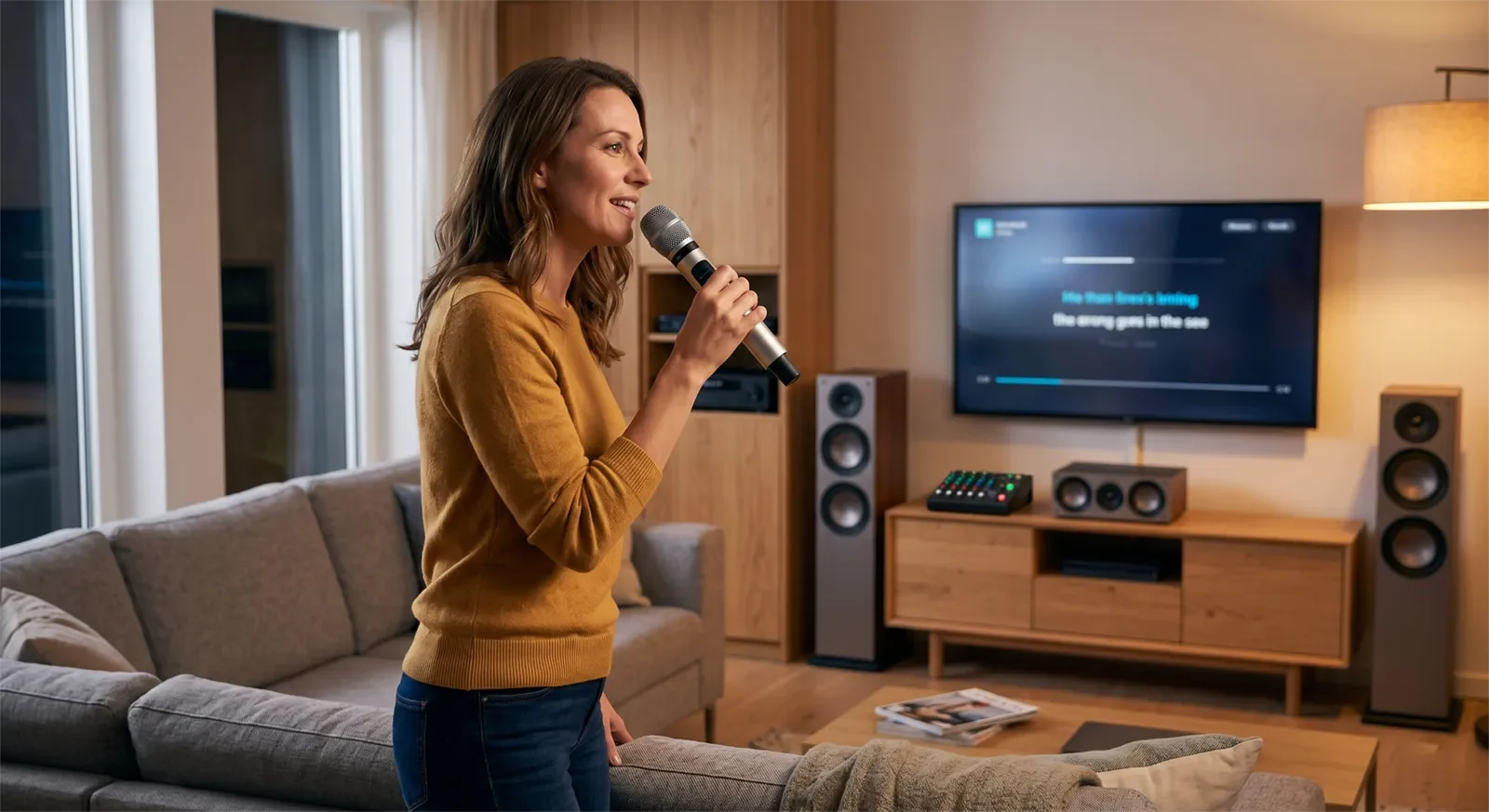
Best for: Homes that sing on weekends, holidays, family gatherings, or casual nights and want vocals to feel clearer without making the setup complicated.
Why it works: Even casual singers notice when a microphone sounds thin, harsh, or hard to hear. A modest step up can make the whole session feel smoother.
Not ideal if: Karaoke is very rare and the current microphones already feel comfortable enough for everyone using them.
Regular Home Singing
Best for: Households that sing often and want microphones that stay consistent across longer sessions and different voices.
Why it works: Regular use exposes weak microphones quickly. If several people take turns, better microphones can reduce constant volume changes, echo adjustments, and vocal imbalance.
Not ideal if: The real problem is still basic setup, poor speaker placement, or missing vocal control rather than the microphones themselves.
Vocal Clarity Problems
Best for: Buyers whose main frustration is that vocals sound buried, harsh, thin, inconsistent, or hard to manage even though the music already sounds acceptable.
Why it works: When the complaint is clearly about the voice, the microphone is often the smarter place to look first.
Not ideal if: The room lacks speaker coverage, the system is underpowered for the space, or the setup has broader problems beyond microphone quality.
Budget, Room Size, and Setup Trade-Offs
A good microphone upgrade does not need to be extreme. In many homes, “good enough” means the microphone captures the voice clearly, feels comfortable in the hand, and makes the system easier to balance without constant correction.
Overkill is real. Not every casual home needs premium microphones. Spending more makes sense when karaoke is frequent, several singers rotate in, or the current vocal experience is clearly the weakest part of the system. Spending less makes sense when the setup already feels comfortable and karaoke is only occasional.
| Scenario | Usually Best | When to Upgrade | When Not To |
|---|---|---|---|
| Occasional family karaoke | A solid everyday microphone | When vocals feel weak, harsh, or hard to hear | When the current setup already feels comfortable |
| Weekly home singing | A better microphone with more consistent vocal pickup | When different singers require constant adjustment | When the issue is basic setup, not the microphone |
| Music sounds fine but vocals disappoint | Microphone upgrade before speaker upgrade | When the room already has enough volume | When the room still lacks speaker coverage |
| Small room with casual users | A clear, forgiving microphone | When feedback or vocal harshness limits enjoyment | When you are paying mainly for prestige |
Common Buying Mistakes
Mistake 1: Treating the Microphone Like a Minor Add-On
The microphone is not just the last accessory in the box. It is the first step in the vocal chain. If that first step is weak, the rest of the system has less to work with.
When vocals matter, the microphone should be treated as part of the core karaoke system.
Mistake 2: Blaming Speakers for Every Vocal Problem
Sometimes the speakers really are the limitation. But if music playback sounds acceptable and only the voice feels buried, thin, harsh, or tiring, the microphone may be the smarter upgrade.
Separate music problems from vocal input problems before spending money.
Mistake 3: Buying Too Cheap or Too Premium Without a Reason
Cheap microphones can create more setup work than buyers expect. Premium microphones can also be wasted if karaoke is light and casual.
Buy for the room, the singers, and the problem you are trying to solve. Do not buy only by lowest price or highest status.
Mistake 4: Ignoring Comfort
A microphone that feels awkward, too light, too heavy, slippery, or unpredictable can change how people sing. Comfort matters because karaoke is physical. People hold the microphone, move with it, and react to what they hear from it.
If family members avoid using the microphone or constantly complain that they cannot hear themselves, comfort and vocal pickup deserve attention.
How to Decide in 60 Seconds
- Check the complaint: Is the problem mainly vocals, or is the whole room lacking sound?
- Listen to the music: If music playback sounds fine but voices disappoint, look at the microphone first.
- Think about users: If several singers use the system, choose a microphone that stays consistent across different voices.
- Watch for feedback: If feedback happens easily, microphone behavior, gain, room layout, and speaker placement all matter.
- Upgrade with purpose: Spend more only when it solves a real vocal clarity, comfort, or control problem.
If you only remember one thing, remember this: when music already sounds acceptable but singing still feels disappointing, microphone quality usually matters more than buyers expect.
Frequently Asked Questions
Do good microphones really matter for karaoke?
Yes. Good microphones matter because karaoke depends on the voice. A better microphone can make vocals easier to hear, easier to balance, and more comfortable to sing through.
Do good microphones still matter if I already have decent speakers?
Yes. Speakers can only reproduce the vocal signal they receive. If the microphone captures the voice poorly, the system can still sound disappointing even when music playback is strong.
Will a better microphone make casual singers sound better?
A better microphone will not create singing skill, but it can make casual singers easier to hear and easier to balance. That often helps people feel more confident and less strained.
Are cheap microphones always bad for karaoke?
No. Some lower-cost microphones are good enough for light home use. The issue is whether they keep vocals clear and the setup easy to manage. If they cause constant adjustment, harshness, or weak vocals, the lower price may not be a good value.
When should I upgrade my microphone before my speakers?
Upgrade the microphone first when the room already has enough volume and the music sounds acceptable, but vocals still sound buried, thin, harsh, or hard to control. In that case, improving the vocal input may create a more noticeable difference than replacing speakers first.
Final Recommendation
Good microphones matter because they shape the part of karaoke people notice most: the voice. If your main problem is weak, harsh, buried, or inconsistent vocals, microphone quality deserves more attention before you assume the speakers are the problem.
If karaoke is only occasional and the current microphones already feel comfortable, you may not need a major upgrade. But if your family sings regularly and the voice never feels easy to manage, the microphone is often one of the smartest places to improve the system.
The real decision is not cheap versus expensive. It is whether the microphone is good enough for your room, your singers, and the vocal experience you want at home.
Want help improving the vocal side of your karaoke setup?
Start with the complete home karaoke system guide, compare how to choose wireless microphones for karaoke, or read our guide on how to get clearer vocals in karaoke.
Visit the Tittac showroom · Contact Tittac for help choosing the right microphone setup