
The best wireless microphones for home karaoke are not the ones with the biggest range claim or the longest feature list. They are the microphones that stay stable in your room, feel comfortable in the hand, sound clear enough for family singing, and stay easy to charge, store, and use every time karaoke night starts.
Written by Toan Ho — Tittac editorial team.
Who this guide is for: This guide is for home karaoke buyers who want wireless microphones that feel reliable, simple, and comfortable for real family singing at home.
How this guide was prepared: This guide was prepared around the practical factors that matter most in home karaoke microphone buying: room use, signal stability, handling comfort, receiver simplicity, battery routine, microphone count, and long-term convenience.
Wireless microphones can make home karaoke feel cleaner, easier, and more social. People can move naturally, pass the mic around, sing duets, and avoid cable clutter across the room. But wireless microphones also create a different kind of buying decision. The confusing part is not finding options. It is knowing which features actually matter once your family starts singing.
The right wireless microphone setup should feel dependable, not technical. It should turn on easily, hold signal during normal movement, feel natural in the hand, and stay ready for the next session without becoming another thing everyone forgets to charge or maintain.
If you are still planning the full system around the microphones, start with The Complete Guide to Home Karaoke Systems. Then use this guide to decide what kind of wireless mic setup makes the most sense for your room, budget, and singing routine.
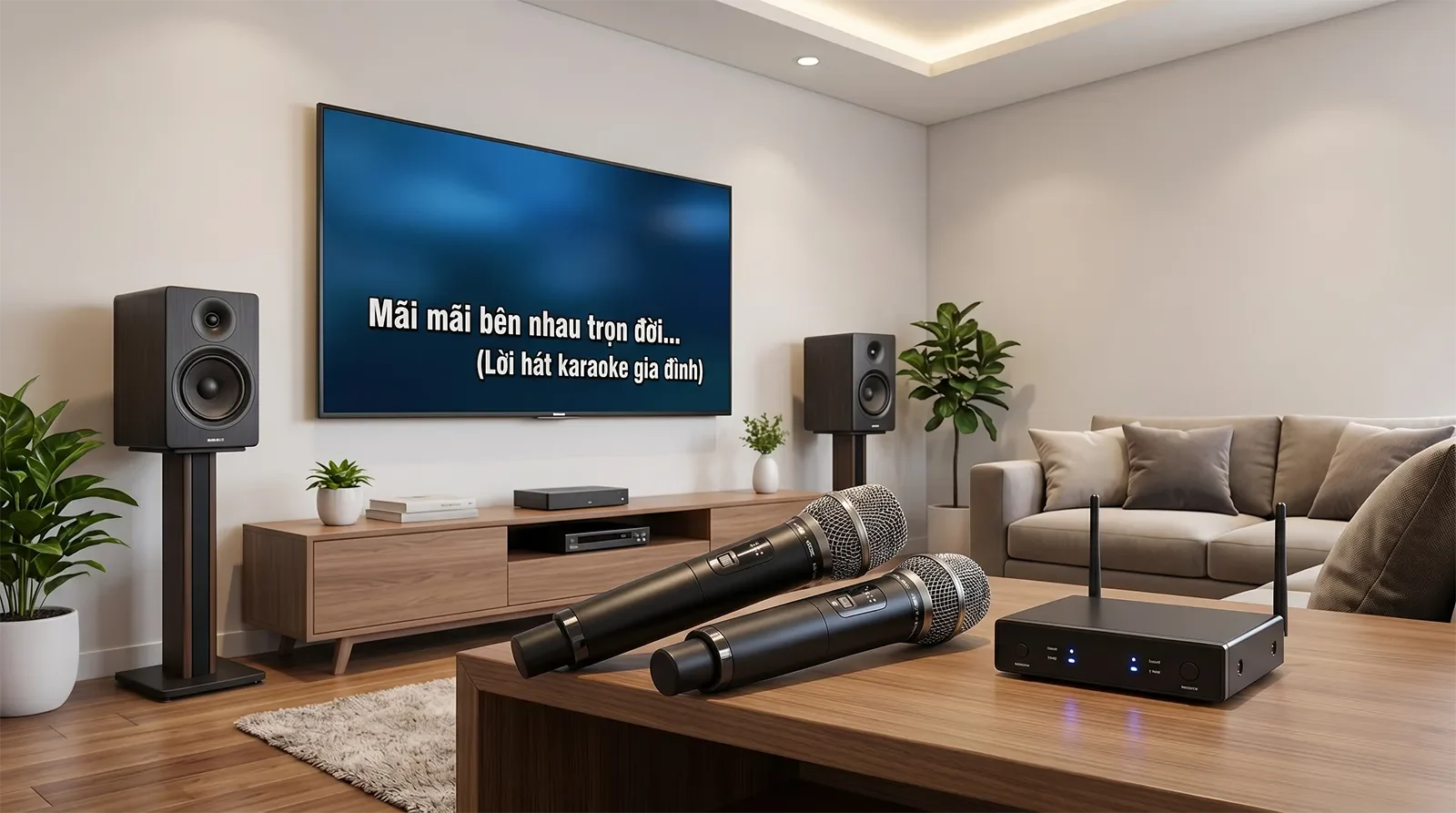
Table of Contents
Quick Answer
For most homes, the best wireless microphone setup for karaoke is a dependable two-microphone wireless set with stable signal behavior, comfortable handling, simple receiver controls, and a battery routine your household can actually maintain. Two microphones are usually enough for casual singing, duets, family karaoke nights, and normal guest use without adding unnecessary clutter.
If your family sings often, pay closer attention to signal type, receiver quality, battery style, and how easy the microphones are to use week after week. If karaoke is occasional, avoid overbuying four microphones or advanced features just because they look more complete online.
The safest rule is simple: buy for the way your home actually sings most of the time, not for the biggest party you might host once a year.
What Matters Most When Choosing Wireless Microphones for Karaoke
Signal Stability Matters More Than Maximum Range
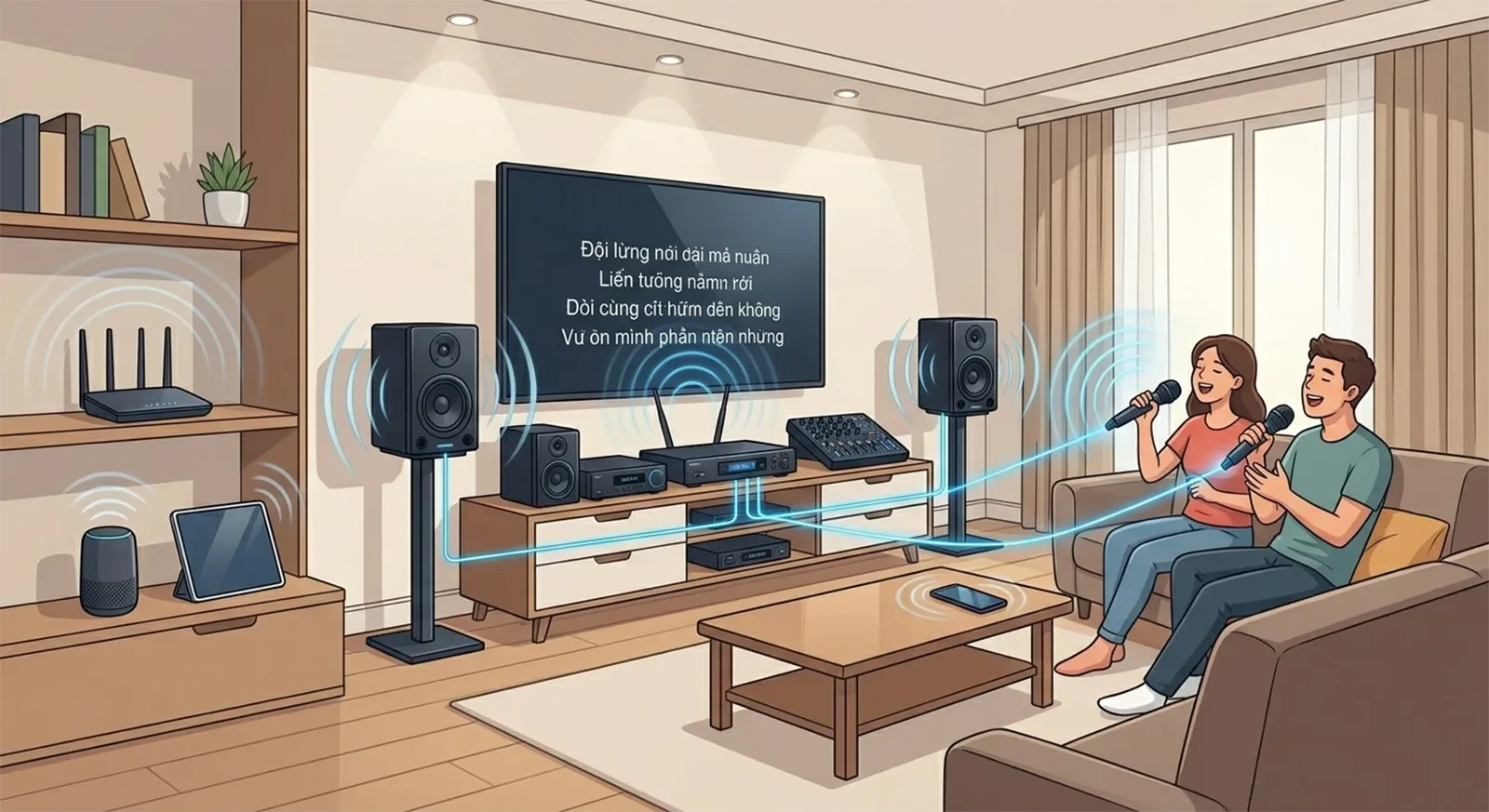
Wireless microphones should be chosen for the room you actually use, not for the largest range number printed on the box. Most home karaoke happens in a living room, family room, bonus room, or open shared space. In that kind of room, the real question is whether the microphone stays stable during normal movement, not whether it can reach across a huge venue.
Routers, TVs, Bluetooth devices, streaming boxes, walls, furniture, and nearby electronics can all affect how wireless microphones behave. A microphone system that stays dependable in your real room is more valuable than one with impressive-looking range claims that do not improve everyday singing.
Handling Comfort Affects How People Sing
A microphone should feel natural in the hand. Weight, grip, button placement, and body shape all affect how confident people feel when they sing. If a microphone feels awkward, too heavy, slippery, or confusing, people may hold it too far away, turn it off by accident, or avoid singing altogether.
Handling comfort is part of sound comfort. A comfortable microphone is easier to hold at the right distance and angle, which helps vocals feel clearer and more consistent. If you want to understand why mic quality affects the singing experience, read our guide on why good microphones matter for karaoke.
The Receiver Should Be Easy to Understand
The receiver is the part many buyers ignore until something goes wrong. For home karaoke, the receiver should be simple enough that the household can understand what is happening: power, channel, volume, battery status, and signal behavior should not feel mysterious.
A complicated receiver may look more professional, but it can become frustrating if only one person knows how to use it. For family karaoke, easy operation often matters more than advanced controls that nobody touches after the first week.
Battery Routine Can Make or Break Convenience
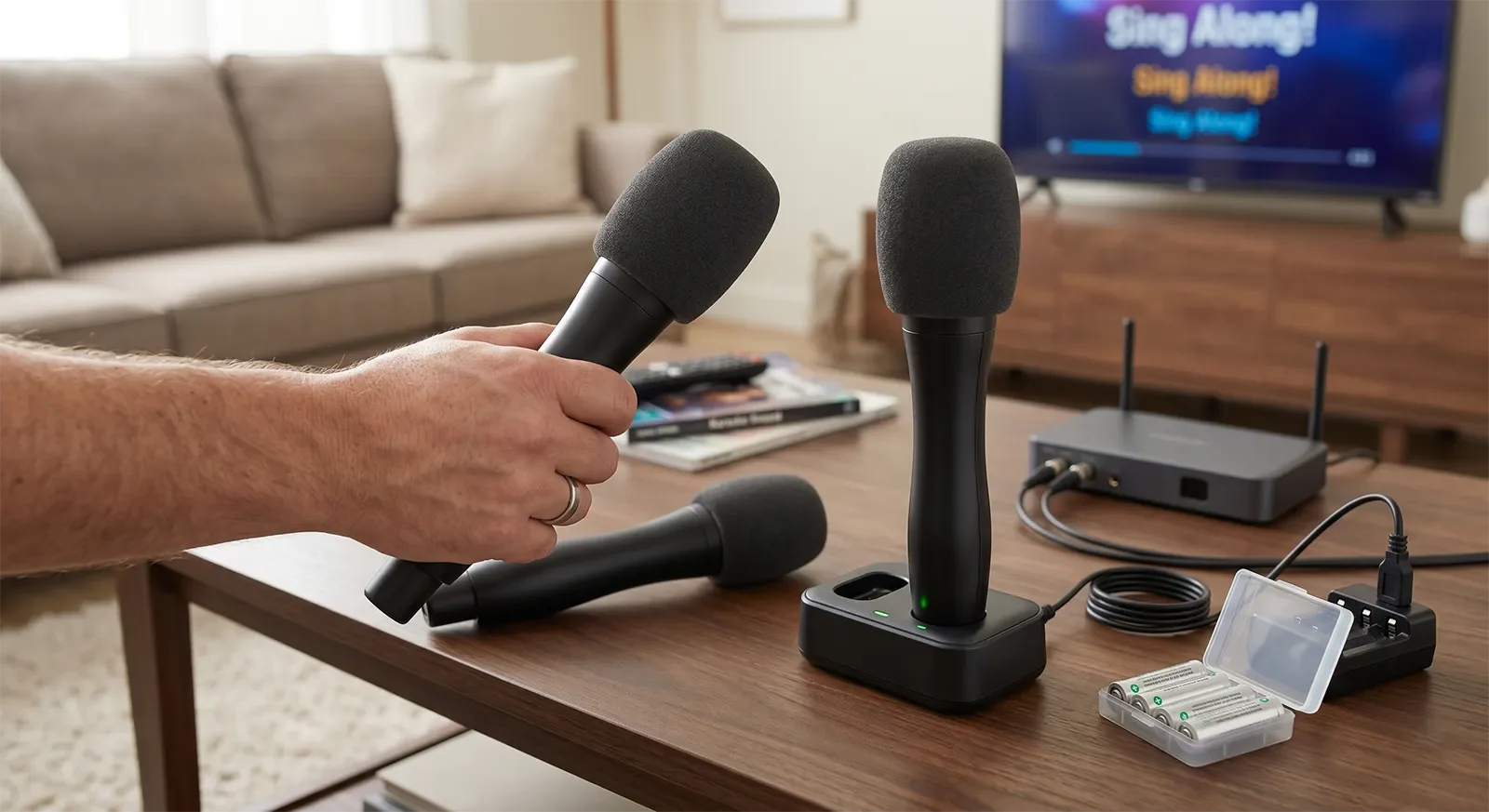
A wireless microphone is only convenient if it is ready when karaoke starts. That is why battery style matters. Rechargeable microphones can feel clean and easy if your family remembers to put them back on charge after each session. Replaceable-battery microphones can be more practical if karaoke nights are unpredictable and you prefer the safety of quick battery swaps.
Neither option is automatically better for every home. The better choice is the one your household will actually maintain. If battery style is the biggest part of your decision, compare the options in our guide to rechargeable vs AA battery wireless microphones.
Microphone Count Should Match Real Use
Most homes do not need four wireless microphones right away. A two-microphone set covers the most common situations: solo singing, duets, parent-and-child singing, couple songs, and normal family rotation. More microphones make sense only when several people regularly sing at the same time and the rest of the system can support that use comfortably.
Extra microphones can add cost, charging work, storage clutter, and receiver complexity. If your normal routine is one or two people singing while others watch, start there. Scale up only when real use proves you need more.
| Factor | Why It Matters | Common Mistake |
|---|---|---|
| Signal stability | Wireless mics must stay dependable during normal room movement | Buying based on range claims instead of real room behavior |
| Handling comfort | Grip, weight, and button layout affect how natural singing feels | Ignoring comfort because the microphone looks premium online |
| Receiver simplicity | Clear controls make the system easier for the whole family to use | Choosing a setup only one technical person understands |
| Battery routine | The right power routine keeps microphones ready for real use | Choosing the battery style that sounds ideal but does not fit the household |
| Microphone count | The right number of mics keeps karaoke flexible without excess clutter | Buying for rare peak parties instead of normal home use |
Best Wireless Microphone Options by Home Use Case
Best for Casual Family Karaoke
Best for: Homes that want easy handoff, cleaner setup, and simple wireless use for casual singing, duets, and family karaoke nights.
Not ideal if: Your home regularly has three or four active singers at the same time or you already know you need a more advanced multi-mic setup.
For many homes, a simple two-microphone wireless set is the best starting point. It gives enough flexibility for most karaoke situations without turning the setup into something complicated. It also keeps charging, storage, and receiver control easier to manage.
This is usually the right choice for families who want karaoke to feel fun and simple, not technical. If the microphones turn on easily, stay stable, and feel comfortable, that matters more than having extra mics sitting unused.
Best for Regular Home Singing
Best for: Households that sing often, use karaoke weekly or frequently, and care more about consistency than the lowest possible price.
Not ideal if: Karaoke is only occasional and your household wants the simplest, lowest-maintenance setup possible.
When karaoke becomes part of your normal home routine, microphone reliability matters more. Small annoyances become obvious: weak signal, confusing receiver controls, uncomfortable grip, short battery life, or inconsistent sound when someone moves around the room.
Buyers in this group should pay closer attention to signal approach and real-world stability. If you are comparing microphone types, our guide to UHF vs VHF vs 2.4GHz microphones can help you understand why two wireless mic sets that look similar online may behave differently at home.
Best for Low-Maintenance Ownership
Best for: Buyers who care most about keeping the microphones ready with the least everyday frustration around charging, spare batteries, storage, and setup.
Not ideal if: Your first priority is maximum flexibility for larger group singing and you are comfortable managing a more involved system.
A wireless microphone setup is only low-maintenance if the household naturally follows the routine. Some families are good at placing microphones back on charge after every session. Others are better off keeping spare batteries nearby and avoiding another device that needs to be charged before use.
The best ownership experience is not the one that sounds best in theory. It is the one that still feels easy six months later.
Best for Frequent Group Singing
Best for: Homes that regularly host karaoke nights, parties, or gatherings where more than two people sing together often.
Not ideal if: You only need extra microphones for rare holidays or occasional large gatherings.
A larger multi-microphone setup can make sense when group singing is a real pattern, not an imagined future use. If three or four people regularly sing at the same time, extra microphones can make the night more fun and reduce waiting.
But larger setups require more management. You need to think about receiver support, battery routine, storage, volume balance, and how the microphones interact with the rest of the system. For most homes, it is better to start with two good microphones than four mediocre ones.
Budget, Room Size, and Setup Trade-Offs
A good wireless microphone setup does not need to be oversized to feel satisfying. In many homes, “enough” means two microphones that stay stable, feel comfortable, sound clear, and are easy to keep ready.
Spending more makes sense when your home sings often, the room is more demanding, or the current microphones already feel like the weak point in the system. It does not make sense to spend more only for extra microphones, longer advertised range, or features your family will not use.
Room size matters, but not in the exaggerated way many buyers think. A normal living room does not need a wireless mic system chosen for huge distance. It needs a stable system that handles normal movement, people passing the mic, and nearby electronics without constant dropouts.
| Scenario | What Usually Works | When to Spend More | When Not To |
|---|---|---|---|
| Mostly solo singing or duets | A stable two-microphone wireless set | When karaoke is frequent and the current mics feel inconsistent | When you are paying mainly for unused mic capacity |
| Regular family karaoke nights | Two comfortable wireless mics with a clear receiver | When convenience and reliability matter every week | When the system is still used casually most of the time |
| Longer gatherings | A setup with a realistic battery routine | When dead batteries or downtime would ruin the session | When your current battery routine already works well |
| Frequent group singing | A larger multi-mic setup if the system supports it | When multiple people regularly sing together | When you are buying for rare peak use only |
Common Buying Mistakes to Avoid
Mistake 1: Buying by Range Claims Alone
Long range sounds impressive, but it does not automatically mean a microphone will feel better in your living room. Most home karaoke does not require extreme distance. It requires stable signal behavior during normal movement around the TV, couch, and speaker area.
Buy for real room stability, not the biggest number on the box.
Mistake 2: Choosing the Longest Feature List
A wireless microphone can look advanced online and still be wrong for home use. Extra features do not help if the mic feels awkward, the receiver is confusing, or the family does not know how to adjust anything.
For home karaoke, simple and reliable usually beats complicated and impressive.
Mistake 3: Ignoring the Battery Routine
Dead microphones can ruin a karaoke night faster than many sound-quality differences. Rechargeable microphones are convenient only if people remember to charge them. Replaceable batteries are convenient only if fresh batteries are always available.
Choose the power routine your household will actually follow.
Mistake 4: Buying Too Many Microphones Too Early
Four microphones may look better than two, but more is not always better. Extra microphones can mean more charging, more storage, more volume balancing, and more confusion. If most of your karaoke nights involve one or two singers at a time, a good two-mic set is usually the smarter choice.
Mistake 5: Ignoring How the Microphone Feels
Comfort matters because karaoke is physical. People hold the microphone, move with it, pass it around, and adjust their distance while singing. A mic that feels too heavy, cheap, slippery, or awkward can make singers less confident even if the specifications look fine.
How to Choose Wireless Microphones in 60 Seconds
- Start with your real use. Is this for casual family singing, weekly karaoke, or frequent group gatherings?
- Choose the right mic count. Most homes should start with two wireless microphones unless multiple people regularly sing together.
- Check comfort. The microphones should feel natural to hold, easy to pass, and simple to operate.
- Think about signal stability. Buy for dependable room behavior, not just advertised range.
- Pick a battery routine you will maintain. Rechargeable and replaceable-battery microphones can both work if they match your habits.
- Keep the receiver simple. The setup should be easy enough for family members and guests to understand.
If you remember only one thing, remember this: for most home karaoke buyers, a stable two-microphone wireless set is the safest starting point because it covers real family use without adding unnecessary complexity.
Frequently Asked Questions
Are wireless microphones good for home karaoke?
Yes. Wireless microphones are a good choice for many home karaoke setups because they reduce cable clutter, make movement easier, and make passing the microphone around feel more natural. The key is choosing a set that stays stable and easy to use in your real room.
Are two wireless microphones enough for most homes?
Yes. Two wireless microphones are enough for most home karaoke setups because they cover solo singing, duets, family rotation, and normal guest use. Four microphones only make sense if several people regularly sing at the same time.
Are rechargeable or AA battery wireless microphones better?
Rechargeable microphones are better if your household follows a consistent charging routine. AA battery microphones are better if karaoke happens unpredictably and you prefer quick battery swaps. The better choice is the one that keeps the microphones ready when you actually want to sing.
Are UHF wireless microphones good for karaoke?
UHF wireless microphones are commonly used for karaoke because they can offer stable performance when properly matched to the room and system. However, the label alone is not enough. Receiver quality, setup, interference, and real room conditions still matter.
When is it worth paying more for wireless microphones?
It is worth paying more when the upgrade improves real use: better stability, more comfortable handling, clearer receiver layout, better battery routine, or more dependable performance during regular karaoke sessions. It is not worth paying more only for extra features your family will not use.
Are wireless microphones better than wired microphones for karaoke?
Wireless microphones are usually better for convenience, movement, and family sharing. Wired microphones can still be useful when maximum simplicity, no battery routine, or direct connection matters more. If you are unsure which direction fits your home, compare wireless vs wired microphones for karaoke.
Final Recommendation
For most home karaoke buyers, the best wireless microphone setup is a dependable two-mic set that stays stable, feels comfortable, uses a battery routine your household can maintain, and keeps the receiver simple enough for everyday use.
Do not buy wireless microphones only by range claims, feature lists, or microphone count. Buy for your real room, your real singers, and your real routine. A simple wireless set that works smoothly every weekend is more valuable than a larger setup that looks impressive but becomes annoying to manage.
If you are still deciding whether wireless is the right direction, compare wireless vs wired microphones for karaoke. If you already know you want wireless and are choosing battery style, read rechargeable vs AA battery wireless microphones.
Need help choosing wireless microphones for your home karaoke setup?
Start with The Complete Guide to Home Karaoke Systems, compare rechargeable vs AA battery wireless microphones, or go deeper with our wireless microphone dropout fix guide.