
Rechargeable wireless microphones are usually better for homes that sing often and keep equipment in one charging spot. AA battery wireless microphones are usually better for occasional karaoke, longer parties, or households that want a fast backup plan without depending on whether the microphones were charged earlier.
Written by Toan Ho — Tittac editorial team.
Who this guide is for: This guide is for home karaoke buyers comparing rechargeable and AA battery wireless microphones and trying to choose the option that will stay ready in real family use.
How this guide was prepared: This guide was refreshed around the ownership factors that matter most for home karaoke: readiness, charging habits, backup planning, party length, storage routine, long-term convenience, and how often the microphones are actually used.
Battery type usually does not decide sound quality by itself, but it can decide whether karaoke night starts smoothly or turns into a search for power. A microphone that sounds good on paper is not helpful if it is dead when the family wants to sing.
The real question is not “Which battery type is more modern?” The better question is “Which routine will your household actually keep up with?” If you are still choosing the whole microphone system, start with how to choose wireless microphones for karaoke. If you are still deciding whether wireless is right at all, compare wireless vs wired microphones for karaoke first.
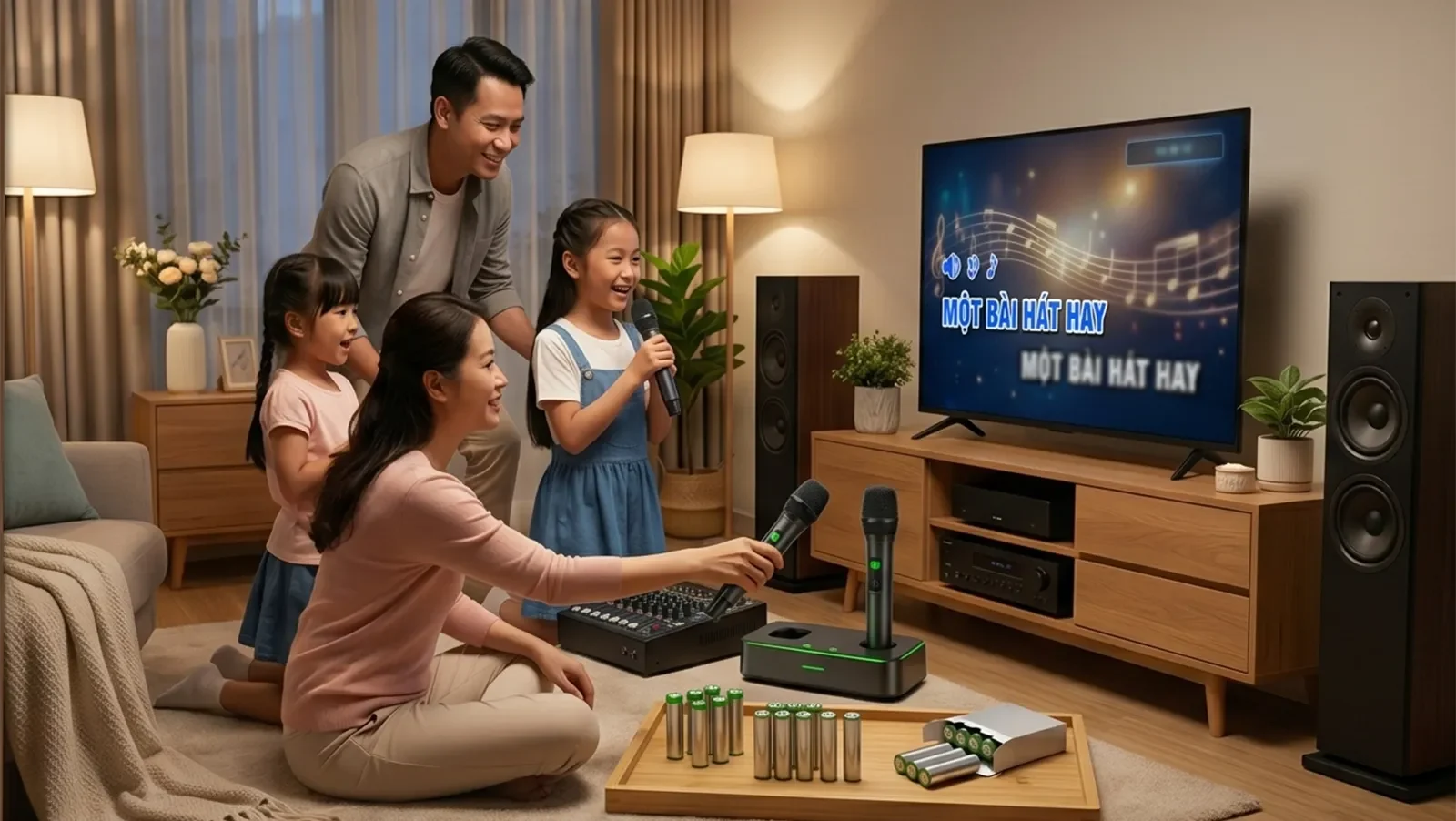
Table of Contents
Quick Answer
Choose rechargeable wireless microphones if your family sings often, stores the microphones in one place, and can keep a simple charging routine. They feel cleaner, reduce loose battery clutter, and can be more convenient over time.
Choose AA battery wireless microphones if karaoke is occasional, parties run long, or your household is more likely to keep spare batteries nearby than remember to charge microphones in advance. AA batteries make recovery fast when power runs low.
For most homes, the better choice is the one that stays ready with the least stress. Rechargeable wins when routine is easy. AA wins when backup recovery matters more.
Rechargeable vs AA Battery Wireless Microphones: The Real Difference
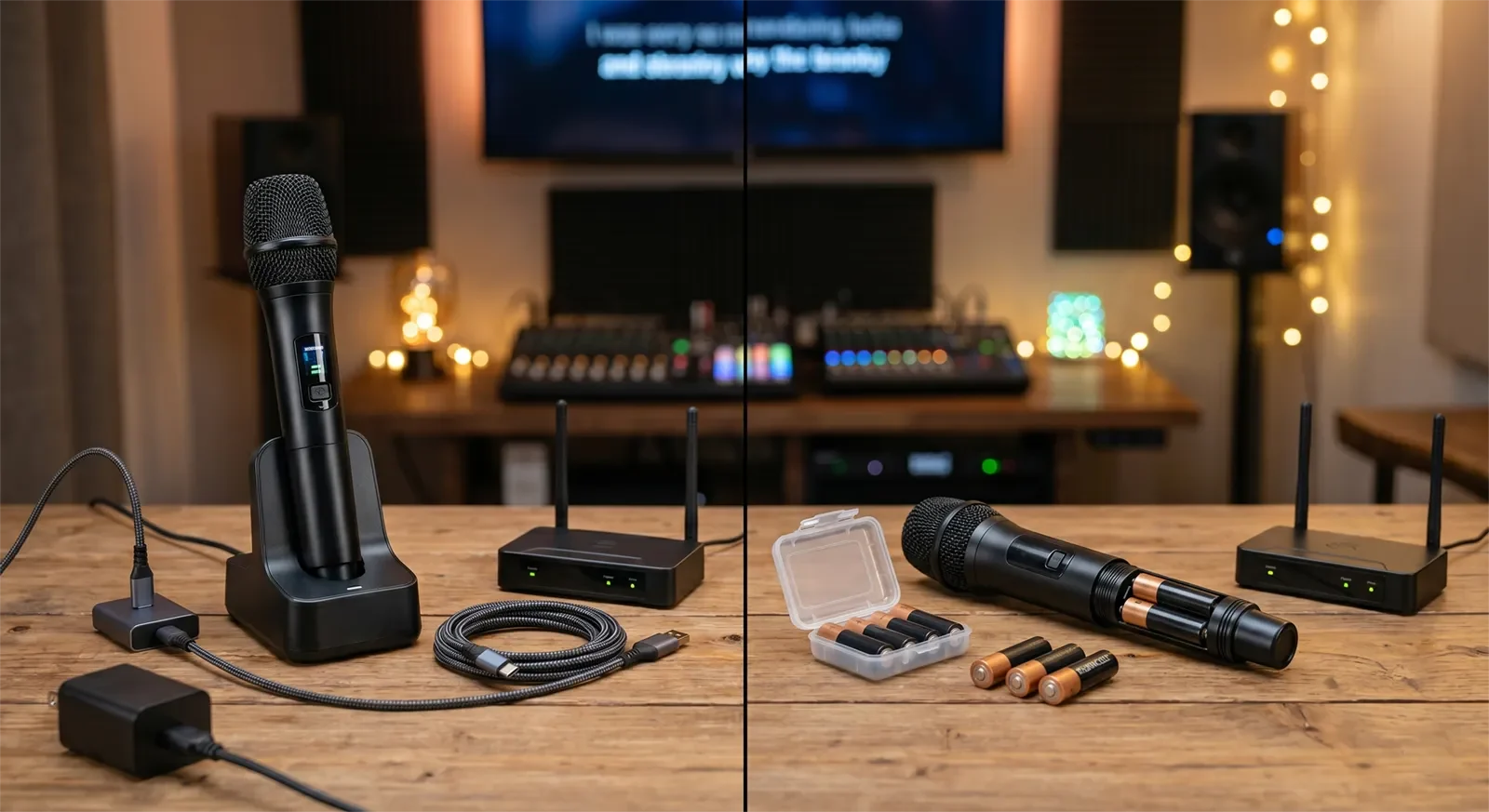
Rechargeable wireless microphones use built-in or removable rechargeable batteries that need to be charged before use. AA battery wireless microphones use replaceable AA batteries, so power can be restored quickly by swapping in fresh batteries.
That difference affects ownership more than sound. Rechargeable microphones can feel cleaner and more modern, but only if they are kept charged. AA battery microphones can feel less elegant, but they are easy to rescue during a party if you keep extra batteries nearby.
| Battery Type | Best For | Main Strength | Main Trade-Off |
|---|---|---|---|
| Rechargeable wireless microphones | Frequent home karaoke, organized storage, weekly family use | Cleaner routine with fewer loose batteries | Must be charged before singing |
| AA battery wireless microphones | Occasional karaoke, longer parties, backup-focused households | Fast battery replacement when power runs low | Requires spare batteries and ongoing replacement |
What Matters Most at Home
Readiness
The best battery type is the one most likely to be ready when someone wants to sing. Rechargeable microphones work well when they return to the same charging area after every session. AA battery microphones work well when the household keeps fresh batteries in the same place as the karaoke equipment.
Readiness is where theory breaks down. A rechargeable microphone that is never charged is not convenient. An AA microphone with no spare batteries nearby is not reliable. The right choice depends on which habit your household can actually maintain.
Party Length and Backup Planning
Longer karaoke sessions expose weak battery planning quickly. If a rechargeable microphone runs low during a party and there is no charged backup, the session can pause. If an AA microphone runs low and fresh batteries are nearby, the fix is usually quick.
That does not mean AA is always better for parties. Rechargeable can still work very well if the microphones hold enough charge and the owner prepares before guests arrive. The point is simple: the longer the session, the more important the backup plan becomes.
Storage Habits
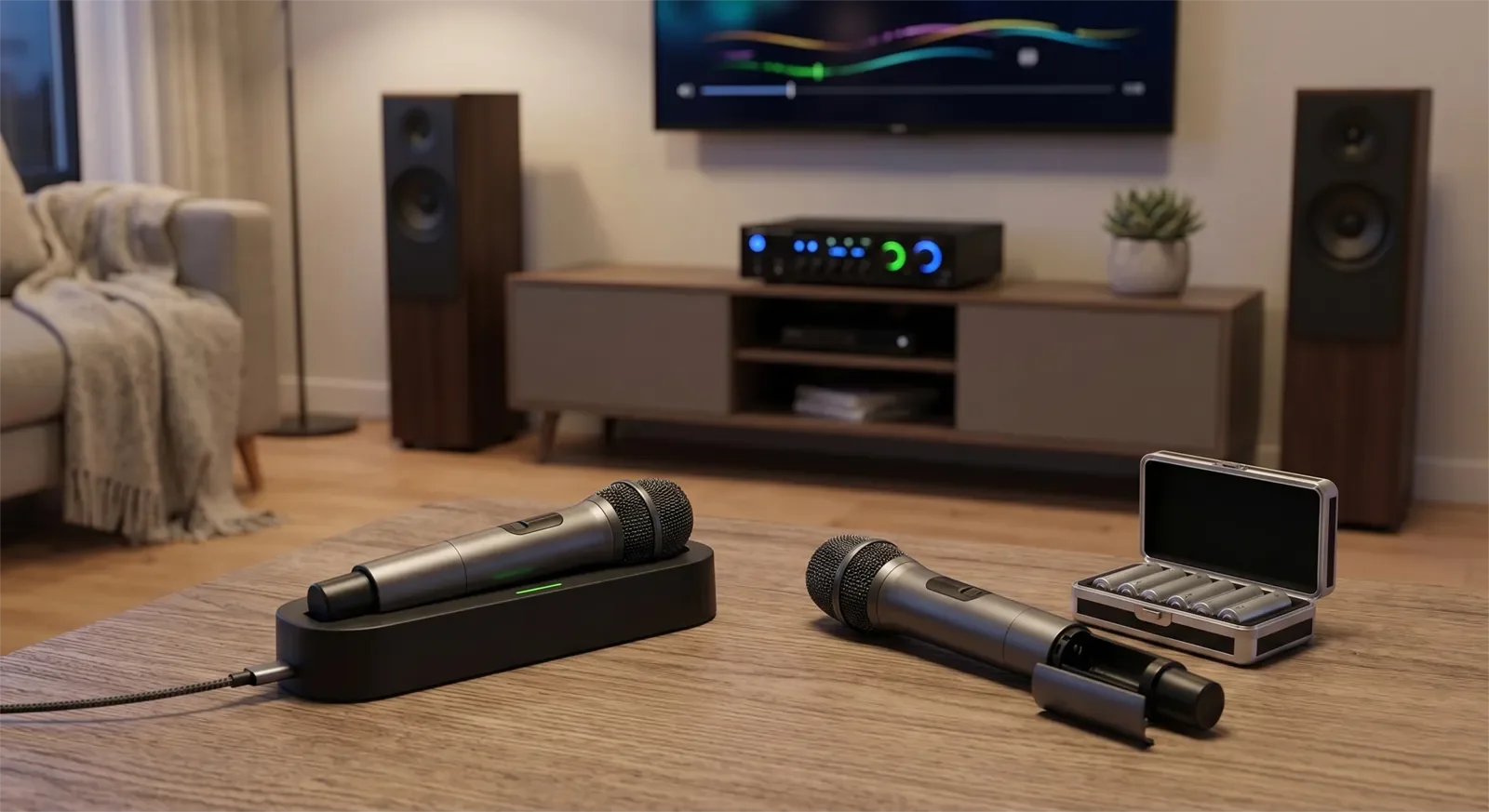
Rechargeable microphones fit homes where equipment goes back to one predictable place. A shelf, charging dock, cabinet, or receiver area can make the charging routine feel automatic. AA battery microphones fit homes where microphones may sit unused for longer periods or get stored in different places between sessions.
Be honest about the way your household handles small maintenance tasks. If everyone already charges phones, tablets, and accessories consistently, rechargeable microphones may feel natural. If devices are often forgotten until the last minute, AA batteries may be less stressful.
Long-Term Value
Rechargeable microphones can feel more economical and less wasteful for frequent singers because you are not replacing batteries every session. AA battery microphones can feel more practical for occasional users because they do not depend on charge level between long gaps.
The cheaper option is not always the better value. The better value is the battery style that makes ownership easier over time.
| Factor | Why It Matters | Common Mistake |
|---|---|---|
| Readiness | The microphones need to work when people want to sing | Choosing the battery type that sounds modern instead of the one that stays ready |
| Backup speed | Low power during a party needs a calm fix | Forgetting what happens when a mic dies mid-session |
| Storage habit | Charging only works if microphones return to the right place | Assuming the family will stay more organized than it really does |
| Use frequency | Weekly users and occasional users experience battery cost differently | Thinking one battery style is always cheaper for everyone |
| Maintenance reality | The best system is the one the household will actually maintain | Buying for an ideal routine instead of the real routine |
Which Battery Type Fits Your Karaoke Setup?
Choose Rechargeable Wireless Microphones If...
Best for: Families that sing weekly or often, keep karaoke equipment in one area, and want a clean setup without managing loose batteries.
Why it works: Rechargeable microphones can feel very convenient when charging becomes part of the normal routine. After karaoke, the mics return to their place, charge, and stay ready for the next session.
Not ideal if: Your family forgets to charge devices, uses karaoke irregularly, or only brings the microphones out for occasional parties with little preparation.
Choose AA Battery Wireless Microphones If...
Best for: Occasional karaoke users, party hosts, backup-focused buyers, and households that prefer quick battery replacement over charging routines.
Why it works: AA battery microphones are easy to recover when power runs low. If you keep spare batteries nearby, a dead microphone does not have to stop the session.
Not ideal if: Your family sings often enough that buying, storing, and replacing batteries becomes annoying or wasteful.
Choose by Habit, Not by Spec Sheet
The simplest way to choose is to ask which mistake your household is more likely to make: forgetting to recharge, or forgetting to buy spare batteries. Rechargeable is better when charging is realistic. AA is better when on-the-spot recovery is more realistic.
Battery type should also stay in context. Signal stability, microphone quality, and wireless behavior still matter. If you are comparing wireless technology at the same time, read UHF vs VHF vs 2.4GHz microphones before making battery type the whole decision.
Budget, Party Length, and Setup Trade-Offs
A good wireless microphone battery setup does not need to be complicated. It needs to stay ready, recover quickly, and match the way your household actually uses karaoke. For some homes, that means a clean rechargeable setup. For others, it means AA microphones with spare batteries in the drawer.
Overkill happens when buyers force a battery routine that does not fit real life. Rechargeable can be wrong if the mics are never charged. AA can be wrong if the household sings often and battery replacement becomes a constant chore.
| Scenario | Usually Best | When to Spend More | When Not To |
|---|---|---|---|
| Weekly home karaoke | Rechargeable microphones | When the family stores and charges equipment consistently | When nobody checks charge levels before singing |
| Occasional karaoke | AA battery microphones | When long gaps between sessions make charging unreliable | When frequent use makes battery replacement annoying |
| Longer family parties | Depends on backup habits | When quick recovery matters during the session | When the backup plan is vague or forgotten |
| Organized equipment area | Rechargeable microphones | When the charging spot is easy and visible | When microphones get moved or stored randomly |
| Low-maintenance household | AA battery microphones | When spare batteries are easy to keep nearby | When nobody remembers to buy replacements |
Common Buying Mistakes
Mistake 1: Treating Battery Type Like a Sound Upgrade
Rechargeable and AA battery microphones can both work well for karaoke. Battery type mainly affects readiness, maintenance, and backup planning. It does not automatically decide vocal quality.
Judge the microphone system by sound, stability, build quality, and ease of use. Judge the battery style by how easy it is to keep ready.
Mistake 2: Buying for a Routine You Will Not Follow
Some buyers choose rechargeable because it sounds cleaner, but the microphones are never charged when needed. Others choose AA because it sounds safer, but they never keep fresh batteries nearby.
The fix is simple: buy for the household you actually have, not the more organized version you hope will appear later.
Mistake 3: Ignoring the Mid-Session Failure
Normal use is only half the decision. The real test is what happens when a microphone loses power five minutes before someone wants to sing.
Before choosing, imagine that moment. Would your home recover faster by charging, swapping batteries, or using a backup microphone? That answer matters more than the spec sheet.
Mistake 4: Forgetting the Bigger Wireless Microphone Decision
Battery type is important, but it is not the whole microphone decision. A microphone also needs stable wireless performance, comfortable handling, clear vocals, and controls that make sense for the system.
Do not choose a weak wireless microphone just because the battery style sounds convenient. The full microphone system still has to fit your room and karaoke setup.
How to Choose in 60 Seconds
- Start with frequency: If your family sings often, lean rechargeable. If karaoke is occasional, lean AA.
- Check your routine: If microphones always return to one place, rechargeable is easier. If not, AA may be safer.
- Think about parties: If long sessions are common, make sure your backup plan is clear before choosing.
- Choose the likely habit: Decide whether your household is better at charging devices or keeping spare batteries nearby.
- Keep sound in context: Battery type should support the microphone system, not replace the rest of the buying decision.
If you only remember one thing, remember this: the better battery type is the one your household is most likely to keep ready the night people actually want to sing.
Frequently Asked Questions
Are rechargeable wireless microphones better for home karaoke?
Rechargeable wireless microphones are better for homes that sing often and keep a reliable charging routine. They are convenient, cleaner to manage, and reduce the need for loose batteries. They are not better if the microphones are often forgotten off the charger.
Are AA battery wireless microphones better for parties?
AA battery microphones can be better for parties when you want fast recovery. If a microphone runs low, fresh batteries can get it working again quickly. The key is keeping spare batteries nearby before the party starts.
Do rechargeable microphones sound better than AA battery microphones?
Not automatically. Sound quality depends more on the microphone system, receiver, signal stability, speaker setup, and vocal settings. Battery type affects readiness and maintenance more than it affects sound by itself.
Which battery type is cheaper over time?
Rechargeable can be more economical for frequent use because you are not replacing disposable batteries often. AA can be more practical for occasional use because the microphones do not need to stay charged between long gaps. The better value depends on how often you sing.
Should battery type be the first thing I decide?
No. Start with microphone quality, wireless stability, ease of use, and how the system fits your room. Then choose the battery type that supports your routine. Battery type matters, but it should not be the only reason you choose a microphone system.
Final Recommendation
Choose rechargeable wireless microphones if your home sings often, stores karaoke equipment neatly, and can keep a simple charging routine. Choose AA battery wireless microphones if karaoke is more occasional, parties are less predictable, or fast battery replacement feels safer than remembering to charge.
The real trade-off is routine versus recovery. Rechargeable microphones reward organized habits. AA battery microphones reward backup readiness. Neither is automatically better for every home.
For most buyers, the best choice is the battery style that creates the least friction. If the microphones are ready when people want to sing, the system is doing its job.
Want help choosing wireless microphones that fit your room and routine?
Start with how to choose wireless microphones for karaoke, compare wireless vs wired microphones, or go deeper with UHF vs VHF vs 2.4GHz microphones.
Visit the Tittac showroom · Contact Tittac for help choosing the right microphone setup