
An easy-to-use karaoke system for parents and seniors should reduce setup stress, keep the controls clear, and make singing feel comfortable from the first song. In most homes, the best choice is not the system with the longest feature list. It is the home karaoke system that helps people start faster, adjust volume confidently, and enjoy karaoke without waiting for one “tech person” every time.
Written by Toan Ho — Tittac editorial team.
Quick Answer
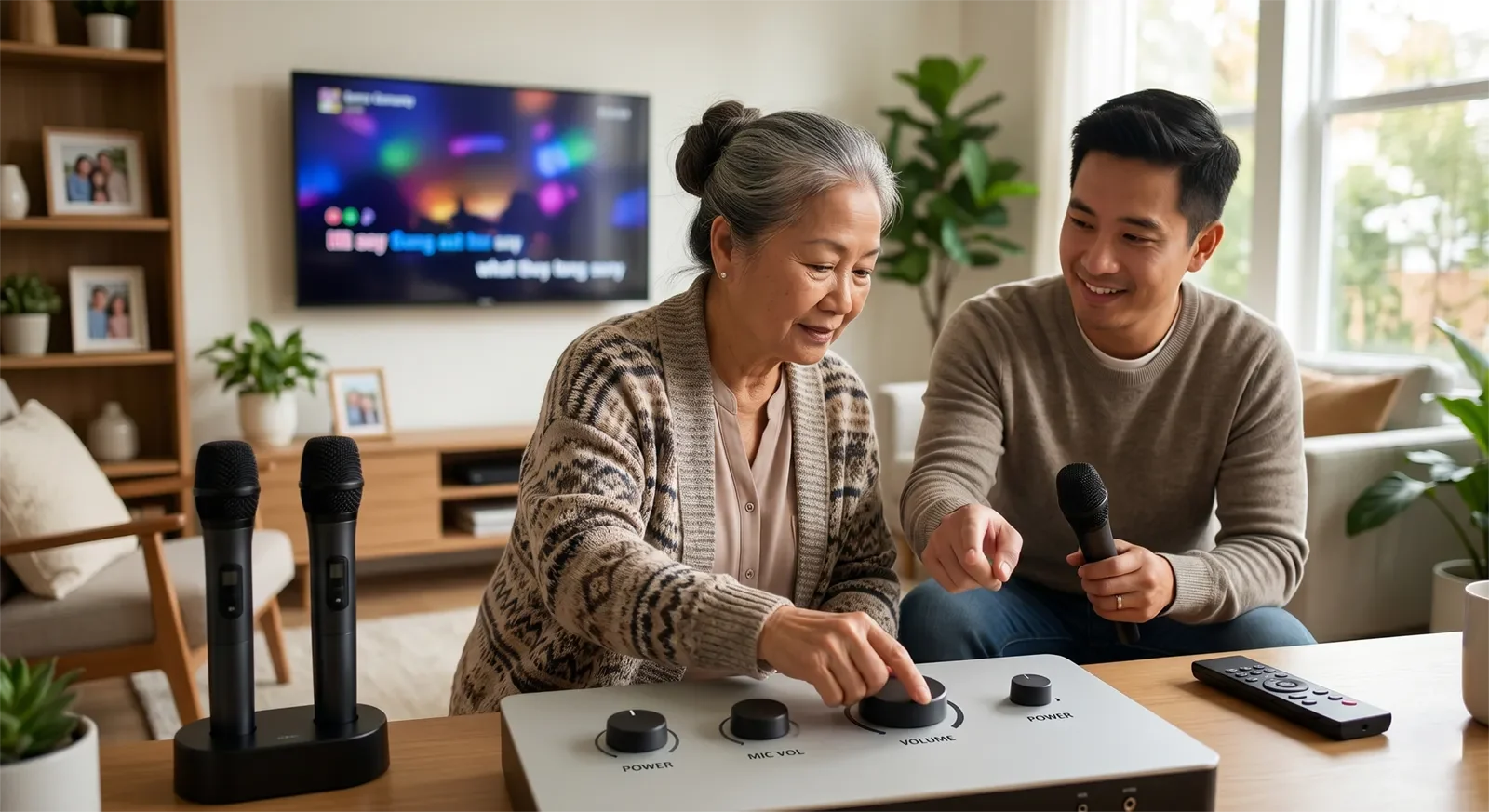
Choose a simpler home karaoke system if your priority is fewer startup steps, easier controls, and a routine that parents or seniors can repeat confidently. In most homes, that means clear microphone and music volume adjustment, a readable layout, and a setup that does not create hesitation before the first song starts.
Choose a more capable home karaoke system only if someone in the household is comfortable managing it and the extra control will actually improve regular use. For most parents and seniors, predictable workflow, easier microphone handling, and lower setup stress matter more than advanced features.
Definition: In this guide, an easy-to-use karaoke system means a home karaoke system designed around clear controls, fewer connection steps, easier microphone use, and a setup flow that feels repeatable in normal family life.
Who this guide is for: This guide is for buyers choosing a karaoke system for parents, seniors, or multi-generational households that want singing to feel easy, comfortable, and low-stress at home.
How this guide was prepared: This guide was prepared using the practical factors that matter most for easier daily use: room fit, readable controls, fewer connection steps, comfortable microphone use, clear volume adjustment, and long-term usability.
Need help choosing the right setup for your home? Visit our Garden Grove showroom or contact Tittac for help in English or Vietnamese.
If you want the broader buying framework first, start with how to choose the best karaoke system for your home. Then use this guide to narrow down what matters most when the real goal is easier everyday karaoke at home.
Table of Contents
- What Matters Most When Choosing an Easy-to-Use Karaoke System for Parents and Seniors
- The Best Fit for Different Home Use Cases
- Budget, Room Size, and Setup Trade-Offs
- Common Buying Mistakes to Avoid
- How to Choose the Right Easy-to-Use Karaoke System in 60 Seconds
- Frequently Asked Questions
- Final Recommendation
What Matters Most When Choosing an Easy-to-Use Karaoke System for Parents and Seniors
Room fit and visual simplicity
Even an easy-to-use home karaoke system still has to fit the room. A smaller condo living room, a shared family room, and a larger open space all change how the setup feels in real use. If the system is too large for the space, it can feel physically awkward and harder to control. If it is too limited for the room, the experience may feel thin or unsatisfying even when the controls are simple.
For parents and seniors, room fit matters because it affects confidence. The easier systems are usually the ones that live in one clear area, stay visually manageable, and do not require constant repositioning. If the setup works naturally with the TV and the main seating area, people are much more likely to use it again without hesitation.
Clear controls and short startup routine
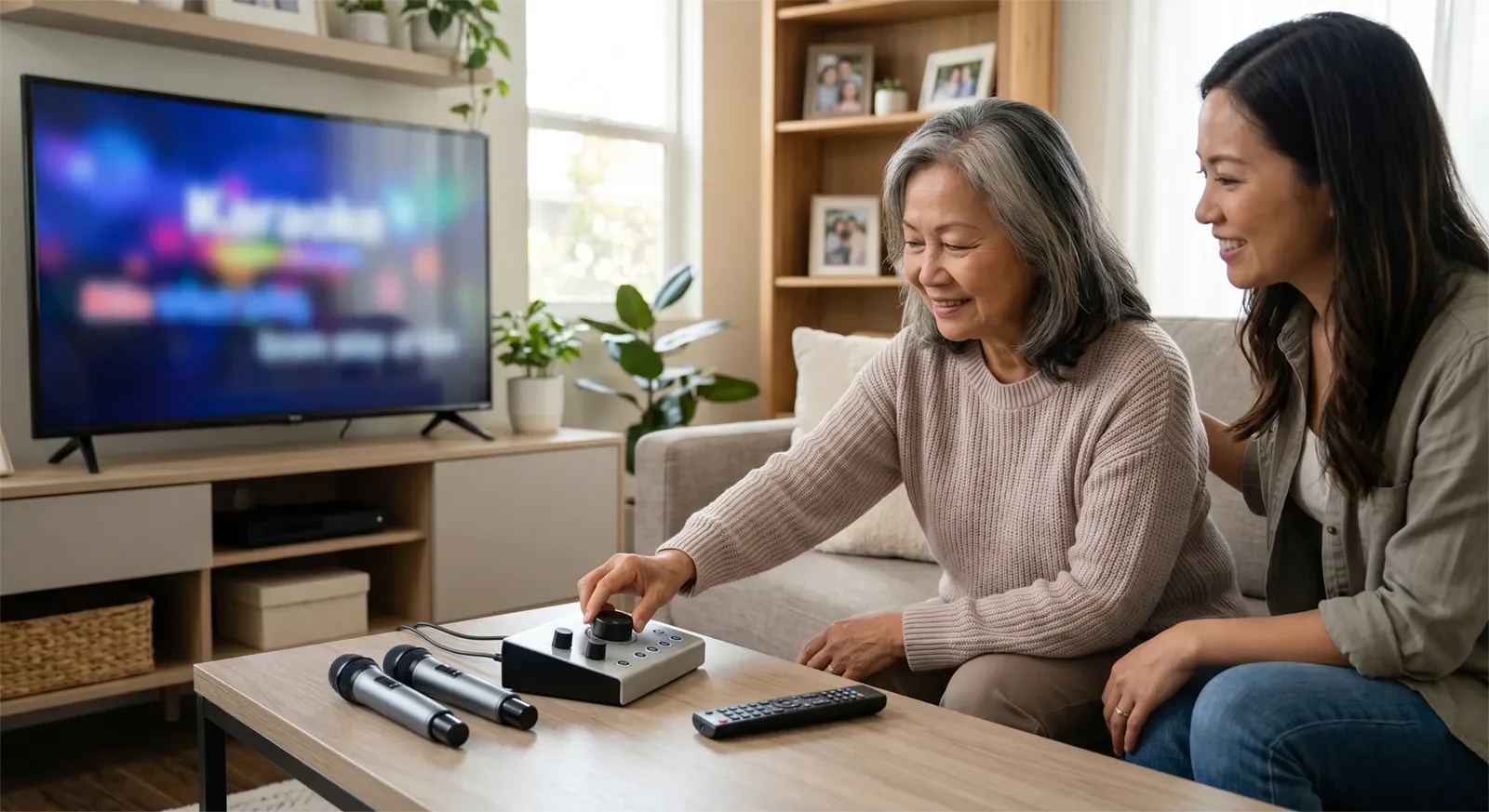
This is the heart of the decision. A good easy-to-use system reduces hesitation from the moment someone turns it on. People should not need to remember a long startup order, switch through too many remotes, or guess which control affects the microphone versus the music. In real homes, karaoke feels easier when the routine stays short and repeatable from week to week.
That usually means fewer connection steps, clearer volume control, and a layout that makes the main actions obvious. If your household uses a TV and online songs, it also helps when the signal path stays simple. Our guide to karaoke setup for TV, YouTube, and wireless microphones is useful here because connection simplicity affects daily comfort more than many buyers expect.
Comfortable microphone use
For parents and seniors, microphone comfort matters more than many buyers realize. If microphones feel awkward, tiring, unclear, or hard to balance against the music, the whole system feels harder to enjoy. Comfortable microphone use helps people sing with more confidence and makes small volume changes feel less stressful.
That is why easy microphone handling should be treated like a core buying feature, not a side detail.
Long-term value and repeatable everyday flow
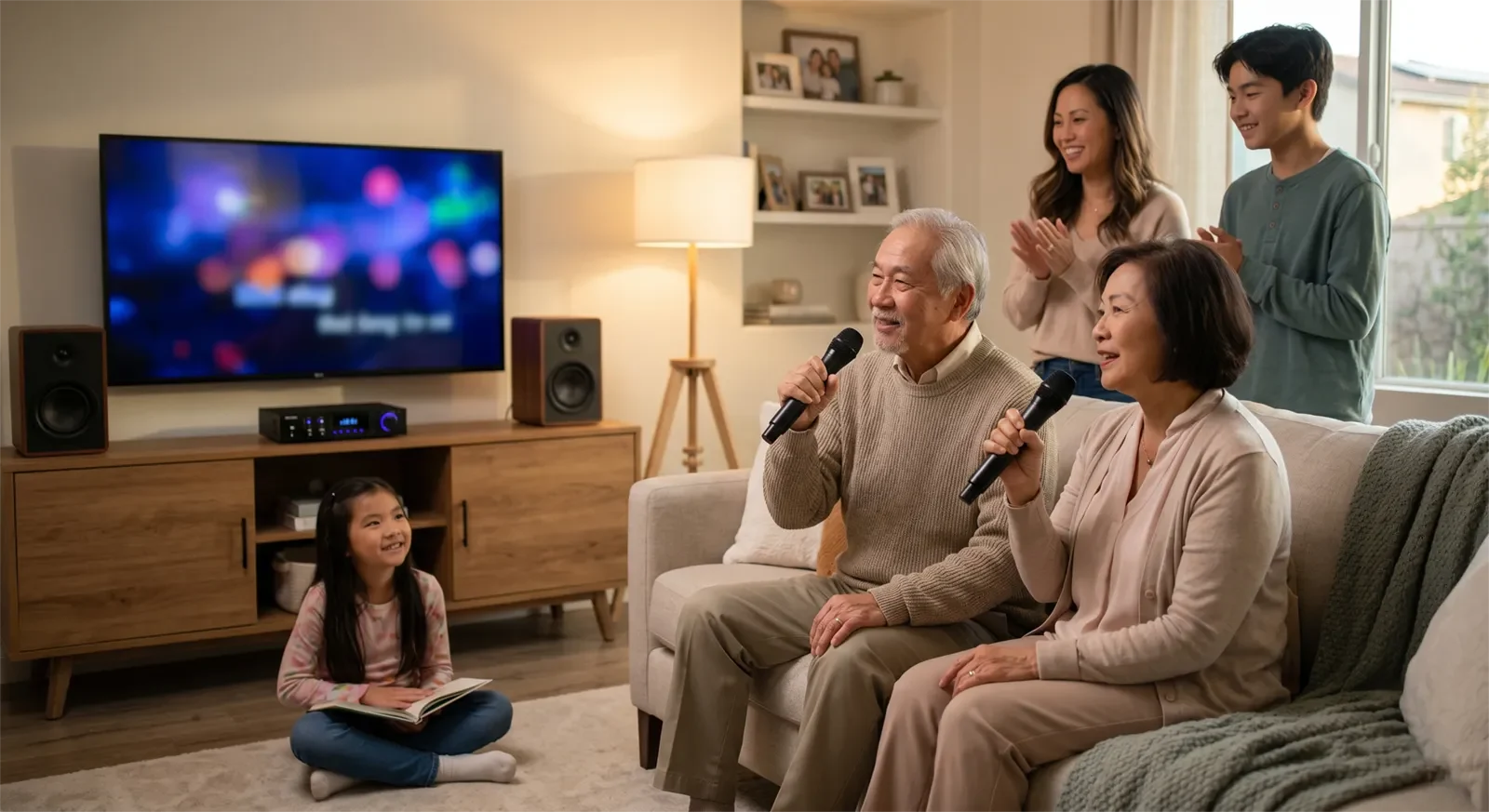
For parents and seniors, long-term value usually comes from repeatable comfort, not from having the most advanced setup in the room. A system that gets used often because it feels welcoming is usually a better buy than one that sounds impressive in theory but becomes frustrating after the first few weeks.
If your home is multi-generational and several people will share the system, our guide to karaoke systems for Vietnamese families in the U.S. is also helpful because family workflow matters almost as much as sound.
| Factor | Why it matters | Common mistake |
|---|---|---|
| Readable control layout | Helps users understand the system faster and make fewer mistakes | Buying a system with confusing menus or cluttered controls |
| Short setup routine | Reduces friction before each session and supports regular use | Ignoring how annoying repeated startup steps can become |
| Clear microphone and music volume control | Makes it easier to adapt to different singers without stress | Choosing a system where basic adjustments are buried |
| Comfortable microphone use | Improves confidence and makes singing feel less tiring | Treating microphones like a minor detail |
| Repeatable everyday flow | Lets more than one family member use the system comfortably | Buying a setup that only one person knows how to run |
The Best Fit for Different Home Use Cases
Best for casual family use
Best for: Homes where karaoke is part of family time, the room is shared, and the priority is a setup that feels calm, approachable, and easy to start.
Not ideal if: The household wants deeper control, expects to fine-tune the setup often, or already knows that regular use will justify a more involved system.
Why this fit makes sense: In many homes, simple family use is where an easy-to-use system delivers the most value. It lowers the barrier to singing, keeps the room from feeling overly technical, and makes it easier for different people to participate without waiting for help.
Best for regular home singing
Best for: Families who sing often and want a setup that still feels easy, but with enough stability and comfort to hold up over time.
Not ideal if: You only sing occasionally and mainly want the smallest possible learning curve with the least amount of setup effort.
Why this fit makes sense: Some households want more than just basic simplicity. They want a system that still feels low-stress but offers a little more confidence, smoother microphone handling, and a more complete experience when karaoke becomes part of regular home life.
Best for buyers who want obvious controls and low-stress setup
Best for: Buyers choosing specifically for parents, seniors, or anyone who values obvious controls, predictable startup, and less dependence on one tech-savvy family member.
Not ideal if: The main buyer enjoys experimenting with features, changing settings often, or managing a more complex system without worrying about shared usability.
Why this fit makes sense: This is often the most practical lens for the topic. A low-stress system keeps karaoke feeling welcoming. It reduces hesitation, lowers the chance of wrong-input moments, and makes basic actions like adjusting the microphone or starting the next song feel much more natural.
Budget, Room Size, and Setup Trade-Offs
For parents and seniors, enough usually means a system that sounds clear, feels comfortable to use, and does not create anxiety before the first song starts. That often makes better use of budget than paying for extra features that complicate the setup without improving the actual singing experience. In this category, convenience is part of value.
Spending more makes sense only when it improves the real home experience: better readability, better microphone comfort, better room fit, or a setup that stays consistent during regular use. Overkill is real here. If the system feels harder to operate, requires too many steps, or leaves older users waiting for help, the extra spend is not helping.
| Scenario | What usually works | When to spend more | When not to |
|---|---|---|---|
| Casual weekend family singing | Simpler system with clear controls and short startup routine | When the household uses it often enough to justify more comfort and stability | When extra features only add setup complexity |
| Parents or seniors using the system regularly | Easy layout with obvious microphone and music adjustment | When clearer control and better microphones will actually improve daily use | When the added complexity will go mostly unused |
| Multi-generational shared room | Low-stress setup with repeatable connection flow | When several users need the system to feel stable and predictable every time | When the setup still depends on one tech person no matter what |
| Buyer wants future-proof features | Buy enough for current comfort and keep the workflow simple | When your family already knows it will grow into a more advanced routine soon | When future plans are vague and present use is still simple |
Common Buying Mistakes to Avoid
Buying for features before ease
A system can look strong on paper and still feel frustrating in real use if the controls are confusing or the startup routine is too long. For parents and seniors, the smarter question is not how much it can do, but how easy it is to start and adjust without stress.
Ignoring connection flow
Many setups become annoying because they rely on too many devices, too many steps, or too much memory. That is especially hard in households where several people might use the system but only one person feels comfortable with tech. A shorter, more predictable setup path usually creates a better long-term experience.
Buying too much system for the actual user
Some buyers choose a setup mainly for rare parties or future possibilities, then discover that everyday karaoke feels more complicated than it should. The better mindset is to buy for normal home use first. If the system feels calm and repeatable every week, it is already doing the right job.
How to Choose the Right Easy-to-Use Karaoke System in 60 Seconds
- Start with the room and use case: shared living room, family room, or multi-generational home setup.
- Decide how important easy startup and clear controls are for the people who will actually use the system.
- Choose your priority: lower stress and simpler workflow, or more control with slightly more complexity.
- Set a budget boundary based on comfort and repeatability, not on rare situations.
- Ask whether you want to keep the setup simple now or add more features only if the household will truly use them.
If you only remember one thing, remember this: For most parents and seniors, start with the system that reduces steps, makes volume changes obvious, and helps people sing without waiting for help.
Frequently Asked Questions
Is an all-in-one karaoke system usually easier for seniors?
For many households, yes. An all-in-one setup often reduces the number of separate parts and startup steps, which makes karaoke feel more approachable. The real advantage is not the format alone, though. It is whether the system behaves consistently and keeps the main controls obvious.
What controls matter most for parents and seniors?
The most helpful controls are usually the simplest ones: clear microphone volume, clear music volume, and a layout that makes the main actions easy to find. The goal is not to remove every feature. It is to make the everyday actions feel obvious and low-stress.
Do easy karaoke systems have to be very basic?
No. A system can still have useful features and remain easy to use if the main actions stay clear and accessible. Problems usually come from cluttered menus, unclear signal flow, and everyday tasks that feel more technical than they need to be.
Should I prioritize easier microphones or more advanced sound features?
For parents and seniors, easier microphones usually matter more. If the microphones feel clear, comfortable, and easy to balance against the music, the whole system feels better. Advanced features only help if the household can use them confidently without turning karaoke into work.
Final Recommendation
If you are choosing a karaoke system for parents and seniors, the best option is usually the one that feels calm, readable, and repeatable in everyday use. If your goal is relaxed family singing, stay focused on shorter setup, easier control, and better comfort rather than feature count alone.
The main trade-off is simple: a more advanced system can offer more flexibility, but an easier system usually gets used more often. For most homes, the better choice is the one that removes friction, builds confidence, and makes singing feel natural for the people actually using it.
Need help narrowing it down for your room, budget, and family use?
Start with how to choose the best karaoke system for your home, compare family needs in our karaoke systems for Vietnamese families in the U.S. guide, or simplify your setup with our TV + YouTube + wireless microphones setup guide.