
The cleanest TV, YouTube, and wireless microphone karaoke setup is simple: use the TV for lyrics, send YouTube audio into the karaoke system, connect the wireless microphone receiver directly to the karaoke system, and let the karaoke system mix music and vocals before the sound reaches the speakers.
Written by Toan Ho — Tittac editorial team
Who this guide is for: Home users who want to sing karaoke with a TV, YouTube, and wireless microphones without dealing with weak vocals, confusing controls, feedback, or noticeable delay.
How this guide was prepared: This guide was written from a practical home setup perspective, focusing on the signal path most families can repeat easily: screen first, music path second, microphones third, and the karaoke system as the main audio control point.
A TV, YouTube, and wireless microphones can make home karaoke feel natural when every part has a clear job. The TV should show lyrics. YouTube should provide the songs. The wireless microphones should capture the singers. The karaoke system should control the final music-and-vocal mix.
Most setup problems happen when those jobs get mixed together. If the TV is expected to handle too much of the audio side, vocals may feel weak or delayed. If the microphones do not connect through the karaoke system, you lose the control that makes singing comfortable. If too many speakers play at once, the room can feel messy even when all the devices technically work.
Quick answer: For most homes, run YouTube on the TV or a streaming device connected to the TV, send the TV’s audio output into the karaoke system, plug the wireless microphone receiver into the karaoke system, and use the karaoke speakers as the final sound output. This keeps lyrics easy to see, vocals easier to control, and the whole setup easier to troubleshoot.
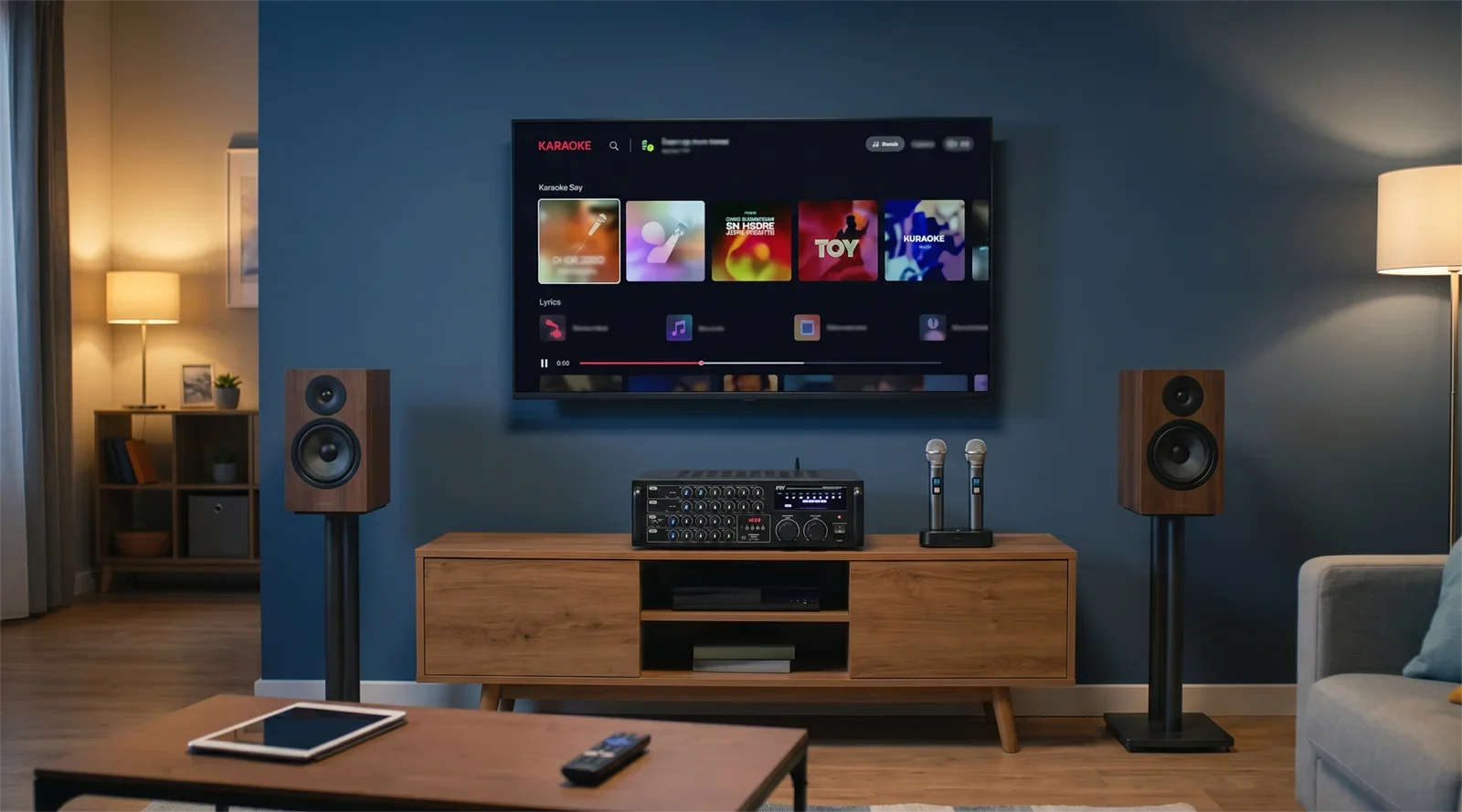
Table of Contents
Why this setup works
This setup works because it follows how people actually use karaoke at home. The TV gives everyone a large lyric screen. YouTube makes song search familiar. Wireless microphones let singers move around the room. The karaoke system brings the music and live vocals together so the final sound feels like one controlled mix.
The key is not to make the setup more complicated. The key is to give each device the right role.
- The TV handles the screen and lyrics.
- YouTube provides the karaoke tracks.
- The wireless microphones capture the singers.
- The karaoke system controls music volume, mic volume, echo, tone, and final output.
- The karaoke speakers play the finished music-and-vocal mix.
When the karaoke system becomes the main audio control point, the setup is easier to use. You can raise or lower the microphones, adjust echo, balance the music, and fix most problems without changing the TV or YouTube source every time.
If you want the broader source-level setup first, start with the Ultimate YouTube Karaoke Setup Guide.
What you need
For a normal home setup, you usually need five pieces:
- A TV: for clear lyric viewing from the couch, dining area, or normal singing position.
- A YouTube source: the built-in TV app, a streaming device, or another device connected to the TV.
- A karaoke system: a karaoke speaker, mixer, receiver, or amplifier that accepts both music and microphone audio.
- Wireless microphones: usually a two-mic set for family use, duets, and guests.
- A TV-to-karaoke audio connection: HDMI ARC, optical, RCA, AUX, or another compatible output depending on your TV and karaoke system.
The exact cable may change from system to system, but the logic stays the same: the TV sends music to the karaoke system, and the microphones connect to the karaoke system. That is what gives you one clean place to control the singing experience.
The best signal path for most homes
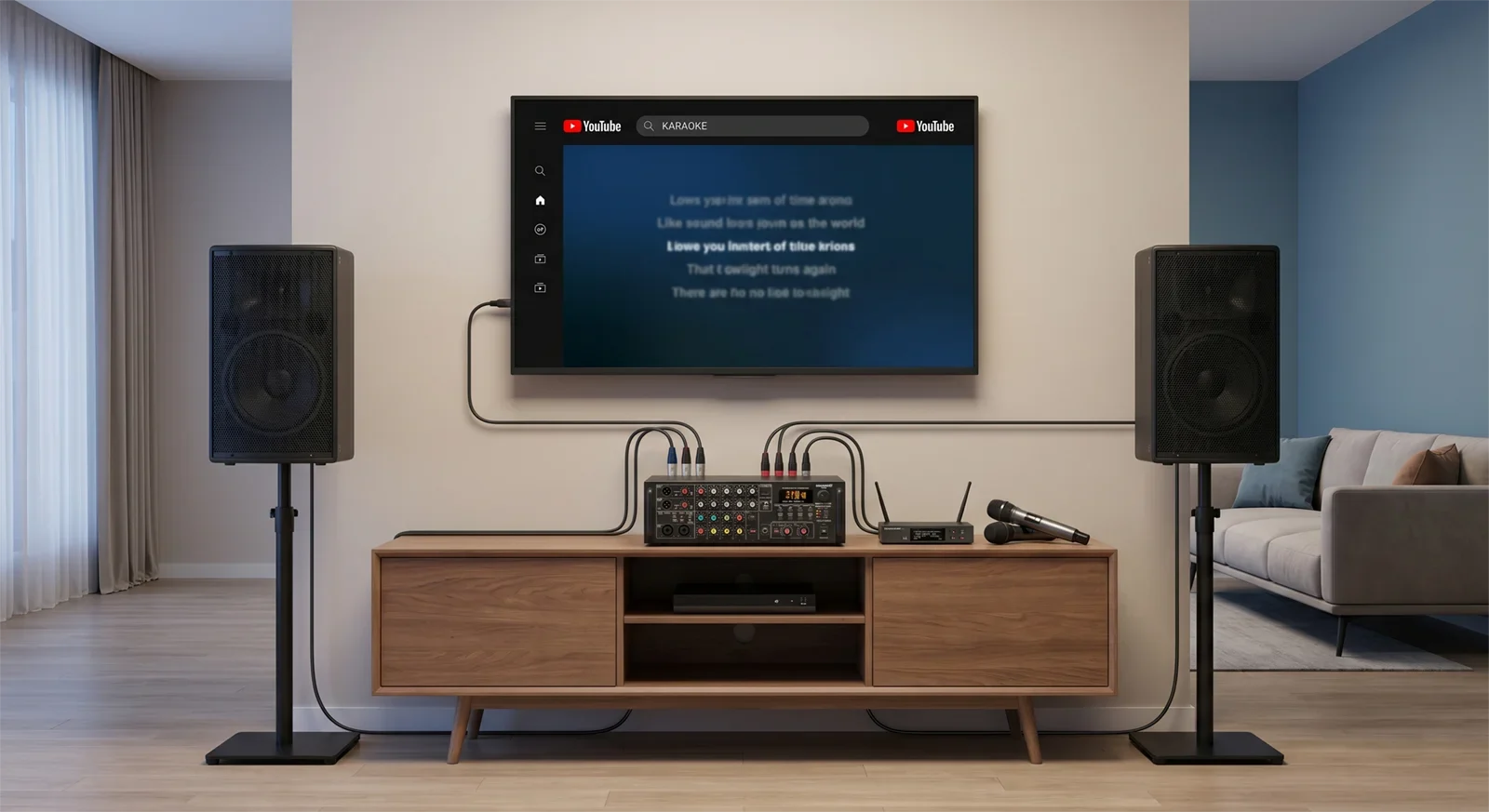
The best signal path for most homes is:
- YouTube plays on the TV or on a streaming device connected to the TV.
- The TV sends song audio into the karaoke system.
- The wireless microphone receiver connects directly to the karaoke system.
- The karaoke system mixes the YouTube music and live vocals together.
- The finished sound comes from the karaoke speakers, not the TV speakers.
This structure keeps the screen side and singing side separate in the right way. The TV stays responsible for lyrics. The karaoke system stays responsible for live audio. That usually gives you clearer vocals, better echo control, and fewer timing problems.
If the TV connection itself is the confusing part, read How to Connect a Karaoke System to a Smart TV before changing multiple settings at once.
For many homes, the best rule is simple: use the TV as the display, but do not rely on the TV as the final karaoke speaker. TV speakers are built for watching, not for mixing live microphones with music.
Step-by-step TV, YouTube, and wireless mic setup
Build the setup in order. Do not connect everything at once and then guess what went wrong. A clean sequence makes the system easier to understand and easier to fix later.
1. Decide where YouTube will run
Choose one main YouTube source. It can be the TV’s YouTube app, a streaming device, or another device connected to the TV. The best choice is the one your family can search and control easily.
Do not choose a source only because it is technically possible. Choose the source that will be simple during real use, especially when guests or older family members are choosing songs.
2. Test the lyric screen first
Open a real karaoke video and check the lyrics from the normal singing area. The words should be easy to read without people standing awkwardly, turning their head too much, or moving too close to the TV.
If the screen position feels wrong, fix that before adjusting audio. A karaoke setup with good sound but uncomfortable lyrics still feels difficult to use.
3. Send TV audio into the karaoke system
Next, connect the TV audio output to the karaoke system. Test music only. Do not turn on the microphones yet.
Your goal at this stage is simple: a YouTube karaoke track should play from the karaoke system clearly and predictably. If the music does not reach the karaoke system, the microphone side will not solve the problem.
If you are deciding between common TV audio paths, use HDMI vs Optical for Karaoke Systems to compare the practical differences.
4. Connect the wireless microphone receiver
Once the music path works, connect the wireless microphone receiver directly to the karaoke system. This is important because the karaoke system needs to control the mic level, vocal tone, echo, and balance against the music.
A wireless microphone receiver should not be treated as a separate sound system. It should feed into the karaoke system so the vocals and music can be mixed together properly.
5. Test one microphone first
Turn on one microphone and speak normally into it. Keep the music low at first. Raise the mic level slowly until your voice sits clearly above the track without sounding harsh or too loud.
Testing one microphone first makes it easier to hear problems. If you test both microphones immediately, it can be harder to tell whether the issue is volume, input selection, battery strength, receiver placement, or speaker position.
6. Add the second microphone
After the first mic feels stable, test the second microphone. Try a simple duet-level balance. Both mics should sound similar enough that one singer does not feel buried while the other feels too loud.
If one mic is much weaker, check its battery, channel, gain level, and distance from the receiver before turning everything louder.
7. Use one final speaker output
For the cleanest result, use the karaoke speakers as the main final output. Avoid playing the TV speakers and karaoke speakers at the same time.
When two different speaker systems play the same YouTube track, the room can feel slightly delayed or unfocused. Even a small timing difference can make singing feel unnatural.
First sound check
Your first sound check should focus on comfort, not perfection. A good home karaoke setup should make the singer feel supported: the music is steady, the vocals are clear, and the room does not fight back.
Start with music first
Play a familiar karaoke track and set the music to a comfortable level. Do this before raising the microphones. If the music already sounds thin, harsh, too loud, or delayed, fix the music path first.
Raise the mic level slowly
Bring up one mic until normal singing is easy to hear over the track. Stop before the voice starts sounding strained or before the room begins to ring. In most homes, clean vocal balance is better than maximum microphone volume.
Use echo lightly
A little echo can make singing feel smoother. Too much echo makes lyrics less clear and can make timing problems more obvious. Start light, then add more only if the voice feels too dry.
Place the receiver in an open spot
Keep the wireless microphone receiver in a clear position. Do not bury it behind the TV, deep inside a cabinet, or under other electronics. A receiver with a cleaner line of sight to the singing area usually behaves more predictably.
Check speaker and microphone placement
Keep microphones in front of the singers and avoid pointing them directly at the speakers. If feedback starts quickly, do not only lower the volume. Also look at where the speakers and singers are positioned in the room.
For a deeper troubleshooting path, use Common Karaoke Problems and How to Fix Them.
Common problems and quick fixes
Music plays, but the microphones are weak
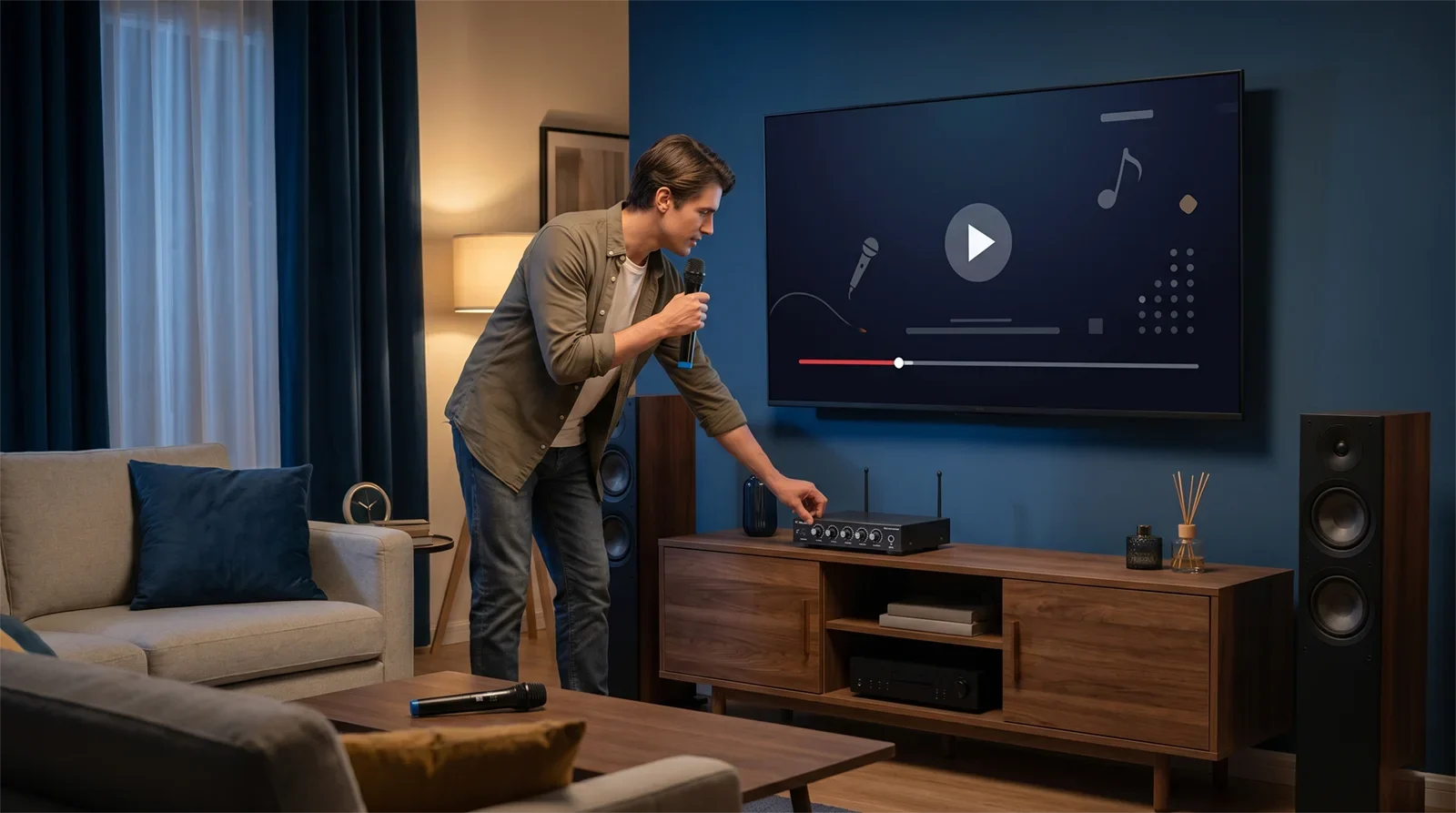
The mic level may be too low, the music may be too loud, the receiver may be connected to the wrong input, or the karaoke system may be set to the wrong mode. Start by lowering the music, checking the receiver connection, and raising one mic slowly.
The setup feels delayed
Delay usually comes from the full signal path. TV audio processing, sound modes, Bluetooth audio, or a complicated connection chain can make the singer feel behind the music. Use a direct TV-to-karaoke audio path when possible, and avoid using multiple speaker outputs at the same time.
Feedback happens too easily
Feedback usually means the microphone is hearing too much of the speaker output. Lower the mic level slightly, move the microphone away from the speaker direction, reduce excessive echo, and avoid placing singers directly in front of loud speakers.
The wireless microphones cut in and out
Check batteries first. Then move the receiver to a more open spot and keep it away from dense cabinets, metal objects, and crowded electronics. If the issue continues, test the microphones closer to the receiver to separate wireless range problems from audio setup problems.
The TV speakers still play sound
Go into the TV audio settings and choose the correct external audio output. In many homes, the cleanest karaoke result comes from turning off the TV speakers and letting the karaoke system handle the final sound.
Everyday setup checklist
Use this checklist before a normal family karaoke session:
- Choose one YouTube source and keep it simple.
- Confirm the lyrics are easy to read from the real singing position.
- Test YouTube music through the karaoke system before turning on microphones.
- Connect the wireless microphone receiver directly to the karaoke system.
- Test one microphone first, then the second microphone.
- Set music volume first, then mic volume, then echo.
- Use light echo instead of heavy echo at the beginning.
- Keep the receiver in an open, sensible location.
- Use the karaoke speakers as the main final output.
- Run one full song before guests or family start singing.
The best home karaoke setup is not just the one that works once. It is the one your household can repeat without confusion. When the signal path is simple, the system becomes easier to use, easier to explain, and easier to troubleshoot.
Conclusion
TV + YouTube + wireless microphones is one of the most practical karaoke setups for home because it fits how families already watch, search, and sing. The TV makes lyrics easy to follow. YouTube keeps song access familiar. Wireless microphones make singing more relaxed and social.
The setup works best when the karaoke system stays in charge of the live audio. Keep the screen path simple, send the music into the karaoke system, connect the microphones to the karaoke system, and use one final speaker output. That structure gives most homes a cleaner, clearer, and more repeatable karaoke experience.
Before your next singing session, test one real song with the full TV-to-karaoke path and both microphones ready. That small routine catches most setup mistakes before anyone starts singing.
Use the Karaoke Setup Checklist Before a Party
Contact Tittac if you want help matching your TV, room, microphones, and karaoke system setup
Frequently Asked Questions
What is the best way to set up YouTube karaoke with wireless microphones?
The best way for most homes is to play YouTube on the TV, send the TV audio into the karaoke system, connect the wireless microphone receiver directly to the karaoke system, and use the karaoke speakers as the final sound output.
Should wireless microphones connect to the TV or the karaoke system?
Wireless microphones should usually connect to the karaoke system, not the TV. The karaoke system gives you better control over mic volume, echo, tone, and balance against the music.
Can I use TV speakers for YouTube karaoke?
You can use TV speakers for basic music playback, but they are not ideal for karaoke with live microphones. For clearer vocals and better control, send the audio into a karaoke system and use karaoke speakers as the final output.
Why does my YouTube karaoke setup have delay?
Delay can come from TV audio processing, Bluetooth audio, sound modes, or a complicated signal path. Use a direct TV-to-karaoke audio connection when possible, turn off extra processing, and avoid playing TV speakers and karaoke speakers together.
Is HDMI or optical better for connecting a TV to a karaoke system?
Either can work, depending on your TV and karaoke system. HDMI ARC can be convenient when supported properly. Optical is often simple and stable for sending TV audio to an external system. The best choice is the one your equipment supports reliably.
Why do my wireless microphones sound weak?
Weak wireless mic sound can come from low mic volume, low battery, wrong input selection, poor receiver connection, or music volume being too high. Test one mic at a time and raise the mic level slowly after the music path is working.
How do I reduce feedback in this setup?
Keep microphones away from the speaker direction, avoid pointing the mic at the speaker, use moderate mic volume, reduce excessive echo, and place singers in a position where the microphone is not picking up too much speaker sound.