
A good karaoke system for Vietnamese families in the U.S. should keep mixed-language singing easy, make TV song playback feel natural, and work comfortably for parents, seniors, and younger family members in the same room. In most homes, the best choice is not the one with the biggest feature list. It is the home karaoke system that fits the room, keeps lyrics easy to follow, and lets family members take turns without slowing the whole night down.
Written by Toan Ho — Tittac editorial team.
Quick Answer
Choose a simpler home karaoke system if your family mostly sings casually, uses one shared TV area, and wants a setup that feels easy for everyone to start without much explanation. Choose a more capable home karaoke system if your family sings often, gatherings are regular, or you care more about clearer vocals, smoother microphone switching, and a setup that feels more complete over time.
For most Vietnamese families in the U.S., the best fit is a system that keeps TV or YouTube playback simple, supports easy duet use, and feels comfortable across generations. Mixed-language convenience and low-friction control usually matter more than extra features that look impressive during shopping but slow the night down at home.
Definition: In this guide, a karaoke system for Vietnamese families in the U.S. means a home karaoke system built for mixed-language singing, shared TV-based song playback, multi-generational use, and repeatable family gatherings at home.
Who this guide is for: This guide is for Vietnamese families in the U.S. who want a home karaoke system that works well for mixed-language singing, multi-generational use, and real family gatherings without becoming hard to manage.
How this guide was prepared: This guide was prepared using the practical factors that matter most for Vietnamese family karaoke at home: TV and YouTube workflow, mixed-language song search, microphone flexibility, ease of use for parents and seniors, room fit, vocal clarity, and long-term value.
Need help choosing the right setup for your home? Visit our Garden Grove showroom or contact Tittac for help in English or Vietnamese.
If you want the broader buying framework first, start with how to choose the best karaoke system for your home. Then use this guide to narrow down what matters most for Vietnamese family use in the U.S.
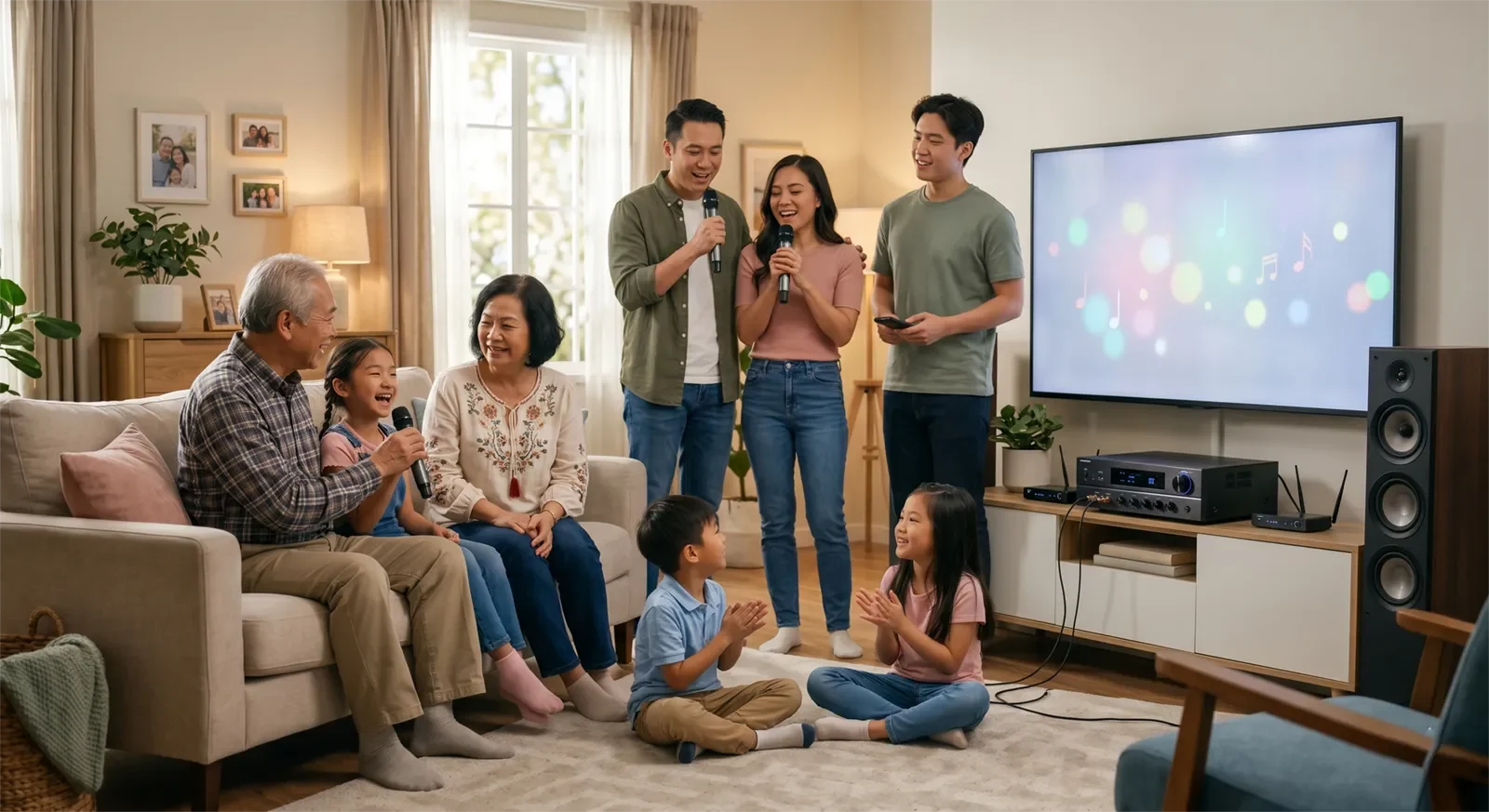
Table of Contents
What Matters Most When Choosing Karaoke Systems for Vietnamese Families in the U.S.
Room fit and real family use
Room fit matters because Vietnamese family karaoke usually happens in a real living room, family room, or shared home space, not in a dedicated music room. People may be sitting across a couch, standing near the TV, or moving in and out of the room during the night. A home karaoke system that feels natural in that space usually works better than one chosen only because it sounds bigger on paper.
Think about how the room is actually used. Is karaoke staying in one main TV area, or does the system need to move for family visits and holidays? Will most people read lyrics from one screen, or do seating distance and room layout make visibility more important? A system that fits the room and the family routine will usually feel better than a stronger-looking setup that turns normal home use into a project.
Mixed-language workflow and ease across generations
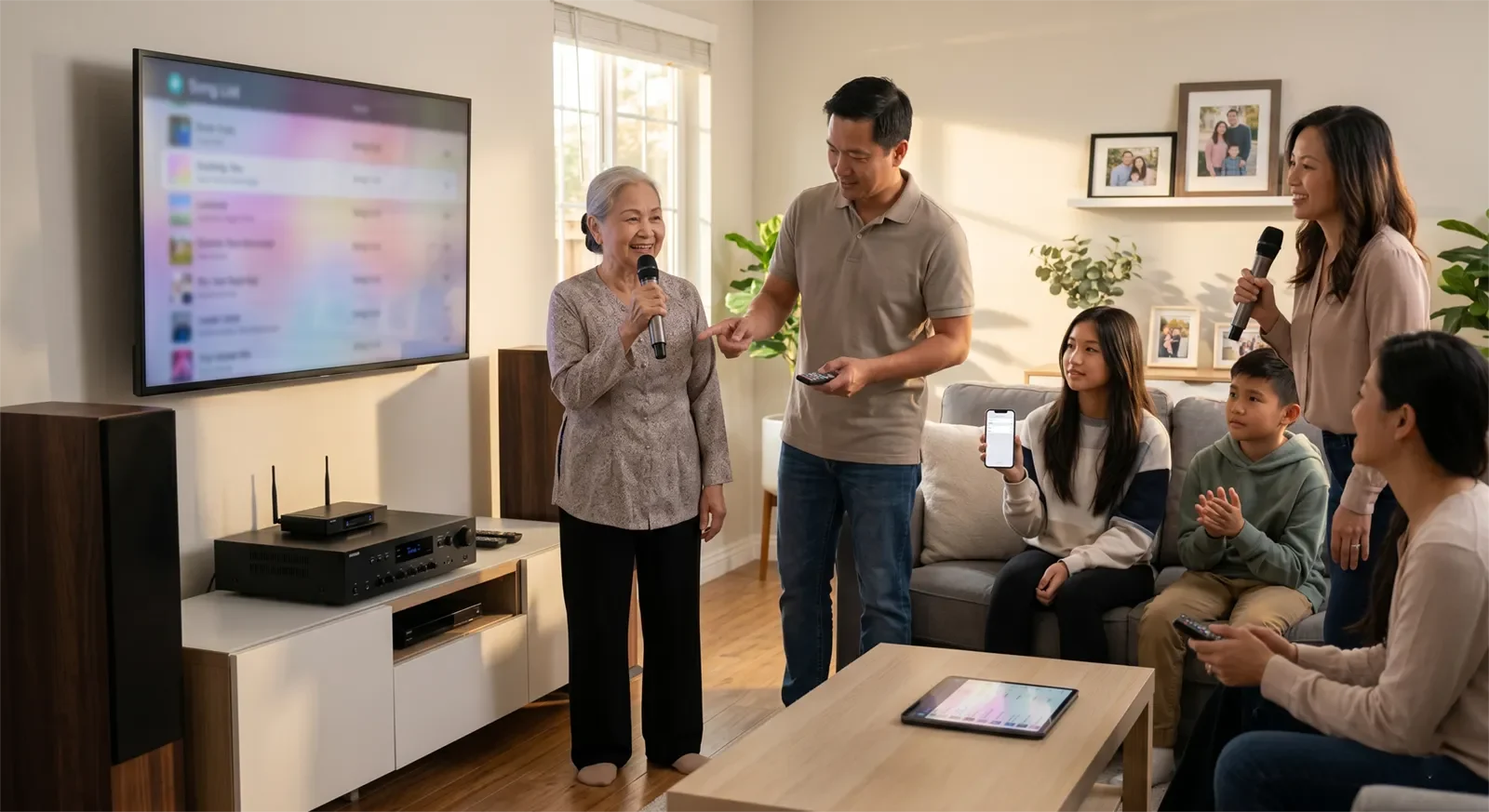
Ease of use matters more here than many buyers expect because one person may not be managing everything all night. In many households, parents, grandparents, younger relatives, and guests all end up taking turns. If the system only feels easy when one tech-comfortable family member is running it, the experience becomes less welcoming very quickly.
That is why control flow matters almost as much as sound. Clear volume adjustment, a straightforward way to start songs on the TV, and a setup that feels familiar after the first few uses usually matter more than extra complexity. If shared ease of use is a major priority in your home, compare easy-to-use karaoke systems for parents and seniors before deciding how much complexity your household will actually enjoy.
TV, YouTube, and song search comfort
For many Vietnamese families in the U.S., karaoke moves naturally between Vietnamese and English songs in the same session. That means TV visibility, song search speed, and playback flow are not side details. They are part of the core buying decision.
If your family usually sings from the TV and finds songs through YouTube or other screen-based routines, that part of the setup needs to feel smooth. Our guide to karaoke setup for TV, YouTube, and wireless microphones is especially useful if your goal is a system that feels easy in real family use, not just strong in theory.
Long-term value and upgrade path
A good family karaoke system should feel right now without becoming frustrating later. Some buyers overbuy because they are afraid of buying too small for holiday gatherings. Others underbuy and end up with a setup that always feels a little cramped once duets, song switching, and regular family use become normal. Long-term value comes from getting the right balance, not from buying the most gear.
The smarter target is enough system for the way your household actually sings most of the time, with room to improve later only if that growth is realistic.
| Factor | Why it matters | Common mistake |
|---|---|---|
| Mixed-language song workflow | Keeps the night moving when families switch between Vietnamese and English songs | Buying a system that sounds fine but feels slow or awkward to search on |
| Ease across generations | Lets parents, grandparents, and younger family members all participate comfortably | Assuming one person will always manage everything |
| TV visibility and home placement | Makes lyrics easier to follow from normal seating positions | Thinking only about speaker size instead of how people actually sing in the room |
| Microphone flexibility | Family karaoke often becomes more social than buyers first expect | Buying only for solo use when duets and turn-taking happen regularly |
| Upgrade path | Helps you buy enough now without paying for complexity you may never use | Overbuilding for rare events instead of normal weekly or monthly use |
The Best Fit for Different Home Use Cases
Best for casual family use
Best for: Families who sing during weekends, birthdays, or casual get-togethers and want something easy to start with the TV and simple enough that most relatives can use it comfortably.
Not ideal if: Your family sings often enough that weak control, limited microphone flexibility, or a cramped setup already feels frustrating.
Why this fit makes sense: A simpler system is often the smartest choice when convenience matters most. It lowers the barrier to use, keeps the room setup cleaner, and makes karaoke feel more like part of family time instead of a small technical project.
Best for regular home singing
Best for: Families who sing often, use karaoke as a regular home activity, and want steadier microphones, better vocal balance, and a setup that feels more complete during real gatherings.
Not ideal if: Karaoke only happens a few times a year and the household will avoid anything that feels slightly more involved.
Why this fit makes sense: Once karaoke becomes a regular habit, a more capable home karaoke system usually feels worth it. Clearer vocals, easier microphone handling, and smoother room coverage matter more when several people take turns through the night. If your home also hosts birthdays or holiday get-togethers, our guide to best karaoke systems for family parties can help you think through how that changes the decision.
Best for buyers who care about easy multi-generational use
Best for: Buyers who care most about making karaoke feel comfortable for parents, seniors, and younger family members in the same household.
Not ideal if: You are mainly shopping for one experienced singer who prefers deeper control and does not care much about shared ease of use.
Why this fit makes sense: Multi-generational households need more than good sound. They need a system that feels understandable, repeatable, and welcoming. The best fit here is not always the strongest one. It is the one that lets different people step in naturally without slowing the whole night down or making one person responsible for every song and setting.
Budget, Room Size, and Setup Trade-Offs
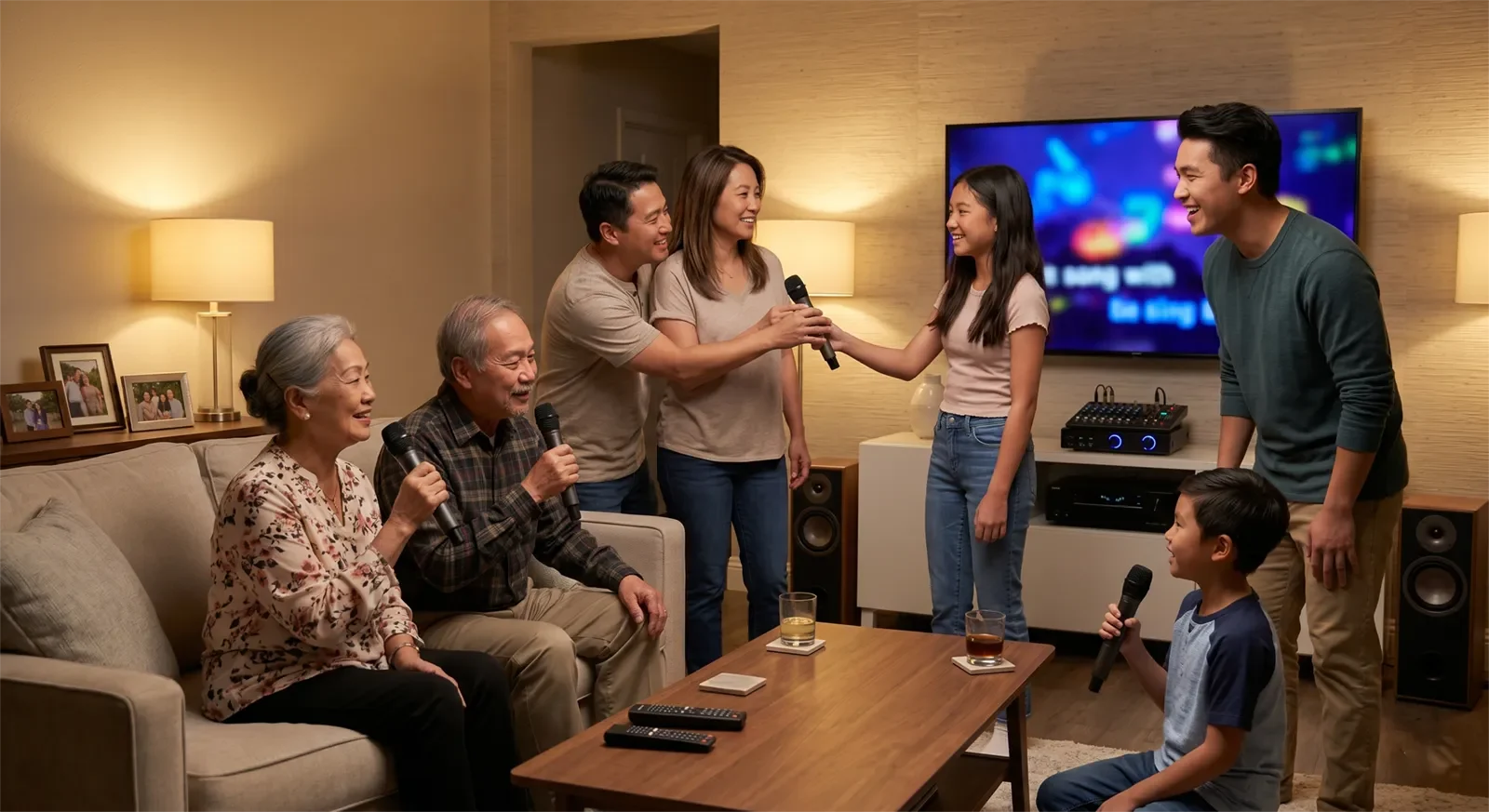
A good karaoke system for Vietnamese family use in the U.S. does not need to be oversized to be satisfying. In many homes, enough means clear vocals, easy TV or YouTube playback, dependable microphones, and a layout that feels simple to repeat the next time family comes over. That is often a better use of budget than chasing extra size or features that do not improve the actual family experience.
Spending more makes sense when your room is larger, gatherings happen often, or your family already knows that smoother microphone handling and stronger overall control will get used. Overkill is real, though. A system can be too much if it adds steps, takes up more space than the room comfortably supports, or feels intimidating for casual users.
| Scenario | What usually works | When to spend more | When not to |
|---|---|---|---|
| Small or shared room with casual family use | A simpler setup with TV-friendly workflow and two reliable microphones | When lyrics are hard to see, vocals feel weak, or gatherings happen more often than expected | When you are paying mainly for size or features nobody will use |
| Standard living room with regular family singing | A balanced home karaoke system with better control and smoother family turn-taking | When karaoke is a real routine and mixed-age use happens often | When singing is light and convenience still matters more than extra control |
| Holiday-heavy home with larger family visits | A more capable setup with better microphone flexibility and comfortable room coverage | When family gatherings are common enough to justify the extra ease and headroom | When you are building for imagined events instead of actual use |
| Parents or seniors use the system often | A setup with readable controls and a predictable, low-stress workflow | When the current setup only works if one person manages every step | When deeper features will create more friction than value |
Common Buying Mistakes to Avoid
Buying by size, wattage, or appearance alone
A system can look stronger on paper and still be the wrong fit for Vietnamese family karaoke at home. In real use, the better question is whether it matches the room, keeps vocals comfortable, and feels easy enough that everyone actually wants to use it. Choose for real family flow, not product-page intimidation.
Treating mixed-language song search like a side detail
In many Vietnamese households, songs move between Vietnamese and English throughout the same session. If the TV setup, search process, or playback path feels clumsy, the whole night feels slower. Treat TV and song workflow as part of the core buying decision, not as an afterthought you will solve later.
Buying too much system for occasional use or too little flexibility for real gatherings
Some buyers pay for complexity they will never enjoy. Others buy only for solo singing and then feel limited once duets, guests, or holiday family use become normal. Buy for the way your household actually sings most of the time, then leave room to improve later only if that growth is realistic.
How to Choose the Right Karaoke System in 60 Seconds
- Start with your real use case: casual weekends, regular family singing, or larger holiday gatherings.
- Decide how important ease of use is for parents, seniors, and relatives who may not want a technical setup.
- Choose your main priority: simpler daily workflow or better vocals and more complete control.
- Set a budget boundary based on what your room and family routine truly need, not on what looks safest on paper.
- Ask whether you want to keep things simple now or buy something that still makes sense if family karaoke becomes more frequent later.
If you only remember one thing, remember this: For most Vietnamese families in the U.S., start with a system that keeps TV or YouTube use simple, vocals clear, and family participation easy.
Frequently Asked Questions
Is a simple karaoke system good enough for Vietnamese family use?
Yes, in many homes it is. A simple system can be the better choice if your family sings casually, uses one main TV area, and values easy setup more than deeper control. It becomes less ideal only when karaoke is frequent enough that limited microphones, awkward workflow, or weaker control start to get in the way.
Do Vietnamese family karaoke setups usually need more than two microphones?
Not always, but many families end up wanting more flexibility than they first expect. Duets and shared singing happen naturally at family gatherings. Two microphones may be enough for normal use, but the real question is whether your family usually sings one at a time or whether participation quickly becomes more social once the night gets going.
Is YouTube-based karaoke enough for mixed-language family singing?
Often, yes. For many families, YouTube is practical because it makes switching between Vietnamese and English songs easier. The key is not only access to songs. It is whether the full setup feels smooth together, with lyrics easy to see on the TV, microphones simple to manage, and the search process comfortable for the people actually using it.
Is it worth paying more for a system that is easier for parents and seniors to use?
It can be, especially if they will use the system often. A setup that feels easier across generations usually gets used more and causes less friction during family gatherings. That does not always mean buying a bigger system. It often means paying attention to control clarity, TV workflow, microphone convenience, and how repeatable the whole experience feels.
Final Recommendation
The right karaoke system for Vietnamese families in the U.S. is the one that fits the way your household actually gathers and sings. If your priority is casual family use, mixed-language convenience, and low-stress setup, stay simple. If karaoke is a real routine, family participation is frequent, or you care more about stronger vocals and smoother overall flow, move toward a more complete home karaoke system with better everyday control.
The main trade-off is not just budget. It is simple family use versus deeper long-term capability. The best choice is the one that feels right in your room, easy enough across generations, and practical for the way your family already uses the TV, searches songs, and shares the microphone. If you want more ideas for the social side of the experience, our guide to karaoke party tips for Vietnamese communities is a helpful next read.
Need help narrowing it down for your room, budget, and family use?
Start with how to choose the best karaoke system for your home, compare easy-to-use systems for parents and seniors, or go deeper with our TV + YouTube + wireless microphone setup guide.