
Foot rollers, calf massage, and air compression do not usually feel the same in a massage chair. Foot rollers tend to feel more direct under the soles, calf massage focuses more on the lower-leg area, and air compression usually creates a broader squeeze-and-release sensation around the feet and calves.
Who this guide is for: Buyers comparing lower-leg massage chair features who want to understand what foot rollers, calf massage, and air compression actually feel like in real use.
How this guide was prepared: This guide translates common massage chair feature language into practical home-use explanations so shoppers can compare lower-leg features more clearly.
When people compare massage chairs, the foot and lower-leg section often creates confusion. Product pages may list foot rollers, calf massage, and air compression together, but these features do not create the same feeling.
The main reason shoppers get confused is that all three relate to the lower legs, yet each one works differently. This article focuses on feel, feature behavior, and what type of user may notice each feature more.
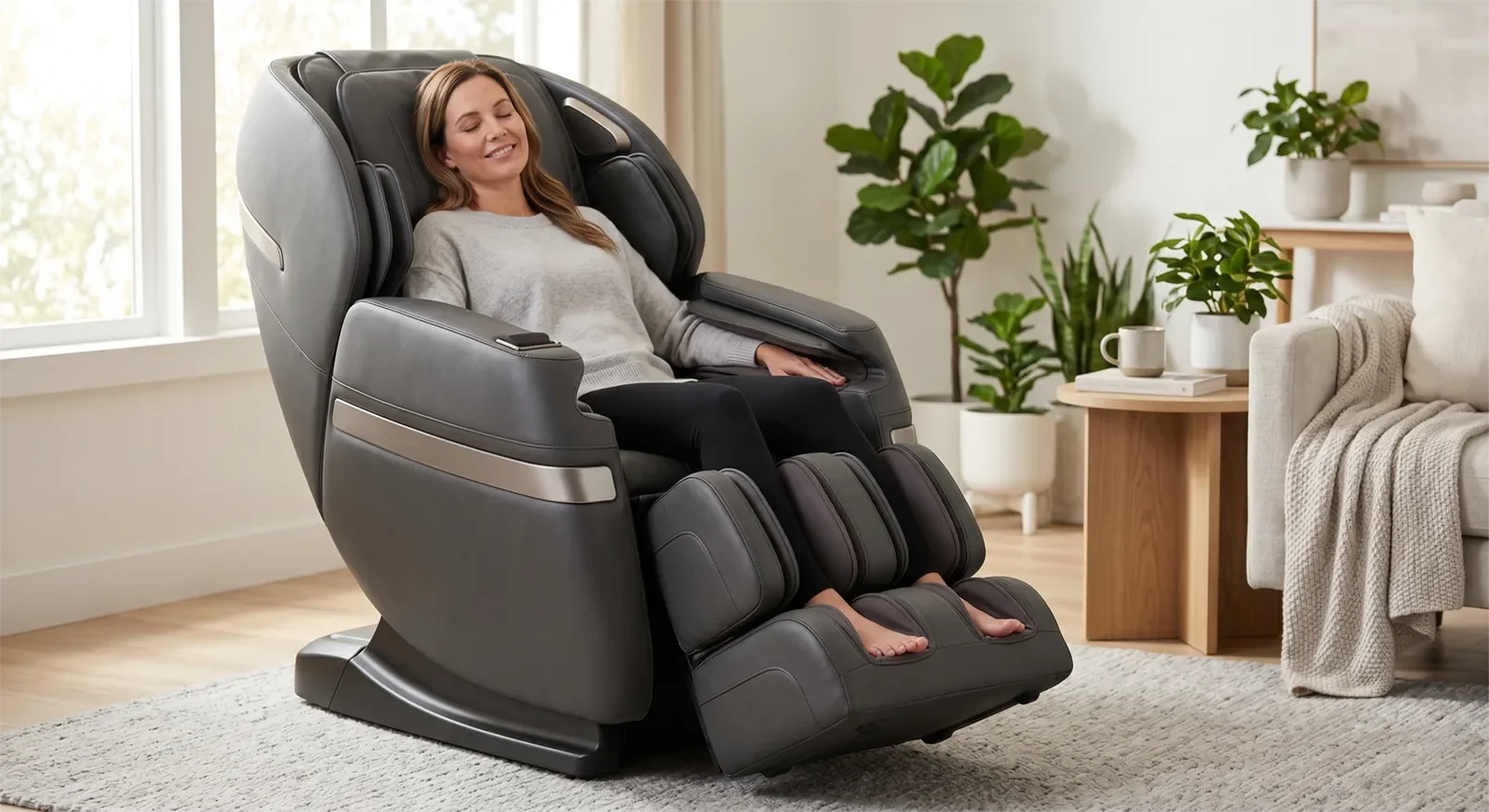
Table of Contents
- Quick answer
- What foot rollers usually feel like
- What calf massage usually feels like
- What air compression usually feels like
- The main difference in plain English
- When foot rollers stand out more
- When calf massage stands out more
- When air compression stands out more
- Which one is better?
- Frequently Asked Questions
Quick answer
Foot rollers, calf massage, and air compression each create a different type of lower-leg experience. Foot rollers usually feel more targeted under the soles and arches. Calf massage usually focuses more on the back or sides of the lower legs. Air compression usually feels broader and more like a gentle squeeze around the feet or calves.
The most useful way to compare them is not by asking which one is “best” in general, but by asking what kind of lower-leg feeling you want most: direct sole stimulation, lower-leg massage contact, or a broader compression sensation.
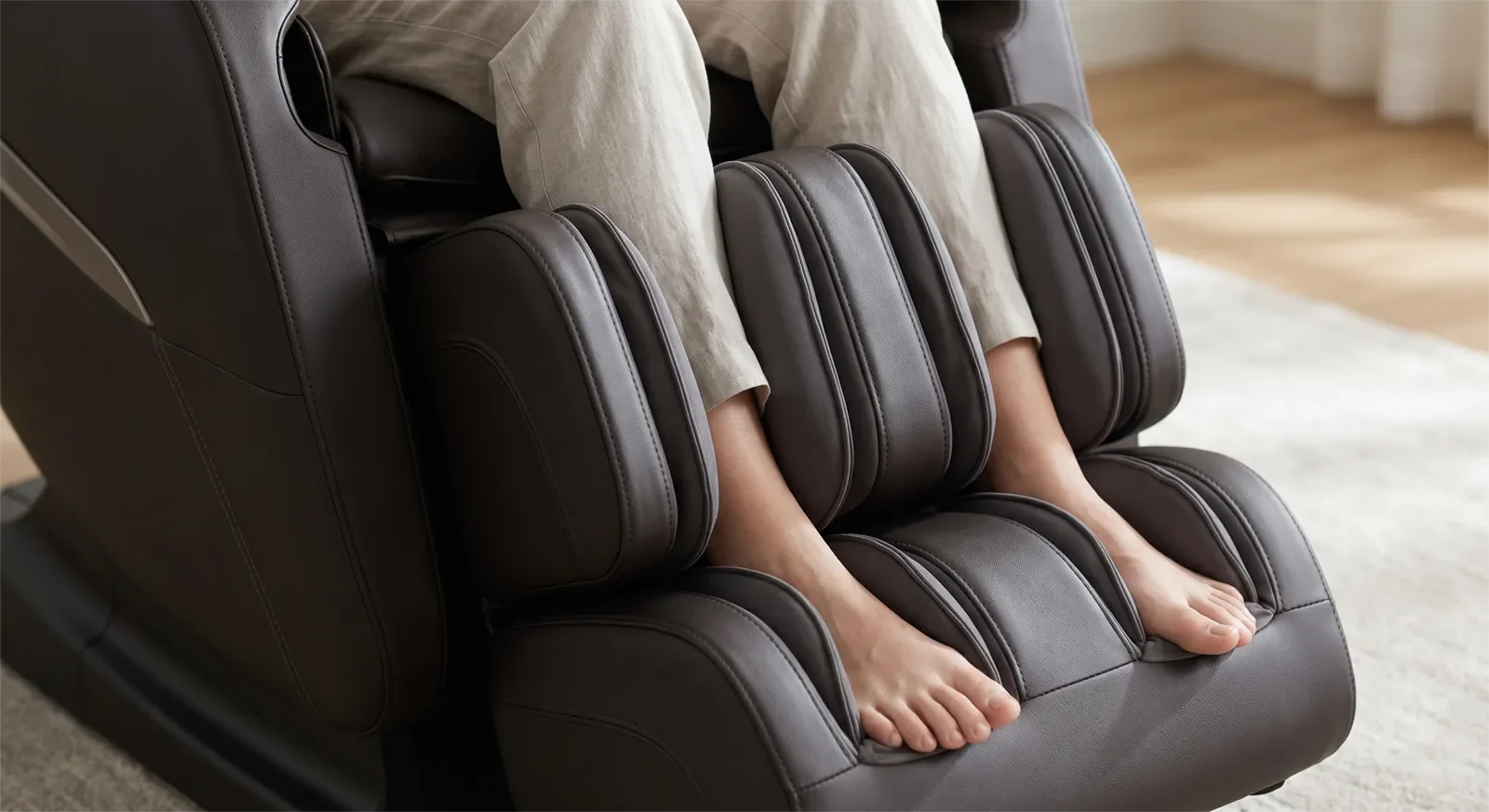
What foot rollers usually feel like
Foot rollers are usually the most direct-feeling lower-leg feature. They focus on the bottom of the feet, especially the soles and arches, where people often notice a more targeted sensation.
In real use, foot rollers often feel:
- more focused under the feet than around the legs,
- more direct than air compression,
- easier to notice quickly in a short demo,
- more stimulating for users who like sole contact.
This is why foot rollers often stand out to people who spend long hours standing, walking, or working on hard floors. The feeling tends to be less about broad comfort and more about direct contact under the feet.
What calf massage usually feels like
Calf massage usually shifts the focus upward from the feet to the lower legs. Instead of concentrating on the soles, it gives more attention to the calf area itself.
Depending on the chair, calf massage may feel:
- more focused on the lower-leg muscles than on the soles,
- more supportive for people with tired calves,
- more balanced if you want the lower legs included in the session,
- less sharp or direct than foot rollers.
Many people notice calf massage most after long days of walking, standing, or physical activity. It often feels less like targeted sole stimulation and more like lower-leg support.
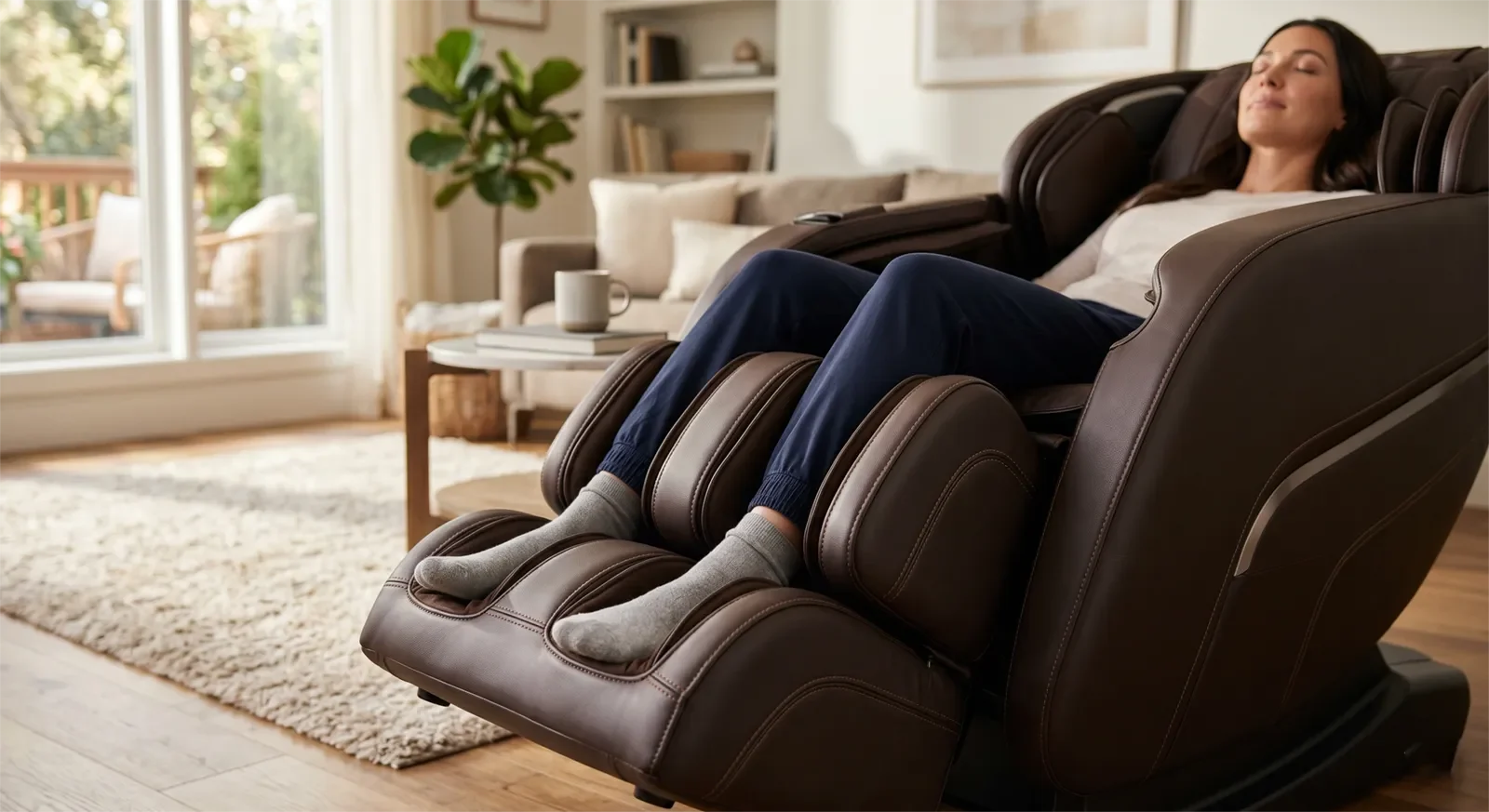
What air compression usually feels like
Air compression usually feels broader than foot rollers and less specifically muscle-focused than calf massage. Instead of a direct rolling action, it often creates a padded squeeze-and-release sensation around the feet, calves, or both.
In real use, air compression often feels:
- broader and gentler than foot rollers,
- less pinpointed than direct roller contact,
- more like the chair is wrapping the lower leg or foot area,
- more comfort-oriented than sharply targeted.
This is why some users enjoy air compression even if they are not looking for an intense sole-focused feeling. It can make the lower-leg section feel more complete and supportive overall.
The main difference in plain English
Foot rollers = more direct contact under the feet
If you care most about the soles and arches, foot rollers are usually the most noticeable feature. They tend to feel more specific and more direct.
Calf massage = more attention on the lower legs
If you want the lower-leg muscles themselves to feel more involved, calf massage may matter more. It shifts the feeling upward rather than keeping the focus mainly under the feet.
Air compression = broader squeeze around the area
If you want a more surrounding and less targeted feeling, air compression often stands out. It is usually the broadest-feeling of the three.
That is the simplest way to compare them: foot rollers are more direct, calf massage is more lower-leg focused, and air compression is broader and more surrounding.
When foot rollers stand out more
Foot rollers may stand out more if you:
- want strong attention under the soles,
- like a more noticeable foot-focused sensation,
- stand or walk a lot during the day,
- care more about the bottom of the feet than the calves.
When calf massage stands out more
Calf massage may stand out more if you:
- want more attention on the lower legs,
- often feel tired through the calf area,
- want the chair to include more of the lower leg,
- prefer a less sole-focused feeling than foot rollers.
When air compression stands out more
Air compression may stand out more if you:
- prefer a gentler squeeze-and-release feeling,
- want the lower-leg area to feel more wrapped and supported,
- do not want only direct roller contact,
- prefer a broader comfort sensation.
Which one is better?
There is no single best feature for everyone. These features solve different comfort preferences.
- Choose foot rollers if you care most about direct sole stimulation.
- Choose calf massage if you care most about lower-leg support.
- Choose air compression if you want a broader squeeze-and-release feeling around the lower-leg area.
In many premium chairs, these features work together. The real question is which feeling matters most to you, not which label sounds more advanced on a product page.
Frequently Asked Questions
Do foot rollers and calf massage feel the same?
No. Foot rollers usually feel more direct under the soles, while calf massage usually focuses more on the lower-leg area itself.
Is air compression the same as calf massage?
Not usually. Air compression often feels like a broader squeeze around the area, while calf massage is more specifically about the calf section.
Which feature matters most for tired feet?
If the main issue is the bottom of the feet, foot rollers often stand out the most because they focus more directly on the soles and arches.
Which feature matters most for tired lower legs?
If the lower legs themselves are the main concern, calf massage or air compression may matter more depending on whether you want a more targeted or broader feeling.
Do I need all three features?
Not always. It depends on what you value most. Some shoppers mainly care about direct sole contact, while others want a more complete lower-leg comfort experience.