
Treble adds useful detail when it makes vocals easier to understand without making the sound sharp, tiring, or stressful. In home karaoke, the real test is not whether the system sounds brighter. The real test is whether that brightness helps people hear lyrics more naturally.
Who this guide is for: Home karaoke users who want clearer vocals and more open sound without accidentally making the system harsh, edgy, or fatiguing.
How this guide was prepared: This guide was prepared by focusing on real home karaoke listening behavior: vocal clarity, consonant sharpness, room reflections, cymbal brightness, and ear fatigue. It explains how to judge treble by what listeners actually hear instead of treating “more highs” as an automatic upgrade.
Many home karaoke users turn up treble because they want more clarity. That makes sense. A little more top-end can help vocals feel cleaner, lyrics easier to follow, and music more open. But the same adjustment can also go too far. When that happens, the sound stops feeling clear and starts feeling sharp, thin, or aggressive.
That is why this distinction matters. In home karaoke, “more treble” is not the same thing as “more useful detail.” Useful detail helps the voice become easier to follow. Harshness makes the ear work harder. For broader technical context on how these listening traits show up in real systems, see our in-depth technical analysis of karaoke systems.
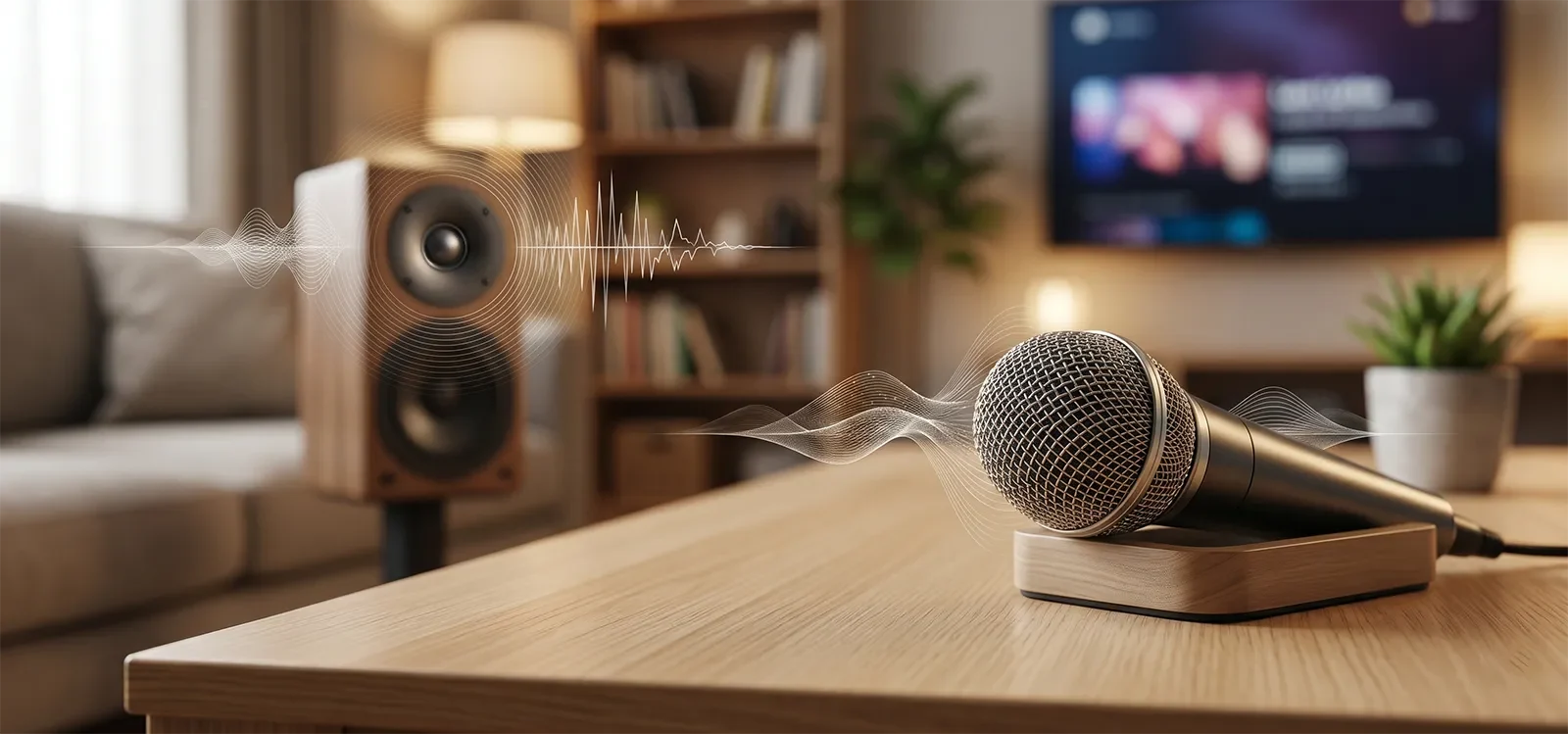
Quick Answer
Treble is adding useful detail when vocals sound clearer, lyrics become easier to understand, and the system feels more open without becoming uncomfortable. Treble is adding harshness when the sound becomes sharp, edgy, splashy, or tiring even if it seems more “detailed” at first. In home karaoke, the difference often shows up in consonants, vocal edges, cymbals, and room reflections. Useful detail improves clarity while keeping comfort intact. Harshness makes the sound more noticeable but less enjoyable.
Table of Contents
What useful treble detail actually means
Useful treble detail means the upper part of the sound is helping you hear more clearly without making the system harder to enjoy. In plain language, lyrics become easier to follow, vocal edges feel more defined, and small musical details come through without sounding forced.
This matters because karaoke depends heavily on vocal intelligibility. People need to hear the words, the timing, and the shape of the singer’s voice. A system that is too dull can make vocals feel covered or closed in. A controlled amount of treble can bring the voice forward and make the mix easier to read.
Good detail usually feels informative, not demanding. You notice that the vocal is clearer, but the treble itself does not keep calling attention to itself. The sound feels more open, not more tense. That is the key difference between clarity that helps and brightness that becomes fatiguing.
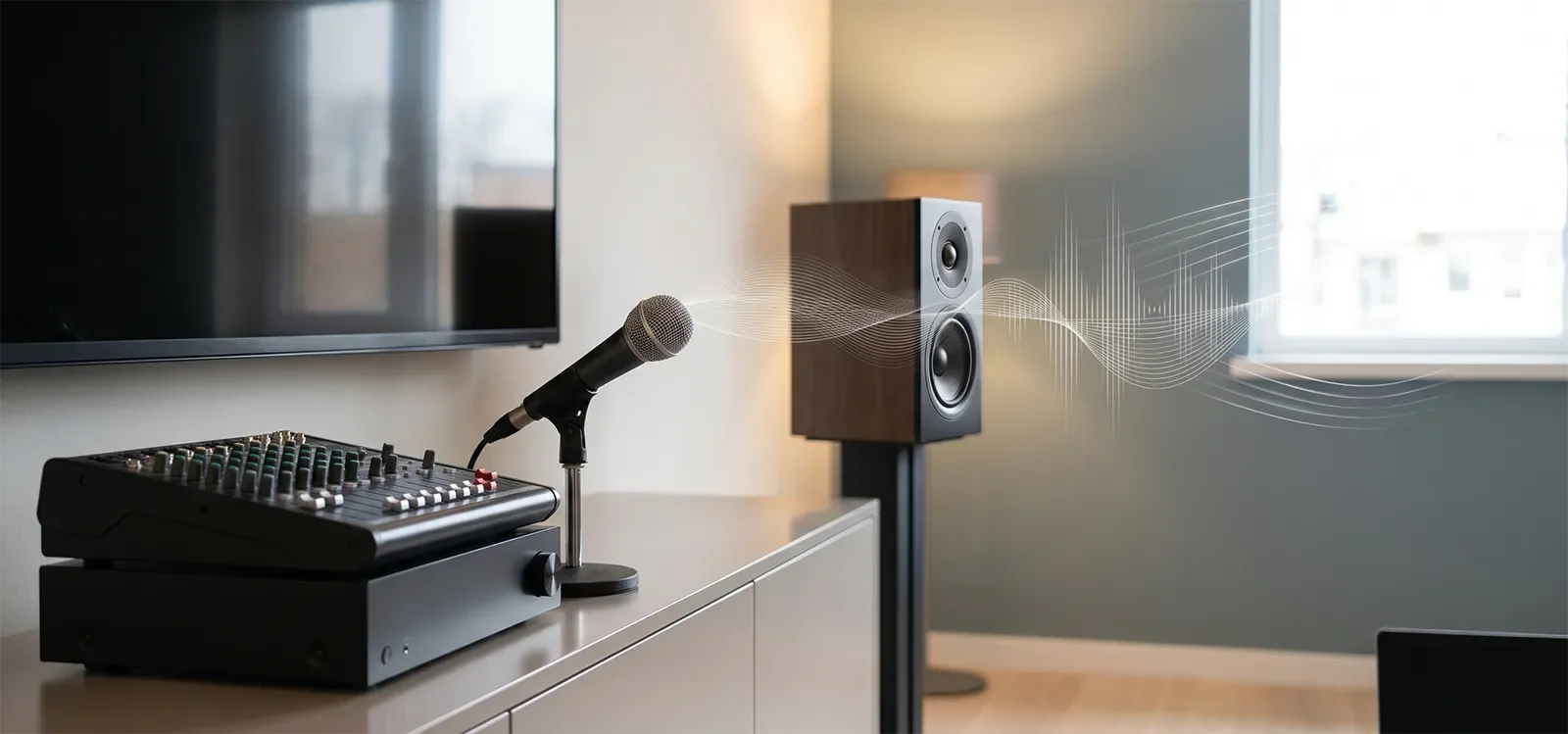
How treble changes system behavior
When treble is helping, the system becomes more articulate. Consonants have cleaner shape, vocals are easier to track, and the overall sound feels less covered. The system gives the listener more information without making the ear feel pressured.
When treble crosses into harshness, the behavior changes. The vocal edge may become too hard. Cymbals may sound splashy or distracting. Reflections from walls, windows, tile, or hard flooring may become more obvious. The system may seem more revealing at first, but it becomes less comfortable over time.
This is why brightness alone is not enough to judge the result. A brighter system is not automatically better, and a smoother system is not automatically less detailed. The real question is whether the extra top-end helps the system communicate more clearly. If you want the settings-side topic, our guide to advanced EQ tips for karaoke covers EQ adjustment more directly. This article stays focused on the listening judgment itself.
What users actually hear at home
At home, useful treble often shows up as clearer lyrics and better vocal focus. The singer’s voice sits in the mix more naturally. Words are easier to understand. The music feels more open, but the system does not become brittle or stressful.
Harshness sounds different. It often appears as sharp vocal edges, overly aggressive “s” and “t” sounds, splashy cymbals, or a glare that makes the room feel harder than it should. At first, this can be mistaken for better clarity because the sound is more obvious. After a few songs, it usually feels tiring instead of helpful.
The room can make this harder to judge. A reflective room can exaggerate upper-frequency energy and make normal clarity feel sharper than it really is. This is one reason the same karaoke system may sound smooth in one room and harsh in another. For the broader room-and-system issue, see why some karaoke systems sound harsh at home.

Why brightness can be misleading
A common mistake is assuming that more sparkle always means more real detail. Sometimes it does. But sometimes the system is only pushing the top edge of the sound forward. That can create the impression of clarity without actually making lyrics easier to understand.
Another mistake is blaming every uncomfortable sound on the treble knob alone. The harshness may also come from the room, microphone tone, recording quality, speaker placement, or the way the vocal sits in the mix. What matters most is the listening result. Does the system help you hear the singer more clearly, or does it make the sound feel harder?
Many users chase clarity by adding more treble when the real issue is somewhere else. If the vocal becomes more noticeable but not easier to follow, the extra treble is probably not solving the problem. Good clarity should reduce listening effort. Harshness increases it.
A practical listening rule for detail vs harshness
A useful rule is simple: if the sound becomes easier to understand without becoming harder to enjoy, the treble is probably adding useful detail. If the sound becomes more obvious but also sharper, thinner, or more tiring, the treble is probably leaning toward harshness.
Start by listening to vocals. Useful detail makes words arrive with better shape and cleaner edges. Harshness makes the top of the voice feel etched, forced, or slightly painful over time. Pay close attention to consonants. If “s,” “t,” and “ch” sounds jump out too aggressively, the system may be adding edge rather than clarity.
Then listen for fatigue. Harshness often wins the first few seconds because it sounds exciting or revealing. Useful detail holds up better after a few songs. If people keep wanting to turn the volume down even though the system is not extremely loud, the top end may be too stressful for comfortable karaoke listening.
Conclusion
Treble adds useful detail when it improves vocal clarity, lyric intelligibility, and openness without making the system sharp or tiring. It adds harshness when the sound becomes more aggressive, more stressful, or less comfortable even if it seems more detailed at first.
The main trade-off is not simply bright versus dull. It is helpful information versus tonal stress. In home karaoke, the best treble balance lets people hear the singer clearly and keep enjoying the music after more than one song.
Frequently Asked Questions
Can brighter karaoke sound seem clearer at first even if it is harsh?
Yes. Extra treble often grabs attention quickly, so it can create an immediate impression of more clarity. But if the sound becomes sharp, tiring, or stressful after a few songs, that first impression may be false detail rather than useful clarity.
What should I listen to first when judging treble detail?
Start with vocals, especially lyrics and consonants. Useful treble makes words easier to follow without making the voice sound etched or tense. Harsh treble makes the top of the voice feel sharp, forced, or tiring.
Can the room make treble sound harsher?
Yes. Hard surfaces can reflect upper-frequency energy and make a system sound brighter or more aggressive than expected. Tile floors, bare walls, glass, and open reflective spaces can all make treble harder to judge at home.
Is useful detail always subtle?
Not always, but it should feel controlled. You may notice clearer lyrics or a more open sound right away, but the system should still feel comfortable. If the “detail” keeps demanding attention from your ear, it may be moving toward harshness.
Should I always reduce treble if the system sounds harsh?
Not always. Reducing treble may help, but harshness can also come from room reflections, microphone tone, speaker placement, or recording quality. The better first step is to judge whether the sound is truly clearer or simply more aggressive.
If your system sounds clearer but also makes you want to turn it down, pay attention to that reaction. Better listening judgment usually helps more than making large changes too quickly.
Learn how professionals tune karaoke systems for better home sound.