
Echo and reverb help karaoke vocals only when they support the voice without covering the words. For clearer singing at home, the best setting is usually not the biggest effect. It is the smallest amount of space that makes the singer feel comfortable while keeping lyrics direct, readable, and easy to follow.
Who this guide is for: Home karaoke users who want smoother, more comfortable vocals without making the voice blurry, distant, delayed, or washed out.
How this guide was prepared: This guide was written from real home karaoke use, focusing on how echo and reverb affect vocal clarity, timing, comfort, room fit, and singer confidence.
Echo and reverb are supposed to make singing feel easier. Used well, they can soften a dry vocal, help the singer feel less exposed, and make the voice sit more naturally with the music.
But many home karaoke systems use too much effect. The vocal may sound impressive for a few seconds, then become harder to understand once the song starts. Words smear together. Timing feels slower. The singer sounds farther away. In a small or medium home room, that usually means the effect has gone past helpful and started covering the voice.
This article focuses on one practical technical question: how to adjust echo and reverb for clearer karaoke singing. For broader plain-English technical context, see our Karaoke Technical Guides.
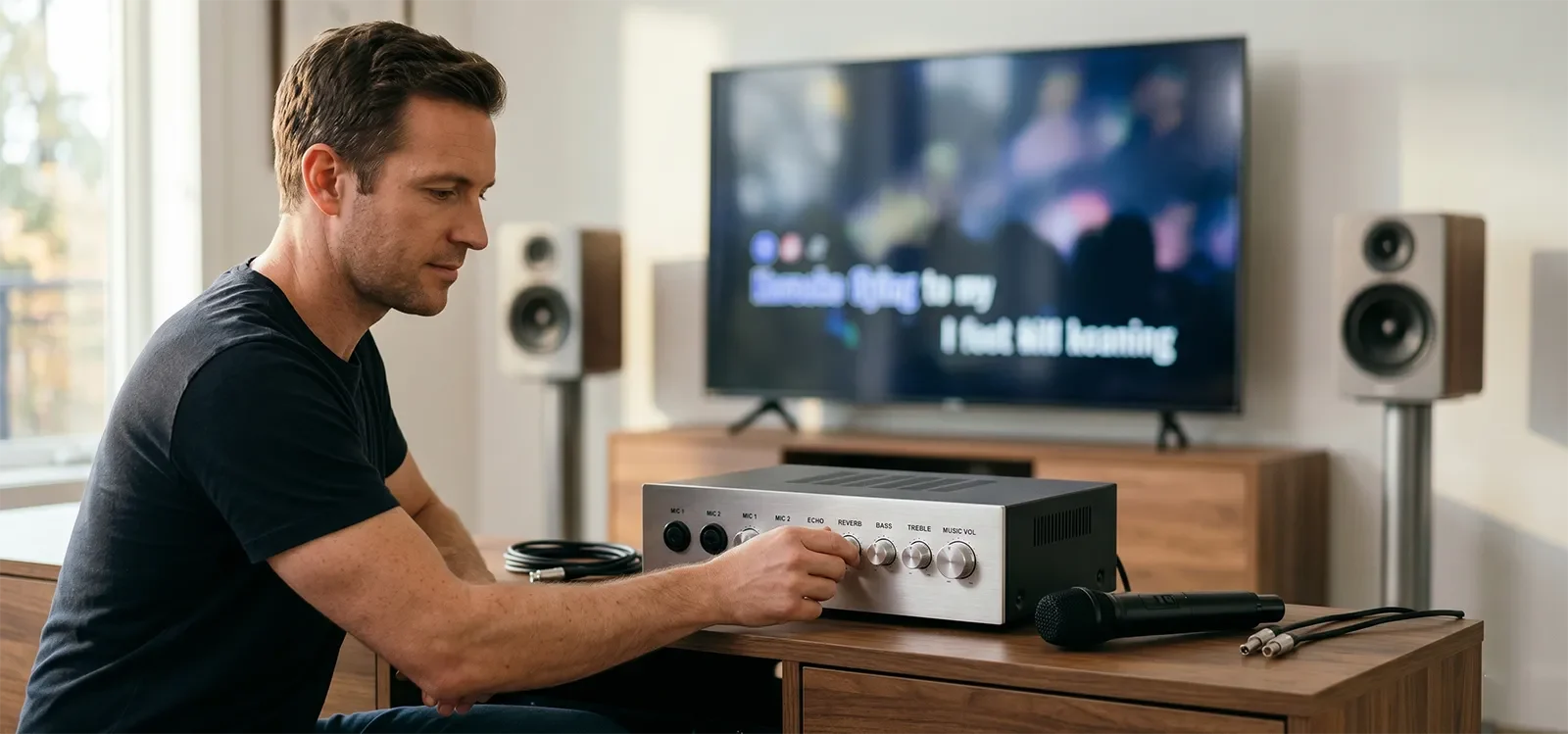
Table of Contents
Quick Answer
For clearer karaoke singing, start with less echo and reverb than you think you need. Echo adds repeat and rhythmic support, while reverb adds space and tail around the voice. Both should make the vocal feel smoother without making lyrics harder to understand. If the voice sounds distant, smeared, slow, or harder to pitch, the effect is too heavy. Tune in this order: lyric clarity first, singer comfort second, room space last.
Echo vs Reverb in Karaoke
Echo and reverb are often grouped together, but they do different things to a karaoke vocal.
Echo creates repeat. It gives the voice a delayed copy that can make singing feel more forgiving, especially between phrases. If used carefully, echo can help a vocal feel smoother and less dry.
Reverb creates space. It adds a lingering tail around the voice, making the vocal feel like it is sitting in a room rather than sounding completely exposed.
In home karaoke, the goal is not to make either effect obvious. The goal is to use just enough effect so the singer feels supported while the words still stay clear.
What Echo and Reverb Change First
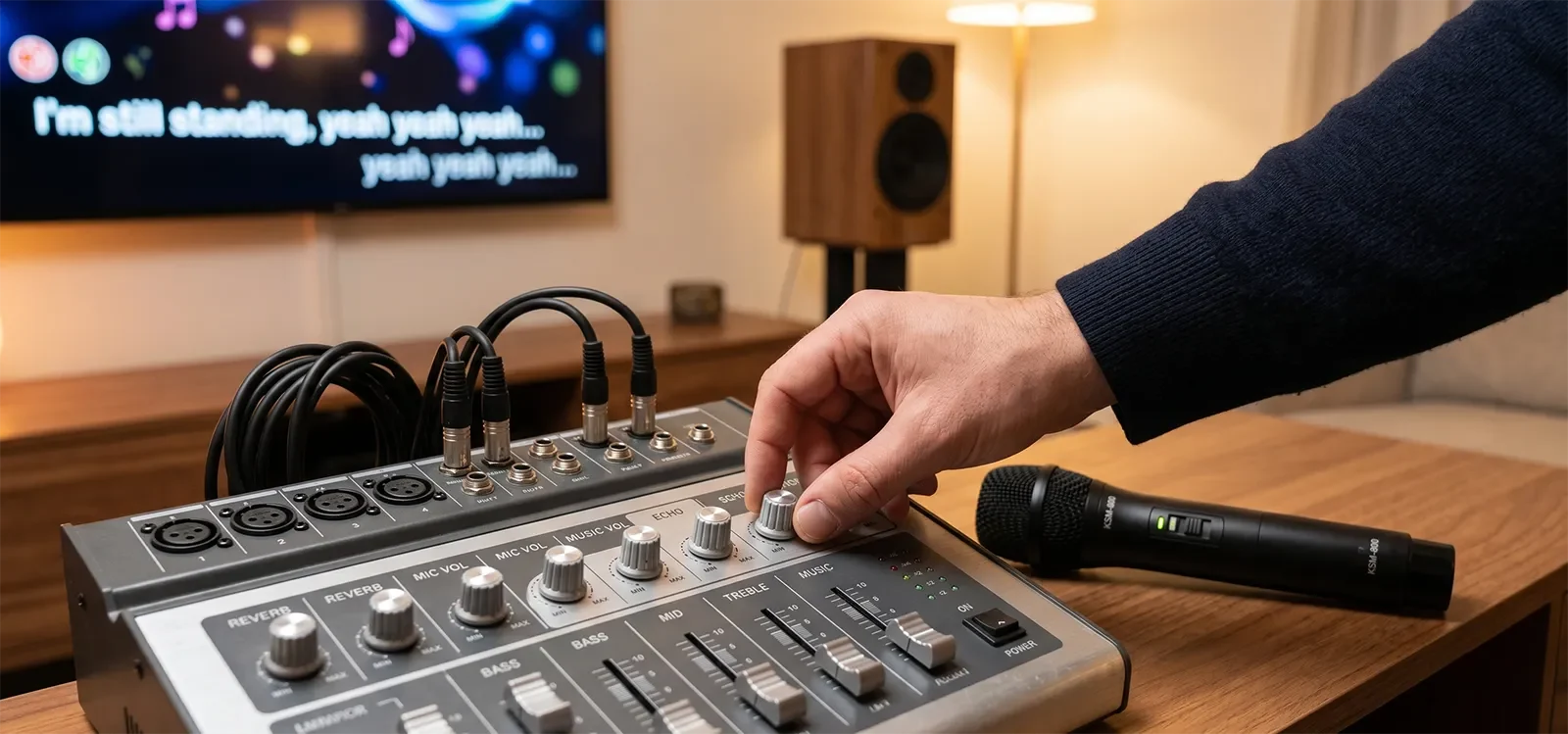
Echo and reverb do not simply make a vocal “better.” They change how direct or wrapped the voice feels.
A small amount can make the vocal feel smoother, warmer, and easier to sing through. Too much can push the voice backward, blur consonants, soften timing, and make the singer feel less connected to the music.
This matters because karaoke vocals must stay readable. The listener needs to understand the words, and the singer needs to hear the voice clearly enough to control pitch and timing. If the effect makes the vocal prettier but less readable, the setting is not helping.
Effect tuning also depends on vocal balance. If the voice is already too low or too buried under the music, adding more echo or reverb may only hide the problem. In that case, start with how to balance music and vocals in karaoke before pushing the effects.
The Safest Starting Point for Most Homes
For most small and medium home rooms, the safest starting point is a vocal that sounds slightly dry, clean, and direct. That gives you a clear reference before adding space around the voice.
This works because the room is already adding some sound of its own. Walls, floors, furniture, glass, and room size all affect how spacious or cluttered the vocal feels. If you start with a very wet effect, the room and the processor can stack together quickly.
A slightly dry starting point also protects lyric clarity. Once the words are easy to follow, you can add echo and reverb slowly until the vocal feels more comfortable without losing focus.
The goal is not to make the mic test sound impressive. The goal is to make the vocal stay clear through a whole song, different voices, and normal family-room volume.
How to Adjust by Listening
The best way to adjust echo and reverb is to listen in the right order. Do not start by asking whether the effect sounds big. Start by asking whether the words are still easy to understand.
Use this order:
- Lyric clarity: Can you understand the words easily?
- Singer comfort: Does the singer feel supported instead of exposed?
- Sense of space: Does the vocal feel natural without becoming distant?
If lyric clarity fails, the setting is already too heavy or the vocal balance is wrong. If clarity stays strong but the singer feels too bare, add a little effect. If the singer feels comfortable but the vocal starts floating too far back, reduce the effect.
After the effect behavior is stable, broader tone shaping may help. That is where advanced EQ tips for karaoke can support clarity, but EQ should not be used to rescue an effect setting that is already too dense.

What Too Much or Too Little Sounds Like
When echo or reverb is too much
Too much effect usually makes the vocal sound farther away, slower, and less focused. Fast lyrics begin to smear. Strong notes lose edge. Duets become crowded. The voice may sound nice during a short test, then become messy once the music starts.
Common signs include:
- Words are harder to understand.
- The vocal feels behind the beat.
- The singer sounds distant instead of present.
- The room feels crowded with vocal tail.
- Pitch control feels harder because the voice is less direct.
When echo or reverb is too little
Too little effect creates a different problem. The vocal can feel dry, flat, or too exposed. Casual singers may push harder because the voice feels unforgiving.
Common signs include:
- The singer feels nervous or unsupported.
- The vocal sounds bare compared with the music.
- Small vocal imperfections feel too obvious.
- The performance feels less smooth, even though the words are clear.
The sweet spot is between those extremes. The vocal should stay direct and readable, but it should feel a little easier to sing.
A Simple Tuning Order
Use one familiar song with both short phrases and held notes. Do not tune only by speaking into the microphone. Speech checks are useful, but real songs reveal timing, lyric density, and room buildup more clearly.
Try this order:
- Start with a clean vocal and very little effect.
- Set the vocal level so the words sit clearly above the music.
- Add a small amount of echo until the singer feels less exposed.
- Add only enough reverb to give the voice a little space.
- Sing a real chorus and listen for lyric clarity.
- Reduce the effect if the vocal becomes smeared, slow, or distant.
Then listen from the normal singing and seating positions, not only from the control spot. A setting that sounds fine beside the mixer may feel too wet once it fills the room.
The practical rule is simple: stop as soon as the vocal feels supported. Do not keep turning the effect up just because it sounds pleasant by itself.
Common Mistakes
Using effects to hide poor vocal balance
If the vocal is too low under the music, more reverb or echo will not solve the real issue. It may make the voice bigger, but not clearer.
Copying random setting numbers
Every room, microphone, speaker, and singer is different. A setting that works in one room may sound washed out in another. Listening is more reliable than copying numbers.
Tuning with speech only
A spoken mic check does not show how the effect behaves during real singing. Always test with music and actual phrases.
Making the effect obvious
In most home karaoke setups, the best effect is felt more than noticed. If everyone notices the reverb before they notice the singer, the effect is probably too strong.
Conclusion
Echo and reverb improve karaoke vocals when they make singing feel easier without covering the words. The trade-off is simple: more ambience can sound flattering for a moment, but too much quickly reduces clarity, timing, and control.
For clearer singing at home, tune lyric clarity first, singer comfort second, and space last. Start slightly dry, add effect slowly, and stop when the vocal feels supported but still direct. That is usually the setting that works best through real songs, real rooms, and real family karaoke use.
Frequently Asked Questions
Should karaoke use echo and reverb together?
Often, yes, but both should be modest. Echo can make the voice feel more forgiving, while reverb adds a sense of space. The best result usually comes from a controlled blend, not a heavy amount of either effect.
Why do vocals sound fine during testing but messy when the song starts?
Because real music exposes effect problems. A short mic check does not show how echo repeats, reverb tails, lyric speed, and room reflections interact during a full song. Always test effects with familiar music.
Do smaller rooms need less echo and reverb?
Usually, yes. Smaller rooms already add reflections of their own, so heavy effects build up faster. In small rooms, a cleaner and more direct vocal usually stays clearer.
What matters first: echo, reverb, or vocal balance?
Vocal balance usually comes first. If the voice is not sitting correctly against the music, effects may hide the problem instead of fixing it. Balance the vocal first, then add echo and reverb carefully.
How do I know if my reverb is too high?
If the vocal sounds distant, words become softer, or the tail hangs between lines, the reverb is probably too high for the room. Reduce it until the voice feels closer and the lyrics become easier to follow.
The next helpful step is learning how music and vocal level work together before you push the effects further.