
A good beginner karaoke system should feel easy to start, easy to understand, and satisfying enough that your family wants to use it again next weekend. For most first-time buyers, the best choice is not the cheapest system or the most advanced one. It is the home karaoke system that fits the room, keeps vocals clear, makes song playback simple, and does not turn karaoke night into a setup project.
Written by Toan Ho — Tittac editorial team.
Quick Answer
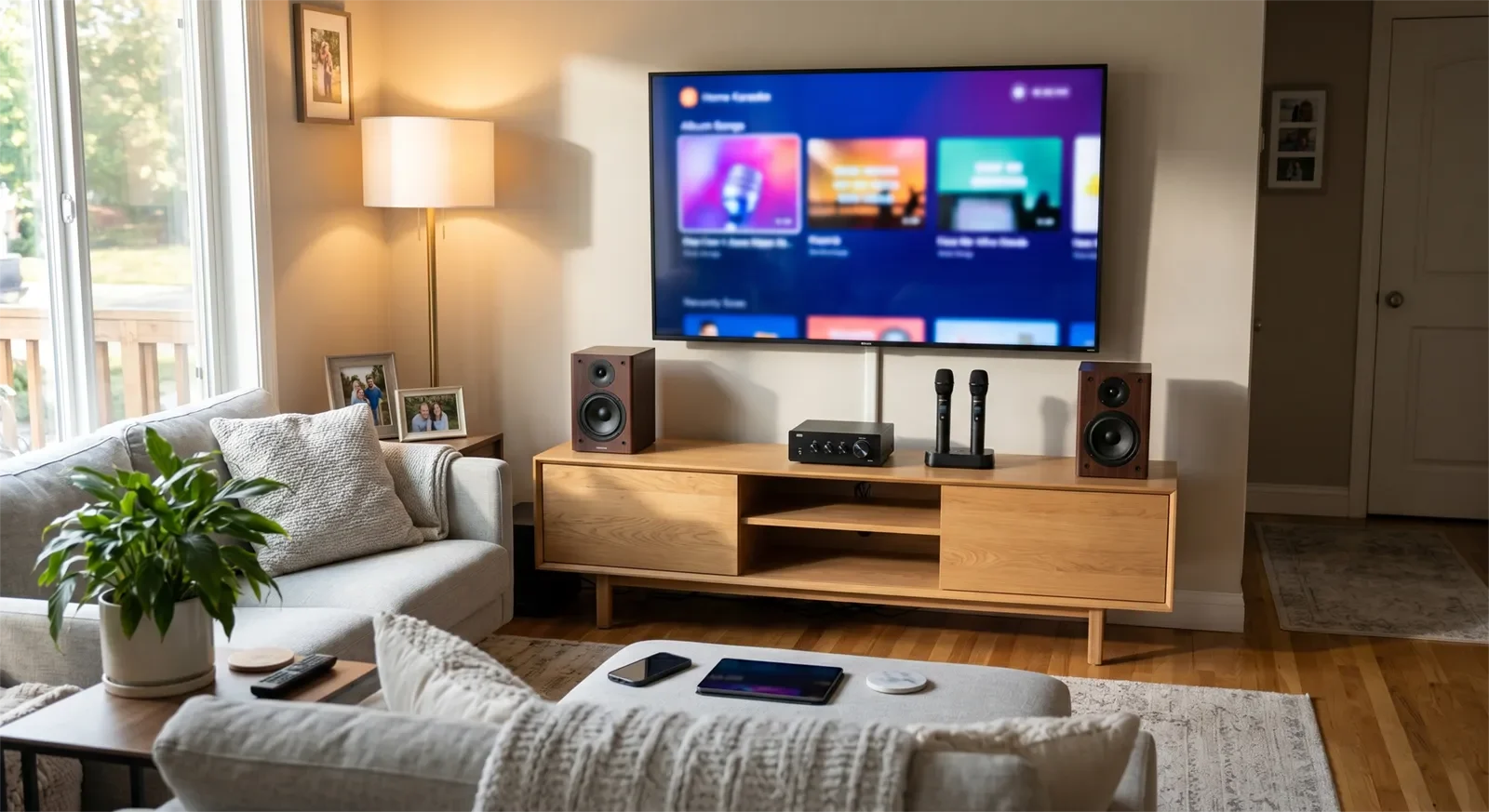
Choose a simpler beginner karaoke system if you want easy startup, casual family singing, and a setup that works well in a small or shared room without much adjustment. Choose a more capable beginner-friendly home karaoke system if your family sings often, your room is medium to large, or you already know that clearer vocals, better control, and stronger long-term satisfaction matter to you.
For most beginners, the best starting point is a system with clear vocals, comfortable microphones, easy song playback, and a setup flow that makes sense from day one. If those basics are right, the rest of the learning curve becomes much easier.
Definition: In this guide, a beginner karaoke system means a home karaoke system built for first-time buyers who want an easier learning curve, practical daily use, and enough performance to feel good without getting lost in unnecessary complexity.
Who this guide is for: This guide is for first-time home karaoke buyers who want a system that feels easy to understand, fits the room, and gives them a good first experience without getting lost in specs.
How this guide was prepared: This guide was prepared using the practical factors that matter most for beginner home karaoke buyers: room size, ease of use, vocal clarity, song playback workflow, microphone quality, budget fit, and upgrade path.
Need help choosing the right setup for your home? Visit our Garden Grove showroom or contact Tittac for help in English or Vietnamese.
If you want the broader framework first, start with how to choose the best karaoke system for your home. Then use this guide to narrow down what beginners should care about first.
Table of Contents
What Matters Most When Choosing a Karaoke System for Beginners
Room size and home setup
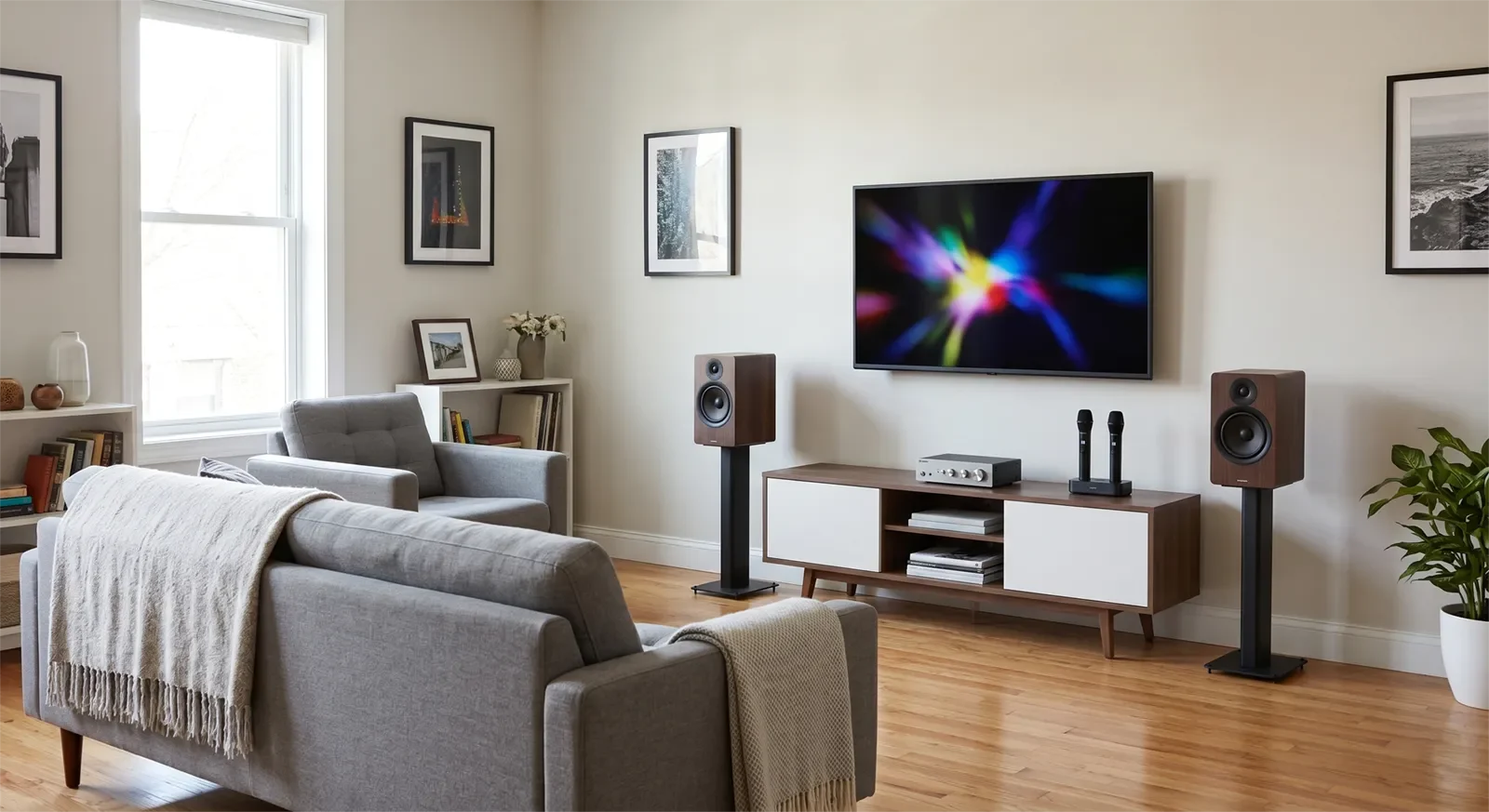
Room size changes beginner decisions more than many buyers expect. A home karaoke system that feels great in a condo, bedroom, or smaller living room may feel thin in a bigger family room. On the other hand, a system that is clearly larger than the room needs can feel harder to place, harder to control, and less comfortable in day-to-day use.
Beginners usually do better when they choose for the room they have now instead of for an imagined future room or a rare holiday gathering. It also helps to think about how the room is really used. Will the system stay in one main TV area? Is karaoke happening in a shared family room or in a space used mostly for entertaining? A beginner setup should feel natural in the room, not oversized or awkward.
Ease of use and daily workflow
For beginners, ease of use matters almost as much as sound. A system can look strong on paper and still become frustrating if it takes too many steps to start a song, balance the microphones, or explain to other family members. Most first-time buyers are happier with a home karaoke system that feels understandable after a few uses than with one that promises more control but creates more friction every time karaoke starts.
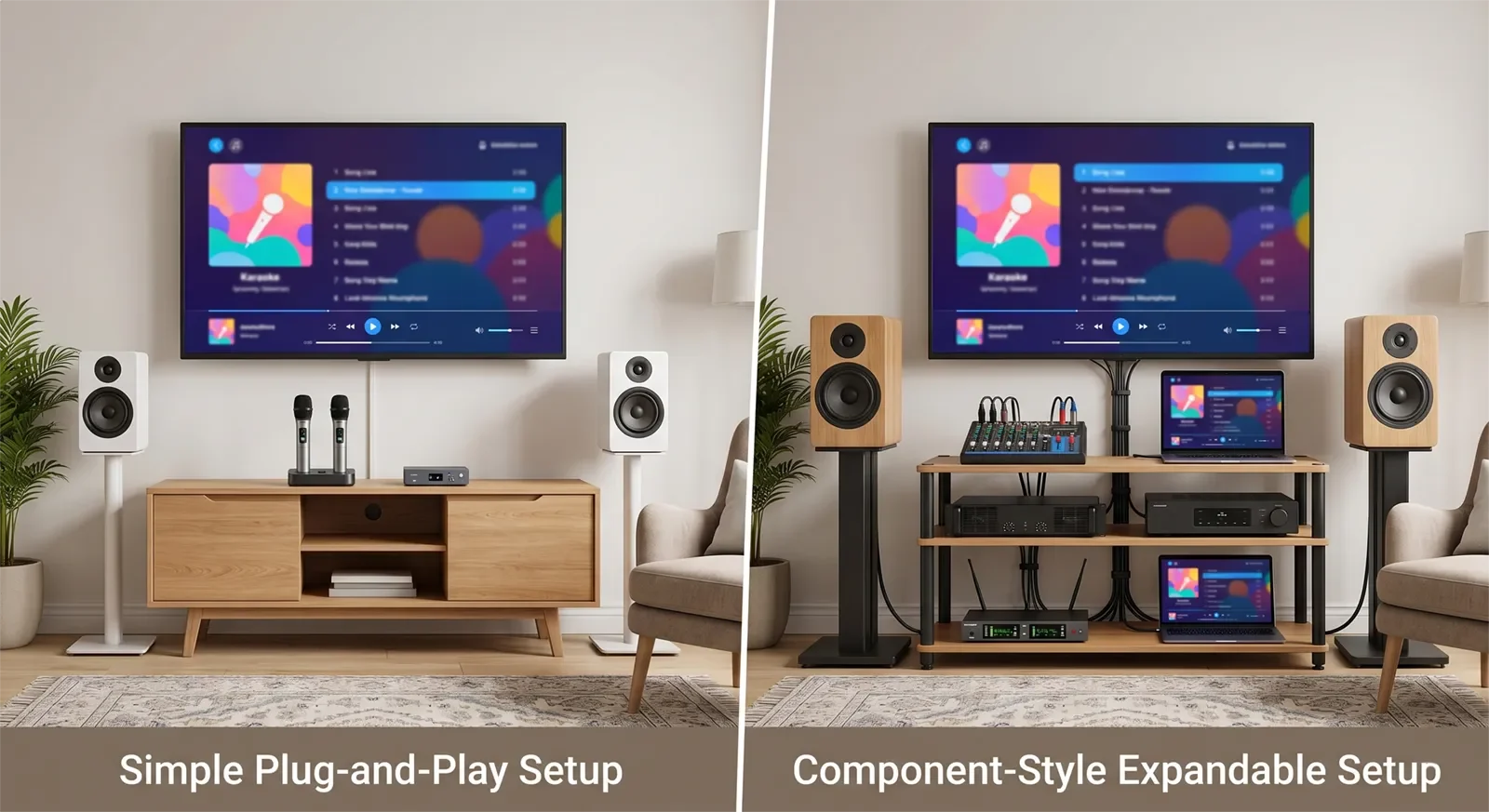
This is why the beginner decision is often really a simplicity-versus-flexibility decision. If that is the part you are stuck on, comparing all-in-one vs. component karaoke systems can help you see whether you want a faster plug-and-play routine or a setup that gives you more room to shape things over time.
Microphone quality and song playback
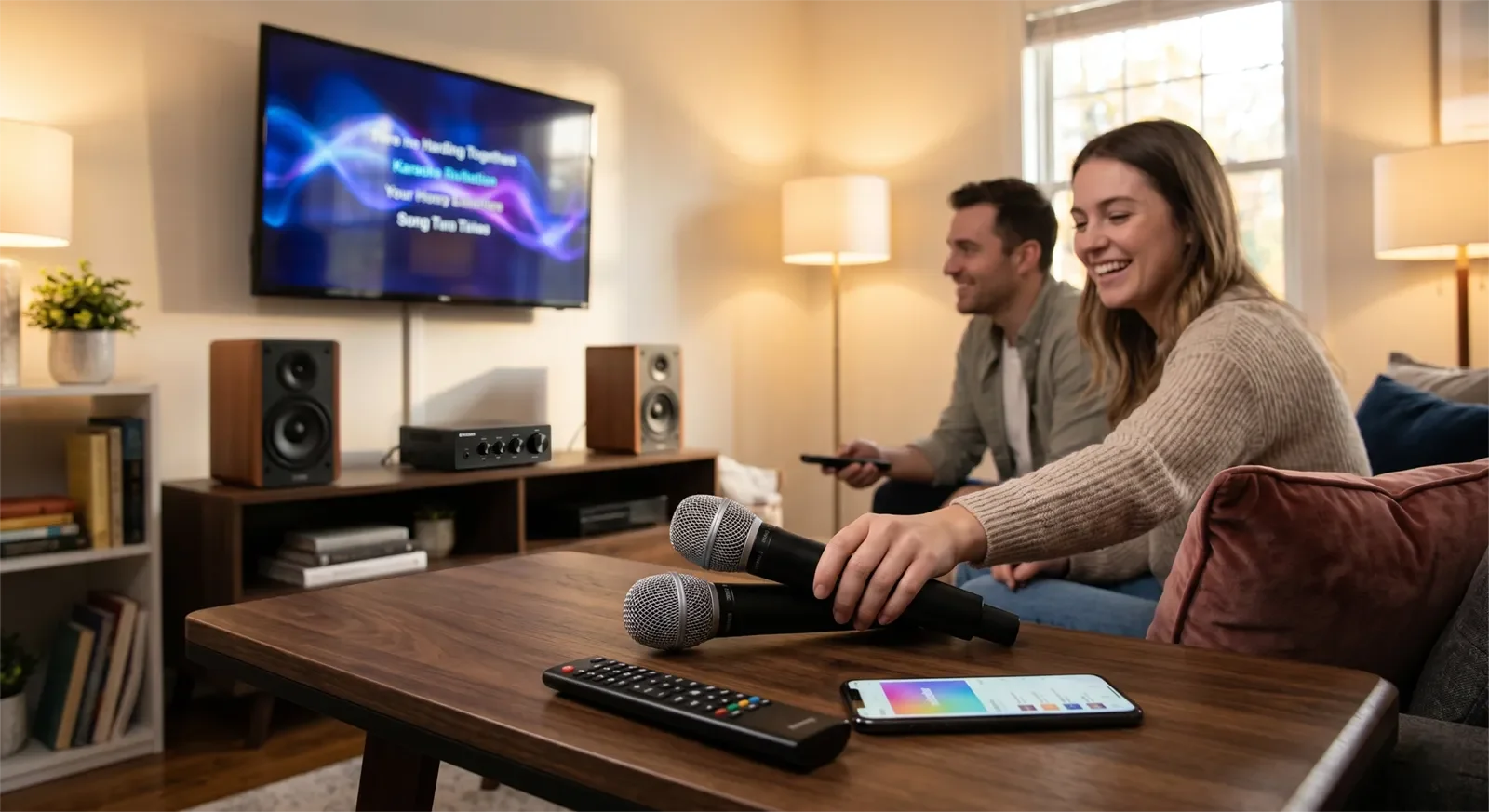
Beginners often focus on speakers first and underestimate how much the experience depends on microphones and playback flow. Clear microphones make singing feel more natural. Easy TV and YouTube playback makes karaoke feel repeatable instead of clumsy. A system that sounds decent but feels awkward to start usually gets used less than expected.
That is why beginners should treat microphone quality and song playback workflow as core parts of the decision, not as minor details to figure out later.
Long-term value and upgrade path
A good beginner karaoke system should feel right now without becoming disappointing too quickly. Some first-time buyers underbuy because they are afraid of wasting money. Others overbuy because they are afraid of making a mistake. In real home use, value usually comes from buying enough system for the room, the family, and the way songs will actually be played, not from buying the most gear.
If budget is a big part of your decision, it helps to compare your options against a realistic karaoke system budget guide instead of assuming that entry-level or premium automatically tells you what will feel right at home.
| Factor | Why it matters | Common mistake |
|---|---|---|
| Room fit | Helps the system feel balanced and comfortable where you actually sing | Buying by size category instead of real room use |
| Ease of use | A simpler setup usually gets used more often by beginners | Choosing a system that feels too technical for the household |
| Microphone quality | Clearer, easier vocals make the first karaoke experience much more satisfying | Treating microphones like a small accessory instead of part of the core experience |
| Song playback workflow | TV and YouTube convenience affect how natural karaoke feels at home | Ignoring how songs will actually be played and controlled |
| Upgrade path | Lets you buy enough now without overcommitting too early | Paying for long-term complexity you may never use |
The Best Fit for Different Home Use Cases
Best for simple plug-and-play use
Best for: Beginners who want a straightforward setup for casual family singing, smaller or shared rooms, and a system that starts easily without much adjustment.
Not ideal if: You already know your family sings often, your room needs more coverage, or you care a lot about having more control over vocals, music balance, and long-term flexibility.
Why this fit makes sense: A simpler beginner system lowers the barrier to use. It keeps the footprint cleaner, the workflow easier, and the learning curve much smaller. In many homes, that leads to more real use than a more advanced setup that looks better online but feels less inviting once it is in the room.
Best for better sound and more control
Best for: Beginners who want a stronger first setup, expect regular home singing, and are willing to live with slightly more system complexity in exchange for better overall control.
Not ideal if: You mainly want something fast, casual, and easy to explain to anyone in the household without much setup help.
Why this fit makes sense: Some first-time buyers already know they care about clearer vocals, steadier microphones, and a setup that feels more complete from the beginning. In that case, starting slightly higher can make sense. The key is that the extra control should actually improve real home use, not just add more parts and more decisions.
Best if you want room to upgrade later
Best for: Buyers who want a solid starting point now but also want the setup to make sense if family use, room expectations, or singing frequency grow over time.
Not ideal if: Your main goal is the simplest possible setup right now and you do not want to think about future changes at all.
Why this fit makes sense: Many households grow into karaoke. What starts as a casual purchase becomes something the family uses more often than expected. A beginner setup with some room to grow can be smart when you already suspect that your expectations will rise. The important part is to leave room for improvement without paying for complexity that feels unnecessary today.
Budget, Room Size, and Setup Trade-Offs
A good beginner karaoke system does not have to be the biggest or most expensive option. In many homes, enough means clear vocals, practical microphones, easy song playback, and room-appropriate coverage without turning the setup into a project. That is usually a better beginner outcome than buying a weaker system that never feels satisfying or a more advanced one that nobody wants to manage.
Overkill is real for beginners. A bigger system is not automatically a smarter first system if the room does not need it or the household will not use the extra flexibility. At the same time, going too small can be frustrating if karaoke quickly becomes a regular activity. The right beginner decision usually sits between those extremes: enough system to feel fun and complete, but not so much system that it creates stress instead of enjoyment.
| Scenario | What usually works | When to spend more | When not to |
|---|---|---|---|
| Small room, casual family use | A simpler beginner system with easy TV-based workflow and two practical microphones | When vocals already feel weak or the family uses karaoke more often than expected | When extra spending mainly adds complexity, not comfort |
| Shared living room, weekly singing | A more balanced setup with clearer vocals and better day-to-day control | When the room and routine clearly justify better overall performance | When the household still wants the fastest, simplest setup possible |
| Beginner buyer with long-term interest | A solid starting system with some room to improve later | When future upgrades are realistic, not just hypothetical | When you are buying future complexity before you know you want it |
| Family wants easy TV and YouTube use | A setup that keeps playback simple and vocals easy to manage | When the current source workflow already feels clumsy or limiting | When the extra cost does not improve the actual singing routine |
Common Buying Mistakes to Avoid
Buying by specs before locking the room and routine
Beginners often look at bigger claims, more features, or more powerful-sounding descriptions and assume that means safer. In reality, the better beginner decision is usually the one that fits the room and feels easy enough to use regularly. Choose for real home use first, then compare features inside that smaller, more relevant range.
Underestimating the song-playback workflow
Many first-time buyers focus on the speaker side and forget that karaoke also depends on how songs are actually found, shown on the TV, and controlled during the session. That creates frustration later, especially when the system sounds okay but the night still feels awkward. Treat TV and YouTube workflow as part of the buying decision, not something to figure out later.
Buying for a future dream setup instead of the first real experience
Some beginners pay for complexity they may never grow into. Others buy too small because they only think about today and ignore the way family use can grow. Buy for the way your home is most likely to use karaoke in the next year, not for a fantasy version of the room or a once-a-year special event.
How to Choose the Right Beginner Karaoke System in 60 Seconds
- Start with the room and use case: small shared room, standard living room, or bigger family space.
- Decide how important ease of use is: do you want fast plug-and-play use, or are you comfortable with a slightly more involved setup?
- Choose your main priority: simpler daily workflow, clearer vocals, or more long-term flexibility.
- Set a budget boundary based on what your room and household really need, not on fear of buying too small or too big.
- Ask whether you want to keep things simple now or start with a setup that still makes sense if karaoke becomes a regular activity later.
If you only remember one thing, remember this: For most beginners, start with a system that feels easy to use, fits the room honestly, and gives you clear vocals before you chase advanced flexibility.
Frequently Asked Questions
What makes a karaoke system good for beginners?
A good beginner karaoke system is one that feels easy to start, easy to understand, and satisfying enough that people actually want to use it again. For most homes, that means clear vocals, simple song playback, practical microphones, and room-appropriate coverage rather than the most advanced feature list.
Should beginners choose an all-in-one or a component karaoke system?
Most beginners are happier with the option that matches their tolerance for setup. If you want faster startup, less clutter, and easier daily use, simpler systems usually make more sense. If you already know you want more control and more flexibility later, a more expandable approach can still be a smart beginner choice.
Do beginners need expensive microphones?
No, but beginners do need microphones that make singing feel clear and comfortable. Weak microphones can make a first system feel disappointing even when the rest of the setup is decent. You do not need the most expensive option, but you should not treat microphones like the least important part either.
Is YouTube enough for a beginner home karaoke setup?
For many homes, yes. YouTube is often the easiest way to start because it gives you quick song access and a familiar TV-based workflow. The important part is making sure the full setup is structured correctly so the TV shows the songs while the karaoke system still handles the singing experience properly.
Final Recommendation
If you are buying your first karaoke system, keep the decision grounded in real home use. The best beginner system is usually the one that fits the room, keeps startup simple, gives you clear vocals, and feels comfortable enough that the family actually uses it often. If your priority is casual singing and low stress, stay simple. If you already know you want better control and longer-term satisfaction, step up only as far as your room and routine justify.
The main trade-off is not beginner versus advanced. It is easy daily use versus extra flexibility. Buy for the way your home really sings now, and leave room to grow only if that growth feels realistic.
Want to make your first karaoke setup easier to choose and easier to live with?
Start with how to choose the best karaoke system for your home, compare all-in-one vs. component karaoke systems, or go deeper with the TV + YouTube + wireless microphone setup guide.