
Most home karaoke buyers should not start by asking for the most expensive system. They should start by matching the budget to the room, singing habits, and level of experience they expect. A practical setup may be enough for casual family singing, while a $7,000–$10,000 premium karaoke system only makes sense when the room, usage, and expectations truly justify it.
Written by Toan Ho — Tittac editorial team.
Who this guide is for: This guide is for U.S. home karaoke buyers comparing practical, family, premium, and high-end karaoke system budgets before choosing a setup for their home.
How this guide was prepared: This guide was refreshed around the factors that matter most in real home karaoke buying decisions: room size, ease of use, vocal clarity, speaker coverage, microphone quality, control, upgrade path, long-term value, and whether a higher budget will actually improve the way the system feels at home.
A home karaoke budget guide is only useful if it helps you spend in the right place. Most buyers do not waste money because they choose a bad system. They waste money because they choose the wrong spending level for their room, their family’s singing habits, or the experience they really expect.
The smartest question is not “How much should I spend?” It is “What will I actually feel as the budget goes up?” A better karaoke system should give you a better room match, clearer vocals, easier control, stronger microphone performance, cleaner speaker coverage, and a setup that still feels satisfying after the first few months. If you want the broader buying framework first, start with how to choose the best karaoke system for your home, then use this guide to judge budget levels more realistically.
Table of Contents
- Quick Answer
- Home Karaoke System Budget Ranges
- What Matters Most When Setting a Karaoke Budget
- Which Budget Level Fits Your Home?
- Budget, Room Size, and Setup Trade-Offs
- Common Budget Mistakes to Avoid
- How to Choose the Right Karaoke Budget in 60 Seconds
- Frequently Asked Questions
- Final Recommendation
Quick Answer
For most homes, the strongest value is usually in the middle of the karaoke budget range, where the system feels complete without becoming unnecessarily expensive or complicated. Lower budgets can work well for smaller rooms and casual singing. Higher budgets make sense when the room is larger, the family sings often, or the buyer wants stronger sound, better control, cleaner vocals, and a more premium long-term setup.
A $7,000–$10,000 karaoke system is not necessary for every home. It is best for buyers who want a flagship-level experience, host often, have a larger room, or want a system that feels closer to a showroom-style setup. The smartest budget is the one that solves the right problems in the room, not the one that simply buys the biggest package.
Home Karaoke System Budget Ranges
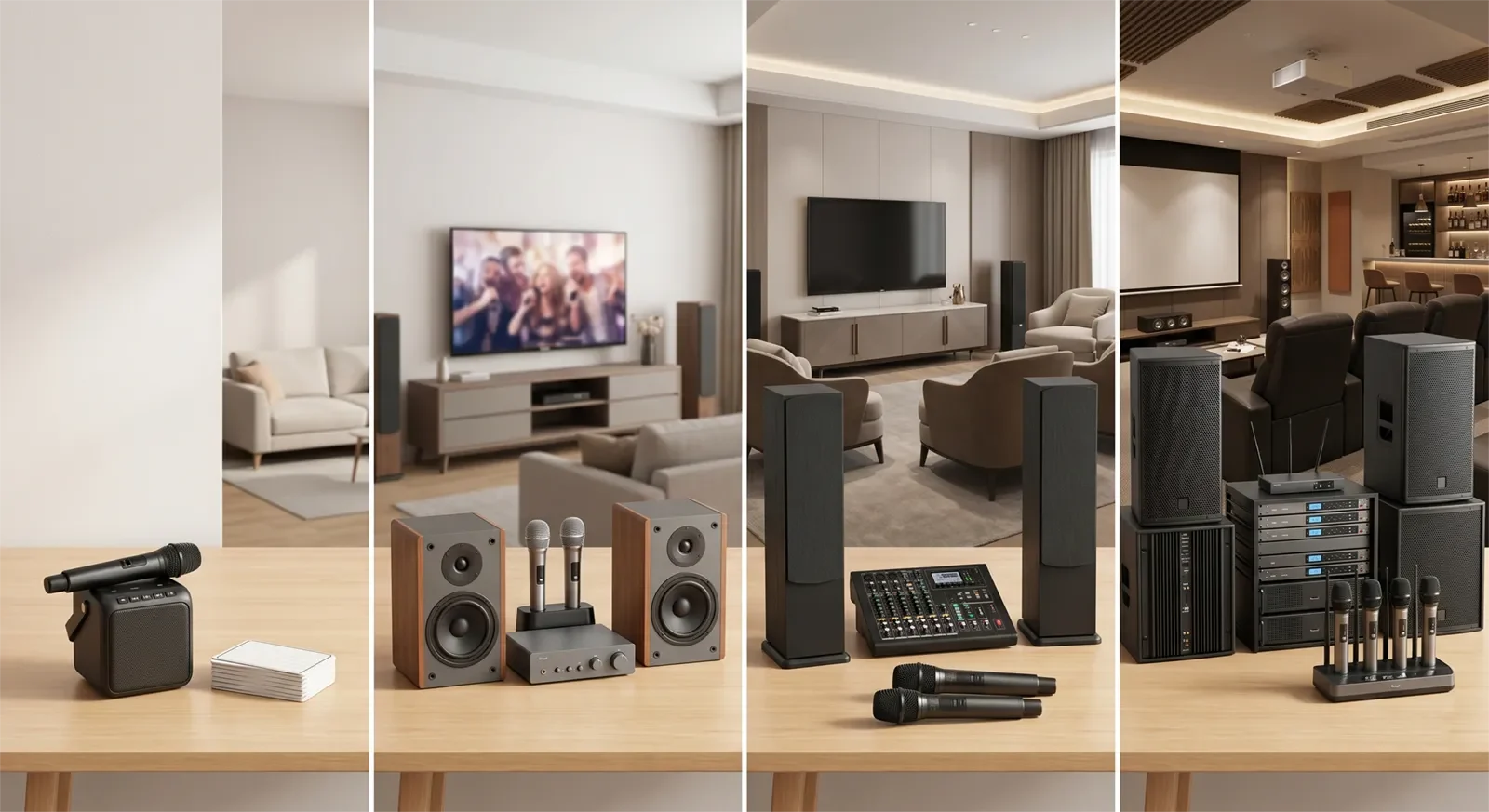
Every home is different, but most home karaoke budgets can be understood in four practical levels. These ranges are not strict rules. They are a buying framework to help you understand what each level is usually trying to solve.
| Budget Range | Best Fit | What the Budget Should Improve | When It May Be Too Much |
|---|---|---|---|
| $1,500–$2,500 | Practical starter setups, smaller rooms, casual family singing | Basic usability, clear enough vocals, simple home enjoyment | When the room is large or karaoke will be used often |
| $2,500–$4,500 | Strong family karaoke systems for regular home use | Better balance, easier control, stronger microphones, fewer compromises | When karaoke is very occasional or the household only wants the simplest setup |
| $4,500–$7,000 | Premium home systems for larger rooms or more serious family use | Stronger coverage, cleaner vocals, more headroom, better long-term satisfaction | When the room is small or the buyer is paying for capability they will not use |
| $7,000–$10,000 | Flagship or high-end home karaoke systems | Fuller sound, premium components, stronger room authority, showroom-level feel | When the purchase is based on fear, status, or rare use instead of real need |
The higher the budget, the more important the reason becomes. Spending more can be smart when it solves real problems: a bigger room, frequent use, higher vocal expectations, better microphones, stronger speaker coverage, or a desire to avoid upgrading again too soon. Spending more is not smart when the system becomes harder to use or when the room does not need the extra scale.
What Matters Most When Setting a Karaoke Budget
Room Size and Home Setup
Budget should start with the room. A karaoke system that feels satisfying in a small condo, bedroom, or compact living room may feel limited in a larger family room. At the same time, a large premium system can feel unnecessary if the space is small, the seating distance is short, or the family mainly wants simple casual singing.
Ask where people will actually sit, stand, and sing. Is karaoke happening in a shared TV area, a larger living room, a dedicated entertainment room, or a space used for hosting? The right budget should make the system feel natural in that room. It should not force the room to work around the system.
Ease of Use and Daily Workflow
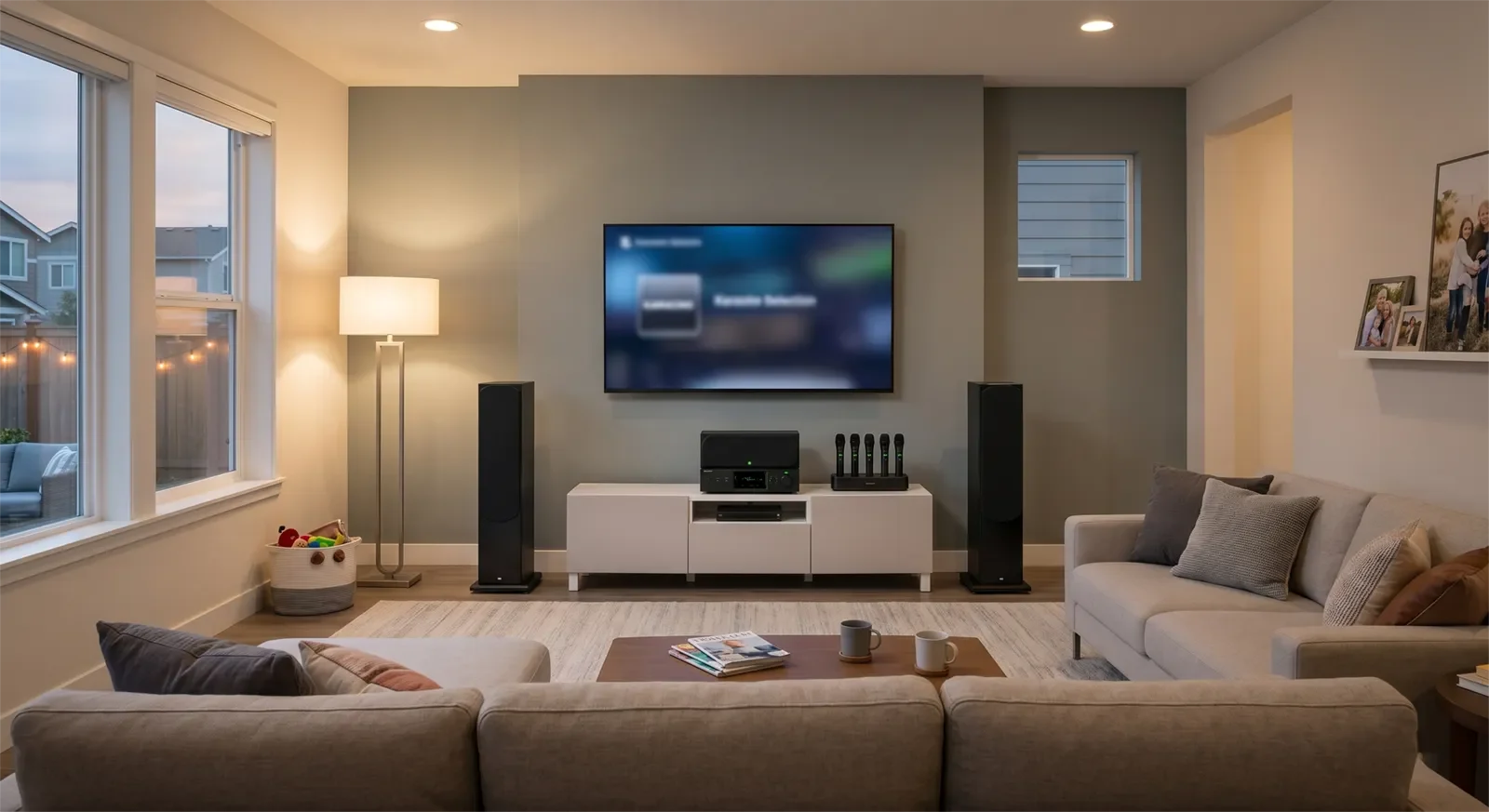
As the budget rises, the system should feel easier to enjoy, not harder to manage. A better budget match should make the setup easier to start, easier to explain to family members, and easier to enjoy without constant adjustment.
This is where many buyers spend in the wrong direction. They pay for more features when what they really need is a cleaner workflow. If your main concern is whether you want a simple setup or a more flexible component path, compare all-in-one vs component karaoke systems before assuming that a higher budget automatically means a better fit.
Vocal Clarity and Control
In karaoke, the voice is the center of the system. A better budget should help the vocals feel clearer, easier to hear, and more comfortable to sing through. That may come from better microphones, stronger mixing control, better speaker matching, cleaner amplification, or a system that handles the room with less strain.
The goal is not just louder sound. A karaoke system can be loud and still feel tiring, harsh, muddy, or difficult to sing on. The real value of a higher budget is that the system should feel more controlled and more comfortable in real use.
Long-Term Value and Upgrade Path
Long-term value is not about buying the biggest system you can justify today. It is about spending enough that the setup still feels right after the first few months. Some buyers underbuy and become frustrated because the system never feels complete in the room. Others overspend on scale, complexity, or edge-case performance that their household never fully uses.
A good budget should give you confidence without forcing unnecessary complexity. If you already own part of a setup and are deciding whether to improve it or replace it, read how to upgrade an existing karaoke system before spending full-system money again.
| Factor | Why It Matters | Common Mistake |
|---|---|---|
| Room match | The system should fit the real space where people sing | Buying for a future dream room instead of the room used now |
| Daily usability | A better system should be easier to enjoy repeatedly | Paying for feature density instead of practical convenience |
| Vocal comfort | Karaoke succeeds or fails through the voice | Judging value only by package size or wattage claims |
| Speaker coverage | Larger rooms need more authority and cleaner coverage | Buying too small for the room, then pushing the system too hard |
| Upgrade logic | Smart budgets avoid replacing the wrong parts | Replacing everything before identifying the weak point |
Which Budget Level Fits Your Home?
$1,500–$2,500: Practical Starter Range
Best for: Smaller rooms, casual family singing, first-time buyers, and households that want a simple home karaoke setup without pushing into a higher budget too early.
Not ideal if: Your room is larger, karaoke is already a regular family activity, or you know you want stronger vocal control, better microphones, and a more complete long-term setup.
Why this fit makes sense: This range can work well when expectations are realistic. It is not about building the most powerful system. It is about getting a practical setup that makes home karaoke enjoyable without overspending. The mistake is not buying at the lower end. The mistake is buying at the lower end when the room and the household clearly need more.
$2,500–$4,500: Strong Family Range
Best for: Families that sing regularly, want a more complete experience, and care about easier use, better microphones, cleaner vocals, and fewer compromises.
Not ideal if: Karaoke is very light and occasional, or the household only wants the most basic setup for casual use.
Why this fit makes sense: For many homes, this is the best value zone. The system usually starts to feel more complete, the microphones and controls can feel more satisfying, and the room fit is often stronger than a basic starter package. This is where many buyers stop feeling like they are “just getting by” and start feeling like they have a real home karaoke system.
$4,500–$7,000: Premium Home Range
Best for: Larger living rooms, frequent family karaoke, buyers who host guests, and households that want a stronger, cleaner, more comfortable system without moving into the highest flagship range.
Not ideal if: The room is small, karaoke is occasional, or the buyer is mainly spending more because it feels safer rather than because the room or use case truly needs it.
Why this fit makes sense: This range is where a home karaoke system can begin to feel meaningfully more refined. Better room coverage, stronger speaker matching, cleaner vocal control, and better long-term satisfaction can become easier to achieve. The value is not just volume. The value is less strain, better comfort, and fewer weak points during real use.
$7,000–$10,000: Flagship or High-End Range
Best for: Buyers who have a larger room, host often, want a more premium sound, expect stronger visual and performance presence, or want a setup that feels closer to a showroom-level karaoke experience.
Not ideal if: Karaoke is casual, the room is small, or the household mainly wants a simple system that turns on easily and does not require much thought.
Why this fit makes sense: A $7,000–$10,000 karaoke system is justified when the extra budget improves real use: better room authority, cleaner vocals, more headroom, stronger microphones, more complete component matching, and a system that still feels satisfying years later. It is not justified when the buyer is spending more only because it feels more impressive.
This level should feel intentional. The buyer should know why the room, the family, or the long-term expectation calls for a higher-end setup. When that reason is real, the investment can make sense. When the reason is vague, a lower budget may deliver a smarter result.
Budget, Room Size, and Setup Trade-Offs
A good karaoke budget should buy enough system for the room, the singers, and the way music is actually used at home. In many homes, “enough” means the setup is easy to use, vocals are clear, the microphones feel comfortable, and the experience is repeatable without becoming a project every time the family wants to sing.
Overkill is real in this category. Spending more makes sense when the room is bigger, the system is used often, or the household clearly values stronger performance and long-term comfort. It does not make sense when the extra money mainly buys rare-use capability, extra complexity, or reassurance without a real reason behind it.
| Scenario | What Usually Works | When to Spend More | When Not To |
|---|---|---|---|
| Small room or compact shared space | Practical starter range | When vocals, control, or coverage feel obviously limited | When the extra budget is mostly for size the room does not need |
| Standard family living room | Strong family range | When karaoke is used often enough that better comfort matters | When the household only wants very casual use |
| Larger room or frequent hosting | Premium home range | When fuller coverage and stronger control will be felt regularly | When you are buying mainly for rare parties |
| Large room with high expectations | Flagship or high-end range | When the buyer wants a long-term premium setup with fewer compromises | When the purchase is based on status or fear of underbuying |
| Buyer already owns some equipment | Targeted upgrade path | When one weak point is holding the system back | When you are replacing everything before naming the real problem |
Common Budget Mistakes to Avoid
Mistake 1: Buying for the Biggest Possible Party
Many buyers budget for the largest party they can imagine instead of the way karaoke will be used most of the time. That can push the budget too high in the wrong direction.
Choose the system for normal home use first. Then consider whether it has enough room to handle occasional guests. Rare peak moments should not control the entire purchase.
Mistake 2: Paying for Complexity Instead of Comfort
More controls and more components do not automatically create a better home experience. If the household does not understand or enjoy using the system, the extra spending may not help.
A better budget should make karaoke easier, clearer, and more enjoyable. It should not turn every singing session into a technical project.
Mistake 3: Underbuying Because of Price Fear
Some buyers choose the lowest comfortable budget even when the room and family use clearly call for more. That can lead to a system that feels limited almost immediately.
If your family sings often, has a larger room, or already expects a more complete experience, stretching into the right budget level may be smarter than buying too low and upgrading too soon.
Mistake 4: Assuming $10,000 Is Automatically Better
A high-end karaoke system can be excellent, but only when the room and expectations justify it. A $10,000 system in the wrong room may not feel better than a well-matched mid-range system. It may simply be more than the household needs.
The best system is not the most expensive one. It is the one that sounds, feels, and functions right in the room where it will actually be used.
Mistake 5: Replacing the Whole System Too Quickly
Sometimes the real problem is not the entire system. It may be weak microphones, poor room fit, bad speaker placement, limited control, or an amplifier that does not match the setup well.
Before replacing everything, name the weakest link. That usually leads to a smarter budget and helps you avoid paying twice for capability you already have.
How to Choose the Right Karaoke Budget in 60 Seconds
- Start with the room: Is it a small room, standard living room, larger family room, or dedicated entertainment space?
- Define the use: Is karaoke occasional, regular family use, frequent hosting, or a serious long-term entertainment setup?
- Choose the main improvement: Do you need easier use, better microphones, stronger vocals, more room coverage, or a more premium complete system?
- Set the budget range: Match the budget to what the household will actually feel, not what sounds safest or most impressive.
- Avoid fake future-proofing: Spend more only when the room, usage, or expectations make the upgrade real.
For many homes, the $2,500–$4,500 range is the safest value zone. For larger rooms or more frequent use, $4,500–$7,000 may make more sense. For buyers with large rooms, high expectations, and a clear desire for a premium long-term system, $7,000–$10,000 can be justified.
Frequently Asked Questions
How much should I spend on a home karaoke system?
Many home karaoke buyers should expect to spend based on room size, singing habits, and expectations rather than a single fixed number. Smaller casual setups may fit a lower budget, regular family use often fits the middle range, and larger rooms or premium expectations may justify a higher budget.
Is a $1,500–$2,500 karaoke system enough?
Yes, it can be enough for smaller rooms, casual singing, and buyers who want a practical starter setup. It becomes less ideal when the room is larger, the family sings often, or the buyer wants stronger microphones, better control, and fewer compromises.
What is the best value range for most home karaoke buyers?
For many homes, the $2,500–$4,500 range is the best value zone because it often balances usability, room fit, vocal comfort, and long-term satisfaction without jumping too quickly into premium spending.
When is a $4,500–$7,000 karaoke system worth it?
This range is worth considering when the room is larger, karaoke is used often, or the buyer wants better coverage, cleaner vocals, stronger components, and a more complete home experience. It is less necessary for very small rooms or occasional use.
Is a $7,000–$10,000 karaoke system worth it?
A $7,000–$10,000 karaoke system can be worth it for larger rooms, frequent hosting, high expectations, and buyers who want a flagship-level setup with stronger long-term satisfaction. It is not necessary for every home, and it should only be chosen when the room and usage justify the investment.
Should first-time buyers stretch the budget?
First-time buyers should stretch only when the room and usage clearly support it. If the family already sings often or wants a system that feels complete from the start, a stronger budget may be smart. If karaoke is still casual or experimental, a simpler budget may be the better starting point.
Final Recommendation
The right karaoke budget is the one that fits your room, your family’s singing habits, and the level of experience you actually want to live with. Smaller rooms and casual singing may only need a practical starter setup. Regular family use often belongs in the strong middle range. Larger rooms, frequent hosting, and higher expectations may justify a premium or flagship system.
The main trade-off is not cheap versus expensive. It is underbuying versus overspending in the wrong place. Spend where the setup becomes easier, clearer, stronger, and more satisfying in real use. Do not spend just because a package looks bigger or feels safer on paper.
If your goal is simple family fun, you may not need a high-end system. If your goal is a premium, long-term karaoke experience for a larger room or serious home entertainment space, a $7,000–$10,000 system can make sense when it is matched correctly.
Want help narrowing the budget to the right fit for your room and family use?
Start with how to choose the best karaoke system for your home, compare the beginner buying guide, or read how to upgrade an existing karaoke system before replacing everything.
Visit the Tittac showroom · Contact Tittac for help choosing the right karaoke system