
For most home karaoke buyers, a mixing amplifier is the easier choice because it combines microphone control, music control, and speaker power in one main unit. A separate mixer and amplifier setup is better when you want more hands-on control, more upgrade flexibility, and do not mind extra wiring.
Written by Toan Ho — Tittac editorial team.
Who this guide is for: This guide is for home karaoke buyers choosing between a mixing amplifier and a separate mixer plus amplifier setup for a component-style karaoke system.
How this guide was prepared: This guide focuses on the practical home-use factors that affect this decision: wiring effort, daily control, vocal adjustment, upgrade flexibility, troubleshooting, room fit, and whether the system will be used casually or managed by someone more hands-on.
If you already know you want a component-style karaoke system, the next decision is not only which speakers or microphones to buy. You also need to decide how the system will be controlled: through one mixing amplifier, or through a separate mixer and amplifier.
This choice affects how simple the system feels, how much wiring you manage, how easy it is for family members to use, and how flexible the setup will be later. If you are still deciding between a simpler all-in-one route and a component system, start with All-in-One vs Component Karaoke Systems first.
Table of Contents
Quick Answer
A mixing amplifier is usually best for home karaoke buyers who want fewer boxes, less wiring, simpler daily control, and a setup that is easier for the whole family to use. A separate mixer and amplifier setup is usually best for buyers who want more independent control, more tuning flexibility, and an easier path to replace or upgrade individual parts later.
Neither option is automatically better. The right choice depends on whether your home karaoke system needs simplicity first or control first. For most living-room and family setups, a mixing amplifier is easier to live with. For hands-on users who expect to fine-tune, troubleshoot, or upgrade over time, a separate mixer and amplifier can be the better long-term layout.
The Basic Difference
A mixing amplifier combines two major jobs in one unit: it lets you adjust microphones and music, and it also powers the speakers. In a home karaoke system, that usually means fewer cables, fewer separate controls, and one main place to manage the sound.
A separate mixer and amplifier splits those jobs into different components. The mixer handles microphone and music control. The amplifier powers the speakers. This gives you more separation between signal control and power, but it also adds more wiring and more settings to manage.
The difference sounds technical, but the buying question is practical: do you want the system to feel simpler every time you use it, or do you want more control over each part of the signal path?
When a Mixing Amplifier Makes More Sense
A mixing amplifier makes the most sense when you want a karaoke system that feels clean, manageable, and easy to operate in a normal home. It is especially useful when different people may touch the controls, such as parents, grandparents, guests, or family members who do not want to understand separate audio components.
For many home karaoke buyers, this is the main advantage: the system feels less intimidating. There are fewer boxes to place, fewer cables to connect, and fewer chances for one setting on one device to conflict with another setting somewhere else.
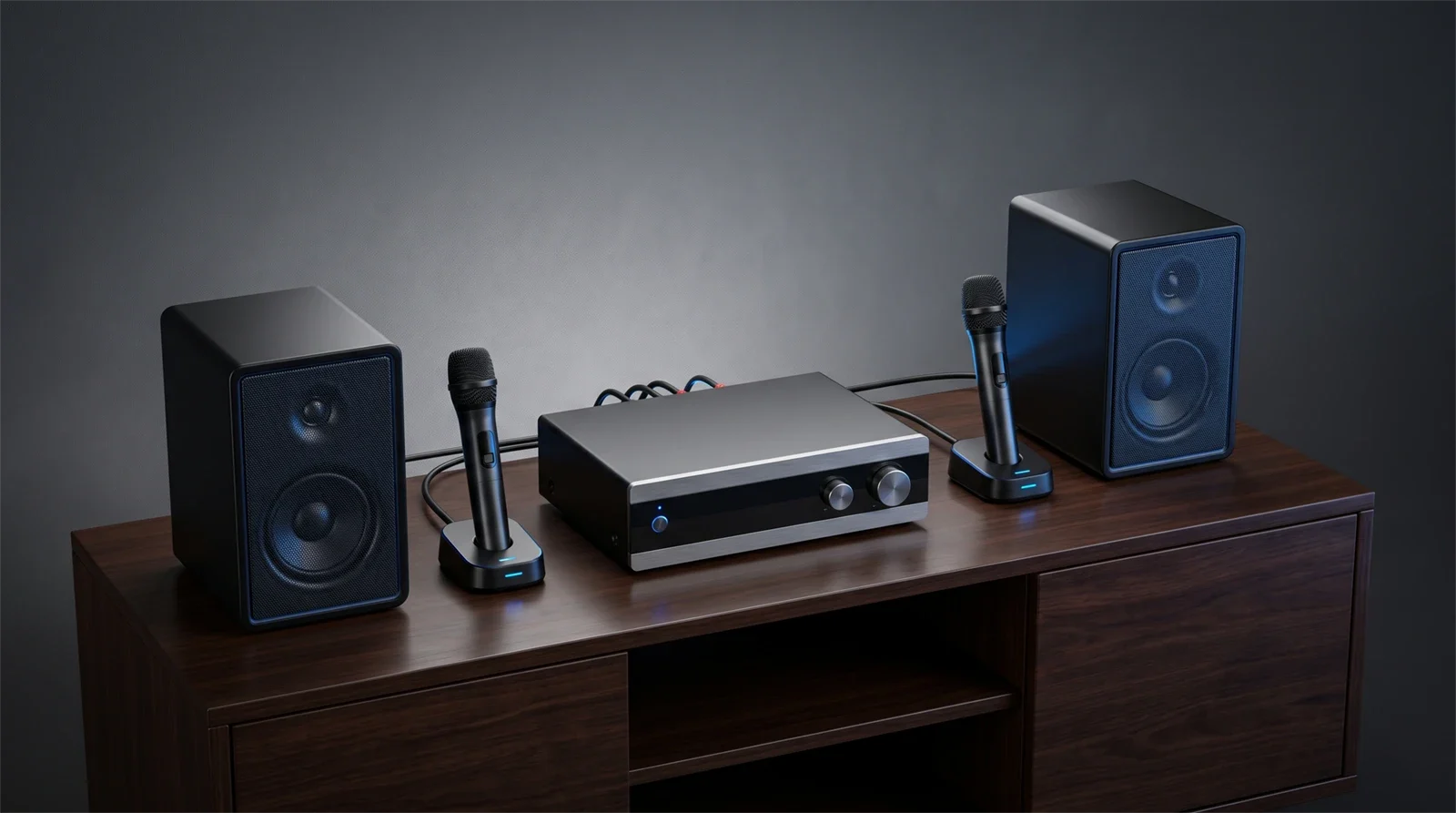
A mixing amplifier is usually a strong fit if you want:
- A simpler component-style karaoke system
- Fewer cables and less equipment clutter
- One main control center for microphones and music
- Easier daily use for family members
- A setup that can stay in the living room without feeling too complicated
This does not mean a mixing amplifier is only for beginners. It means the control path is more consolidated. For many homes, that is a real advantage because the system gets used more often when it feels easy to return to.
When a Separate Mixer and Amplifier Makes More Sense
A separate mixer and amplifier setup makes more sense when you want more control over the system and are comfortable managing more pieces. This layout gives you more freedom to choose, adjust, replace, or upgrade the mixer and amplifier separately.
That flexibility can matter if you are building a more customized karaoke system, if one person in the home enjoys tuning the sound, or if you expect the system to evolve over time. It can also make troubleshooting more precise because each part has a clearer job.
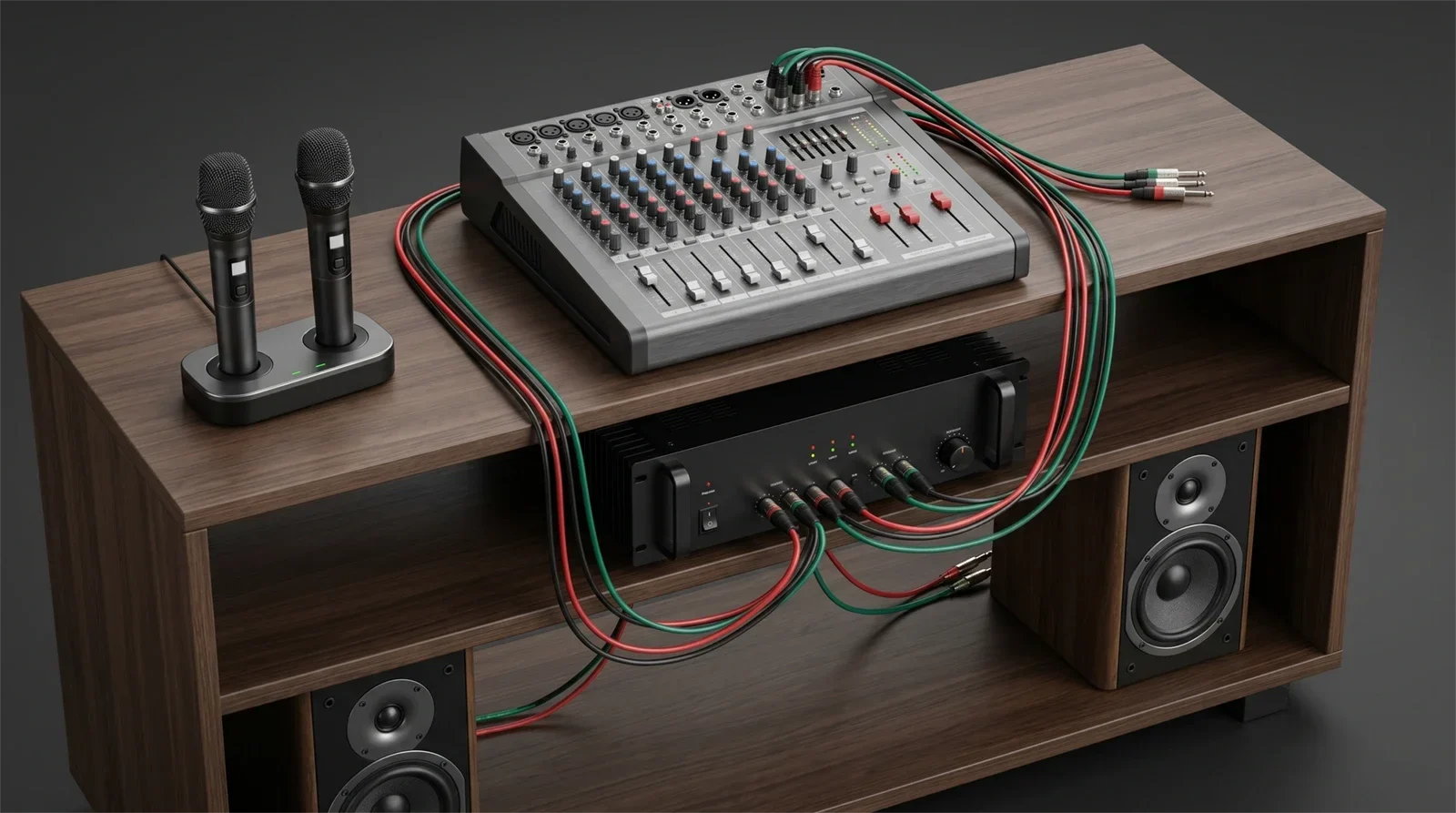
A separate mixer and amplifier is usually a better fit if you want:
- More independent control over sound and power
- More flexibility for future upgrades
- The ability to replace the mixer or amplifier separately
- A more hands-on system layout
- A setup managed mostly by someone comfortable with audio equipment
The trade-off is that this route can feel less friendly for casual family use. More flexibility is useful only if you actually want to manage it. If the system needs to be easy for everyone, extra control can become extra friction.
Mixing Amplifier vs Separate Mixer and Amplifier
| Factor | Mixing amplifier | Separate mixer and amplifier |
|---|---|---|
| Ease of use | Simpler for most home users | Better for hands-on users |
| Wiring | Fewer cables and fewer separate devices | More wiring and more connection points |
| Control | Consolidated control in one unit | More independent control over each stage |
| Family friendliness | Usually easier for multiple people to use | Usually better when one person manages the setup |
| Upgrade flexibility | More limited because functions are combined | Easier to upgrade or replace parts separately |
| Troubleshooting | Fewer pieces to inspect | More parts to inspect, but easier to isolate each stage |
| Best fit | Living rooms, family use, simpler ownership | Custom setups, frequent tuning, future expansion |
Real Home-Use Trade-Offs
Simplicity versus flexibility
The biggest trade-off is simple: a mixing amplifier is easier to live with, while a separate mixer and amplifier gives you more control. Many buyers say they want flexibility, but what they really need at home is a system that works smoothly every weekend without constant adjustment.
If your family wants to turn on karaoke, pick songs, pass microphones, and sing, a mixing amplifier often fits that habit better. If you enjoy adjusting the system, comparing components, and refining the sound over time, separate pieces may be worth the extra complexity.
Cleaner setup versus easier upgrades
A mixing amplifier keeps the setup cleaner because more functions are handled in one unit. That can make the system easier to place in a cabinet, media area, or living room without creating a messy equipment stack.
A separate mixer and amplifier gives you more upgrade freedom. If you later want a different mixer, stronger amplifier, or more specialized control, you can change one part without replacing the entire control path. That matters more if you already see karaoke as a long-term system you may improve piece by piece.
Family use versus dedicated operator use
If several people in the household will use the karaoke system, simpler control usually wins. A system that only one person understands can become frustrating when that person is not available or when a guest changes the wrong setting.
If one person mainly manages the system, a separate mixer and amplifier can work very well. In that case, the added control does not bother the rest of the household because most users only need to sing, not adjust the system.
Room fit still matters
This decision should not be made in isolation. The room still affects how much control you actually need. In a small room, speaker placement and volume balance may matter more than having separate components. In a larger room, stronger coverage and cleaner control may become more important.
If you are unsure whether the system size matches your space, compare the room side of the decision in How to Match a Karaoke System to Your Room Size.
Common Buying Mistakes
Assuming separate components are always more professional
Separate components can be more flexible, but that does not automatically make them better for home use. A system that is harder to operate may get used less, even if it looks more serious on paper.
For many families, the better system is the one that sounds good and stays easy to use. A clean mixing amplifier setup can be the more practical choice even when a separate layout seems more advanced.
Choosing a mixing amplifier when you already want to upgrade piece by piece
A mixing amplifier is convenient because it combines functions. That same convenience can become a limitation if you already know you want to change the mixer, amplifier, or control path later.
If future upgrades are part of the plan from the beginning, a separate mixer and amplifier may make more sense.
Ignoring wiring and placement
Separate components need more planning. More devices mean more cables, more shelf space, more power connections, and more places for settings to get changed. That may be fine for a dedicated setup, but it can be annoying in a shared living room.
Before choosing separate pieces, make sure the room can support the layout without making the system feel messy or hard to manage.
Buying based on features instead of ownership style
Feature lists can make both options look attractive. But the better buying question is how you want to own the system. Do you want karaoke to feel simple and ready, or do you want a system you can actively shape?
That ownership style should guide the decision more than a long list of controls you may never use.
Simple Decision Rule
Choose a mixing amplifier if your priority is easier ownership, less wiring, simpler controls, and a family-friendly karaoke setup that feels ready without much effort.
Choose a separate mixer and amplifier if your priority is more control, more upgrade flexibility, and a system layout you expect to tune, adjust, or improve over time.
If you are still torn, ask one practical question: do you want the control path to disappear into the background, or do you want it to remain something you actively manage? For most home buyers, that question points to the better choice faster than comparing features one by one.
Frequently Asked Questions
Is a mixing amplifier better for most home karaoke systems?
For many home karaoke systems, yes. A mixing amplifier is usually easier to install, easier to control, and easier for family members to use because it combines microphone control, music control, and speaker power in one unit.
Does a separate mixer and amplifier always sound better?
No. A separate mixer and amplifier can offer more control, but better sound still depends on speaker quality, microphone quality, room size, placement, and how well the system is adjusted. Separate components do not automatically guarantee better karaoke sound at home.
Which option is easier to troubleshoot?
A mixing amplifier is often easier for casual users because there are fewer separate pieces. A separate mixer and amplifier can be easier to isolate for someone who understands signal flow, but it also adds more connection points to check.
Which option is better for future upgrades?
A separate mixer and amplifier is usually better for future upgrades because you can replace or improve one part without changing the entire control path. A mixing amplifier is simpler, but its combined design gives you less piece-by-piece flexibility.
Which setup is better for family karaoke?
A mixing amplifier is usually better for family karaoke when several people need to use the system easily. A separate mixer and amplifier can work well if one person manages the equipment and the household wants more tuning flexibility.
Final Recommendation
For most family and living-room karaoke systems, a mixing amplifier is the better starting point because it keeps the system cleaner, simpler, and easier to use. It gives home buyers a component-style setup without making daily operation feel too complicated.
Choose a separate mixer and amplifier only if you genuinely want more hands-on control, more upgrade flexibility, and are comfortable managing the extra wiring and setup decisions. It can be the stronger long-term route for the right user, but it is not automatically the better home choice.
The real decision is not “basic versus professional.” It is simplicity versus control. Choose the layout that matches how your home will actually use karaoke after the system is installed.
Need help choosing the right karaoke system layout? Tittac can help you compare mixing amplifiers, separate component setups, speakers, microphones, and room fit in English or Vietnamese.
Explore Karaoke Buying Guides · Read the Step-by-Step Home Karaoke Setup Guide · See How to Upgrade an Existing Karaoke System