
The best neighbor-friendly karaoke setup for a shared-wall home is not just “lower volume.” It is a controlled setup: choose the least disruptive room, aim speakers away from shared walls, keep bass restrained, protect vocal clarity at moderate volume, and use hosting habits that prevent the session from slowly getting louder.
Who this guide is for: Home karaoke users in condos, townhomes, duplexes, apartments, and other shared-wall homes who want karaoke to feel fun without creating constant noise stress with neighbors.
How this guide was prepared: This guide was built around real home-use limits: evening singing, shared walls, family gatherings, bass travel, low-volume clarity, and the practical habits that reduce neighbor friction.
Karaoke in a shared-wall home can feel like a compromise. You want the system to be enjoyable, but you do not want every song to come with volume anxiety or the feeling that you are pushing your luck with the people next door.
That is why neighbor-friendly karaoke is not about one magic setting. It is about how sound moves through the room, how the speakers are aimed, how much bass the system produces, how clearly vocals can be heard at lower volume, and how disciplined the session stays once people start singing.
Quick Answer
To make karaoke more neighbor-friendly in a shared-wall home, keep the setup focused and controlled. Use the room with the least shared-wall exposure, keep speakers away from shared walls when possible, avoid heavy bass, keep vocals clear instead of loud, avoid TV speakers and karaoke speakers playing together, and keep sessions earlier, shorter, and easier to manage.
Table of Contents
Why Shared-Wall Karaoke Is Difficult
Shared-wall karaoke is difficult because the goal is not simply to make the system quieter. The real goal is to keep karaoke enjoyable while reducing the kinds of sound that travel, linger, or feel intrusive to other people nearby.
Two karaoke sessions at the same volume can create very different neighbor reactions. One may feel manageable because the sound is focused, the bass is controlled, and the session ends at a reasonable time. Another may feel disruptive because the speakers are aimed into a shared wall, the low end is too strong, or the room gets louder as the night goes on.
This is why shared-wall karaoke needs a different mindset from a detached-home setup. You are not only setting up sound for the people in the room. You are also managing what leaks out of the room.
If you need the broader setup foundation for tighter living spaces, start with Karaoke Setup for Apartments and Noise Control.
Choose the Least Disruptive Room
The room you choose matters more than many people think. A karaoke system placed in the wrong room can feel louder to neighbors than it feels to you inside the home.
When possible, avoid the room that shares the most direct wall contact with a neighbor. If one room has more interior walls, more furniture, and less direct neighbor exposure, it may be a better karaoke room than the larger or more convenient space.
Also think about where people will actually sing. If the singer stands near a shared wall or if the speaker output is aimed straight toward that wall, the sound may travel more aggressively. A small layout change can reduce neighbor stress without making karaoke feel less fun.
Aim Speakers Away From Shared Walls
Speaker direction is one of the easiest shared-wall mistakes to fix. If speakers are aimed directly into a shared wall, the sound can become more intrusive outside the room even if the volume inside feels reasonable.
For most shared-wall homes, aim the speakers toward the listening area, not toward the neighbor’s wall. Keep the sound focused where people are actually sitting and singing. The goal is useful sound in the room, not sound that fills every corner of the home.
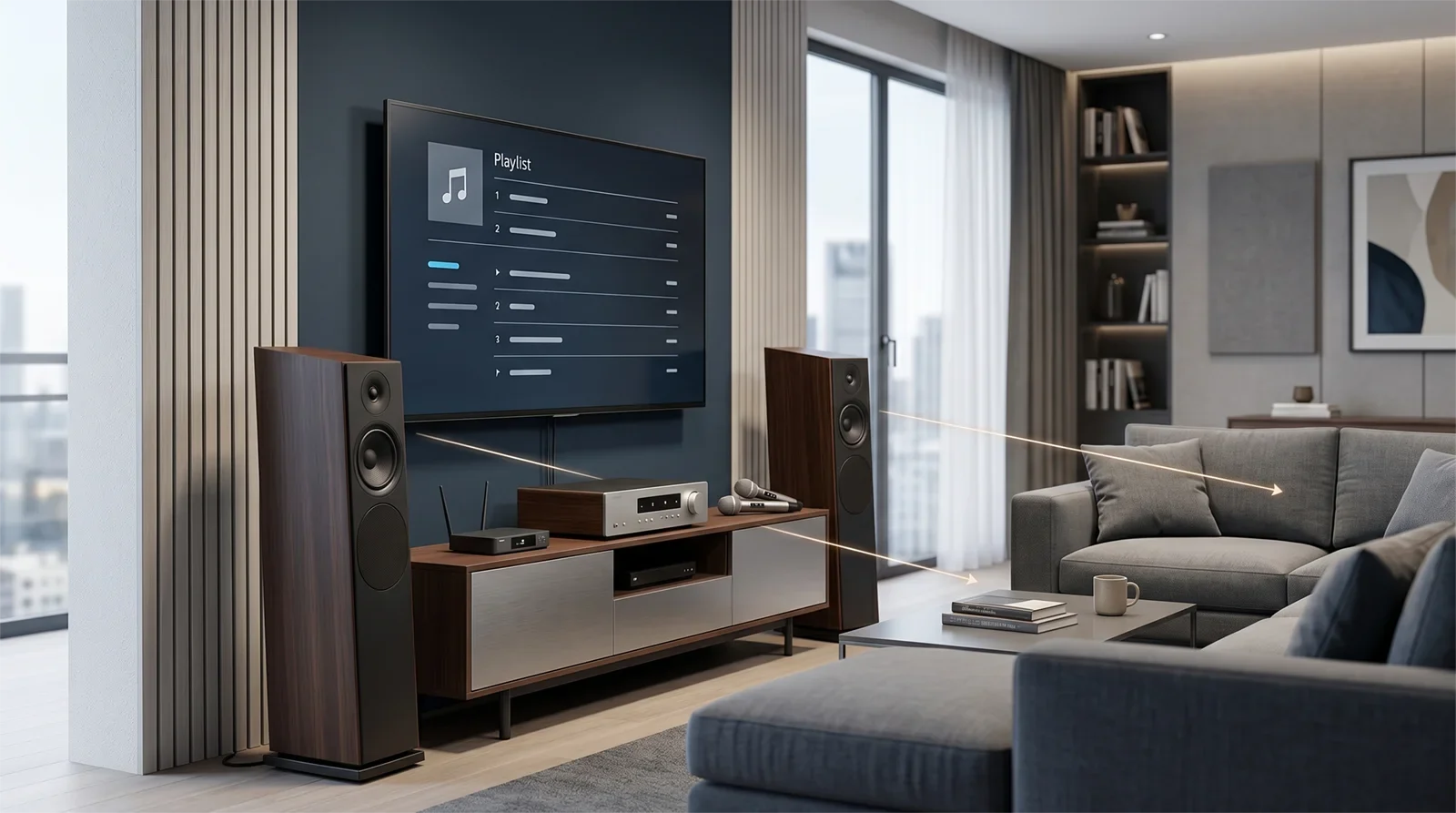
Better placement often helps more than simply turning the system down after the sound has already spread through the room. For a more detailed placement guide, read How to Position Speakers for Karaoke.
Keep Bass Under Control
Bass is often the biggest neighbor-friction problem in shared-wall homes. It can travel through walls, floors, and structures in a way that vocals and higher frequencies usually do not.
This does not mean karaoke has to sound thin. It means the bass should support the music without dominating the room. If the low end is shaking the wall, filling the floor, or making the room feel bigger than it really is, it is probably too much for a shared-wall setup.
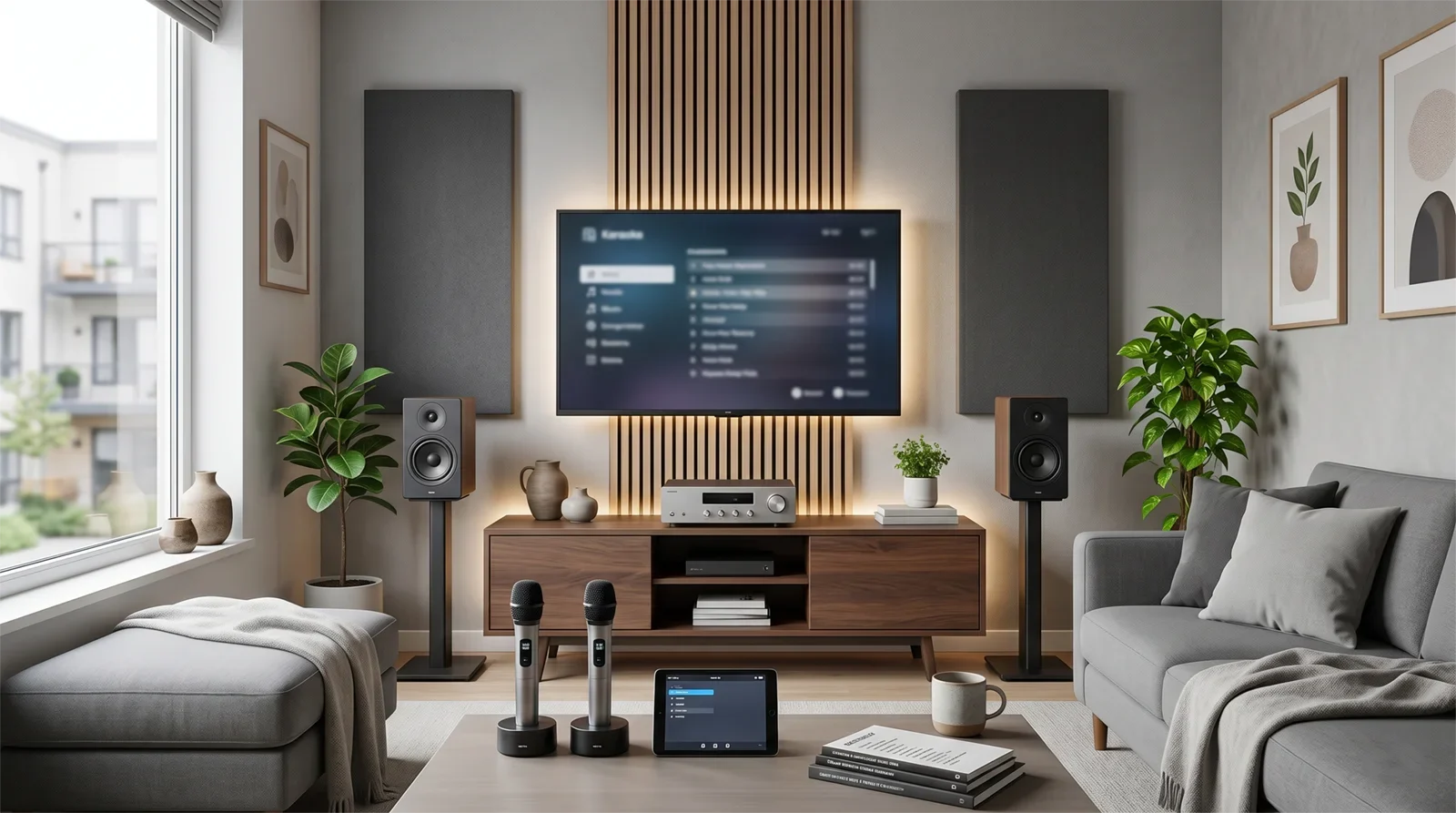
In condos, townhomes, and duplexes, a controlled karaoke setup usually works better than an oversized one. Clear vocals, balanced music, and moderate bass usually feel more enjoyable long-term than a system that sounds powerful for a few minutes but creates stress every time it is used.
If you are still deciding what type of system fits a smaller or shared-wall home, Karaoke Systems for Condos and Small Homes covers that buying decision separately.
Keep Karaoke Fun at Lower Volume
Neighbor-friendly karaoke works best when the system stays clear at moderate volume. If singers can hear themselves, lyrics are easy to follow, and the music still feels balanced, people are less likely to keep asking for more volume.
The biggest mistake is trying to make lower-volume karaoke feel exciting by adding too much bass, echo, or mic level. That usually makes the room messier and less controlled. A better approach is to protect vocal clarity first.
Use a moderate music level. Bring the mic up until the singer is easy to hear. Keep echo light enough that the words stay clear. If the vocal is understandable, the room can feel satisfying without being loud.
In shared-wall homes, clarity is usually more valuable than power. A focused system at moderate volume often feels better than a louder system that turns muddy and leaks through the walls.
Hosting Habits That Reduce Neighbor Friction
The system is only part of what neighbors hear. They also hear the behavior around the system: cheering, shouting between songs, group singing, late-night noise, and volume drift.
Timing matters. A controlled session earlier in the evening usually creates less tension than a careful but late session. In shared-wall homes, people often react as much to timing and repetition as to the actual sound level.
Keep the session structured. Take turns. Avoid shouting over the music. Keep group-singing moments from turning into long periods of raised room noise. Do not let the system gradually get louder every few songs.
Shorter sessions also tend to work better. A planned karaoke night that ends at a reasonable time is easier to live with than a session that slowly expands into a louder, looser event.
When the Room Is the Real Limit
Sometimes the problem is not that you are using karaoke badly. The home may simply have limited margin. If the sound still feels stressful at moderate volume, if bass stays noticeable even when restrained, or if every usable room sits too close to a shared wall, the space may limit how far a normal karaoke session can go.
That does not mean karaoke is impossible. It means the setup has to be honest about the home. You may need shorter sessions, earlier timing, smaller speaker output, more careful placement, or a different room-use approach.
If your main karaoke area is the living room, Best Karaoke Setup for Living Rooms can help you think through layout and real-use comfort.
Neighbor-Friendly Karaoke Checklist
Use this checklist before singing in a shared-wall home:
- Choose the room with the least direct shared-wall exposure.
- Avoid aiming speakers directly toward a shared wall.
- Keep bass controlled instead of oversized.
- Use one clear speaker output, not multiple sound sources at once.
- Set music volume first, then mic volume, then light echo.
- Keep vocals clear instead of simply making everything louder.
- Test from the real singing position, not only near the equipment.
- Keep the wireless microphone level moderate to reduce feedback risk.
- Start earlier in the evening when possible.
- Avoid long late-night sessions.
- Prevent volume drift as the session becomes more energetic.
- Keep the setup simple enough to repeat every time.
The best neighbor-friendly karaoke routine is short enough that you will actually use it. A few careful habits before the first song can prevent most of the friction that happens later.
Conclusion
Neighbor-friendly karaoke in a shared-wall home is not about removing all the fun. It is about keeping the sound controlled enough that karaoke remains enjoyable without becoming stressful for everyone nearby.
The strongest approach is practical: choose the right room, aim speakers carefully, control bass, keep vocals clear at moderate volume, and manage the session before it drifts louder. In many shared-wall homes, that works better than chasing a bigger or louder system.
A good shared-wall karaoke setup should feel clear, repeatable, and honest about the space. When the room has limits, the best system is the one that works with those limits instead of fighting them.
Read Karaoke Setup for Apartments and Noise Control
Frequently Asked Questions
How can I make karaoke more neighbor-friendly in a shared-wall home?
Choose a room with less shared-wall exposure, aim speakers away from shared walls, keep bass controlled, use moderate volume, keep vocals clear, and avoid long late-night sessions.
Is lower volume enough to make karaoke neighbor-friendly?
Not always. Lower volume helps, but room choice, speaker direction, bass control, microphone level, and session timing often matter just as much.
Why does bass bother neighbors more than vocals?
Bass can travel through walls, floors, and building structures more easily than clearer vocal frequencies. That is why a system may not sound extremely loud inside the room but still feel intrusive next door.
Can karaoke still feel fun at lower volume?
Yes. Karaoke can still feel fun at lower volume when the vocals are clear, the music is balanced, the lyrics are easy to follow, and the room setup focuses sound toward the people singing and listening.
Should I use a subwoofer in a shared-wall karaoke setup?
Use caution. A subwoofer can make karaoke feel fuller, but it can also create more neighbor stress in condos, townhomes, and apartments. If you use one, keep the bass restrained and test how the room responds.
What time is best for karaoke in a shared-wall home?
Earlier evening sessions are usually safer than late-night sessions. Even a moderate karaoke setup can feel disruptive if it continues too late or happens too often.
What should I do if karaoke still feels too loud at moderate volume?
Try a different room, change speaker direction, reduce bass, shorten the session, and simplify the setup. If the home still has very little margin, the space may require stricter limits than a detached house would.