
In karaoke, “boxy” sound means the vocal or music feels closed in, hollow, and crowded in the middle instead of open and natural. It is not the same as harshness, which feels sharp, or muddiness, which feels blurred and heavy.
Written by Toan Ho — Tittac editorial team.
Who this guide is for: Home karaoke users who hear a closed-in, hollow, or congested sound and want to understand what “boxy” actually means before blaming the wrong part of the system.
How this guide was prepared: This guide was written by focusing on how vocals, speakers, room reflections, and tonal balance behave in real home karaoke spaces when sound feels trapped instead of open.
Sometimes a karaoke system does not sound clearly distorted, weak, or painfully bright. It simply feels like the sound is trapped. Vocals may seem stuck inside a small space. Music may feel narrow. The whole system may sound present, but not free or natural.
That listening impression is often called “boxy” sound. In home karaoke, boxiness is useful to recognize because it points to a specific tonal problem, not just a general complaint about bad sound. For broader context on how technical sound traits show up in a home system, see our in-depth technical analysis of karaoke systems.
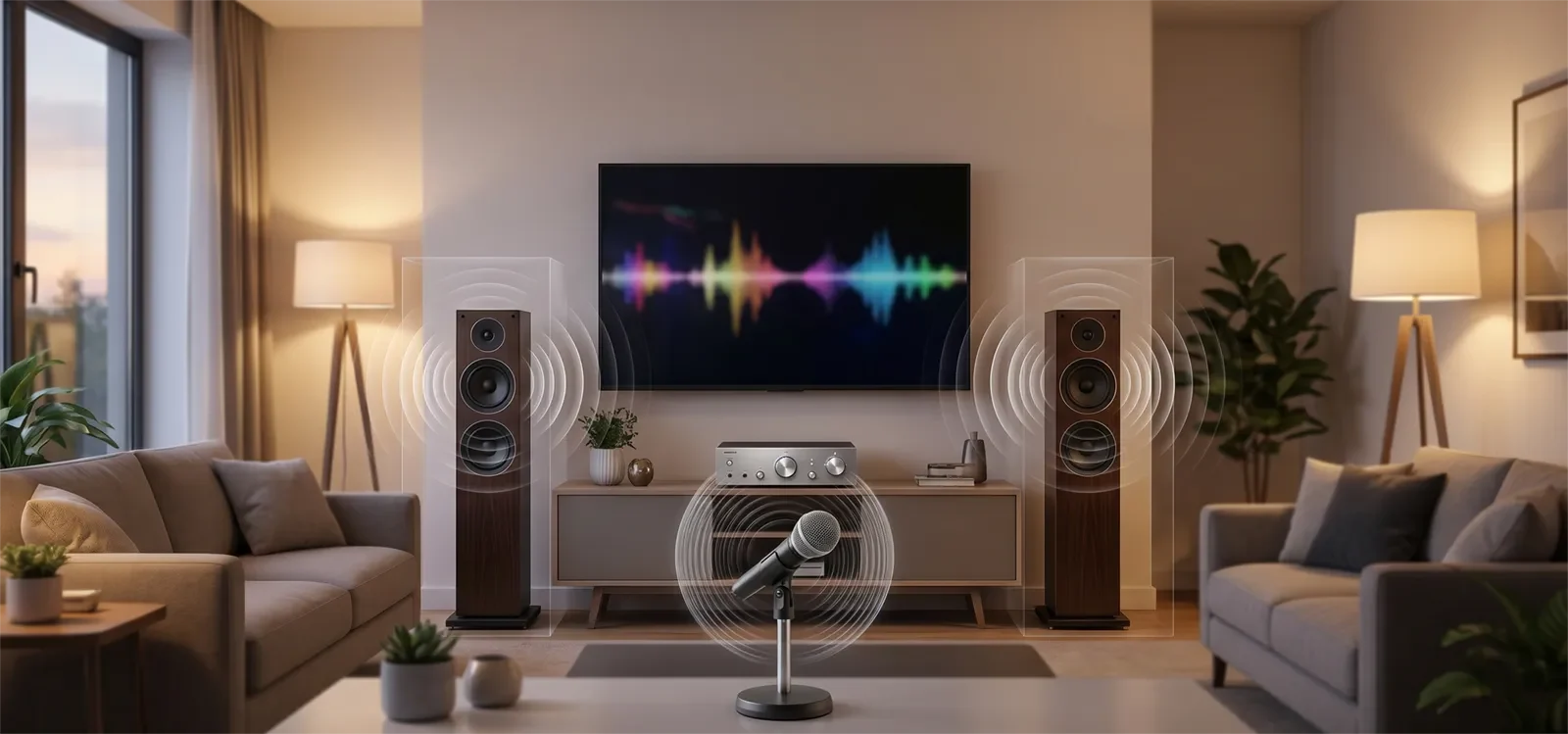
Quick Answer
A karaoke system sounds “boxy” when the vocal or music feels enclosed, hollow, and congested through the middle of the sound. Instead of opening naturally into the room, the voice may feel like it is coming from inside a cabinet, small box, or untreated room. Boxiness often comes from a combination of speaker placement, room reflections, speaker voicing, cabinet character, and tonal balance around the midrange. It is different from harshness, which feels sharp or biting, and different from muddiness, which feels thick, blurry, or poorly defined.
Table of Contents
What “boxy” sound actually means
“Boxy” is a listening word people use when sound feels trapped inside a small space instead of opening naturally into the room. It often shows up as a hollow, chesty, or enclosed character. The sound may still be loud enough, and the words may still be understandable, but the vocal does not breathe well.
In plain English, boxiness is usually a midrange congestion problem. The middle part of the sound becomes too dominant or too narrow in a way that makes the voice feel confined. Instead of hearing a singer as open and natural, you hear the voice as if it is passing through a small cabinet or bouncing around a tight room.
This is why boxiness can be frustrating. It may not sound broken at first. But once you notice it, the system can feel less comfortable and less musical, especially during longer singing sessions.
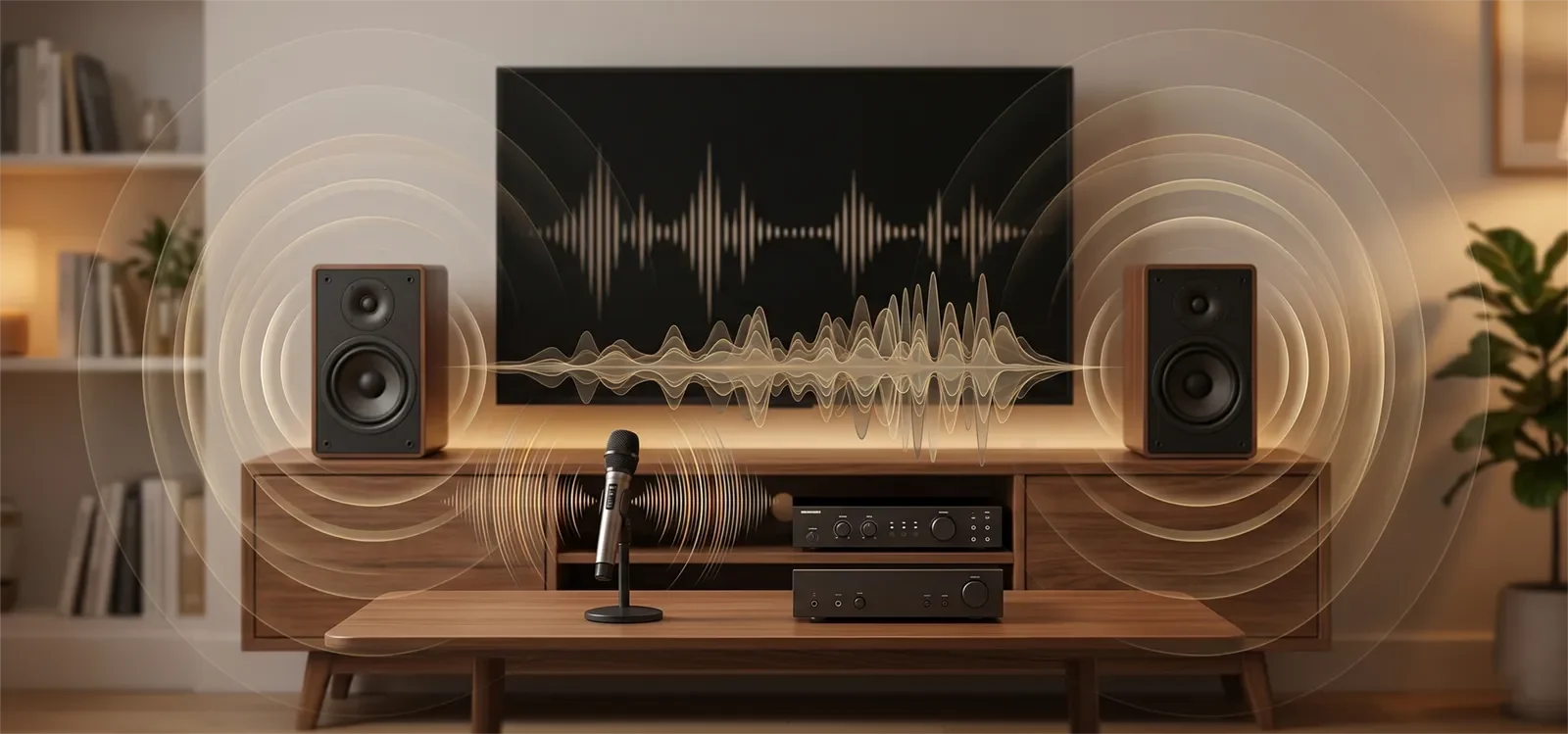
Why boxiness matters in karaoke
Karaoke depends heavily on vocal openness. A good home karaoke system should let the singer hear their voice clearly, comfortably, and naturally over the music. When the sound becomes boxy, the vocal may still be loud, but it feels smaller and more trapped than it should.
That affects the singer’s confidence. Instead of hearing a clean voice that sits naturally in the mix, the singer hears a confined tone that may feel chesty, hollow, or crowded. This can make the performance feel less expressive even when the microphone and speakers are working normally.
Boxiness also changes how the whole system feels in the room. The music may lose width. The vocal may lose air. The sound may feel full in the wrong way: present, but not open. This is why a system can have enough power and still feel unsatisfying.
What users actually hear at home
At home, boxiness is usually easiest to hear on speech and singing. A spoken voice may sound like it is coming from inside a wooden box. Male vocals may feel too chesty or closed. Female vocals may lose openness and feel trapped in the room instead of floating clearly above the music.
Another common clue is that the system sounds full but not clean. There is enough voice, but not enough space around the voice. The sound may feel as if it has a “container” around it.
Turning the volume up usually does not fix boxiness. It often makes the same closed-in character louder. If the vocal gets bigger but not more open, the problem is probably not simple loudness. It is more likely a tonal or room-interaction issue.
Room behavior is often part of that picture. For more detail on how walls, floors, furniture, and placement affect what you hear, see how room acoustics affect karaoke sound.

Boxy vs. muddy vs. harsh sound
Boxy sound, muddy sound, and harsh sound are related complaints, but they are not the same problem.
Boxy sound feels enclosed, hollow, and crowded in the middle. The vocal may sound like it is trapped inside a cabinet or small room.
Muddy sound feels thick, blurred, and poorly separated. The bass or lower midrange may cover up detail, making music and vocals less defined.
Harsh sound feels sharp, biting, or tiring on the ear. It often shows up on strong vocal peaks, treble energy, or upper-midrange glare.
The difference matters because each problem leads to different decisions. Cutting treble may reduce harshness, but it will not automatically fix boxiness. Reducing bass may help muddiness, but it may not open up a boxed-in vocal. If the sound feels sharp rather than trapped, read why some karaoke systems sound harsh at home.
Common causes of boxy karaoke sound
Boxiness usually does not come from one single cause. In many home karaoke systems, it comes from several small factors adding up.
Room reflections can make vocals feel crowded when sound bounces strongly between nearby walls, hard floors, ceilings, or furniture surfaces.
Speaker placement can contribute when speakers are pushed too close to corners, walls, cabinets, or enclosed spaces. This can reinforce certain parts of the sound and make the vocal feel less open.
Speaker voicing or cabinet character can also matter. Some speakers naturally emphasize a closed, thick, or cabinet-like midrange more than others.
Tonal balance can make boxiness more obvious when the middle region is too dominant while the upper clarity and sense of openness are not balanced well.
Microphone tone can contribute too, but it should not be blamed first every time. A microphone can affect vocal color, but the boxed-in feeling often comes from the way the microphone, speakers, room, and mix work together.
A practical listening rule for identifying boxiness
A simple rule is this: if the sound feels closed in, hollow through the middle, and strangely confined even though it is not especially sharp or boomy, you are probably hearing boxiness.
Listen first to spoken words or a familiar vocal line. If the words are understandable but the voice feels bottled up, that points toward boxiness. If the sound is painful, sharp, or biting, that points more toward harshness. If the sound is heavy, blurred, and poorly separated, that points more toward muddiness.
The goal is not to chase random fixes. The goal is to name the sound correctly. Once you can identify boxiness as a specific tonal character, it becomes easier to judge whether the issue is mostly room interaction, speaker placement, tonal balance, or the way the system presents the vocal midrange.
Conclusion
Boxy karaoke sound is not just “bad sound.” It is a specific closed-in, hollow, and congested character that makes vocals and music feel smaller than they should. A system can still be loud and full while losing the openness that makes singing feel natural.
The most important thing is to separate boxiness from other problems. If the sound is sharp, you may be dealing with harshness. If it is thick and blurred, you may be dealing with muddiness. If it feels trapped in the middle, boxiness is the better word. Naming the problem correctly helps you make better sound decisions instead of adjusting the wrong thing.
Frequently Asked Questions
Is boxy sound the same as muddy sound?
No. They can overlap, but they are not the same. Muddy sound usually feels thick, blurred, or poorly separated. Boxy sound feels more enclosed and hollow, as if the vocal or music is trapped inside a small space. A boxy system may still sound fairly clear, but it does not sound open.
Can a karaoke system sound boxy even if it is not very loud?
Yes. Boxiness is a tonal character, not just a volume problem. You can hear it at moderate volume when vocals feel confined or unnatural. Turning the system up often makes the same boxed-in character more obvious rather than fixing it.
Does boxy sound always mean the speakers are bad?
No. Speakers can contribute, but boxiness does not automatically mean the speakers are poor. In many home setups, room reflections, speaker placement, vocal tone, and overall system balance all shape that closed-in character.
How can I tell boxiness from harshness?
Harshness usually feels sharp, biting, or tiring on the ear. Boxiness feels more trapped, hollow, and crowded through the middle. If the sound seems closed in rather than painfully sharp, you are more likely hearing boxiness than harshness.
Can EQ fix boxy karaoke sound?
Sometimes EQ can help, but it depends on the cause. If the issue is mainly tonal balance, careful adjustment may reduce the closed-in feeling. If the issue comes from room reflections or speaker placement, EQ alone may not fully solve it.
Before making bigger changes, identify the sound character first. That usually leads to better decisions and fewer random adjustments.
Learn how professionals tune karaoke systems for better home sound.