
Headroom is the clean reserve a karaoke system has before the sound starts to feel strained. In home karaoke, good headroom is why vocals, music, and chorus peaks can stay clear and controlled instead of becoming harsh, crowded, or tense too early.
Many home karaoke users hear phrases like “more power,” “clean volume,” or “the system is starting to sound stressed,” but the missing idea behind those comments is often headroom. It sounds like a technical term, yet what it describes is easy to hear: whether the system still feels relaxed when the song gets bigger.
That matters because karaoke is rarely a steady signal. Vocals jump, music swells, and certain moments ask more from the system than the average volume suggests. In a broader technical sense, headroom is part of how a system keeps its composure under pressure, which is why it helps to view it alongside the technical behavior of karaoke systems.
Written by Toan Ho — Tittac editorial team.
Who this guide is for: Home users who want to understand why one karaoke system can sound relaxed while another sounds strained, even at a similar listening volume.
How this guide was prepared: This guide was prepared by focusing on how home karaoke systems behave during louder passages, vocal peaks, chorus lifts, and real room listening—not spec-sheet theory alone.
Quick Answer
Headroom is the clean margin a karaoke system still has before sound starts feeling strained, compressed, harsh, or less controlled. In plain English, it is the extra breathing room above your normal listening level. A system with good headroom usually feels more effortless when vocals jump, music gets denser, or a singer leans into a louder phrase. A system with limited headroom can sound tense earlier, even if it is not painfully loud yet.
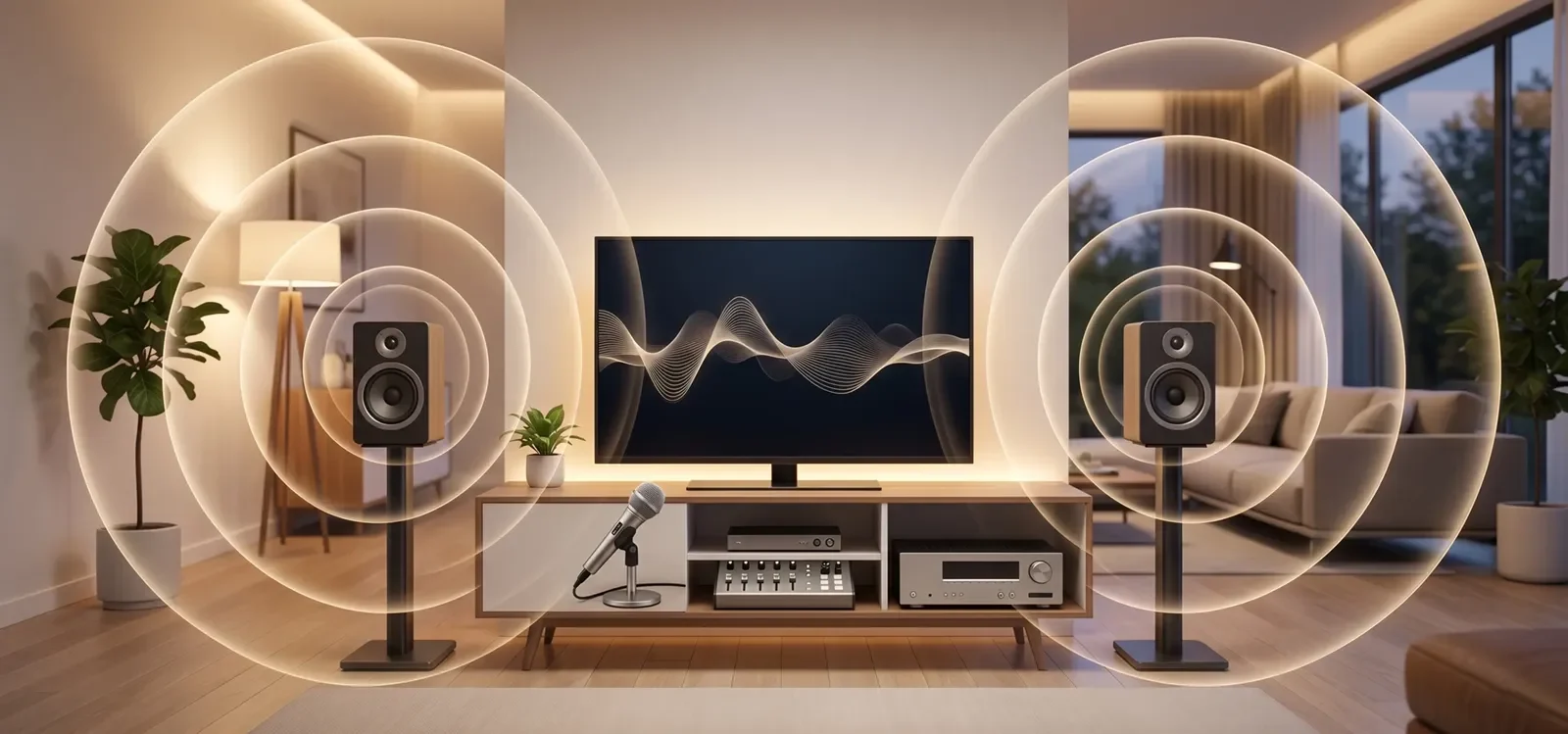
Table of Contents
What headroom actually means
Headroom is not the same thing as maximum volume. It is the margin between where your system is playing now and where it starts losing ease. In karaoke, that matters because songs and vocals do not arrive at one fixed level. A singer may suddenly belt, a backing track may open up in the chorus, or a quiet verse may be followed by a much more demanding passage.
When people say a system has headroom, they usually mean it still has enough clean reserve to handle those bigger moments without sounding pinched, brittle, or stressed. That is why headroom feels less like a lab number and more like a real-world comfort margin. It is the difference between a system that glides through louder moments and one that starts sounding nervous as soon as the mix gets busy.
This is also why headroom should not be confused with level-setting discipline. If you want to understand how signal levels are managed through the chain, that belongs more directly to what gain structure means in home karaoke. Headroom is the breathing room you hear; gain structure is part of how the system is organized to preserve that control.
Why headroom matters in karaoke
Karaoke is harder on a system than simple background music because it combines recorded music with live vocals. A singer can suddenly move closer to the microphone, sing a louder phrase, or push into a chorus while the backing track is already getting bigger. Those moments create short bursts of demand that are easy to underestimate.
Good headroom helps the system absorb those bursts without changing character. The vocal stays more natural. The music does not collapse into a crowded wall. The room feels lively without the sound becoming sharp or tiring. This is why headroom matters even when you are not trying to play extremely loud.
For home users, the benefit is not just volume. It is comfort. A system with enough clean reserve is usually easier to listen to for a longer session because it does not sound like it is constantly being pushed to its limit.
What headroom changes in system behavior
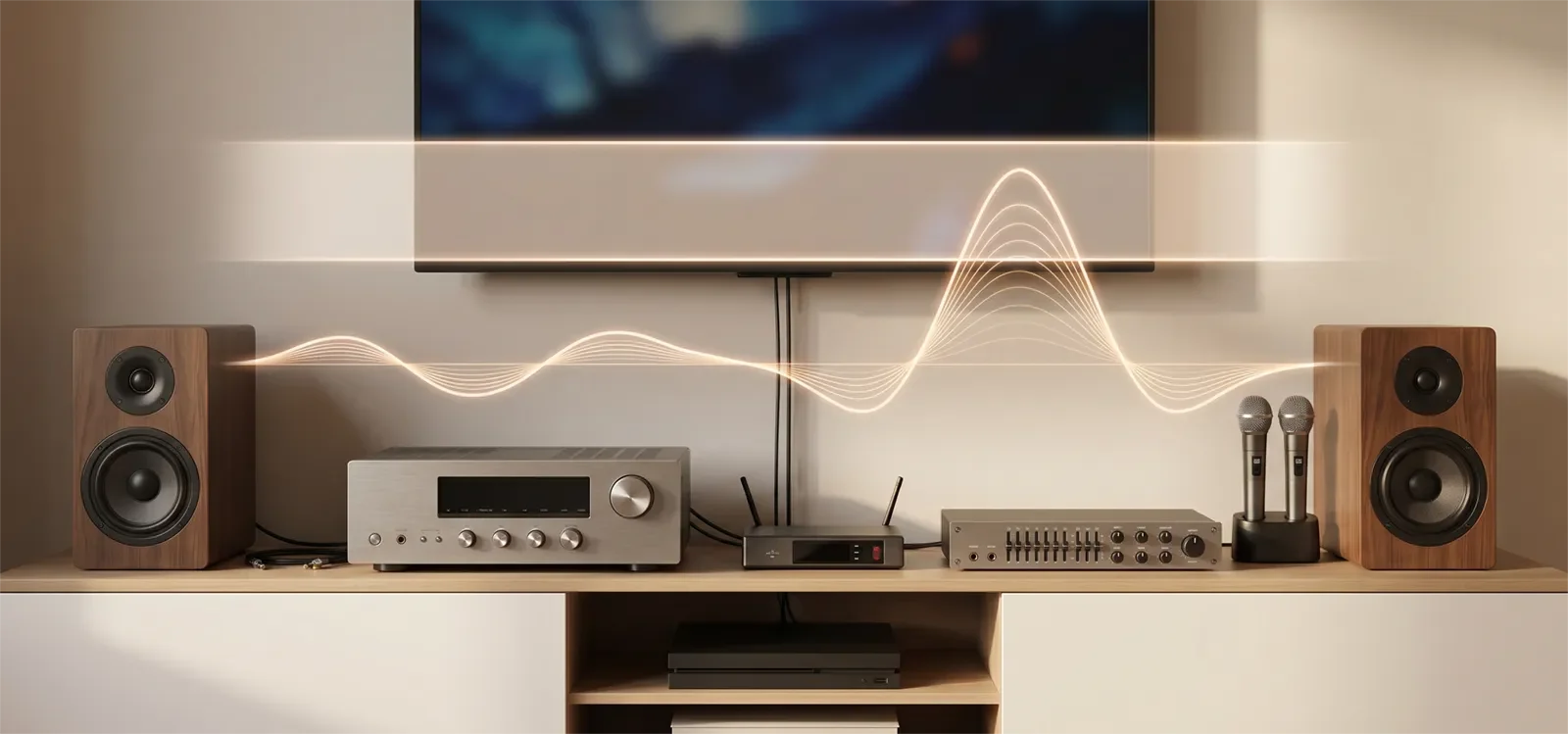
In system behavior terms, headroom affects how calmly the system handles sudden demand. Karaoke is full of short peaks rather than one constant load. A louder syllable, a snare hit, a chorus lift, or stacked instruments can briefly ask for more than the average listening level suggests. A system with more headroom usually absorbs those moments without sounding like its personality has changed.
That is why people often describe good headroom with words like “open,” “easy,” or “unforced.” The system is not just playing loudly enough; it is staying composed when the material becomes more demanding. When headroom is limited, the sound can start feeling flatter, tighter, or more brittle during those same moments.
Headroom also helps explain why a system can seem fine during moderate material, then suddenly lose grace when vocals and music intensify together. It is not always a matter of sheer advertised power. Some confusion comes from treating every power number as if it describes the same thing, which is why broader power language is better separated into topics like RMS vs. peak power explained.
What users actually hear at home
At home, good headroom often sounds like ease before it sounds like loudness. The first clue is not always “this is louder.” More often, it is “this sounds cleaner when the song opens up” or “my voice does not feel buried when I sing harder.” The system seems to stay balanced instead of becoming congested when more energy enters the mix.
Listeners may also hear that the music keeps its shape better. Choruses feel fuller without turning messy. Vocal peaks feel more natural instead of suddenly sharp or boxed in. Bass and lower mids may stay more stable instead of becoming thick and stressed. In a living room or family room, that kind of control often makes the whole system feel more comfortable at ordinary party volume.
By contrast, limited headroom often shows up as early strain. The sound may start feeling crowded, edgy, or smaller than expected once the song gets demanding. Sometimes users describe it as the system “tensing up.” It may still be usable, but it no longer sounds relaxed. That audible shift is often the practical clue that the system is running out of clean margin.

What people often misunderstand
A common mistake is assuming headroom means only how loud the system can go. That is too simple. A system can technically go louder and still stop sounding comfortable before it reaches its upper limit. Headroom is about how much clean margin remains, not just whether sound is still coming out.
Another misunderstanding is blaming every strained moment on bad tuning, bad microphones, or bad speakers in isolation. Those things can matter, but sometimes the more basic issue is that the system is already close to its comfort limit. In other words, the problem is not always a wrong setting; sometimes the system simply has less clean reserve than the listener expects.
People also confuse headroom with wattage math alone. Power-related specs can be relevant, but headroom is not best understood as a spreadsheet exercise for most home users. What matters in practice is whether the system keeps clarity, balance, and ease when the material gets bigger. That is why this topic should stay centered on audible behavior rather than turning into a separate article about gain staging, power ratings, or spec interpretation.
A practical listening rule
A simple way to think about headroom is this: listen to what happens when the song becomes more demanding, not just when the volume gets higher. If a louder passage still sounds calm, balanced, and easy, the system likely still has usable headroom. If the sound suddenly feels harder, flatter, sharper, or more crowded, the clean margin is probably getting smaller.
In real home karaoke, the most useful question is not “How loud is it?” but “How does it behave when the music and vocals both ask for more?” That listening rule keeps the concept practical. It also helps explain why two systems at similar volume can leave totally different impressions. One still feels relaxed. The other already sounds close to its comfort boundary.
So the practical takeaway is simple: headroom is the reason a system can feel easy rather than stressed when real songs get bigger. You do not need heavy math to hear it. You only need to notice whether the system still sounds composed when the moment becomes demanding.
Conclusion
Headroom is best understood as clean margin, not as a bragging-rights number. It is the extra room that lets a karaoke system handle louder passages, vocal peaks, and denser moments without sounding tense too early.
That is the trade-off to remember: a system with more usable headroom tends to feel easier and more natural at real home listening levels, while a system with less headroom can sound strained sooner even before it seems extremely loud. In practice, headroom is the difference between a system that feels comfortable under pressure and one that starts sounding stressed when the song asks for more.
Frequently Asked Questions
Is headroom just another word for loudness?
No. Loudness is only part of the picture. Headroom is the clean margin a system still has before it starts sounding strained, crowded, or less controlled. A system can still be loud while already feeling stressed, which is why headroom is more about ease and reserve than raw output alone.
Can I hear limited headroom before the sound becomes painfully loud?
Yes. In home karaoke, limited headroom often shows up earlier as tension, hardness, congestion, or a loss of ease during louder passages. That change can happen before the system reaches a volume people would describe as extreme. The clue is often strain, not just sheer loudness.
Does better headroom always mean a more powerful system?
Not in the simple way people often assume. Power-related capability matters, but headroom is heard as clean reserve during demanding moments, not just as a bigger published number. The more useful listening question is whether the system keeps clarity and composure when vocals and music both rise together.
Why do two systems at similar volume feel so different?
Because the average volume does not reveal how much clean margin each system still has. One system may remain open and steady when the song gets bigger, while the other starts sounding tight or stressed. That difference in ease is often where users are really hearing headroom in practice.
If you want to turn this idea into practical listening and tuning decisions, the next step is learning how experienced listeners judge balance and control in real rooms.
Read how professionals tune karaoke systems for better home sound.