
In karaoke, noise floor means the quiet background noise that remains underneath the music and vocals. A low noise floor makes the system feel cleaner and calmer; a higher noise floor may show up as hiss, faint background sound, or a system that never feels fully quiet.
Written by Toan Ho — Tittac editorial team.
Who this guide is for: Home karaoke users who hear hiss or background noise and want to understand whether it is normal, harmless, or worth paying attention to.
How this guide was prepared: This guide was written by focusing on how system quietness is heard in real home rooms during idle moments, quiet intros, microphone use, and normal family karaoke sessions.
Many home karaoke users notice a faint hiss, soft background noise, or a lack of “black silence” when nothing much is happening. It may be most obvious before a song starts, during a quiet intro, or right after someone stops singing.
That is where noise floor becomes useful. It gives you a simple way to describe how quiet the system really is underneath the main sound. In home karaoke, noise floor is part of the system’s technical behavior, so it helps to understand it within the wider picture of how karaoke systems behave in real home use.
Quick Answer
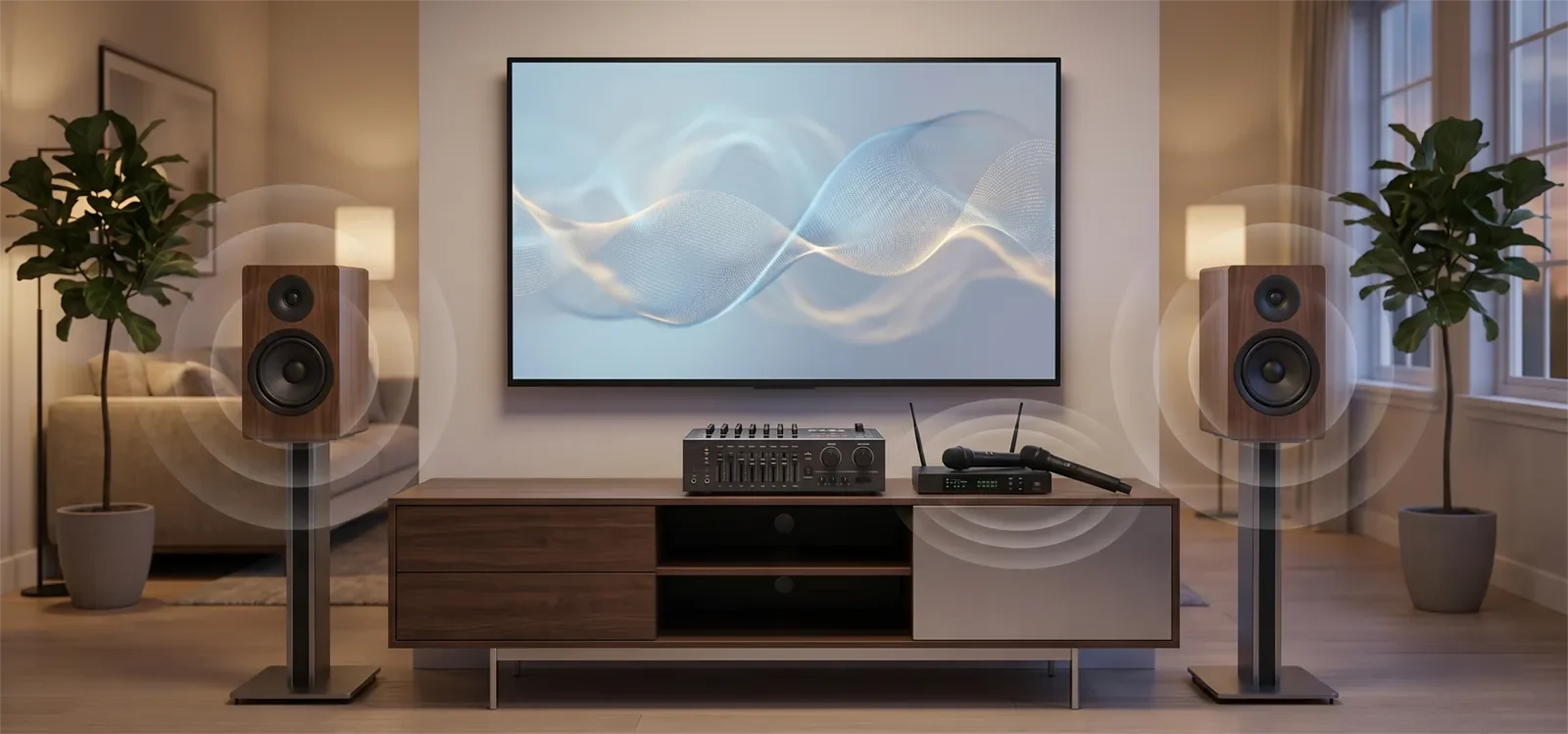
Noise floor is the low-level background noise a karaoke system carries even when no music or voice is strongly active. In plain English, it describes how quiet the setup feels underneath everything else. A lower noise floor usually feels cleaner, calmer, and more refined during pauses and quiet song sections. A higher noise floor may sound like hiss, faint air, or a subtle background layer that never fully goes away. Noise floor does not automatically mean the system is broken, but it does affect how clean and quiet the system feels at home.
Table of Contents
What noise floor actually means
Noise floor is the background level of noise a system carries when the main signal is quiet or inactive. It is not the same as loud distortion, sudden buzzing, or obvious electrical problems. In many home karaoke setups, it is much softer than that.
You may hear it as a faint hiss, a steady low-level texture, or simply a sense that the system is not completely silent. If the music and vocals are the main picture, noise floor is the faint background underneath that picture.
This is why noise floor is really a quietness concept. It does not describe how loud the system can play. It describes what the system sounds like when it is supposed to be resting or when the signal is very light. For the broader path of how sound moves through the system, see understanding karaoke signal flow without the jargon.
Why noise floor matters in home karaoke
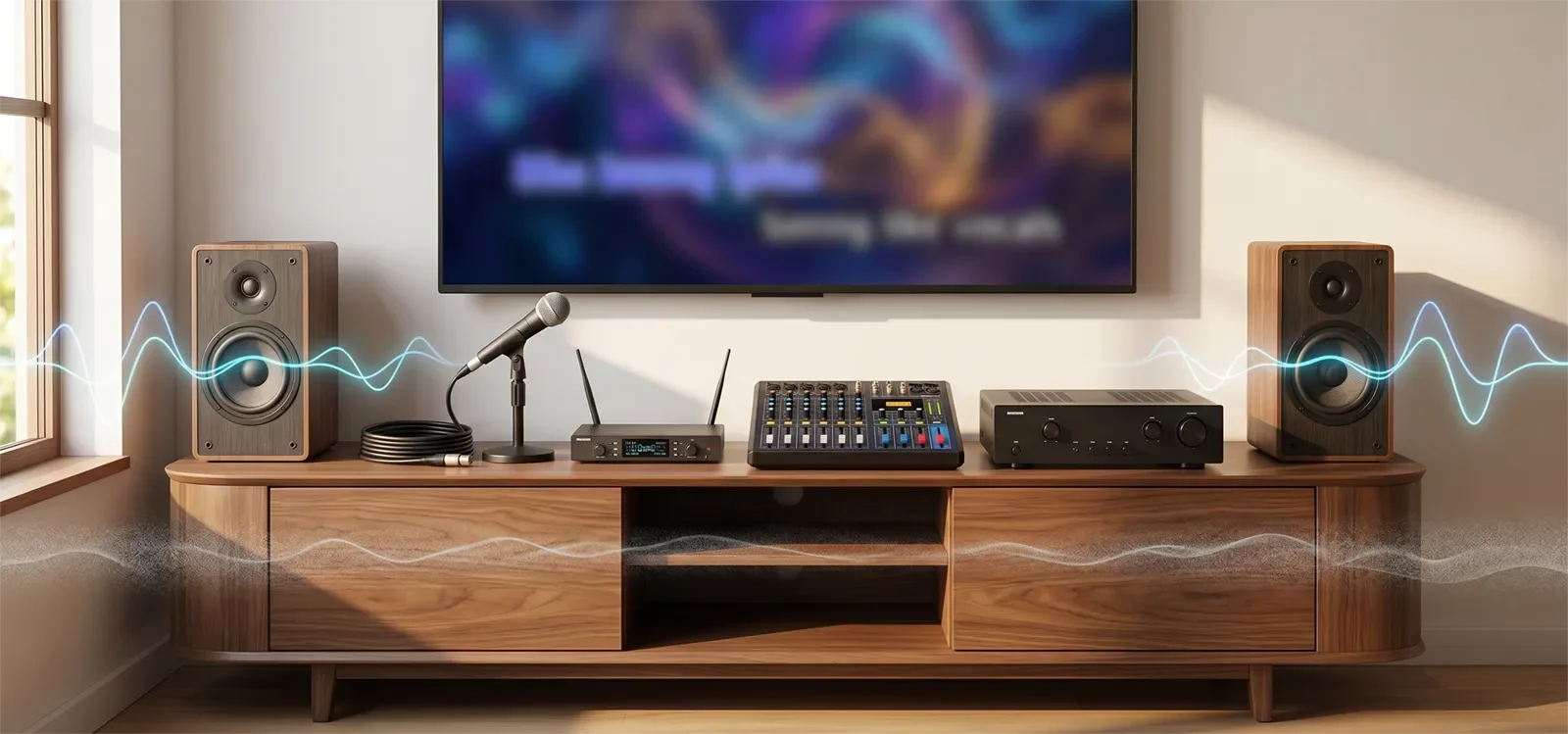
Noise floor matters because karaoke includes many quiet moments. There are pauses between songs, quiet intros, soft vocal passages, and moments when microphones are on but nobody is singing yet. In those moments, system quietness becomes easier to notice.
A setup with a lower noise floor usually feels cleaner and more refined. It does not call attention to itself when little is happening. Quiet parts feel calmer, and the transition from silence to music feels more natural.
A higher noise floor can make the system feel slightly busy even at rest. It may not ruin karaoke, but it can reduce the sense of polish. Instead of feeling clean between phrases or songs, the system may always have a faint layer of sound sitting underneath everything.
What users actually hear at home
At home, users usually notice noise floor as hiss first. It may be easiest to hear when microphones are on, music is paused, or the volume is up while nobody is singing. Some people describe it as a soft air-like sound. Others simply say the system does not feel fully quiet.
Noise floor can also show up during quiet song intros or gentle transitions. Instead of hearing near-silence behind the track, users may hear a faint background layer that makes the system feel less clean.
This can be more noticeable at home than in a larger venue because listeners sit closer to the speakers and equipment. Living rooms and family rooms are also often quiet during pauses, so low-level noise has less background sound to hide behind.
Normal noise floor vs. a real noise problem
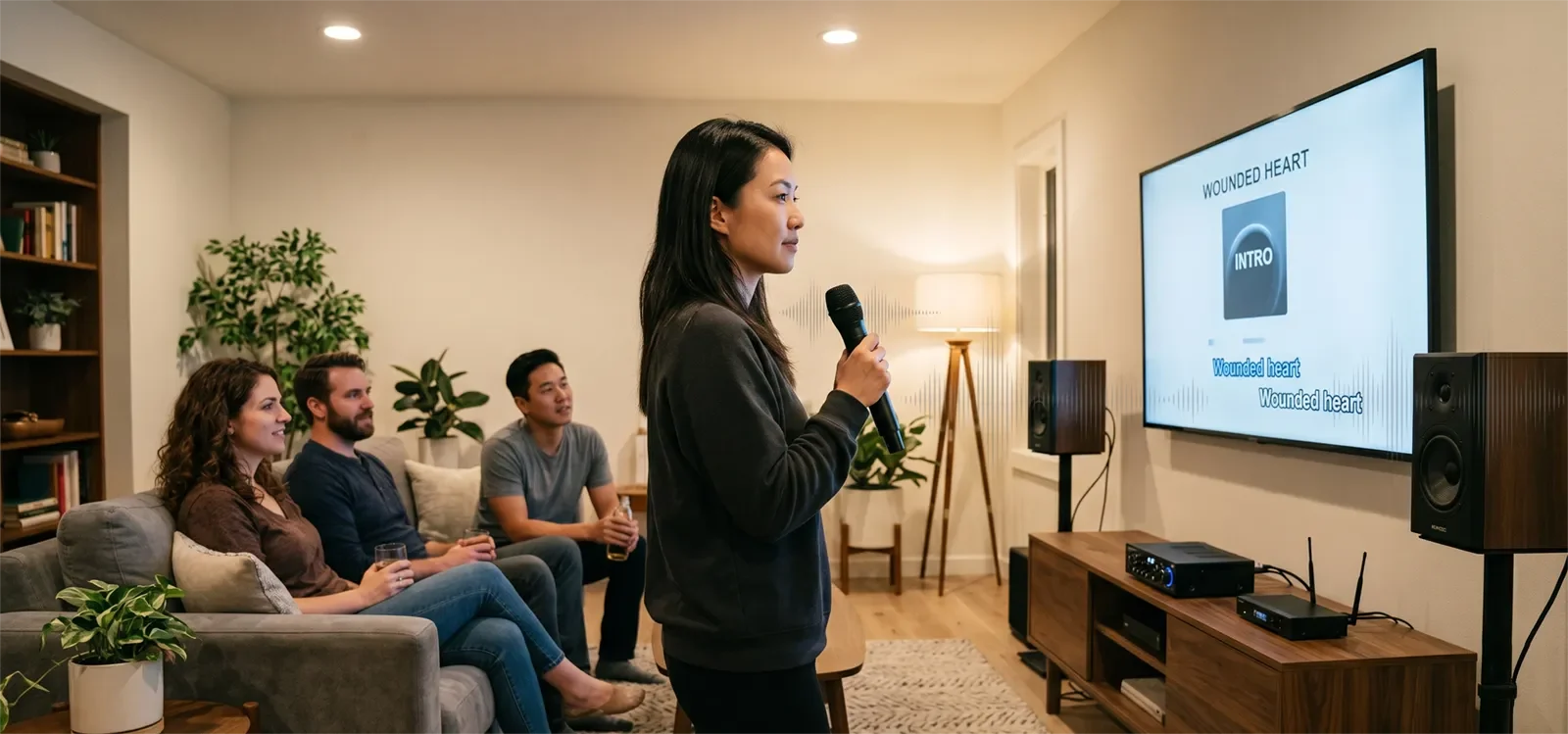
Some low-level noise can be normal in real karaoke systems, especially when microphones, gain, wireless receivers, mixers, amplifiers, and speakers are all active. The question is not whether any noise exists at all. The better question is whether the noise affects normal listening.
A mild noise floor is usually only noticeable when the room is quiet, the music is paused, or you are standing close to the speakers. Once the song starts, it mostly disappears into the main sound.
A more serious problem is different. If the hiss is strong during normal singing, if the noise changes suddenly, if there is a clear hum, or if the background sound distracts from quiet intros and pauses, then it deserves more attention. That may point to gain settings, cable issues, microphone behavior, wireless interference, or another part of the signal chain.
What people often misunderstand
A common misunderstanding is thinking any noise floor means something is defective. That is not always true. No real-world karaoke setup is perfectly silent in every condition, especially when microphones and gain are involved.
Another misunderstanding is expecting perfect silence as the only acceptable standard. In practice, what matters is whether the background noise stays low enough that it does not distract from the karaoke experience.
People also confuse noise floor with every unwanted sound. A faint, steady hiss is not the same as a loud hum, crackling cable, sudden interference, or signal dropout. Noise floor is usually more constant and subtle. It is the quiet background bed of the system, not every possible noise problem.
A practical listening rule
A useful rule is this: judge noise floor during quiet moments, but judge its importance during normal use.
If the background noise is only noticeable when you stand close, listen carefully, or wait in silence before a song starts, it may simply be the system’s quietness character. If it stays low and mostly disappears once karaoke begins, it may not be a serious issue.
If the hiss or background noise distracts during quiet intros, between vocal phrases, or while people are singing normally, then it matters more. The goal is not impossible silence. The goal is knowing whether the background noise is mild, noticeable, or intrusive in real home use.
Conclusion
Noise floor in karaoke is the system’s background quietness level. It is the low-level hiss or subtle noise that sits underneath music and vocals, especially during idle or quiet moments.
The key point is practical: a faint noise floor does not automatically mean the system is broken, but a distracting one can make the setup feel less refined. Once you understand noise floor as a quietness concept, system hiss becomes easier to judge calmly instead of treating every small sound as a major fault.
Frequently Asked Questions
Does noise floor mean my karaoke system is defective?
No. Some low-level background noise can be normal in a real karaoke setup, especially in a quiet room. Noise floor becomes more important when it is distracting during normal use, not simply because a faint hiss exists.
Is noise floor the same as interference or hum?
No. Noise floor is the low-level background noise underneath normal system use. Interference, hum, crackling, or sudden noise usually points to a more specific issue. Noise floor is usually steadier and more subtle.
Why do I notice hiss more at home?
Home rooms often make low-level noise easier to hear because listeners sit closer to the system and quiet moments are more exposed. In a living room or family room, there may be fewer background sounds to mask the system’s own quiet noise.
When does noise floor actually matter?
Noise floor matters when it affects the listening experience. If the hiss is obvious during intros, pauses, or normal singing, it can make the system feel less clean. If it stays mild and mostly disappears once music starts, many users will treat it as a minor characteristic.
Can microphone settings affect noise floor?
Yes. Microphone gain, mixer settings, wireless receivers, and overall system gain can all affect how much background noise you hear. Higher gain can make hiss more noticeable, especially when the room is quiet and the microphones are active.
If you want to move from vague annoyance to clearer listening judgment, the next step is learning how careful listeners interpret balance, quietness, and control in practice.
Read how professionals tune karaoke systems for better home sound.