
Perceived loudness is how loud a karaoke system feels to real listeners, not just what the numbers say. In home karaoke, a cleaner, better-balanced system can feel louder and more satisfying than a system that only has bigger watt ratings or higher output on paper.
Written by Toan Ho — Tittac editorial team.
Who this guide is for: Home karaoke users who want to understand why some systems feel louder, clearer, or more powerful even when the specs do not fully explain the difference.
How this guide was prepared: This guide was prepared by focusing on real home karaoke listening behavior: vocal clarity, tonal balance, room interaction, speaker sensitivity, and the difference between measured output and what people actually hear.
Many home karaoke users look at numbers first. They compare watt ratings, volume settings, speaker specs, or amplifier claims and assume the higher number should automatically feel louder. Numbers matter, but they do not tell the whole story.
A karaoke system can measure one way and feel very different once it plays in a real room. What people experience as “loud” depends on clarity, vocal focus, tonal balance, room behavior, and how easily the important parts of the sound reach the ear. For broader technical context on how home karaoke sound works beyond simple specs, see our in-depth technical analysis of karaoke systems.
Quick Answer
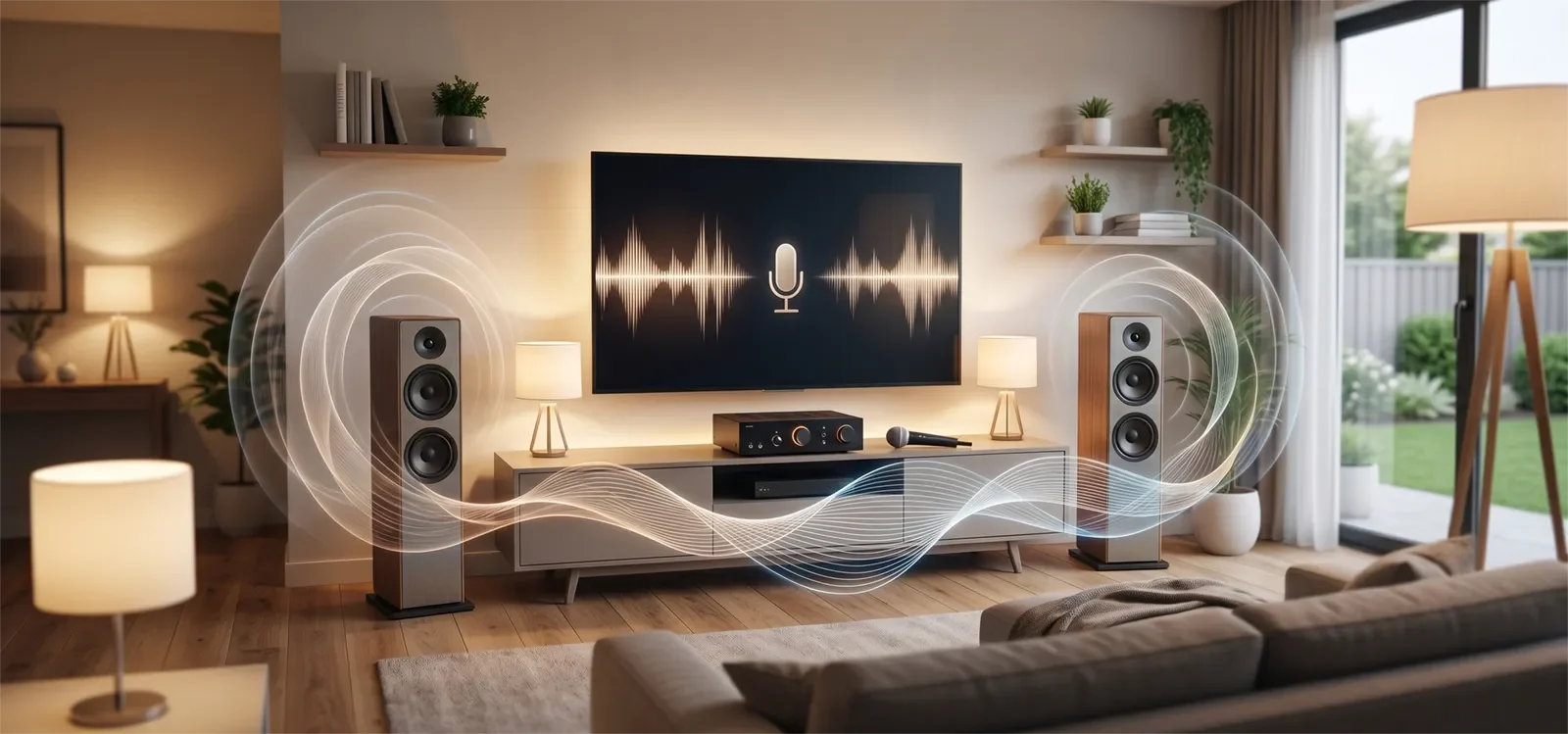
Perceived loudness in karaoke means how loud, present, and easy to hear a system feels to human listeners. It is not the same as a watt rating or a volume number. A karaoke system can feel louder because vocals are clearer, the tonal balance is better, the room supports the sound, or the system sounds more controlled. A system can also produce high output and still feel disappointing if the sound is muddy, harsh, congested, or poorly balanced. In home karaoke, perceived loudness explains why cleaner sound often feels stronger than raw numbers alone.
Table of Contents
What perceived loudness actually means
Perceived loudness is the difference between measured output and human impression. In plain English, it is not only how much sound energy a system produces. It is how strong, clear, present, and easy to hear that sound feels when people are actually singing and listening.
This is why perceived loudness is a listening concept first. Two karaoke systems may have similar settings or similar published numbers, yet one may feel more alive, more effortless, and easier to hear. The other may feel strained, blurry, or smaller than expected.
The ear is not judging one number by itself. It reacts to vocal intelligibility, tonal balance, speaker behavior, room reflections, and how cleanly the sound reaches the listener. If you want the measurement-side foundation, our guide to dB vs watts and what actually matters explains that part more directly. This article focuses on why loudness is also a human listening experience.
How perceived loudness changes system behavior
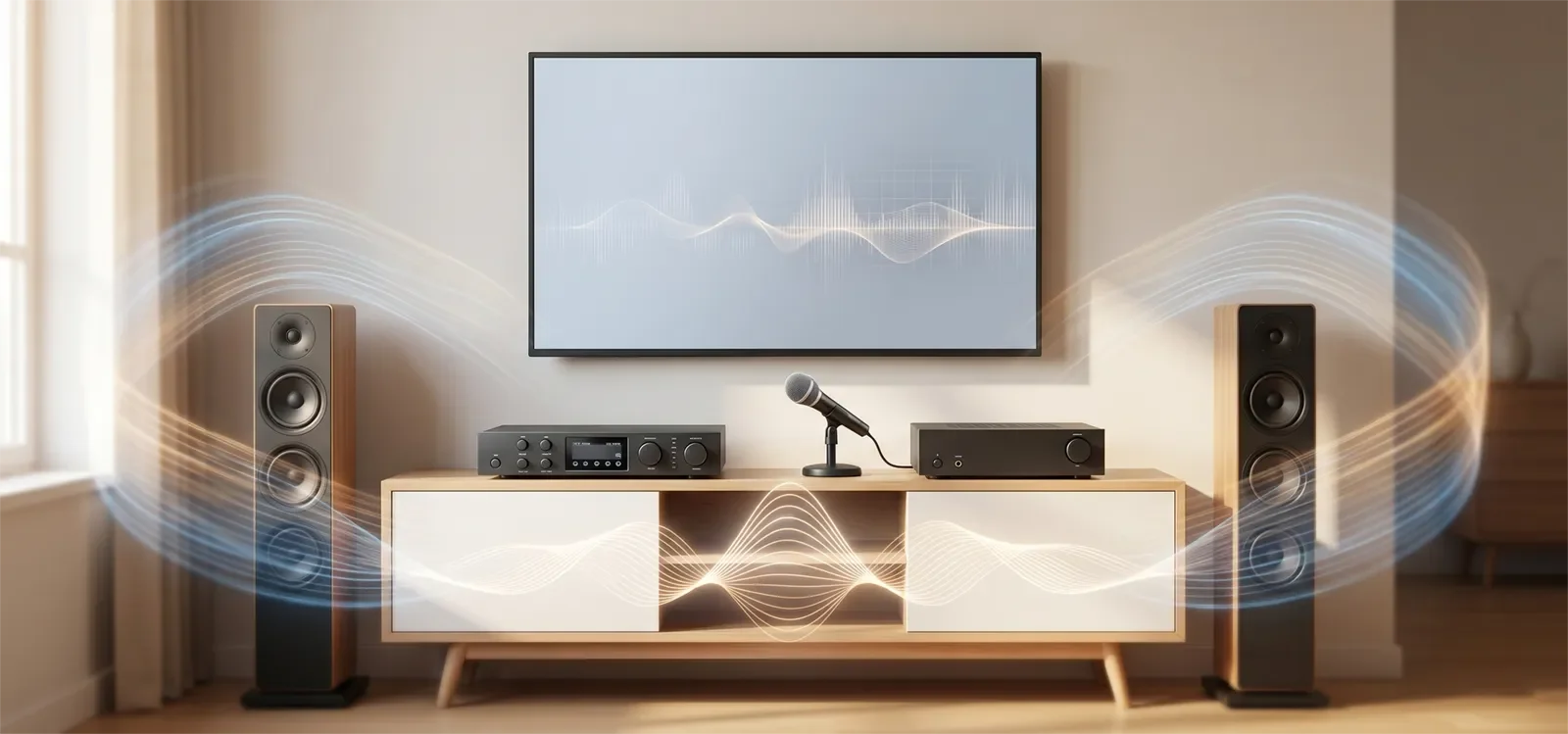
Perceived loudness changes how a karaoke system feels even when raw output is not dramatically different. A system with clearer vocals, smoother balance, and better control often feels louder because the important parts of the sound reach the listener more effectively.
That matters because karaoke is not background music. People are following lyrics, hearing their own voice, watching timing, and reacting to the sound in real time. If the vocal sits clearly above the music and the system remains easy to follow, the whole setup can feel bigger and more confident without needing a huge jump in level.
The opposite is also true. A system can produce plenty of output but still feel smaller or less satisfying if the sound is muddy, harsh, congested, or poorly balanced. More sound energy does not always create a stronger listening impression. Sometimes it only makes the system more tiring.
What users actually hear at home
At home, people notice perceived loudness in practical ways. One system seems to fill the room better even though the volume setting is not much higher. Another system sounds loud at first but does not feel clear once people start singing. A third system may seem less aggressive but more satisfying because the vocals are easier to follow.
Vocals are especially important. If the singer’s voice is clear and naturally placed in the mix, the whole system often feels stronger. That is because the ear is highly sensitive to intelligibility. When words are easy to understand and the vocal tone feels stable, listeners experience the sound as more present and effective.
Room behavior also affects the impression. A room can help the sound carry, or it can make the system feel smeared and uncontrolled. Tonal balance matters too. If bass, treble, or room reflections dominate in the wrong way, the system may feel loud but not useful. Measurement-related topics such as understanding speaker sensitivity for karaoke are helpful, but they still need to be interpreted through real listening.

What people often misunderstand
A common misunderstanding is assuming bigger numbers always create a louder-feeling karaoke experience. Numbers matter, but perception is more complex. If the sound is unclear or poorly balanced, a system may not feel strong even when the technical output is respectable.
Another mistake is treating loudness as only a volume-knob or bass issue. People sometimes turn the system up because they want more impact, but what they really need is more presence, better vocal clarity, or a cleaner center image. If those qualities are missing, raising the level can make the system harsher without making it more satisfying.
Users also confuse “loud” with “good.” A sound can be forceful without being clear, open, or comfortable. In karaoke, perceived loudness is tied closely to usefulness. If vocals smear, disappear, or become tiring, the listening impression may get worse even when the output increases.
A practical listening rule for judging perceived loudness
A useful rule is simple: when comparing karaoke sound, do not ask only which system is louder. Ask which system is easier to hear clearly. If vocals are more intelligible, the music feels more stable, and the room sounds more controlled, that system may have stronger perceived loudness even without a dramatic increase in raw level.
Listen for whether the system feels present or merely forceful. A better-balanced karaoke system often sounds like it is doing more with less effort. A poorly balanced system may feel loud in one narrow way but still fail to sound big, clear, or enjoyable where it matters.
The point is not to ignore measurements. The point is to interpret them correctly. In home karaoke, specs help explain potential, but perceived loudness explains the real listening result.
Conclusion
Perceived loudness in karaoke is about how loud and present a system feels to real listeners, not just how strong a measurement looks. That feeling is shaped by clarity, vocal intelligibility, tonal balance, room behavior, and control.
The main lesson is straightforward: more output does not always create a bigger or better karaoke experience. In many home setups, a cleaner and better-balanced system feels louder, more satisfying, and more useful than a system that only pushes harder on paper.
Frequently Asked Questions
Is perceived loudness the same as measured loudness?
No. Measured loudness describes output in technical terms, while perceived loudness describes how strong, present, and easy to hear the sound feels to people. In home karaoke, a system can measure well but still feel underwhelming if clarity or balance is poor.
Why can one karaoke system feel louder without a big volume increase?
Because the ear responds strongly to clarity and intelligibility. If vocals are cleaner and the tonal balance is easier to follow, the sound often feels more present without a major level increase.
Does better vocal clarity make a karaoke system seem louder?
Yes, very often. In karaoke, the voice is the center of the experience. When vocals stay clear and easy to follow, the whole system feels more effective and more substantial, even if the output is not dramatically higher.
Can a system be technically loud but still feel disappointing?
Yes. A karaoke system can produce plenty of sound but still feel less satisfying if it is harsh, muddy, smeared, or poorly balanced. More output does not automatically mean better perceived loudness.
Do watts tell me how loud a karaoke system will feel?
Watts are part of the technical picture, but they do not fully predict perceived loudness. Speaker sensitivity, system balance, vocal clarity, room behavior, and tuning all affect how loud and satisfying the system feels in real use.
When a karaoke system feels louder in a good way, it is often because the sound is easier to hear, not just because the number is bigger. Understanding that difference leads to smarter listening and better system decisions.
Learn how professionals tune karaoke systems for better home sound.