
You should stop adjusting a karaoke system when the sound is already clear, balanced, and repeatable across normal songs, singers, and listening positions. At that point, more tweaking often stops improving the system and starts pulling the mix away from a stable, natural balance.
Who this guide is for: Home karaoke users who want better sound without falling into endless knob-turning, EQ changes, echo changes, and volume adjustments that slowly make the system less enjoyable.
How this guide was prepared: This guide was written from real home karaoke tuning behavior, where repeatable balance, clear vocals, comfortable music level, and long-session usability matter more than chasing a perfect five-second moment.
One of the easiest ways to make a home karaoke system sound worse is not a lack of effort. It is over-adjustment drift. A small change to vocal volume leads to a bass change. The bass change makes the treble feel different. Then the echo feels too obvious. After a while, the system does not sound more refined. It sounds less settled.
This happens because different is not always better. In home karaoke, tuning eventually reaches a point where the system is stable enough for real use. After that point, every extra adjustment should have a clear reason. This guide focuses on that finish-line judgment: how to recognize when your karaoke system is already close enough, and how to avoid breaking the mix by continuing to tweak without a real problem to solve. For broader technical context on how home karaoke sound works as a complete system, see our in-depth technical analysis of karaoke systems.
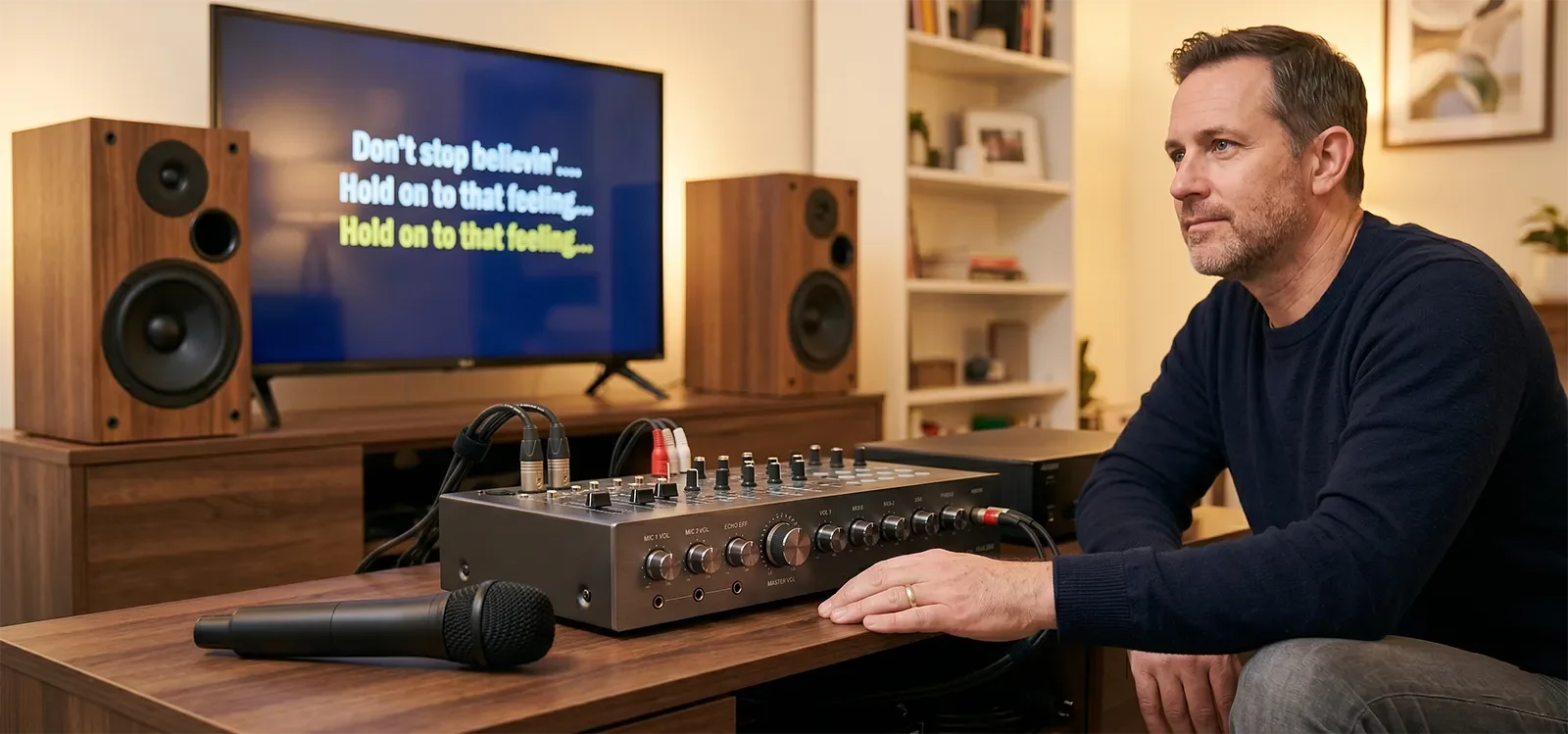
Table of Contents
- Quick Answer
- What stopping actually means
- Why one change starts a chain reaction
- What over-tweaking sounds like in real use
- What people often misread when the system is already close
- A practical stop rule for home karaoke tuning
- When one more adjustment is still worth making
- Conclusion
- Frequently Asked Questions
Quick Answer
You should stop adjusting a karaoke system when vocals are clear, music feels supportive instead of overpowering, echo is comfortable, bass is controlled, and the system holds together across several familiar songs. If a new adjustment is not fixing a specific, repeatable listening problem, it is probably not tuning anymore. It is just changing the sound.
A useful rule is simple: if you cannot clearly name the problem, do not touch the control. Good home karaoke tuning is not about finding a perfect setting that works for every song forever. It is about reaching a stable balance that sounds natural enough, feels easy to sing with, and does not need constant rescue.
What stopping actually means
Knowing when to stop adjusting a karaoke system does not mean the system is perfect. It means the system has reached a stable-enough balance where more changes are more likely to disturb the result than improve it.
In plain English, the system is doing its job. The vocal is readable. The music supports the singer. The bass is not swallowing the room. The treble is not painful. The echo helps the voice without making every word feel cloudy. When those basics are working across normal use, the system is already in a useful tuning zone.
This matters because home karaoke is always variable. Different singers hold the microphone differently. Different songs are recorded differently. Different seats in the room hear slightly different balances. If you treat every small difference as a problem that needs correction, you can slowly pull a good system away from the balance that made it work.
Stopping is not laziness. It is technical judgment. A well-tuned home karaoke setup should sound coherent across real use, not perfect in one short moment.
Why one change starts a chain reaction
Most karaoke controls do not act in isolation. Raising the vocal changes how loud the music feels. Adding bass can make vocals feel less forward. Pulling down treble can reduce sharpness, but it can also reduce clarity. Adding more echo can make singing feel easier for a moment, but it can also push the voice farther back in the mix.
This is why over-adjustment often starts innocently. One small change seems reasonable. Then that change creates another small issue. Then the next correction creates a third issue. Soon the system is not being tuned toward a goal. It is being chased around the room.
The key clue is the chain reaction. If one adjustment keeps forcing another adjustment, the previous balance may have been closer to right than it seemed. The problem is no longer one setting. The problem is drift.
This article stays narrower than the method article on how professionals tune karaoke systems. That guide owns the listening order. This guide owns the finish-line decision: when the system is already close, how do you know extra correction is now causing more harm than help?
What over-tweaking sounds like in real use
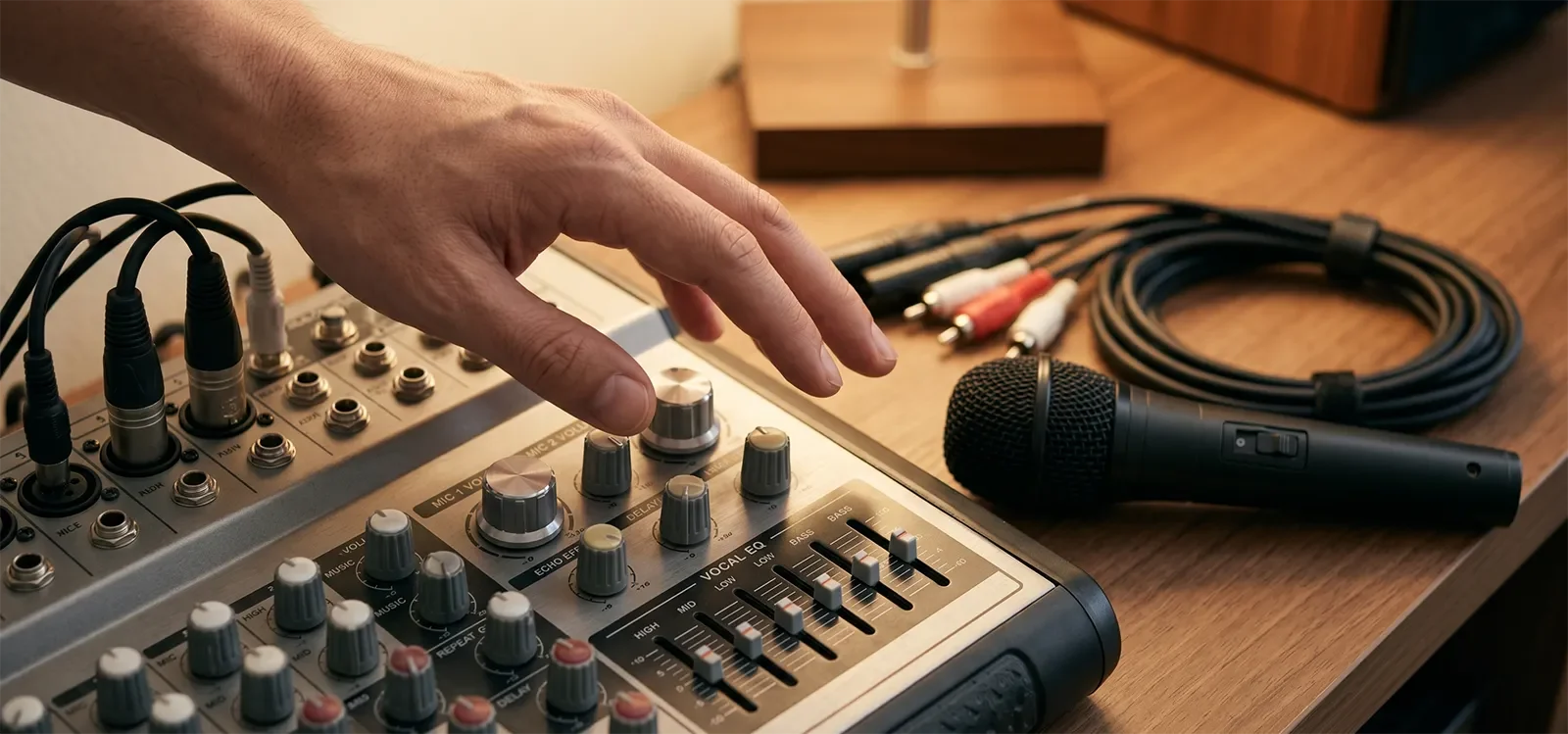
At home, over-tweaking usually sounds like a system that never quite relaxes. One song feels too bright, so the treble comes down. The next song feels dull, so the treble goes back up. Then the vocals feel good, but you chase a little more excitement. Then the echo feels too obvious, so you pull it back. The system keeps changing, but it does not keep getting better.
The most common symptom is gradual loss of balance. The system may still sound acceptable, but less settled than it did earlier. The vocal may become too forward. The echo may start calling attention to itself. Bass may feel bigger but less controlled. Treble may feel cleaner but less alive. Often, there is no single terrible setting. The damage comes from the accumulation of too many small reactions.
Listening fatigue makes this worse. The longer you tweak, the less reliable your judgment becomes. Your ears adapt, your attention narrows, and tiny differences start feeling larger than they really are. At that point, you may be reacting more to your own adjustment cycle than to the actual system.
A stable home karaoke system should not feel like it needs constant saving. If every song makes you reach for another control, it is time to pause and ask whether the system is actually wrong, or whether you have started chasing momentary preferences.
What people often misread when the system is already close
A common mistake is assuming that more effort automatically means better tuning. It does not. There is a point where more effort becomes interference. The best-sounding home karaoke systems are often not the most heavily adjusted systems. They are the ones that reached a sensible balance and were then left alone.
Another mistake is treating every song difference as a system problem. Recordings vary. Singers vary. Microphone distance varies. Room reflections vary. A different song does not automatically mean the karaoke system needs to be retuned.
Users also confuse “I can still hear something I could change” with “I should keep changing it.” Those are not the same. There will almost always be something you could adjust. The better question is whether the change improves the whole system across normal use, or only satisfies a brief impulse in one moment.
Settings-side refinement has its place, and our guide to advanced EQ tips for karaoke covers that adjacent territory. But this guide is about the stop rule: once the system is balanced enough, clear enough, and consistent enough, further tweaking often costs more than it gives back.
A practical stop rule for home karaoke tuning
Use this stop rule: stop adjusting when the system sounds clear, balanced, and comfortable across several familiar songs, and when any new change is no longer fixing a specific repeatable problem.
If you cannot name the exact issue, stop. “Maybe it could be a little better” is not a technical reason. “The vocal disappears when the chorus gets loud” is a reason. “The bass overwhelms the room on several songs” is a reason. “The echo makes lyrics hard to understand” is a reason. Good tuning starts with a problem you can describe.
Another clue is whether one tweak creates two new tweaks. If raising the vocal makes the music feel wrong, and fixing the music makes the echo feel wrong, and fixing the echo makes the vocal feel too dry, stop. The system may already have been closer to right before the adjustment chain started.
It also helps to step away. Leave the settings alone for a few minutes, play several familiar songs, and listen from normal seating positions. If the system still sounds easy to sing with and comfortable to hear, do not keep polishing it. The best home karaoke systems are not the ones adjusted endlessly. They are the ones that stay usable without constant correction.

When one more adjustment is still worth making
Stopping does not mean ignoring real problems. One more adjustment is worth making when the issue is clear, repeatable, and affecting normal use.
For example, if the vocal is consistently buried behind the music on multiple songs, that is worth correcting. If the microphone is consistently harsh at normal singing distance, that is worth correcting. If bass is consistently shaking the room but not helping the music, that is worth correcting. If feedback is close to happening whenever someone sings louder, that is worth correcting.
The difference is purpose. A useful adjustment has a target. It solves a problem you can hear more than once. A risky adjustment is vague. It comes from restlessness, not from a stable listening issue.
If the system has one clear problem, fix that one problem gently and then stop again. Do not use one correction as permission to rebuild the whole mix. Home karaoke tuning usually improves through small, purposeful moves, not constant redesign.
Conclusion
You should stop adjusting a karaoke system when it already sounds balanced enough for real use, and when further changes are no longer solving a clear listening problem. Endless tweaking often makes a home karaoke system less stable, less natural, and less enjoyable over time.
The main trade-off is simple: control can improve a system, but too much control can slowly damage the balance you were trying to protect. Good tuning means knowing what to fix, making the smallest useful change, and recognizing when the system has reached a stable-enough point.
In home karaoke, the goal is not perfection. The goal is a system that people can sing with comfortably, hear clearly, and enjoy without someone constantly reaching for the controls.
Frequently Asked Questions
How do I know if I am improving the sound or just changing it?
You are improving the sound if the change solves a specific problem across several songs or singers. You are probably just changing the sound if the system becomes different but not clearly more balanced, more comfortable, or easier to sing with.
Should I retune the system for every singer or song?
Usually no. Small differences between singers and songs are normal. A good home karaoke setup should hold together across normal use without needing constant correction. If you retune for every track, you may break the broader balance that made the system work well overall.
Why does the sound get worse after too many small adjustments?
Because the controls affect each other. A small change to vocal level, music level, bass, treble, or echo can shift how the whole system feels. After several reactions in a row, the system may lose its original balance even if none of the individual moves seemed extreme.
Is “good enough” really the right goal for home karaoke?
Yes. In home karaoke, stable and enjoyable is usually better than endlessly chasing perfection. Different rooms, songs, singers, and microphone habits will always create small variations. A system that works clearly and comfortably most of the time is better than one that constantly needs adjustment.
What should I do if I am no longer sure what sounds right?
Stop adjusting, return to a familiar song, and listen from a normal seat at a normal volume. If possible, take a short break before making another change. When judgment starts feeling uncertain, more tweaking usually makes the system less reliable, not more accurate.
If your system already sounds balanced and usable, that may be the signal to trust it instead of touching it again. Calm, repeatable tuning usually leads to better long-term results than constant correction.
Learn how professionals tune karaoke systems for better home sound.