
Audio delay in karaoke happens when the vocal, music, TV, wireless path, or processing chain no longer arrives at the right time. Even small timing delays can feel uncomfortable because singers hear both their natural voice and the amplified version coming back through the system.
Written by Toan Ho — Tittac editorial team.
Who this guide is for: Home karaoke users who want to understand latency before trying to solve sync problems in a TV, streaming, Bluetooth, or mixed-signal setup.
How this guide was prepared: This guide was written from a home-use perspective, focusing on how timing delay builds across real karaoke signal chains and why live vocals make some types of latency feel much more obvious than normal media playback.
Audio delay in karaoke feels strange because the system may seem fine for movies, YouTube, or casual music playback, yet feel uncomfortable the moment someone starts singing. The reason is simple: karaoke is not just playback. It adds a live voice into the chain, and live vocals make timing errors much easier to notice.
That is why delay in home karaoke should be understood as a timing issue, not just a random device problem. TVs, streaming apps, Bluetooth paths, wireless systems, DSP, and internal processing can all add small pieces of delay. Those pieces can build into something singers actually feel. This article explains the concept in plain English, not as a fix guide. For broader category context, browse our Karaoke Technical Guides.
Quick Answer: Audio delay in karaoke happens when sound takes time to move through the signal chain and different parts of that chain do not stay perfectly aligned. Delay can come from TV processing, streaming paths, Bluetooth transmission, wireless microphones, DSP, and other layered stages. A small amount may feel acceptable during normal video watching, but karaoke makes it more obvious because singers hear both their natural voice and the delayed amplified return. That timing gap can make singing feel disconnected, late, or harder to control.
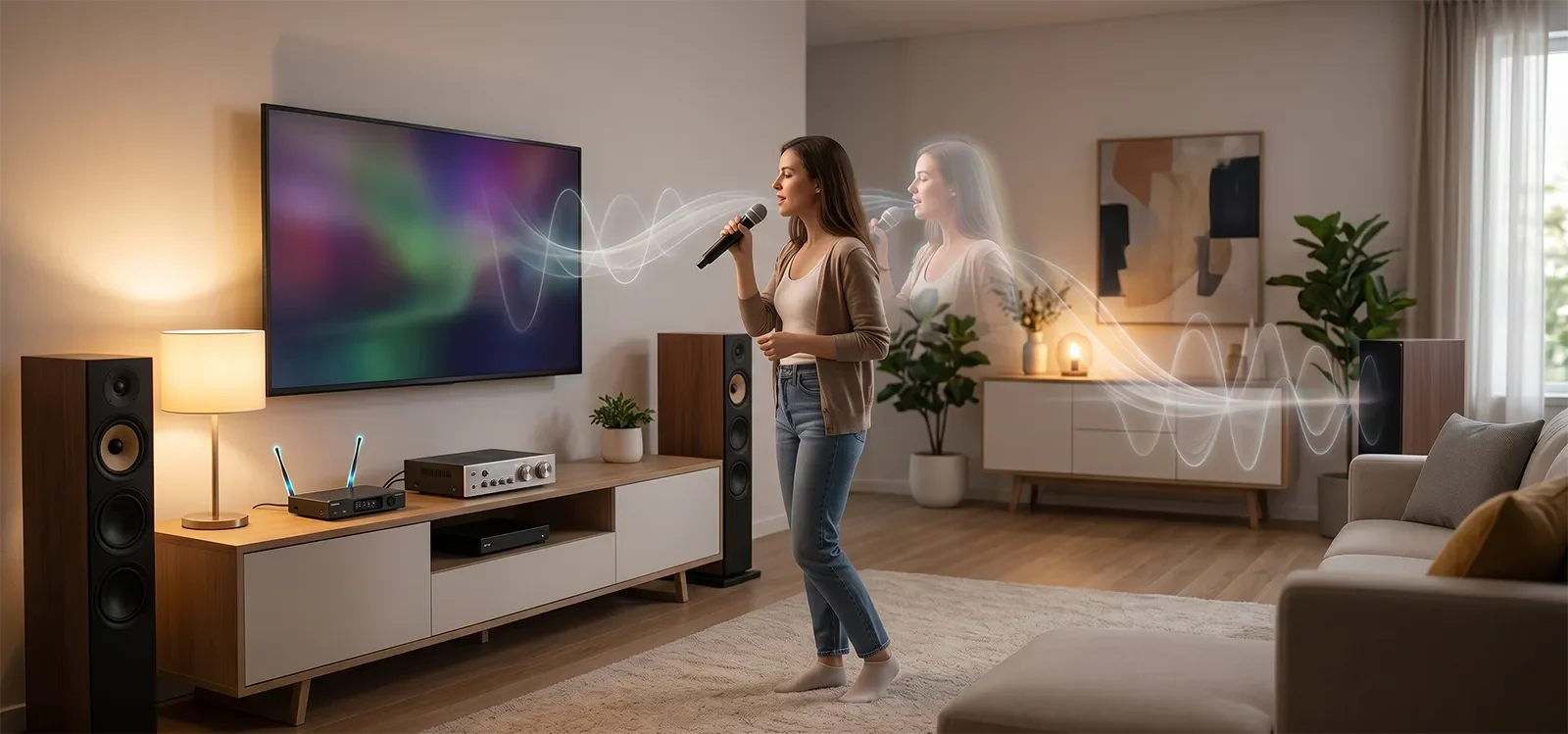
Table of Contents
What audio delay actually means
In plain English, audio delay means sound arrives later than expected. In karaoke, that matters because the system is handling both playback audio and a live microphone signal. If either path takes too long, or if the timing between those paths stops lining up well, the result can feel unnatural.
Delay is not always caused by one big problem. It often builds in layers. A TV may process video and audio at different speeds. A streaming source may add buffering and internal timing changes. A Bluetooth path may add transmission delay. A digital processor may need time to analyze and shape sound before sending it forward.
Each stage may add only a small amount, but the total can become noticeable. That is why delay is best understood as signal timing through the chain. It is not only about where sound goes. It is also about when it arrives.
Why karaoke is more sensitive to delay
Karaoke is more sensitive to delay because the singer is actively creating sound in real time. When you watch a movie, you are only receiving playback. If the delay is small, you may not notice it immediately. But when you sing, your brain compares three things at once: your natural voice in the room, the backing track, and your amplified voice coming back through the speakers.
If the amplified voice arrives late, the singer feels it. The timing may not look terrible on the screen, but the performance can feel disconnected. Words feel harder to place. Rhythm becomes less natural. The singer may start adjusting unconsciously to a delayed version of their own voice.
This is why karaoke delay can feel worse than normal lip-sync delay. It is not only a screen-sync issue. It is a live performance issue.
Where delay comes from in home systems
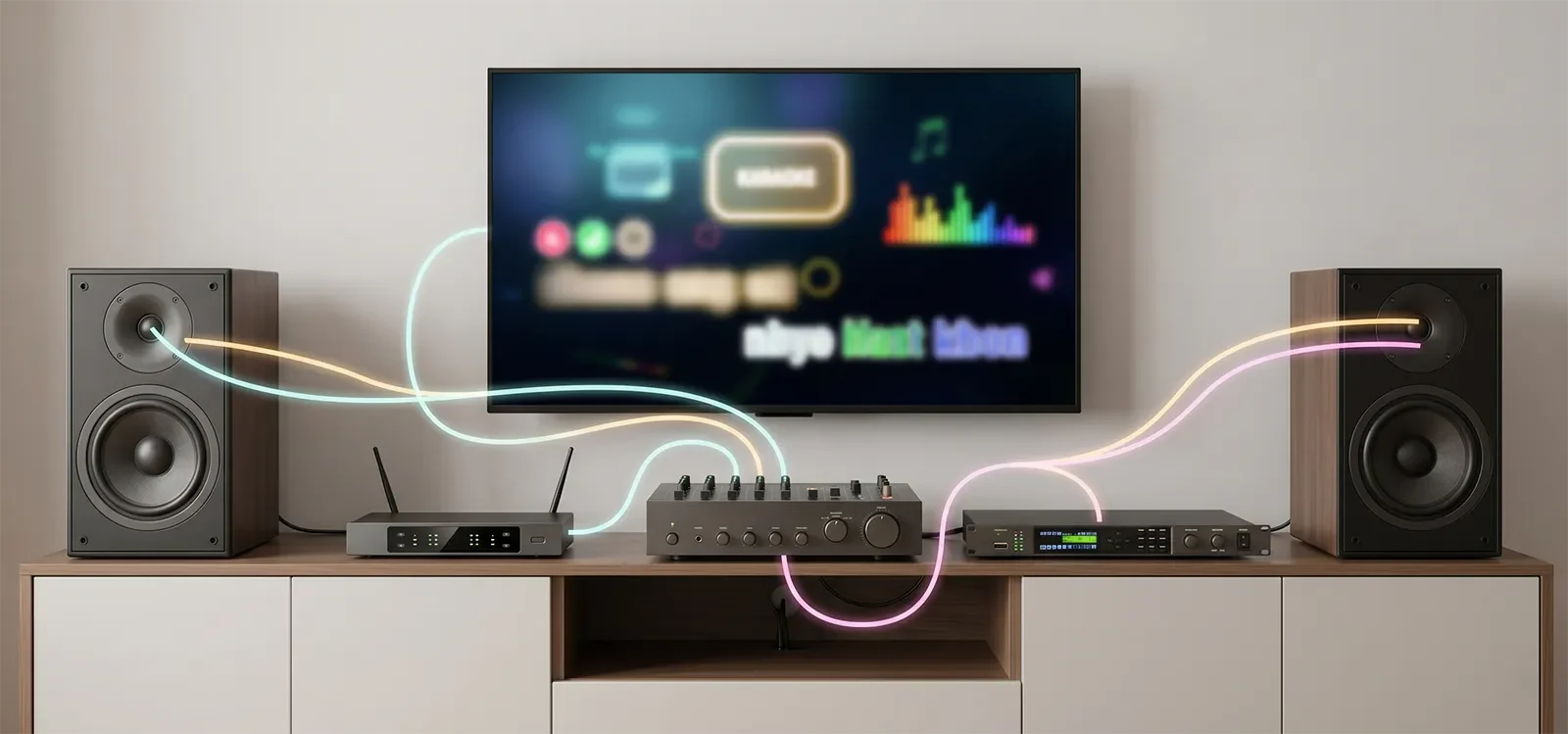
Delay can come from several places in a home karaoke setup. TV processing can add time. Streaming apps can add buffering. Bluetooth can add transmission delay. Wireless microphone systems can add their own timing behavior. DSP-based processors, digital mixers, and smart audio devices may also add small amounts of processing time.
None of these stages has to be “bad” by itself. The problem often comes from stacking too many delayed stages together. A system may use a smart TV, a streaming app, a wireless mic, a digital processor, and Bluetooth audio all in the same chain. Each stage may seem harmless alone, but together they can create a timing gap that singers feel.
This is one reason delay is easier to understand once you understand the full signal path. Different parts of the chain may add different amounts of timing shift. That is why Understanding Karaoke Signal Flow Without the Jargon is an important foundation article. Delay makes more sense when you think in stages instead of seeing the whole system as one box.
What delay changes in system behavior
Audio delay changes how connected the system feels. A karaoke setup with low timing error usually feels immediate. Singers hear the result of their voice quickly enough that the system still feels natural.
Once delay grows, the relationship between action and sound becomes weaker. The singer starts reacting to a slightly late version of the performance. Even if the sound quality is clear, the timing can make the system feel strange.
Wireless paths also matter here. Not every wireless stage behaves the same way, and the type of transmission can change how noticeable the delay feels in real home use. That is why Wired vs Wireless Microphones: The Technical Differences That Matter at Home connects directly to this topic.
DSP can also affect timing. Processing can be useful for EQ, effects, anti-feedback, dynamics, or other control features, but processing still takes time. In a well-designed system, that delay may be small enough to feel natural. In a layered home setup, it can become part of the total timing problem.
What users hear and feel at home
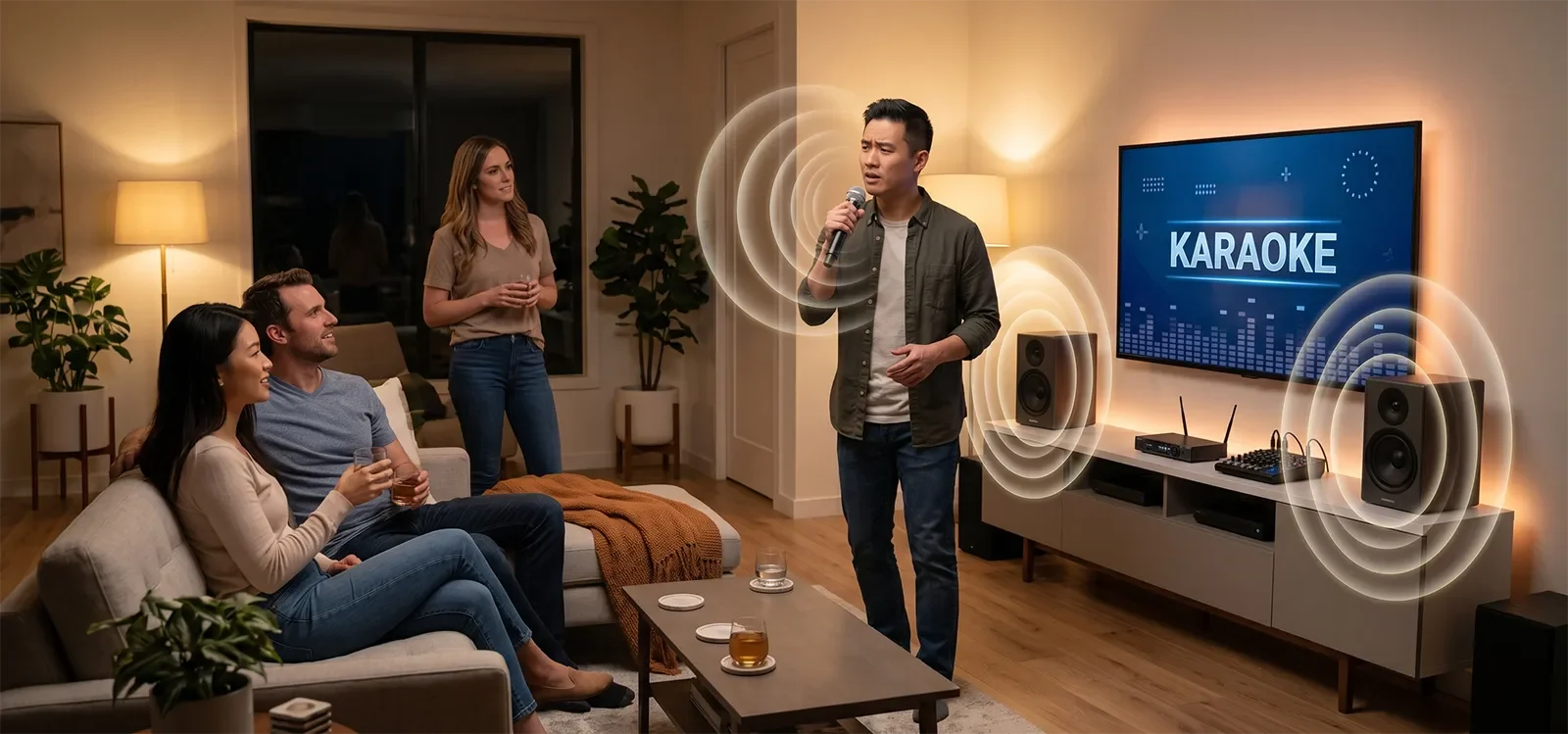
At home, audio delay usually shows up as a feeling before users know how to describe it. Singing feels slightly late. Words feel harder to land cleanly. Rhythm feels less steady even when the singer knows the song. Some people describe it as hearing a “double” effect, while others say the system feels disconnected or strange.
This happens because live vocals make delay much more obvious than passive listening. The singer hears their natural voice immediately through bone conduction and the room. Then the amplified version comes back through the speakers. If the amplified return is late enough, the brain notices the gap.
Mixed home signal chains make this more common than many users expect. A TV, a streaming app, a wireless microphone receiver, a karaoke amplifier, DSP, or Bluetooth playback may each seem harmless on its own. But when several of those stages are combined, the overall delay can become more uncomfortable than expected.
Common misunderstandings
The biggest misunderstanding is thinking delay only matters if lip-sync looks wrong on the screen. Karaoke delay is often felt before it is seen. A system can look mostly acceptable with lyrics on the TV and still feel uncomfortable for singing because the live vocal timing is not tight enough.
The second misunderstanding is assuming delay always comes from one obvious culprit, such as Bluetooth. Bluetooth can add delay, but it is not the only possible cause. TV processing, DSP, streaming behavior, wireless stages, and layered routing decisions can all contribute.
The third misunderstanding is underestimating how sensitive live singing is to timing. A small delay that seems harmless during movie watching can feel much worse during karaoke because the performer is trying to stay locked to rhythm, lyrics, pitch, and their own voice at the same time.
The better way to think about delay is simple: it is often an accumulation problem. The more stages the signal passes through before it reaches the singer’s ears, the more carefully timing has to be managed.
The practical listening rule
The practical rule is simple: think of delay as timing accumulation.
Ask how many stages the signal is passing through, how much processing each stage may add, and whether the singer is hearing both an immediate room voice and a delayed amplified voice at the same time.
For home karaoke, the goal is not to memorize every device-specific fix here. It is to understand why some systems feel usable even with a little processing, while others quickly become uncomfortable. The closer live vocal timing stays to immediate, the easier it is to sing naturally.
Delay is not just a technical flaw on paper. It directly affects how singable the system feels.
Conclusion
Audio delay in karaoke systems happens because sound takes time to move through the signal path, and different digital, wireless, and processing stages can add timing shifts that build together. What feels minor during normal media playback can feel much more serious once a live vocal is added.
The practical takeaway is clear: do not think about karaoke delay only as a screen-sync problem. Think about it as a live timing problem. In home karaoke, that understanding makes it easier to judge why a system feels natural, slightly awkward, or genuinely hard to sing with.
Frequently Asked Questions
Why does audio delay feel worse in karaoke than in regular TV watching?
Because karaoke includes a live voice. During normal TV viewing, you are only receiving playback. In karaoke, you hear both your natural voice in the room and the amplified version coming back through the system. If those do not line up closely enough, the timing difference becomes much easier to notice.
Does delay always come from Bluetooth?
No. Bluetooth is one possible source, but not the only one. Delay can also come from TV processing, streaming paths, internal DSP, wireless systems, and layered signal routing. In many home karaoke setups, the issue is the total accumulation of delay across several stages.
Why do some delays feel minor while others make singing uncomfortable?
Because not all timing differences are equally noticeable in live use. A very small delay may feel slightly soft but still manageable. Once the delay grows enough to separate your natural voice from the amplified return too clearly, singing starts to feel disconnected and harder to control.
Can a karaoke system have delay even if the lyrics look synced on the TV?
Yes. Screen sync and live vocal feel are not always the same problem. The lyrics may look acceptable while the microphone return still feels late to the singer.
Is this article telling me how to fix TV or Bluetooth delay?
No. This guide explains the concept of latency in plain English, not a troubleshooting sequence. The useful takeaway is understanding where delay can come from and why karaoke is especially sensitive to it, so later adjustments and decisions make more sense.
Want to keep going into the processing side of karaoke timing and signal behavior?