
Karaoke can feel tiring before it feels loud because the ear reacts to stress, not just volume. Brightness, vocal strain, room reflections, and dense sound can make a home karaoke session feel uncomfortable even when the level does not seem extreme.
Written by Toan Ho — Tittac editorial team.
Who this guide is for: Home karaoke users who want to understand why a system can feel sharp, stressful, or exhausting before it seems obviously loud.
How this guide was prepared: This guide was prepared by focusing on real home karaoke listening behavior: vocal comfort, room reflections, tonal stress, listening fatigue, and the difference between loudness and long-session comfort.
Sometimes a home karaoke system does not seem extremely loud, yet people still want to turn it down. The session starts feeling stressful, sharp, or wearing long before anyone says, “This is way too loud.” That can be confusing because many users expect discomfort to appear only when the volume becomes obviously high.
But listening fatigue is not just a volume issue. In home karaoke, the ear reacts to how the sound behaves over time. A system can stay at a moderate level and still feel uncomfortable if the vocals push too hard, the room reflects too much energy, or the tonal balance keeps pressing at the ear. For broader technical context on how these traits show up in real systems, see our in-depth technical analysis of karaoke systems.
Quick Answer
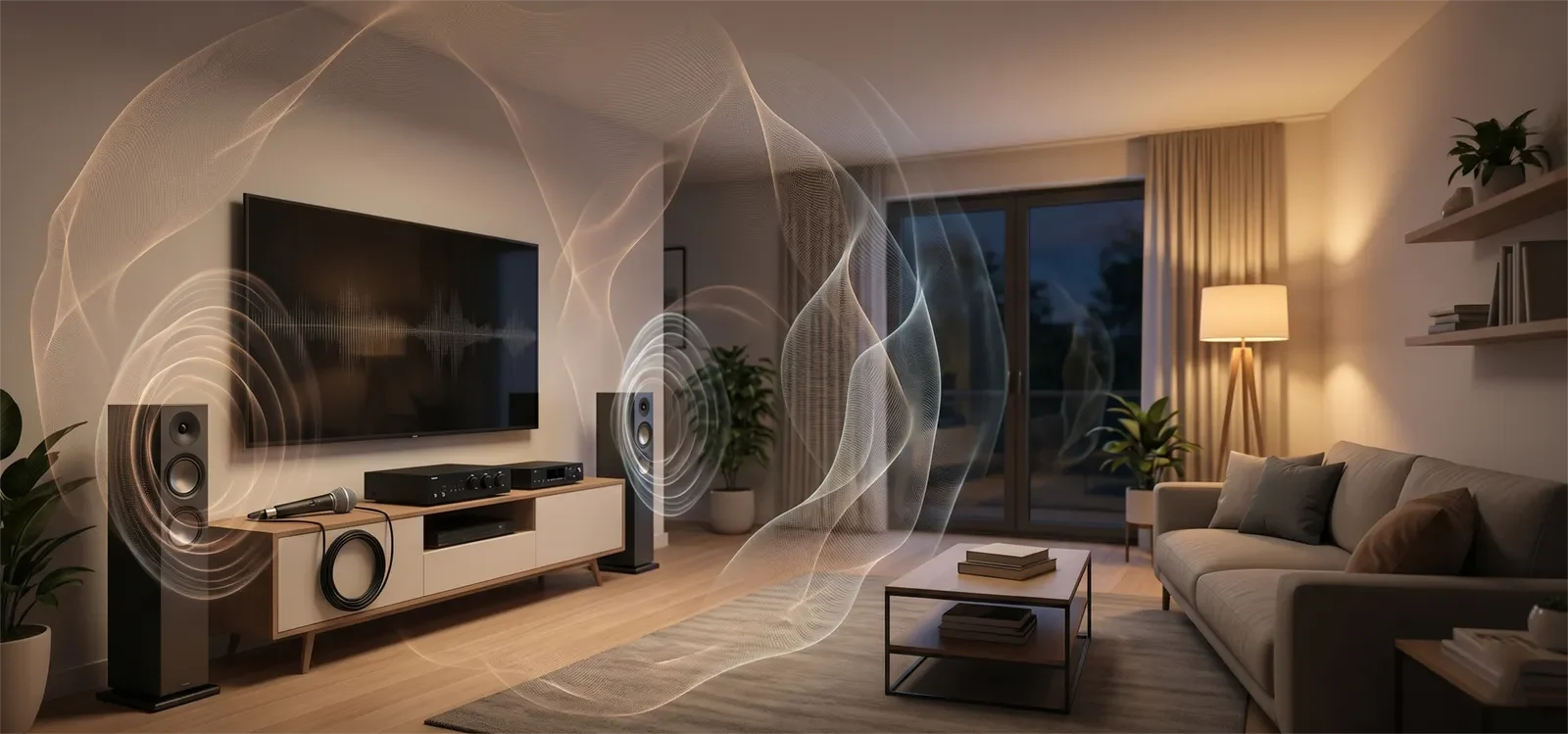
Karaoke can feel tiring before it feels loud because listening comfort depends on more than volume. Bright treble, vocal strain, room reflections, tonal imbalance, and compressed or dense sound can all create fatigue before the system reaches what people think of as “very loud.” In home karaoke, “not that loud” does not always mean “comfortable.” If people want to turn the system down early, the issue may be sound stress rather than raw output level.
Table of Contents
What listening fatigue actually means
Listening fatigue means the sound starts wearing on you before it becomes obviously overwhelming. Your ears, attention, or body begin to feel stressed even though the system does not seem extremely loud in a simple volume sense.
This matters because fatigue is a perception issue, not just a decibel issue. The ear reacts to the shape of the sound. If vocals feel strained, treble feels sharp, reflections bounce around the room, or the mix stays too dense for too long, the session can become tiring early.
That is why fatigue deserves its own explanation. It is related to loudness and harshness, but it is not identical to either one. Loudness is about level. Harshness is one type of tonal discomfort. Fatigue is the broader result when the sound keeps asking too much from the listener over time.
How fatigue changes system behavior
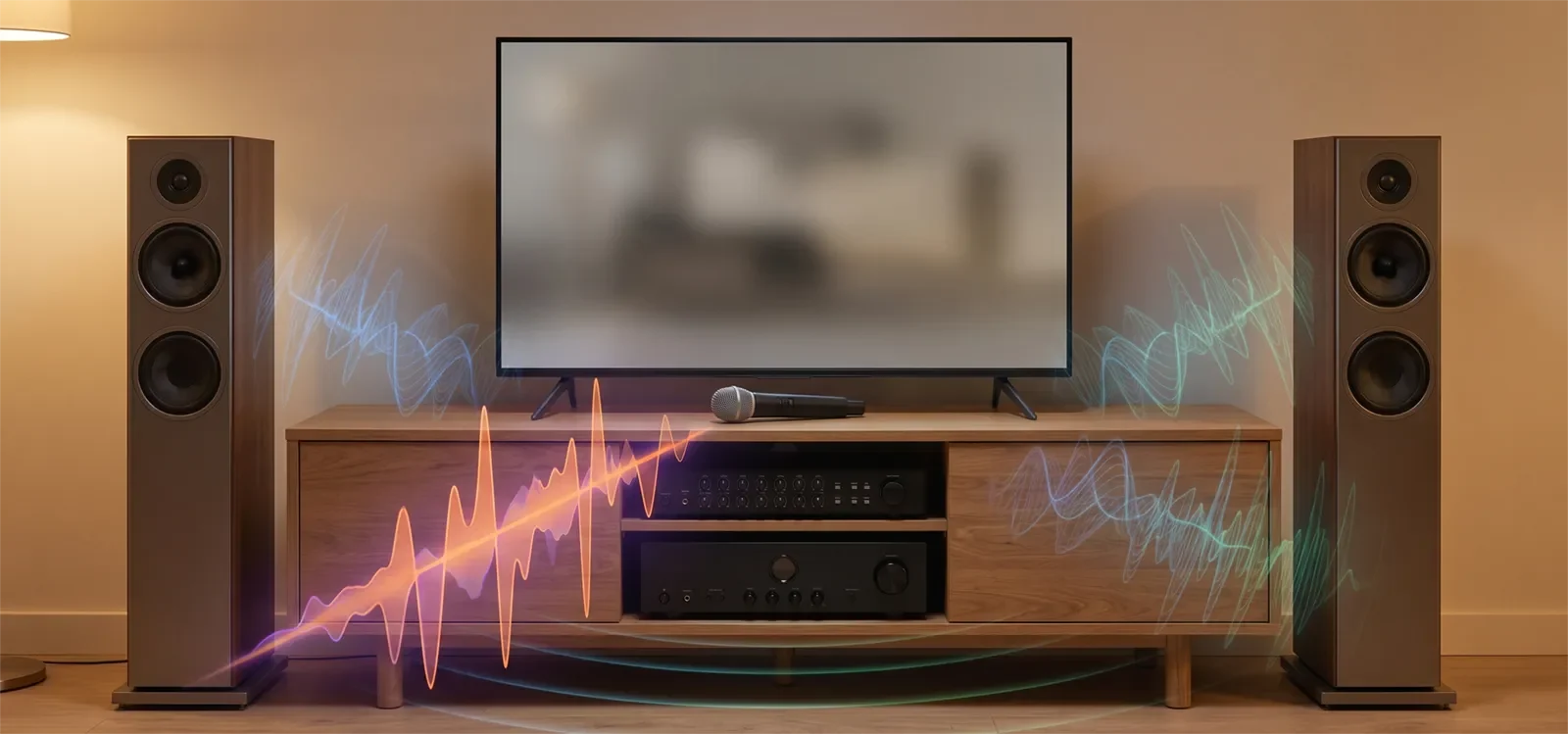
When a karaoke system becomes fatiguing early, the whole session feels less relaxed. People become less willing to sing longer, less comfortable raising the volume, and less able to enjoy the sound even if the system still seems powerful.
One reason this happens is that the sound stops feeling easy. Instead of flowing naturally into the room, it starts pressing at the ear. Vocals may feel too forward. Reflections may add extra edge around the sound. Brightness may make every vocal detail feel more aggressive than helpful.
Sound density can also contribute. If the vocal feels packed, squeezed, or constantly pushed forward, the ear gets less relief between phrases. This is related to the behavior discussed in how compression and limiting affect karaoke vocals, but the key point here is simpler: fatigue often appears when the sound feels demanding instead of natural.
What users actually hear at home
At home, users often describe early fatigue in plain terms. They say the sound feels sharp, stressful, pushy, tiring, or hard to stay with. Sometimes they lower the volume even though they would not describe the system as extremely loud.
Vocals are usually where fatigue shows up first. A voice that feels strained, over-forward, or constantly pressing at the ear can wear people out quickly. In karaoke, this matters because listeners are paying close attention to lyrics, pitch, timing, and the singer’s voice at the same time.
Room reflections can make the problem worse. Hard floors, bare walls, glass, and open reflective spaces can send extra energy back into the room. The system may not be louder in a simple sense, but it feels more active and more tiring. This is why fatigue should not be reduced to harshness alone. For that narrower topic, see why some karaoke systems sound harsh at home.
What people often misunderstand
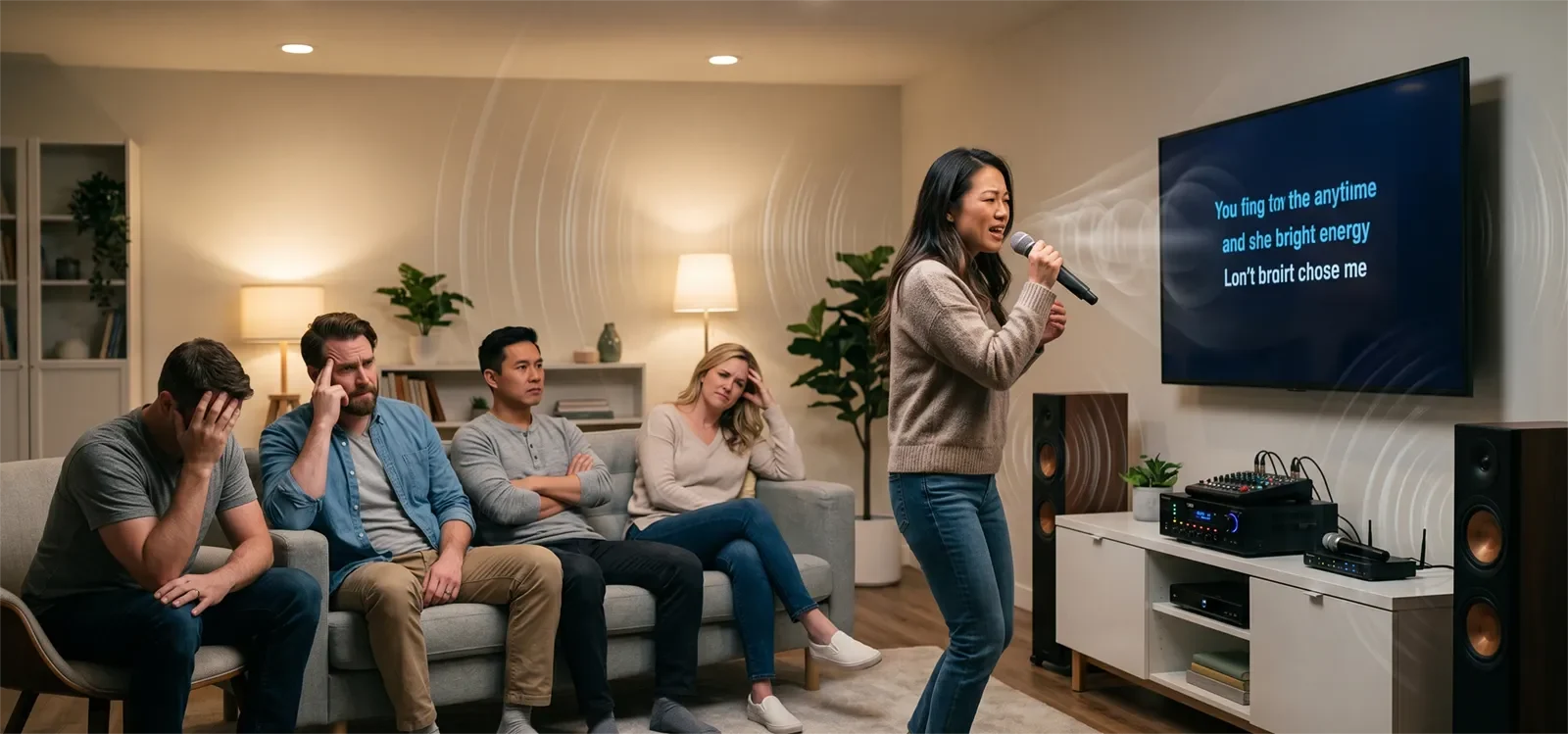
A common misunderstanding is assuming comfort and loudness move in a straight line. People expect the system to feel comfortable until it becomes obviously loud. Real home karaoke does not always work that way. A system can feel tiring early because the sound quality is stressful even when the quantity does not seem extreme.
Another mistake is assuming early fatigue means the listener is too sensitive or the room is simply too small. Those things can matter, but they are not the whole story. Tonal stress, vocal push, reflection buildup, and dense sound can all create fatigue without a dramatic volume problem.
Users also tend to say, “It is not that loud, so it should be fine.” But loudness is only one part of the experience. If the ear keeps dealing with glare, vocal pressure, splashy reflections, or a sound that never relaxes, the session can still feel wearing.
A practical listening rule for using fatigue as a clue
A useful rule is simple: if the system becomes tiring before it becomes obviously loud, look for sound stress, not just volume. Ask whether the sound feels easy to stay with or whether it keeps pressing at the ear over time.
Listen for the pattern. If people want the volume lower even though the room does not seem extremely loud, something in the sound may be creating fatigue. The cause could be vocal edge, room reflections, tonal imbalance, or a mix that feels too dense.
Fatigue is useful because it tells you something that a volume number cannot. It shows whether the system is comfortable for real karaoke sessions, not just whether it can play with enough power. Once you hear fatigue as a pattern, you can judge the system more accurately instead of assuming loudness is the only problem.
Conclusion
Karaoke can feel tiring before it feels loud because the ear responds to stress, not only level. Brightness, reflections, vocal strain, and dense sound behavior can all make a session feel wearing even when the volume still seems moderate.
The main lesson is straightforward: a system does not need to be obviously loud to become uncomfortable. When fatigue shows up early, the sound may be asking too much from the ear before the volume itself seems like the problem.
Frequently Asked Questions
Can karaoke be fatiguing even at moderate volume?
Yes. A system does not need to be extremely loud to feel tiring. Brightness, room reflections, vocal strain, and dense sound behavior can all create listening stress at moderate levels.
Is listening fatigue the same as harshness?
No. Harshness is one possible cause of fatigue, but fatigue is broader. A system can feel tiring because of reflections, vocal pressure, tonal imbalance, or a constantly dense presentation even if it is not sharply harsh in one obvious way.
Why do vocals often make fatigue show up first?
The ear is highly sensitive to the human voice. If vocals feel strained, too forward, or constantly pressing at the listener, the whole karaoke session can become harder to enjoy. This is especially important because karaoke depends on following lyrics and vocal timing.
Does “not that loud” mean the system is comfortable?
No. Moderate volume does not automatically mean listening comfort. A karaoke system can stay below what users think of as “very loud” and still feel stressful if the sound is sharp, reflective, dense, or tiring over time.
What is the easiest sign of early listening fatigue?
The easiest sign is when people want to lower the volume even though the system does not seem extremely loud. That reaction often means the sound is creating stress through tone, reflections, or vocal pressure rather than level alone.
If a karaoke session feels tiring earlier than expected, that reaction is worth taking seriously. Reading that clue well usually leads to better decisions than focusing on loudness alone.
Learn how professionals tune karaoke systems for better home sound.