














Who this guide is for: Readers who are specifically interested in citrine and want a clear, practical explanation of what it traditionally symbolizes in jewelry use, everyday wear, and goal-focused routines.
How this guide was prepared: This article was rebuilt as Tittac’s dedicated citrine profile page. It keeps the focus on citrine only, uses careful symbolic language, and hands off broader intention, ritual, styling, and care questions to their proper owner pages.
Citrine is traditionally associated with confidence, motivation, brightness, and forward-moving energy. Many people choose citrine jewelry because the stone feels warm, noticeable, and encouraging without needing to be framed as a promise of money, success, or guaranteed results.
That is the most useful way to understand citrine. It works best as a symbolic stone tied to mindset, habits, and intention rather than as a result engine. This guide stays focused on one stone only: what citrine commonly symbolizes, why people are drawn to it, how it fits into real routines, and how to wear it in a way that feels clear and practical.
Quick Answer
Citrine is best known for symbolism linked to confidence, motivation, brightness, and momentum. In jewelry, it appeals to people who want a stone that feels warm, visible, and energizing without looking too heavy or formal. A practical way to think about citrine is simple: it is a strong everyday choice for readers who want a piece that symbolizes action, optimism, and follow-through, not a shortcut to abundance or success.
Important: This article discusses citrine in a symbolic, spiritual, and mindfulness-oriented context. It does not make medical claims and should not replace diagnosis, treatment, therapy, medication, professional care, or financial judgment.
Table of Contents
What citrine traditionally symbolizes
Citrine is traditionally associated with confidence, motivation, brightness, and a more energized sense of direction. Many people use it as a symbolic reminder to stay engaged with goals, show up more fully, or move through the day with a little more intention and momentum.
Its color shapes much of that meaning. Yellow and golden tones are often linked with warmth, visibility, optimism, and clarity, which is one reason citrine feels more outward-facing than softer or darker stones. In jewelry, that gives citrine a lively presence without making it hard to wear.
If you want the wider A–Z crystal context, go to Healing Stones & Crystal Meanings: A Practical A–Z Guide. If your real question is broader than citrine and you want to choose by life theme, use Stones by Intention. This page stays with citrine itself.
Why people choose citrine
People often choose citrine because it feels bright without being fragile, and encouraging without sounding overly intense. Symbolically, it is commonly linked with confidence and momentum. Visually, it brings warmth and light into a piece of jewelry without requiring a dramatic look.
It also appeals to readers who want a stone that feels useful in everyday life. Many people use citrine as a reminder to follow through, stay connected to personal goals, or bring a more positive tone into their routine. That kind of meaning is often more honest and more helpful than making the stone responsible for an outcome it cannot guarantee.
If your question is really which stone fits a particular goal or emotional theme, the better page is Stones by Intention. This profile stays with citrine only.
Goal-setting and routine ideas
Citrine works best in routines when the stone is treated as a symbolic anchor rather than a promise. In practice, that might mean wearing a citrine bracelet on workdays, keeping a citrine piece near your planning space, or using it as a visible reminder to reconnect with one clear intention.

The key is to keep the ritual practical. One goal, one habit, and one visible cue is usually more useful than building a long, elaborate setup. Many people use citrine this way to support consistency, focus, optimism, or follow-through in daily life.
If you want a broader ritual structure, this page should hand off rather than take over. For a fuller ritual conversation, go to New Moon Intention Ritual Jewelry. That page owns the ritual framework, while this citrine profile stays stone-specific.
How to wear citrine jewelry
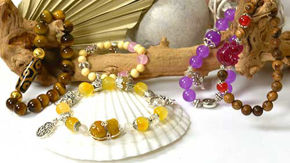
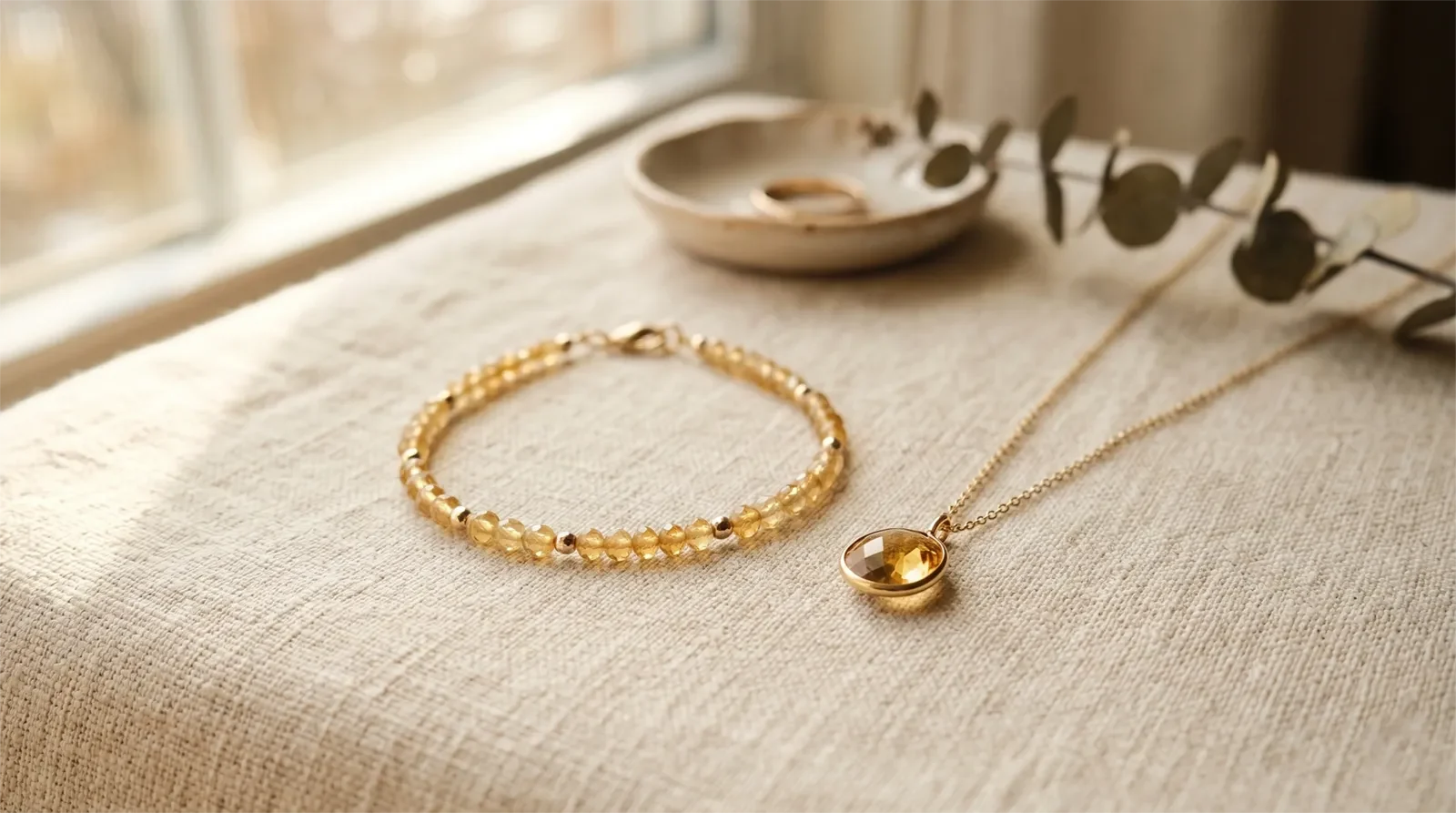
Citrine works especially well when you want jewelry to feel warm, bright, and easy to notice without becoming loud. A bracelet is often the simplest place to start because it keeps the stone visible in daily life and fits naturally into habit-based routines. Pendants and rings also work well when you want the color to play a more central role.
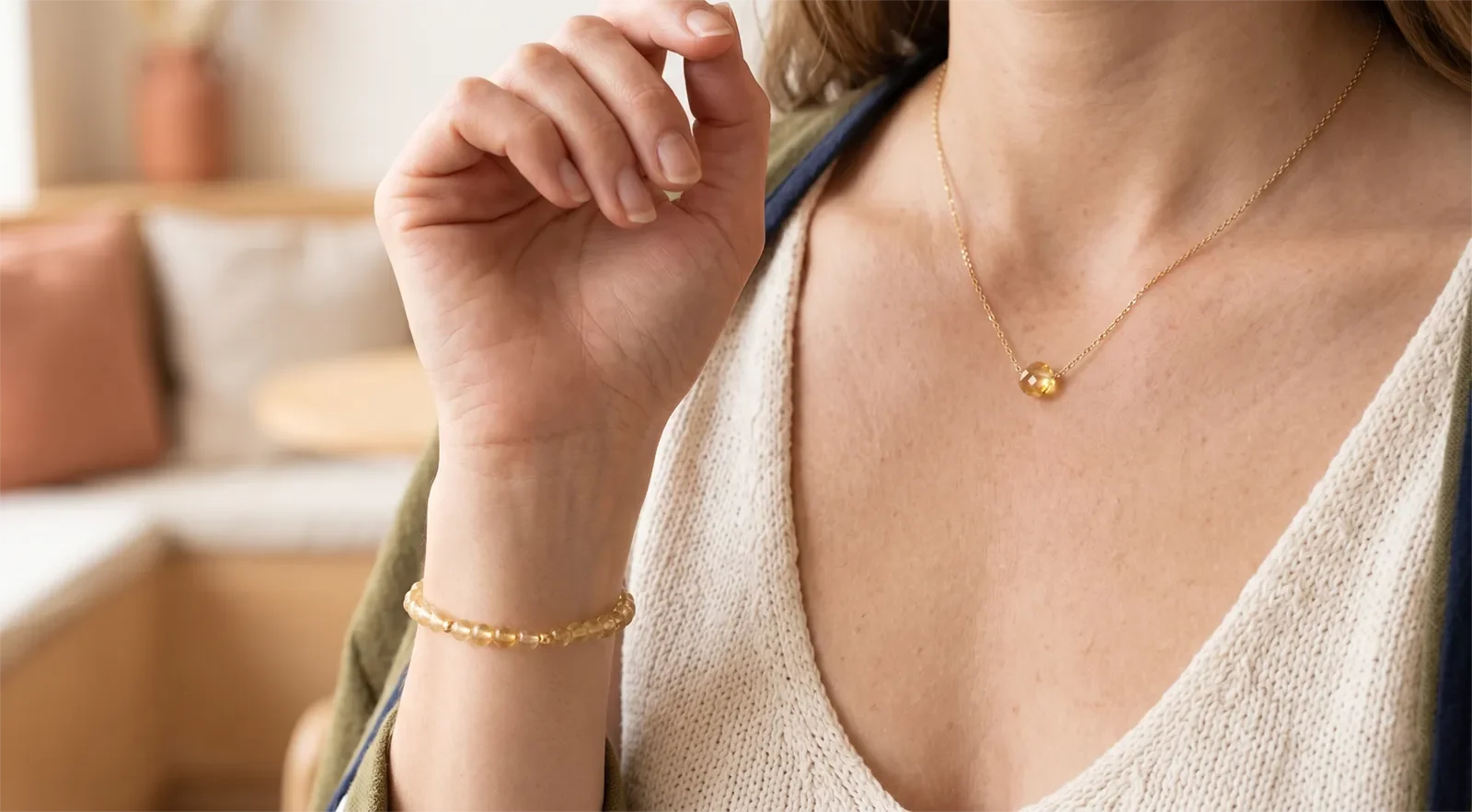
If you want citrine to feel subtle, choose smaller stones, lighter yellow tones, or simpler settings. If you want it to feel more expressive, deeper golden hues or a slightly larger focal piece can create a stronger presence. Either way, citrine usually works best when the design stays clean enough to let the color do the work.
In wardrobe terms, citrine pairs well with cream, white, beige, camel, olive, denim, soft brown, charcoal, and navy. It can also work as a brighter accent against black when you want a little warmth without adding too many colors. For broader outfit logic and layering ideas, go to How to Style Healing Jewelry.
Care and shopping notes
Care guidance should stay brief here because this article is about citrine meaning and wear, not a full maintenance guide. In general, citrine jewelry should be handled like jewelry first: avoid unnecessary impact, store it thoughtfully, and pay attention to how often you wear it.
Shopping clarity matters too. A stone can still be the right choice only if the listing is honest and understandable. Look for clear naming, believable photos, and material disclosure that does not rely on hype. A bright citrine piece does not need inflated promises around abundance or success to feel meaningful.
For broader care guidance, cleaning basics, and everyday handling, use How to Cleanse & Care for Healing Jewelry. That page owns the fuller care discussion so this citrine profile can stay focused on one stone.
Bottom line: Citrine is usually a strong choice for readers who want a stone that feels warm, motivating, visually uplifting, and easy to connect with through real habits rather than exaggerated claims.
FAQ
What is citrine associated with?
Citrine is traditionally associated with confidence, brightness, motivation, and forward-moving energy. Many people choose it as a symbolic reminder to stay engaged with goals and daily momentum.
Is citrine good for workwear?
For many people, yes. Citrine can work well in workwear because its warm color is noticeable without always feeling formal or heavy, especially in simple bracelets, pendants, or smaller accent pieces.
Can citrine be part of a goal ritual?
Yes, in a symbolic way. Many people use citrine as part of a goal-setting or intention routine by tying it to a habit, reflection moment, or planning practice. For a fuller ritual structure, go to New Moon Intention Ritual Jewelry.
What colors pair well with citrine?
Citrine pairs especially well with cream, white, beige, camel, olive, denim, charcoal, and navy. Those tones usually let the stone feel warm and clear without looking overly busy.
Does citrine create abundance?
This page keeps that language symbolic. Some people associate citrine with abundance themes, but it should not be framed as something that creates money or guarantees success. It is better understood as a personal reminder tied to intention, mindset, and routine.
Does citrine need special care?
No unusual care is needed beyond thoughtful jewelry handling in everyday use. For broader cleaning and storage guidance, use How to Cleanse & Care for Healing Jewelry.