






Written by Toan Ho — Tittac editorial team.
Who this guide is for: This guide is for home karaoke buyers comparing small rooms vs large rooms and trying to choose a system that actually fits the space instead of buying too big, too small, or too complicated.
How this guide was prepared: This guide was prepared using the practical factors that matter most for room-based karaoke buying, including coverage, vocal clarity, ease of use, feedback risk, placement flexibility, room demand, and long-term value.
Need help choosing the right setup for your home? Visit our Garden Grove showroom or contact Tittac for help in English or Vietnamese.
The best karaoke system for a small room is usually not the best karaoke system for a large room. Small spaces reward control, clarity, easy placement, and a system that sounds full without taking over the room. Large spaces need more clean output, more usable headroom, better coverage, and a setup that still feels comfortable once several people are singing.
That is why room size should be one of your first filters, not one of the last things you think about. A system that feels balanced in a bedroom, condo, or compact family room can sound thin in a large open space. A system that feels exciting in a large room can feel oversized, boomy, or tiring in a smaller one. If you want the broader buying framework first, start with how to choose the best karaoke system for your home, then use this guide to decide what your room actually needs.
Quick Answer
Choose a small-room-optimized karaoke system if your space is compact, shared, or reflective, and you want clear vocals, easy placement, and enough clean sound without overpowering the room. Choose a large-room-optimized system if your room is open, bigger, or used for larger family gatherings, and you need more coverage, more vocal presence, and more headroom so the system still sounds relaxed at higher usable output.
If you are between the two, start with the room you sing in most often, not the biggest room you might use once in a while. For most homes, the better choice is the one that feels comfortable and balanced in normal use, not the one that wins on paper.
Table of Contents
What Matters Most When Choosing a Karaoke System for Small Rooms vs Large Rooms
Room Size and Home Setup
Room size changes what “good performance” actually means. In a small room, the system does not need extreme output to feel full because the listening distance is shorter and the room fills quickly. In fact, too much speaker size or too much bass can make the room feel crowded fast. In a large room, the opposite problem shows up. A setup that felt perfectly fine in a bedroom or compact living room can start to feel smaller, thinner, or less confident once the space opens up.
That is why it helps to think about room demand, not just square footage. Ceiling height, open layouts, hard reflective surfaces, and how far singers are standing from the TV or speakers all matter. A small room with tile and glass can behave more aggressively than its size suggests. A larger room with softer furniture and better spacing may be easier than expected. The better question is not just “How big is the room?” but “How demanding is this room on the system?”
Ease of Use and Daily Workflow
Small rooms usually reward simpler workflows. When people are closer to the speakers and closer to each other, a system that is easy to place and easy to control often feels better than a bigger setup that takes more effort to manage. That is especially true in condos, bedrooms, or shared living rooms where karaoke needs to fit into normal family life instead of taking over the whole space.
Large rooms often ask for a little more system confidence. That does not always mean more complicated day-to-day use, but it usually means you will feel the difference between a compact convenience-first setup and a fuller system with more headroom. If that part of the decision is still unclear, comparing portable vs full-size karaoke systems can help you see how room size changes what “easy” and “enough” really look like.
Long-Term Value and Upgrade Path
Long-term value is where many buyers go wrong. In small rooms, people often overspend on size they do not need, then end up with a system that feels harder to place, harder to tune, and less comfortable at normal listening levels. In large rooms, people often underestimate how quickly a modest setup starts to feel limited once the family gathers, the music rises, and the room needs more coverage.
The smartest upgrade logic is different in each case. In a small room, “enough” often means clean vocals, stable microphones, and balanced sound at moderate volume. In a large room, “enough” usually means the system still sounds open and relaxed without being pushed too hard. If you are trying to size that part more realistically, how many watts do I need for karaoke is the best support guide after you decide what kind of room you are buying for.
| Factor | Why it matters | Common mistake |
|---|---|---|
| Room demand | The same system behaves differently in a compact room than in an open one | Buying by generic size labels instead of real room behavior |
| Main priority | Small rooms usually need control; large rooms usually need coverage | Using the same buying mindset for both |
| Speaker sizing | Right-sizing helps the system feel comfortable, not strained or excessive | Oversizing small rooms or underestimating large ones |
| Microphone handling | Room size changes feedback risk, vocal presence, and ease of tuning | Thinking microphone needs stay the same in every room |
| Long-term fit | The right system should still feel appropriate after repeated home use | Buying for a rare edge case instead of the room you use most often |
The Best Fit for Different Home Use Cases
Choose a Small-Room-Optimized System if…
Best for: Bedrooms, condos, compact living rooms, smaller family rooms, and homes where karaoke needs to sound full and fun without dominating the space.
Not ideal if: Your main karaoke area is large, open, or regularly filled with more people than a compact setup can comfortably cover.
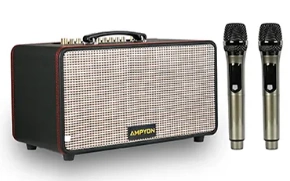
Why this fit makes sense: Small rooms reward balance. A compact or mid-size home karaoke system with clear vocals, stable microphones, and simple control often sounds better in practice than a bigger system that feels too aggressive or too physically intrusive. If your main concern is tight home space, karaoke systems for condos and small homes is the best next read.
Choose a Large-Room-Optimized System if…
Best for: Big family rooms, open-concept living spaces, larger entertainment areas, and homes where karaoke needs to carry more naturally across more distance.
Not ideal if: Your actual everyday karaoke use happens in a smaller shared room and you would mostly be paying for capacity you rarely use.
Why this fit makes sense: Large rooms expose weak coverage and weak vocal presence faster. A fuller-size setup with more clean headroom, better microphone handling, and more control over music-vocal balance usually feels more relaxed and complete in that kind of space. If your real use case is closer to an open-concept home, read karaoke systems for open floor plans and large living rooms next.
If You Are Still Deciding, Start Here
Best for: Buyers with a standard living room, a medium-size family room, or a home that sits somewhere between “small and tight” and “large and open.”
Not ideal if: You already know your room clearly behaves like one extreme or the other and just need a more targeted guide.
Why this fit makes sense: Most homes are not extreme cases. If your room is somewhere in the middle, start by asking where the system will live most of the time, how often the family actually sings, and whether you care more about easy control or room-filling confidence. In many medium rooms, the right answer is a balanced system that does not feel oversized but still has enough comfort to grow with the room.
Budget, Room Size, and Setup Trade-Offs
A good karaoke system for a small room does not need to feel small in a negative way. In many homes, “enough” means clear vocals, stable wireless microphones, easy placement, and balanced sound without harshness or bloated bass. That is often a better result than buying too much system and then spending the next year trying to tame it.
A good karaoke system for a large room is different. The goal is not just louder sound. It is more usable headroom, better vocal presence, and more natural coverage so the system still feels comfortable when the room opens up. That is where underbuying becomes a problem. If a setup only sounds good when pushed hard, or if vocals start to disappear as the room fills, the system is usually too small for the real use case.
| Scenario | What usually works | When to spend more | When not to |
|---|---|---|---|
| Bedroom, condo, or compact shared room | A compact or mid-size system with strong vocal clarity and easy placement | When the current setup feels thin, harsh, or awkward to control | When extra spending mainly adds bulk and output you will never use comfortably |
| Standard living room or multi-use family room | A balanced home system that sits between compact convenience and fuller room confidence | When karaoke is frequent enough that smoother vocals and better control are worth it | When you are paying for a large-room setup just to feel safer on paper |
| Large family room or open-concept space | A stronger full-size system with more clean headroom and better overall coverage | When vocals lose presence or the system feels strained as the room fills | When your main use still happens in a much smaller room most of the time |
| One system for “everything” | The setup that fits where you actually sing most often | When your main room clearly demands more than a compact solution can provide | When you are buying for a rare large-party scenario instead of normal family use |
Common Buying Mistakes to Avoid
Mistake 1
The first mistake is buying for power numbers instead of room fit. Buyers often assume bigger output automatically means safer buying, but in small rooms that can create more problems than it solves. In large rooms, the opposite mistake happens: the system looks fine on paper, but it starts to feel undersized once the space asks for more coverage. The fix is to size the system around room demand, not around the most reassuring spec.
Mistake 2
The second mistake is using the wrong room mindset. Small rooms need control, easy placement, and lower feedback risk. Large rooms need headroom, vocal projection, and a system that still feels relaxed when people spread out. When buyers apply one mindset to the other kind of space, the result is usually disappointment. The fix is to decide what the room is really asking for before comparing product categories.
Mistake 3
The third mistake is trying to fix poor setup with more hardware. Placement matters in both kinds of rooms. In small rooms, speakers too close to microphones can raise feedback risk quickly. In large rooms, cramped placement can keep the system from covering the space naturally. The fix is to remember that room-friendly placement and tuning matter as much as hardware choice. More system cannot always rescue the wrong layout.
How to Choose the Right Karaoke System in 60 Seconds
- Start with the room and use case: small shared room, standard living room, or large open family space.
- Decide how important ease of use is: do you want a cleaner, simpler setup or a stronger setup with more room confidence?
- Choose your main priority: control and clarity, or coverage and headroom.
- Set a budget boundary based on the room you actually sing in most often, not the biggest room you might use once in a while.
- Ask whether you need to keep things simple now or buy enough system that it still feels right if family gatherings grow a little over time.
If you only remember one thing, remember this: small rooms usually punish oversizing, and large rooms usually punish underestimating the space.
Frequently Asked Questions
What is the best karaoke system for a small room?
Usually a compact or mid-size home karaoke system with clear vocals, stable microphones, simple controls, and enough clean sound without overwhelming the room. In small spaces, balance and control matter more than maximum output, and the best system is often the one that feels easiest to place and enjoy regularly.
What is the best karaoke system for a large room?
Usually a stronger full-size setup with better coverage, more clean headroom, stronger microphone performance, and more control over music-vocal balance. The goal is not simply louder sound. It is keeping the system comfortable and confident once the room opens up and more people are in it.
Do small rooms always need less power?
They usually need less overall output, but what matters more is control. A system that sounds balanced, clear, and comfortable at moderate volume is often a better small-room choice than one that is more powerful on paper but harder to place or manage in real use.
Can one karaoke system work well in both a small room and a large room?
Sometimes, but compromises are common. A system that feels ideal in a small room may start to feel limited in a large one, while a large-room-oriented system may feel oversized in a compact space. Matching the system to the room you use most often usually leads to the better overall result.
Final Recommendation
If your main karaoke space is compact, shared, or reflective, choose a system that prioritizes control, vocal clarity, and easy placement. If your main karaoke space is large, open, or used for bigger family gatherings, choose a system that prioritizes coverage, headroom, and stronger overall room confidence. The right answer is not really “small system vs big system.” It is “properly matched system vs mismatched system.”
The main trade-off is simple: small rooms reward restraint, while large rooms reward enough capability to stay relaxed. Buy for the room where you actually sing most often, and your system will usually feel better over time than a setup chosen for extremes you rarely use.
Want to narrow it down by your exact room, not just by vague size labels?
Start with how to choose the best karaoke system for your home, compare portable vs full-size karaoke systems, or go deeper with how many watts you really need for karaoke.