
Stereo width can make karaoke music sound bigger, but it does not always make home karaoke easier to sing. For karaoke, a stable vocal center is usually more important than a dramatic left-right spread.
Who this guide is for: Home karaoke users who want to understand why a wider-sounding setup may feel impressive for music but less stable once live vocals and shared seating are involved.
How this guide was prepared: This guide was written by focusing on stereo image behavior, vocal anchoring, listener position, and practical home karaoke clarity rather than music-only spaciousness.
Stereo width is easy to admire because it can make music feel larger, more spacious, and more impressive. That often leads home karaoke users to assume that wider automatically means better.
But once live vocals enter the system, the priority changes. Karaoke depends more on vocal focus, lyric follow-through, and a stable center image than on a dramatic left-right spread. A setup that sounds exciting for music playback can make vocals feel less anchored, less centered, or harder to track when people are singing and listening from different spots in the room. For broader technical context, see our Karaoke Technical Guides.
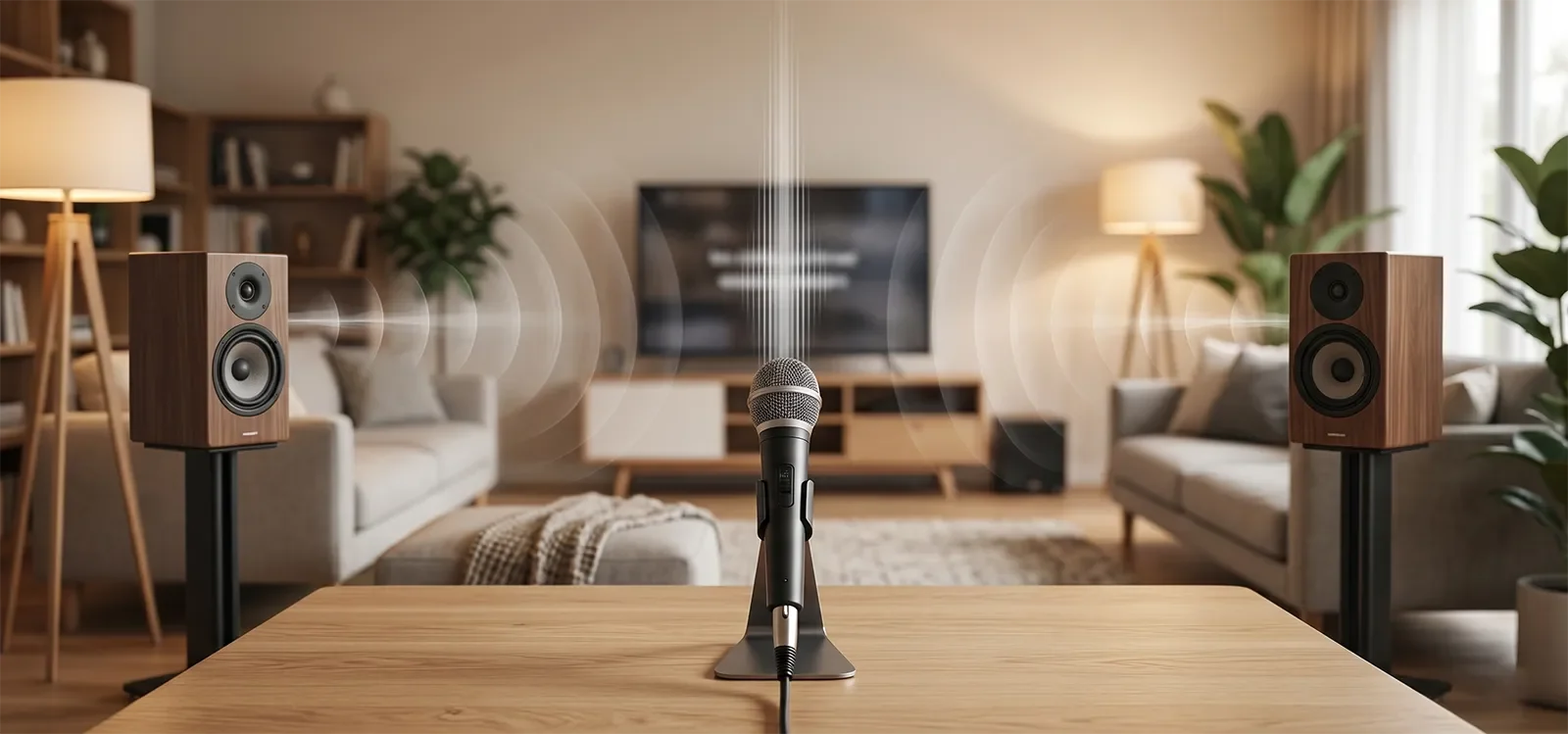
Table of Contents
Quick Answer
Stereo width can make music feel larger and more spacious, but that does not always create a better karaoke experience at home. Karaoke usually depends on a stable phantom center, clear vocal anchoring, and consistent results for people who are not sitting exactly in the middle.
When the stereo image becomes very wide, the center can feel less locked in, especially for off-center listeners. That can make vocals seem less focused or less predictable even if the system sounds impressive on music alone. For home karaoke, wider is not automatically worse, but it is not automatically more useful either.
What stereo width actually means in karaoke
Stereo width is the sense of space between the left and right sides of the soundstage. When a system produces a wide image, instruments, effects, and backing tracks can feel more spread out instead of clustering near the middle. That can sound impressive because the presentation feels larger and less crowded.
In karaoke, though, the question is not just whether the image feels wide. The question is whether the vocal stays easy to locate and easy to follow. A wider presentation can be enjoyable for music, but karaoke adds a different priority: the singer and the listener both need the vocal center to feel believable and steady.
This is why stereo width should not be judged only by the first impression. In home karaoke, the better question is whether width improves the experience without weakening the sense that the vocal belongs in a stable, usable center.
What stereo width changes in system behavior
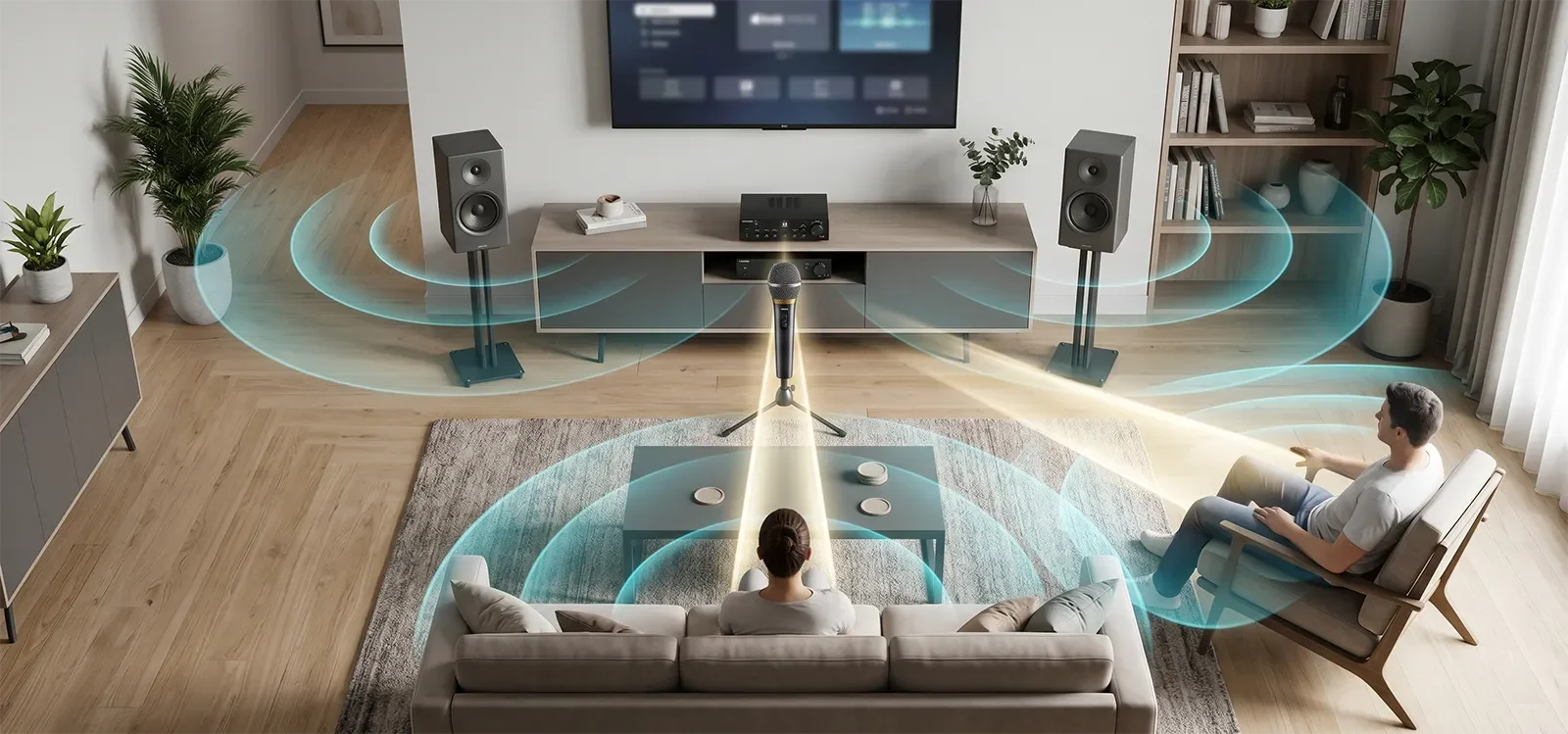
The key mechanism is the phantom center. In a stereo setup, the center image is usually not coming from a physical center speaker. It is created by the left and right speakers working together in balance. When that balance holds, the vocal can feel locked in the middle even though no speaker is physically there.
As stereo width becomes more pronounced, the system can become more sensitive to position and symmetry. The center image may feel strong for one listening spot but less stable for another. Once that happens, the vocal can seem to drift, spread, or lose some of its center certainty.
This matters because home karaoke is usually shared. People are sitting on a sofa, standing near the screen, walking around, or singing from a different part of the room. A stereo image that works beautifully for one centered listener may not feel as useful for a group.
This is related to listening position, but it is not the same as a full seating-position article. If you want that separate concept explained more directly, see Why Seating Position Changes What You Hear. The narrower point here is simple: wider stereo can make the center image more fragile for karaoke use.
What users actually hear at home
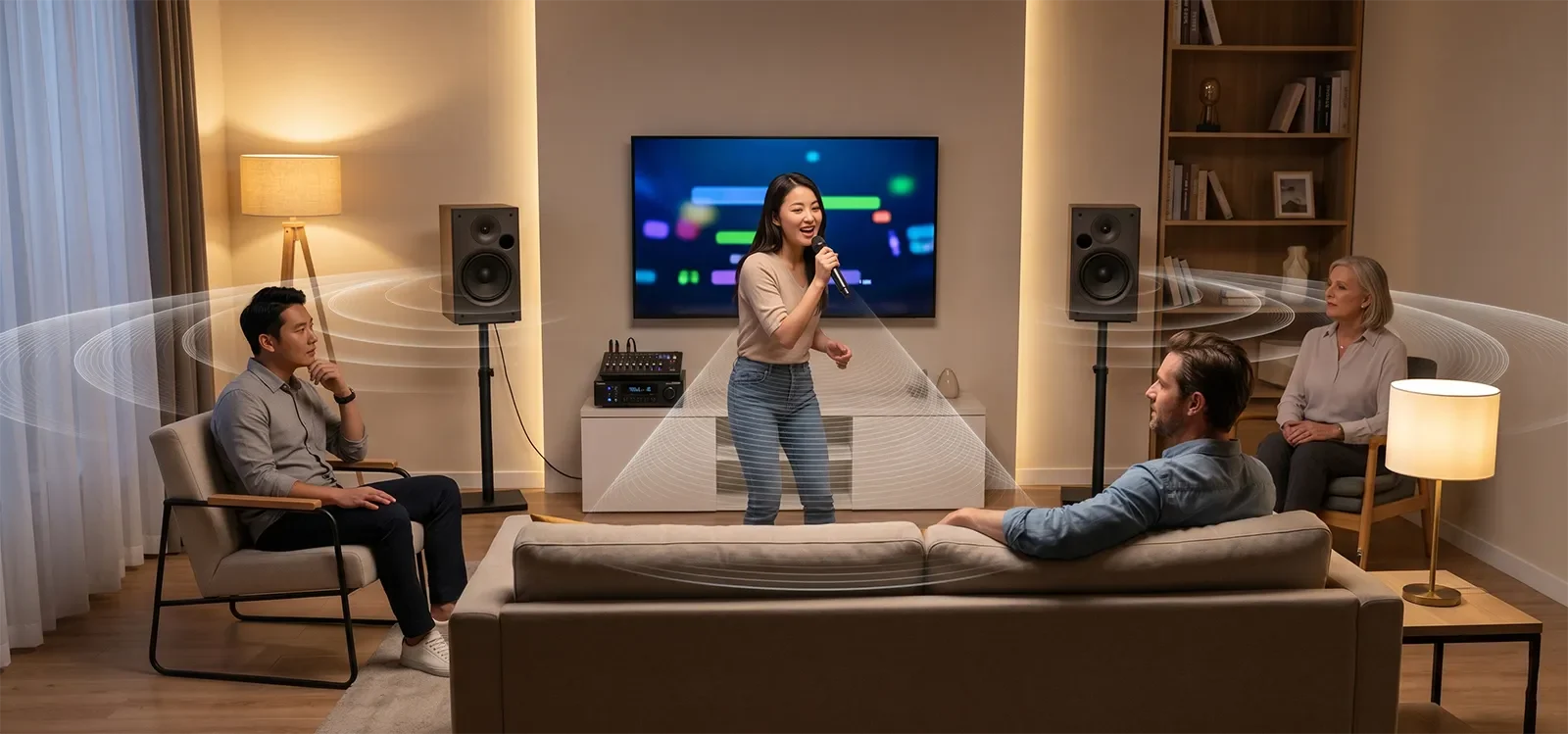
At home, people often notice this as a loss of vocal anchoring rather than as an obvious technical problem. The music may sound large and open, but the vocal may feel less centered, less settled, or strangely harder to follow. That can make karaoke feel less confident even if the system still sounds big.
Off-center listeners usually notice this faster because the phantom center is easier to disturb when they are not hearing both speakers in a balanced way. The result may not sound broken, but it can sound less stable. One person may think the system feels spacious, while another feels that the vocal is wandering or not landing where it should.
This is also why width should not be confused with room coverage. A system can project broadly without creating the most useful stereo behavior for shared karaoke use. That separate idea belongs more directly to How Speaker Dispersion Affects Karaoke Coverage in Living Rooms.
What people often misunderstand
The biggest misunderstanding is assuming that a bigger stereo image automatically means a better vocal experience. That idea makes sense in music-only listening, where width can feel cinematic or immersive. But karaoke is less about spectacle and more about maintaining a reliable center that helps people sing in time and stay connected to the mix.
Another mistake is blaming the wrong thing when vocals feel unstable. Users may assume the microphone, the singer, or the track balance is at fault when the real issue is that the stereo presentation is emphasizing space more than center stability. The system can sound exciting without being especially helpful for shared karaoke use.
People also sometimes use “wide” as if it means “better engineered.” In reality, wider is simply one kind of presentation. It can be enjoyable, but it is not a universal upgrade. For karaoke at home, usefulness depends on whether width supports the vocal instead of weakening the sense that the vocal is anchored where people expect it to be.
When stereo width can still help
Stereo width is not automatically bad. A moderate sense of width can make backing tracks feel more open, less cramped, and more enjoyable. It can help music breathe when the vocal center still stays clear and stable.
Width becomes useful when it supports the song without pulling attention away from the singer. If the music feels more spacious but the vocal still feels centered, readable, and easy to follow from normal seats, then the width is helping rather than hurting.
The problem starts when width becomes the main attraction. If the track feels impressive but the live voice feels less grounded, the setup is serving music playback more than karaoke. That may be enjoyable for listening, but it is not always the best choice for singing.
A practical home karaoke rule
The most useful rule is this: judge stereo width by what it does to vocal stability, not by how impressive it makes the backing track sound. If the music feels bigger but the vocal feels less centered or less reliable, that extra width may not be helping the part of the experience that matters most.
For home karaoke, consistency often beats drama. A slightly less dramatic stereo presentation can be more useful if it keeps vocals easier to place, easier to follow, and more believable for people sitting in different parts of the room.
That does not mean width is bad. It means width only helps when it serves the vocal instead of distracting from it. In karaoke, bigger is only better when the center still feels trustworthy.
Conclusion
Stereo width can make music playback sound larger and more exciting, but karaoke asks for something more specific. It asks for a vocal center that feels stable, intelligible, and dependable in real home use.
That is why stereo width does not always help karaoke at home. When width starts weakening vocal anchoring or making results less consistent across the room, the bigger image becomes less useful than it first appears.
The practical takeaway is clear: do not judge stereo width by size alone. Judge it by whether the singer still feels centered, the lyrics remain easy to follow, and the system still works for the room instead of only for one perfect listening spot.
Frequently Asked Questions
Does wider stereo always make karaoke sound better?
No. Wider stereo can make music feel bigger, but karaoke depends heavily on a stable vocal center. If the wider image makes vocals feel less locked in or less consistent for different listeners, it may sound impressive without actually improving the singing experience.
Why do vocals sometimes feel less centered in a wide setup?
Because karaoke vocals often depend on a stable phantom center created by the left and right speakers working together. If that center becomes fragile because of width, room behavior, or listener position, the vocal can seem less anchored even though the system still sounds spacious.
Is this the same as a speaker-dispersion problem?
No. Dispersion is about how sound spreads through the room. Stereo width is about left-right image behavior and how that image affects the stability of the center vocal. The two ideas can interact, but they are not the same technical question.
Should home karaoke always use a narrow stereo image?
Not necessarily. The goal is not to make everything narrow. The goal is to keep enough center stability that vocals still feel easy to follow and believable. A wider presentation can work well if it does not weaken the vocal focus that karaoke depends on.
What is the best way to judge stereo width for karaoke?
Listen to the vocal from more than one normal seating position. If the music feels spacious but the vocal stays centered, clear, and easy to follow, the width is probably useful. If the vocal feels unstable or harder to locate, the setup may be too focused on stereo drama for karaoke use.
Better karaoke sound usually comes from balance, not spectacle.
Read How to Balance Music and Vocals for a more practical next step.