
Seating position changes what you hear because sound does not spread evenly across a room. In home karaoke, one seat may sound balanced while another sounds boomy, thin, or less clear, even though the system settings have not changed.
Written by Toan Ho — Tittac editorial team.
Who this guide is for: Home karaoke users who want to understand why the same system can sound different from the couch, side chair, back wall, or standing position.
How this guide was prepared: This guide was prepared by focusing on real home karaoke listening behavior: bass buildup, vocal clarity, direct sound, reflected sound, speaker angle, and normal seating differences in shared family rooms.
One of the most confusing things about home karaoke is that the system can sound nicely balanced in one seat, then boomy, thin, or strangely unclear just a few feet away. Nothing changed in the settings. The singer did not suddenly get worse. The speakers are still in the same place.
What changed is the listening position. In home karaoke, your seat affects how bass builds, how clearly vocals arrive, and how the room mixes direct speaker sound with reflected sound. For broader technical context on how these behaviors show up in real systems, see our in-depth technical analysis of karaoke systems.
Quick Answer
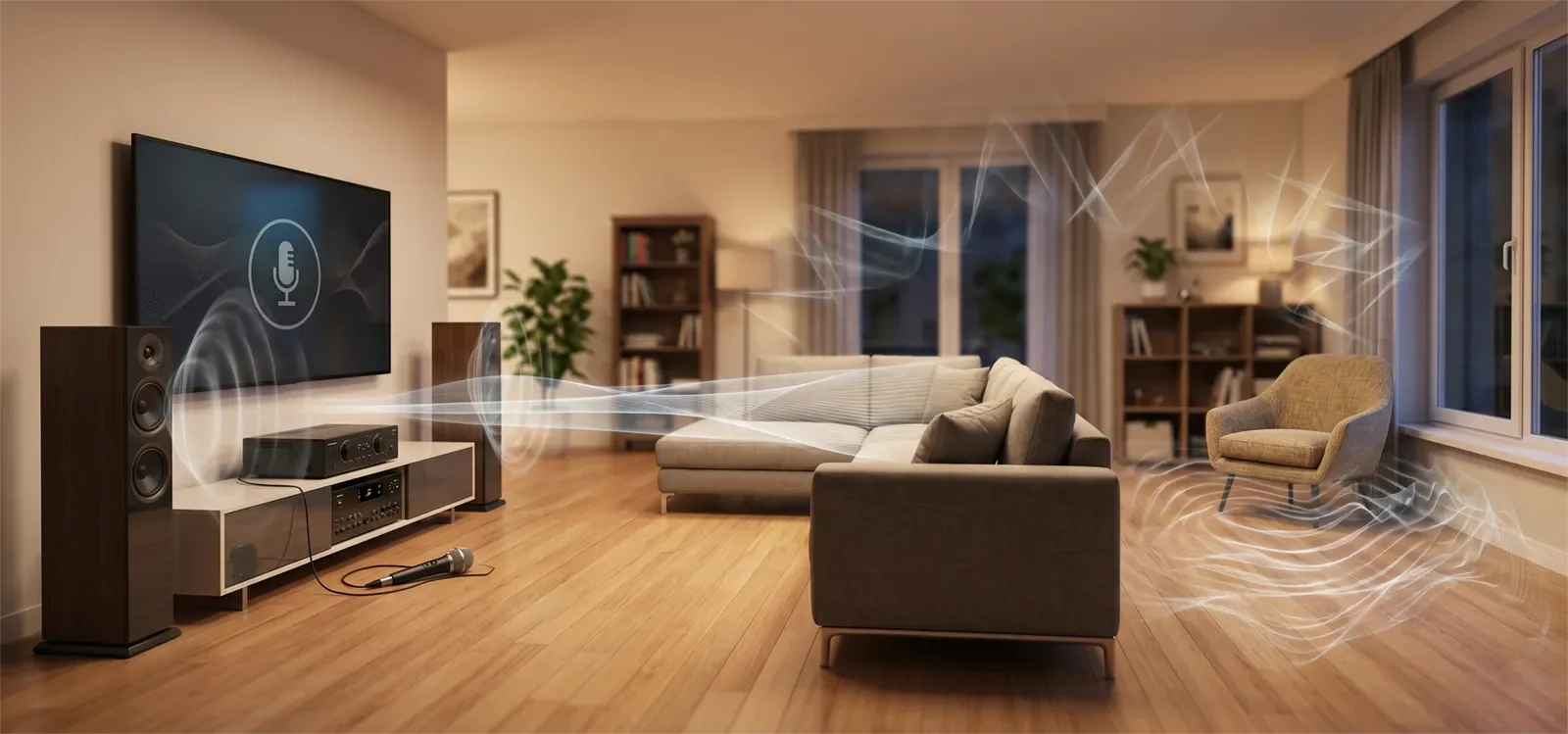
Seating position changes what you hear because each spot in the room receives a different blend of direct sound, reflected sound, and bass buildup. One person may hear clear vocals and balanced music, while another hears too much bass, weaker vocal focus, or a thinner sound. This does not always mean the karaoke system is poorly set up. It often means the room is distributing sound differently across different listening positions. In family-style karaoke spaces, this is normal.
Table of Contents
What seating position means for karaoke sound
Seating position matters because a room is not acoustically even. Sound leaves the speakers, travels through the room, reflects off surfaces, and interacts with walls, floors, furniture, and open spaces. Each seat receives a slightly different version of the same performance.
In plain English, the room reshapes the sound depending on where you sit. One chair may catch stronger bass buildup. Another may receive clearer direct sound from the speakers. A couch near the back wall may sound fuller but less controlled, while a side seat may sound lighter or less centered.
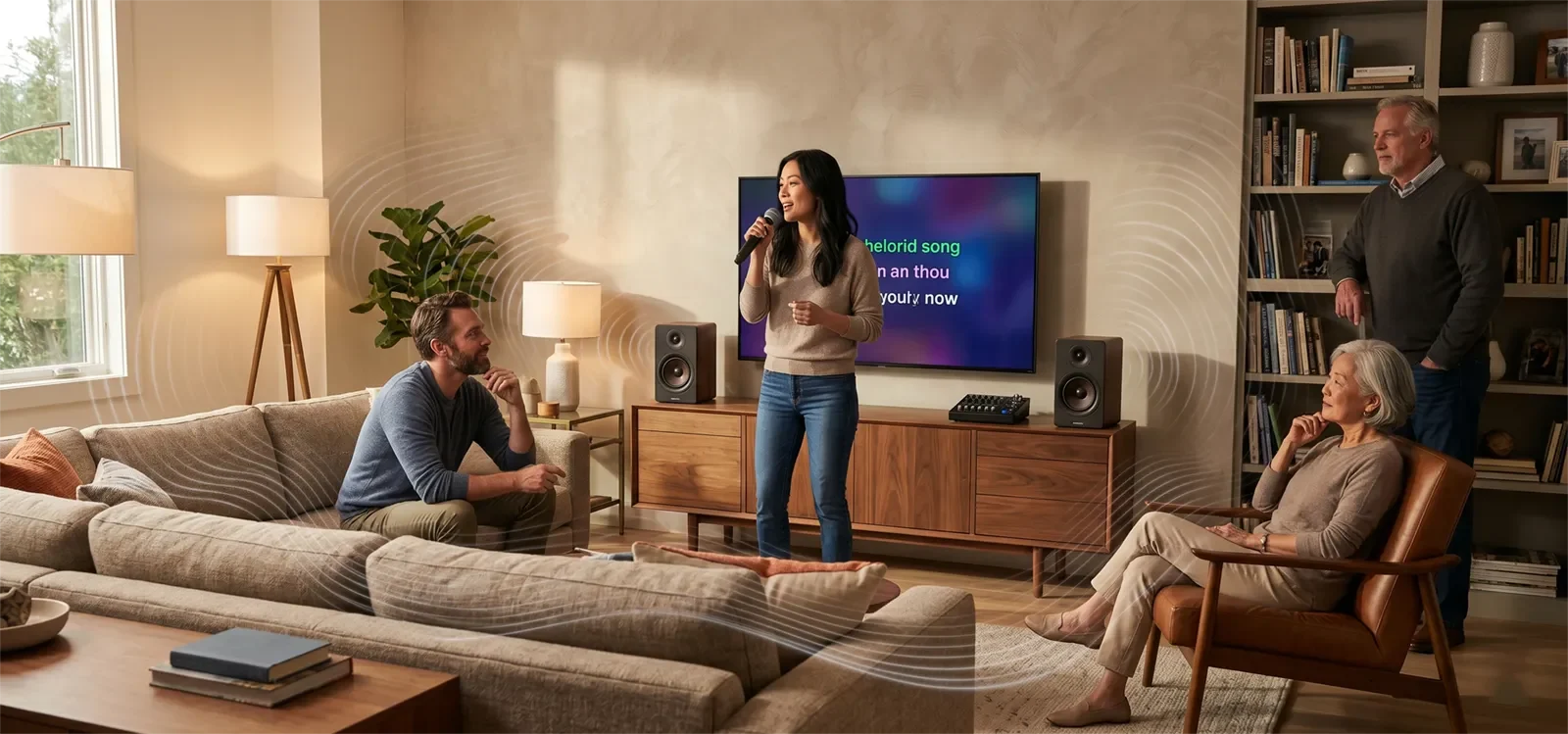
This matters especially in home karaoke because people rarely listen from one perfect seat. Family and friends sit on couches, stand near the side, move around, or take turns singing from different parts of the room. A good home karaoke setup usually needs to sound reasonably good across the main listening area, not perfect in only one chair.
How position changes system behavior
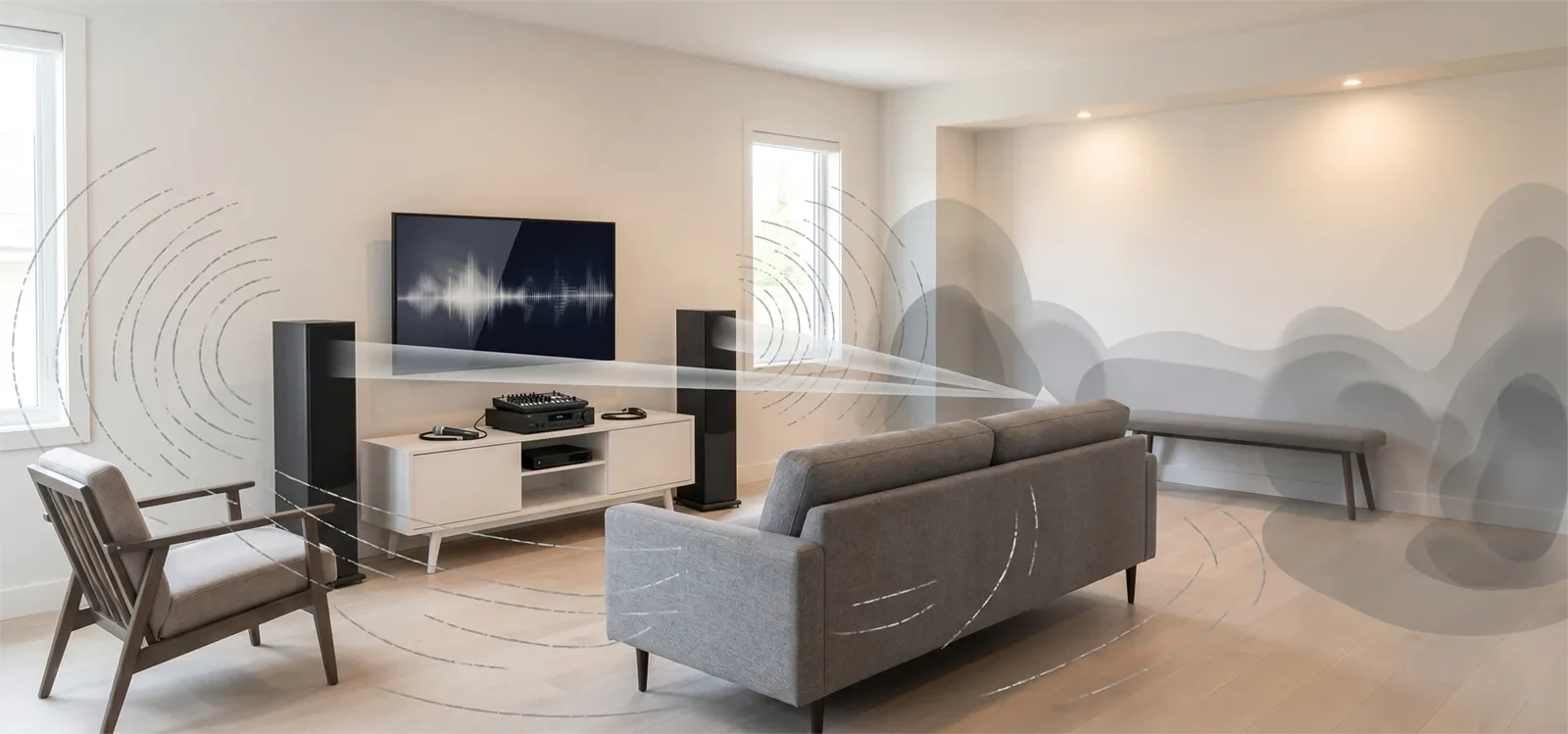
Different seating positions can make the same karaoke system seem to behave differently. Bass is the easiest example. In some seats, low frequencies build up and feel heavier or boomier. In other seats, the same bass may feel weaker, tighter, or less present.
Vocal clarity also changes with position. A seat with a cleaner direct path from the speakers may hear vocals as focused and easy to understand. Another seat may receive more reflected sound, which can soften word edges and make the voice feel less anchored.
Speaker coverage also plays a role. If you are far off to the side, you may hear a different tonal balance than someone sitting more centered. For the speaker-side explanation of this topic, see how speaker dispersion affects karaoke coverage in living rooms. This article focuses on the listening-position reality: your seat changes the blend of bass, vocals, and room energy that reaches your ears.
What users actually hear at home
At home, people usually describe seating differences in practical terms. One seat sounds balanced. Another sounds too bass-heavy. A third sounds thin or less clear. Someone on the main couch may say the system is warm and full, while someone off to the side says the vocals are harder to hear. Both can be right.
This is common in rooms with mixed seating and open layouts. A centered seat may hear a more stable sound. Side seating may hear the speakers from a less direct angle. A seat close to the back wall may get extra bass reinforcement. A seat farther into the room may sound clearer but less full.
Room interaction is a major reason this happens. Reflections, boundaries, and furniture all change how sound collects or spreads in different spots. The broader room behavior is covered in how room acoustics affect karaoke sound, but the main point here is simple: different seats really can hear different versions of the same karaoke system.
What people often misunderstand
A common mistake is assuming one seat tells the truth about the whole system. If one couch position sounds boomy, someone may think the system has too much bass. If another side seat sounds thin, someone else may think the system lacks fullness. Both judgments may be incomplete because each one reflects only one listening position.
Another mistake is treating normal seat-to-seat variation as proof that the system is bad. Sometimes a setup does need improvement, but home karaoke rooms are not purpose-built listening rooms. They usually include couches, walls, windows, open areas, furniture, and different listener positions. Perfectly identical sound across every seat is not realistic.
People also change settings too quickly based on one spot. They adjust bass, treble, vocal level, or EQ to fix what they hear from one chair, then accidentally make another part of the room worse. That is why seating awareness matters. Before changing the system, it helps to know whether the problem is system-wide or seat-specific.
A practical listening rule for judging seating differences
A useful rule is simple: if one part of the room sounds balanced and another sounds clearly different, do not assume the entire system is wrong right away. First, check whether you are hearing a position-based effect.
Listen from a few normal seats before making a decision. If bass gets much stronger near a wall or corner, that points to position-based buildup. If vocals lose clarity from a side seat, that may be related to speaker angle and reflections rather than a simple microphone or volume problem.
For family-style karaoke, the goal is practical balance. The system should sound reasonably good across the main listening area, even if each seat is not identical. Once you understand seating differences, you can judge the room more fairly and avoid blaming the equipment too quickly.
Conclusion
Seating position changes what you hear because sound is not distributed evenly across a room. Bass, vocal clarity, tonal balance, and room reflections all shift depending on where you sit.
The main lesson is straightforward: one room can hold several listening experiences at the same time. When one seat sounds balanced and another does not, that does not automatically mean the karaoke system is flawed. It often means the room is giving each listener a slightly different version of the same sound.
Frequently Asked Questions
Why does one couch seat sound bassier than another?
Bass does not spread evenly through a room. Some seats sit where low frequencies build up more strongly, especially near walls or corners. Another seat only a short distance away may hear less of that buildup.
Can the same karaoke system sound clear in one seat and blurry in another?
Yes. Different seats receive different blends of direct sound and reflected sound. A centered seat may hear cleaner vocals, while another position may hear more room influence, making the same system sound less focused.
Does seating position matter more in small rooms?
It often becomes more noticeable in smaller or more reflective rooms because walls and boundaries are closer. Bass buildup, reflections, and speaker angle can change quickly over short distances.
Should I judge my karaoke system from only one listening position?
No. In a shared home karaoke room, it is better to listen from several normal seats before making conclusions. One seat may exaggerate bass or reduce clarity in a way that does not represent the whole room.
Does this mean the room matters more than the equipment?
Not always, but the room matters more than many people expect. A good karaoke system still matters, but the room strongly affects how that system is heard from each seat.
If different seats in the room seem to tell different stories, the room may be the reason. Understanding that first usually leads to smarter judgment and fewer wrong equipment assumptions.
Learn how professionals tune karaoke systems for better home sound.