
Speaker dispersion explains why the same karaoke system can sound clear and balanced in one seat, but softer, blurrier, or less connected in another. In a family living room, speakers do not only need to be loud enough. They need to send useful sound to the places where people actually sit, stand, listen, and sing.
Who this guide is for: Home karaoke users who wonder why one listening position sounds good while another feels less clear, less balanced, or less connected, especially in a shared family living room.
How this guide was prepared: This guide was written around real living room karaoke situations, including off-center seating, long sofas, open layouts, reflective surfaces, and multiple people listening or singing from different positions.
Many home karaoke systems sound good in one spot but change quickly when you move to the next seat. One position may have clear vocals, controlled music, and an easy-to-follow mix. Another position may sound thinner, blurrier, sharper, or less “together” even though the system has not changed. When that happens, many people assume the system is not powerful enough, but the real issue may be how the speakers are covering the room.
This article is not a step-by-step speaker placement guide, and it is not a full room acoustics guide. It focuses on one technical question: why do different seats in the same living room hear the same karaoke system differently, and how does speaker dispersion explain that? For a broader foundation on how the room itself affects karaoke sound, start with How Room Acoustics Affect Karaoke Sound, then come back to this guide for the speaker coverage side of the problem.
Quick Answer
Speaker dispersion affects home karaoke by controlling how sound leaves the speaker and spreads across the room. It helps explain why the center seat may hear vocals clearly while someone sitting off to the side hears a weaker, less balanced mix. A more powerful system does not automatically cover the room better, and wider coverage is not always better either. What matters most is whether the useful part of the sound reaches the real listening and singing areas.
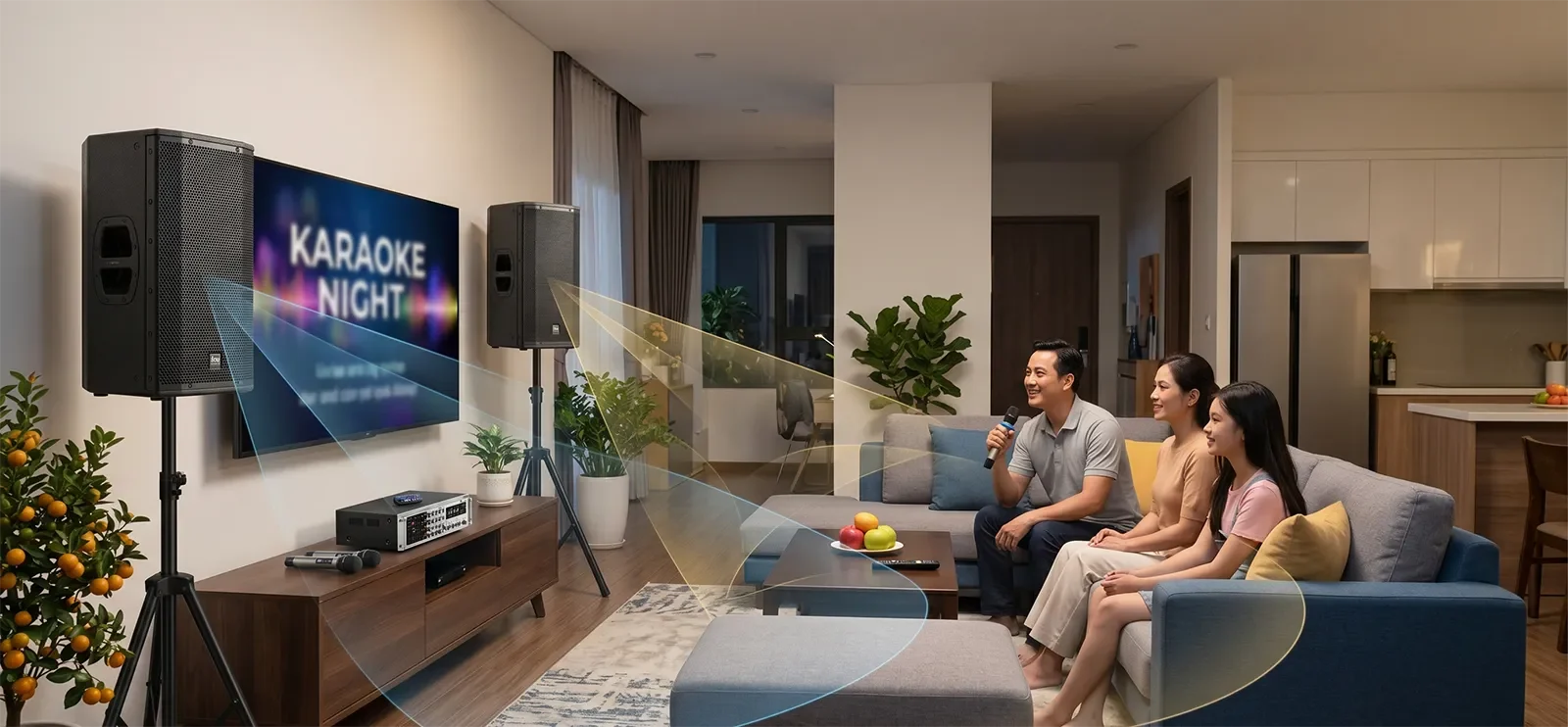
Table of Contents
What speaker dispersion means
Speaker dispersion is the way sound leaves a speaker and spreads into the room. It is not only about how loud the speaker can play. It is about which parts of the room receive sound that is still clear, balanced, and useful for karaoke listening or singing.
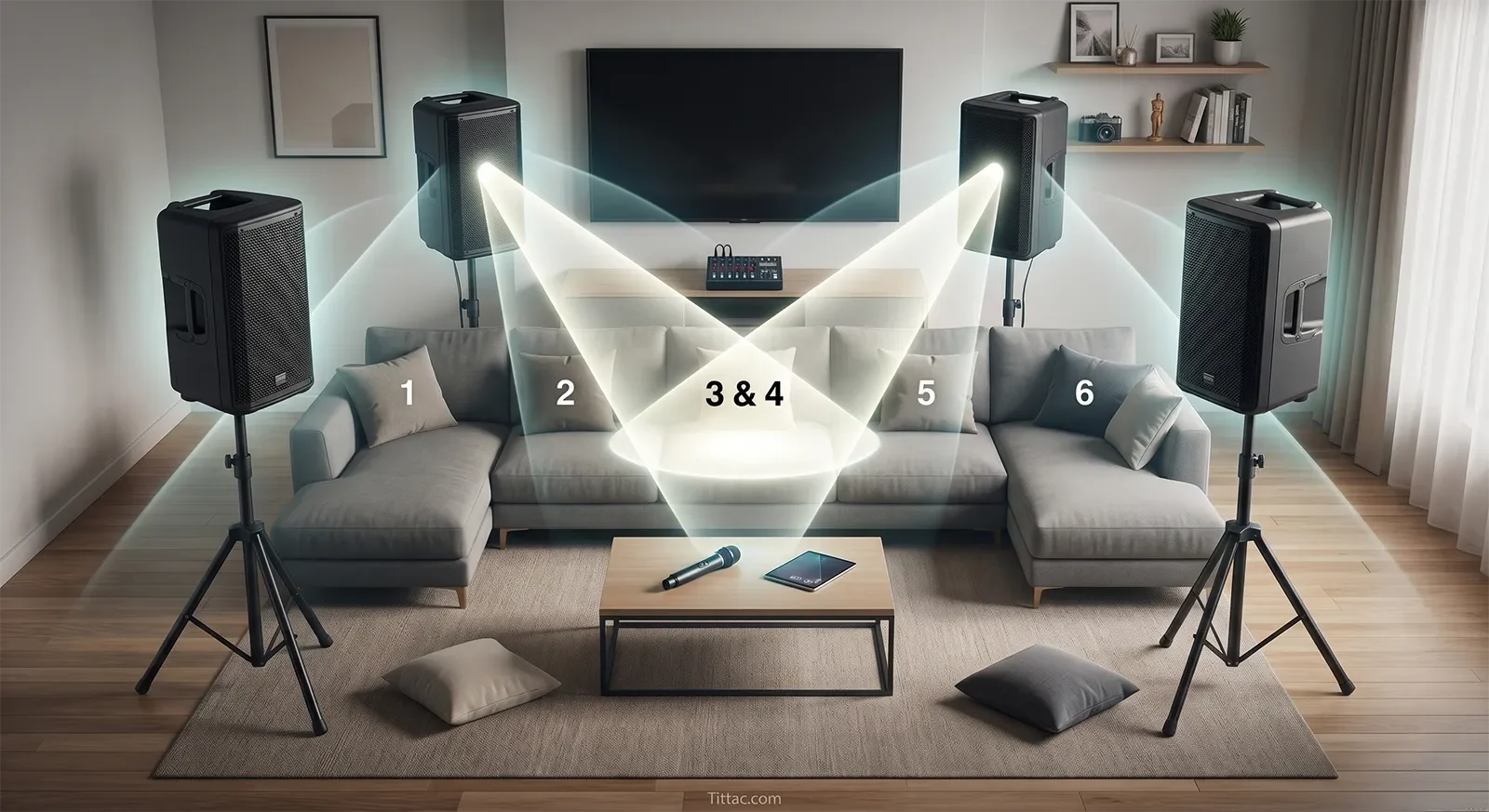
For home karaoke, the easiest way to think about dispersion is in two directions: horizontal coverage and vertical coverage. Horizontal coverage affects whether people sitting across a sofa, or slightly off to the side, hear the system in a similar way. Vertical coverage affects how sound reaches seated listeners, standing singers, the floor, the ceiling, and nearby reflective surfaces.
This is why a karaoke system can sound impressive from one chair but noticeably less convincing just a few feet away. Dispersion helps explain where the speaker’s best listening area is, how wide that area feels, and where the sound starts to lose clarity or connection.
How dispersion changes the karaoke system
At the system level, dispersion changes how even the listening area feels. A pair of speakers with coverage that suits the room can help the karaoke mix stay more balanced across multiple seats, instead of sounding good only at one center position. If the coverage does not fit the space, one area may hear the vocal clearly while another area loses detail or balance.
Dispersion also affects how much the room becomes part of the sound. When speakers send useful energy toward the people who are actually listening, the sound often feels more direct, clear, and easy to understand. When too much energy is aimed into walls, ceilings, floors, or unused areas, the room can reflect more sound back and make the overall mix feel smeared, harsh, or messy.
That means speaker behavior is not only about where the speaker box sits. Placement is important, but dispersion is what happens after the sound leaves the speaker. Two systems placed in similar locations can still cover the room differently if the speakers spread sound in different ways. To separate room reflections from speaker coverage, read What Room Reflections Do to Karaoke Vocals.
In family karaoke, this has a direct effect on real enjoyment. The question is not only “Are the speakers loud enough?” A better question is “Can several people in the room hear clearly and sing comfortably?” A system that sounds good only in one perfect seat may not be the best fit for a living room.
What listeners notice in a living room
Most people do not describe dispersion as a technical spec. They notice it as uneven sound. A person near the center of the room may hear clear vocals, balanced music, and an easy mix. Someone sitting off to the side may hear less detail, weaker vocals, or a mix that does not feel as connected.
This becomes more obvious in open living spaces. You can turn the volume up, but the system may only become louder, not more evenly covered. If the useful part of the sound still does not reach the right seating area, extra volume may make the best seat more intense while the off-axis seats remain unclear.
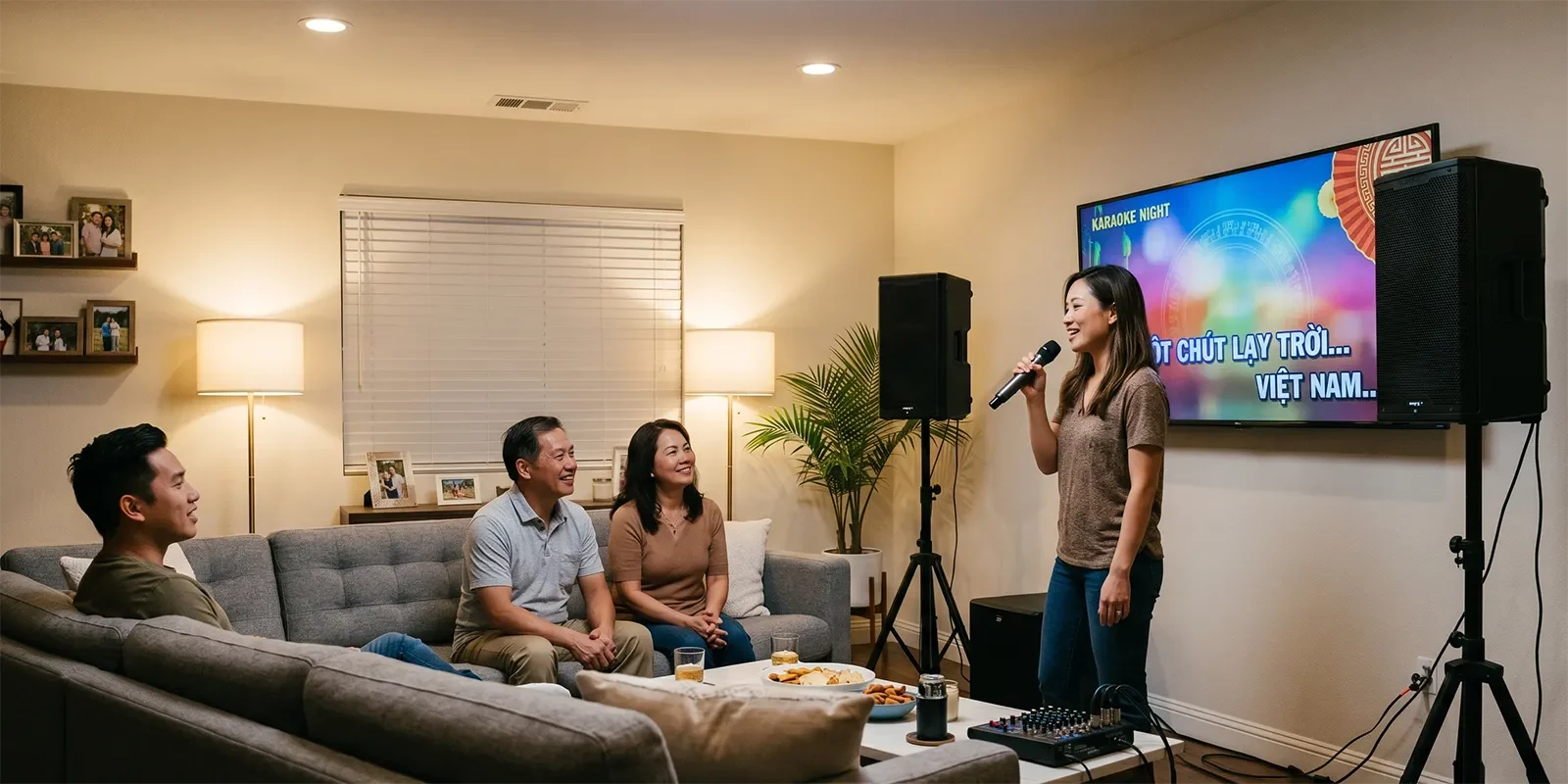
This matters when a family is singing or listening together. A setup that works from one main chair may not work for the whole sofa. If some positions in the room sound much clearer than others, When Room Treatment Helps More Than Better Equipment is also worth reading, because the issue may not be weak speakers. It may be the room and coverage pattern limiting the useful listening area.
Common misunderstandings about speaker coverage
The first misunderstanding is thinking that more power will fix uneven coverage. It usually does not. A stronger system can make the room louder, but it does not guarantee that someone sitting off-center will hear the same vocal clarity and balance as the person in the best seat.
The second misunderstanding is assuming wider coverage is always better. Wider horizontal coverage can help a sofa area feel more even, but in a reflective room, sending sound too broadly can also make the room more active. The goal is not to send as much sound everywhere as possible. The goal is to send useful sound to the places where real people sit and sing.
The third misunderstanding is treating dispersion and placement as the same thing. Placement is where the speaker is located. Dispersion is how the speaker spreads sound after it plays. Two speakers can sit in the same spot but still cover the room differently because their designs and coverage behavior are not the same.
Many people also overlook vertical coverage. In a family living room, vertical coverage matters because people may be seated or standing, and reflections from the floor and ceiling can make the system feel cleaner or more confused.
How to check speaker dispersion in real life
When checking speaker dispersion for home karaoke, do not judge the system only from the best seat. Listen while you move. When you step away from the center, do the vocals still stay clear? Does the person sitting off to the side still hear a balanced mix? Does turning the volume up improve several seats, or does it only make the best seat louder?
If a karaoke system sounds impressive only when you sit in one exact position, dispersion may be part of the reason the room feels uneven. On the other hand, if the sound stays reasonably connected across several sofa positions or while people move lightly around the room, that is usually a good sign for home use.
A practical rule is to judge the system by how many normal listening and singing positions still work well, not only by the single best spot. In a family living room, the real value is a setup that gives several people a comfortable experience, not a setup that impresses only one person sitting at the perfect point.
If the room still limits the result even when speaker coverage seems reasonable, the next step is usually not buying a bigger system. It is more useful to understand when the room itself becomes the bigger bottleneck. For that, continue with When Room Treatment Helps More Than Better Equipment.
Conclusion
Speaker dispersion matters for living room karaoke because it controls whether sound spreads evenly and remains useful across multiple seats. It affects vocal clarity, mix balance, and whether the whole family can enjoy the system or only one person in the ideal position hears it at its best.
The key point is simple: dispersion is not a distant technical detail. It is how a speaker behaves inside the real space where you sing. Once you understand that, it becomes easier to see why some systems are not weak but still cover a room unevenly, and why turning the volume up is often not the right fix.
Frequently Asked Questions
Why does one seat on the same sofa sound better than another?
Usually, those seats are receiving speaker coverage differently. One seat may be closer to the direct and useful part of the sound, while another seat receives less direct sound or more room reflection.
Does louder sound mean better room coverage?
No. Turning the volume up only raises the sound level. It does not guarantee that clear, useful sound is spreading evenly across the whole seating area.
What is the difference between horizontal and vertical coverage?
Horizontal coverage affects how evenly people hear the system across the left-to-right width of the room. Vertical coverage affects how sound reaches seated listeners, standing singers, and reflections from the floor or ceiling.
Does speaker dispersion matter in a normal family living room?
Yes. It often matters a lot because people rarely sit in one perfect listening position. They sit off-center, move around, and sing from different spots, so even coverage affects the real karaoke experience.
Should I buy more powerful speakers if the room sounds uneven?
Do not assume that right away. If the issue is speaker coverage or room reflection, stronger speakers may make the problem louder instead of more even. Before upgrading power, check listening positions, coverage, speaker direction, and room reflections.
If the problem is not weak equipment but uneven room coverage, the next step is learning when the room becomes a bigger bottleneck than the system itself.
Read next: When Room Treatment Helps More Than Better Equipment