





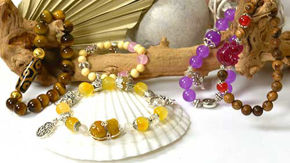
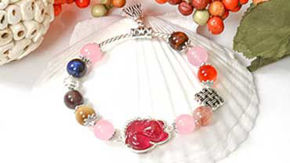



A full moon cleansing ritual for jewelry is a symbolic reset practice: choose one piece, place it in a calm space, reflect on what you want to release, and close the ritual with a simple reminder. It does not need to be elaborate, and it does not guarantee a specific result. The purpose is to create a quiet moment of release, reflection, and reconnection with a piece you wear meaningfully.
Who this guide is for: This guide is for readers who enjoy moon-phase symbolism and want a gentle full moon ritual for healing jewelry without confusing symbolic cleansing with physical cleaning or material care.
How this guide was prepared: This guide was prepared by reviewing common beginner questions about full moon rituals, symbolic cleansing, jewelry care, moonlight exposure, and everyday spiritual-wellness practices, then organizing the guidance into a simple and claim-safe ritual.
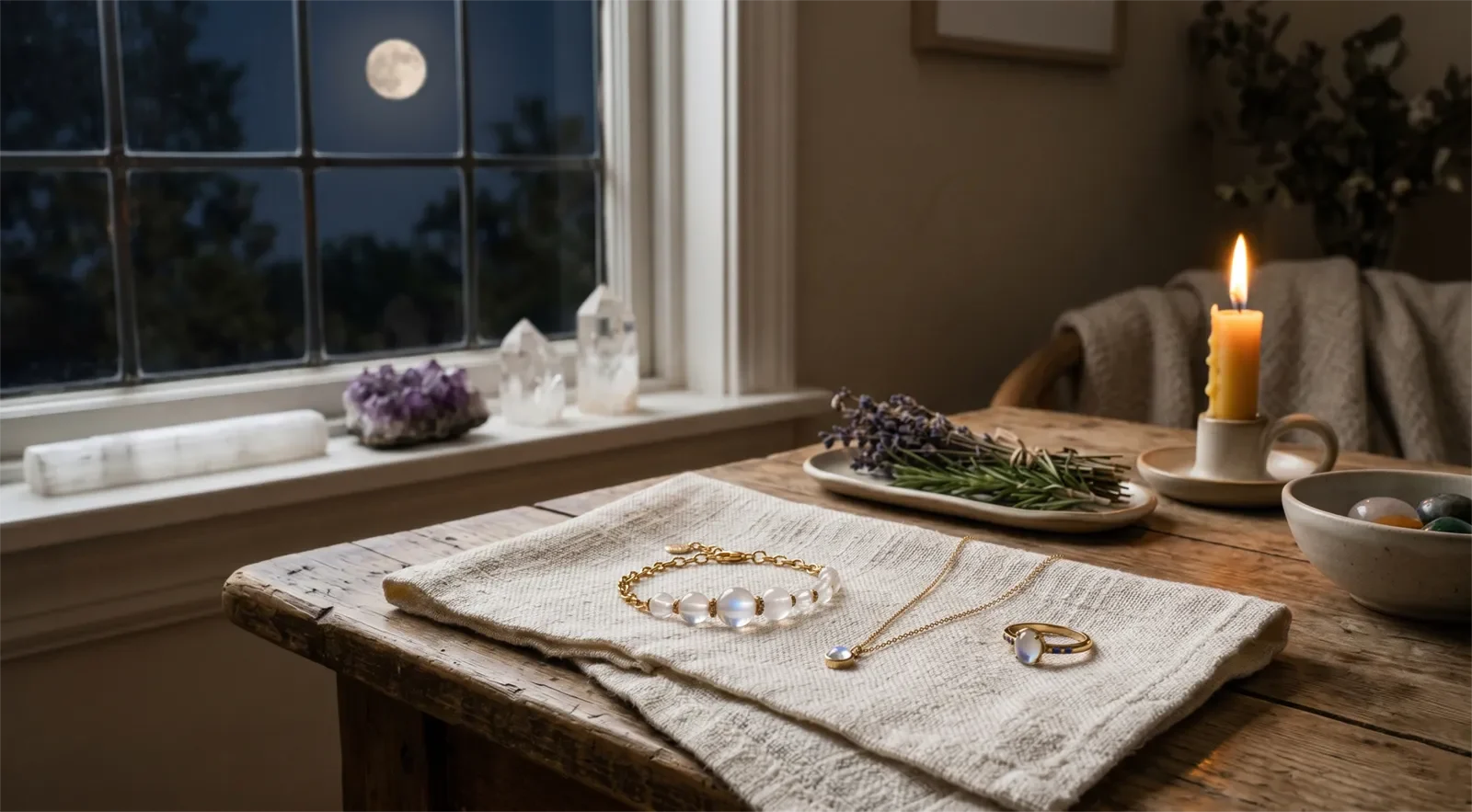
The full moon is often associated with fullness, illumination, reflection, and release. In a jewelry ritual, that symbolism can become a calm monthly pause: a moment to notice what feels heavy, reset your attention, and reconnect with the meaning behind a bracelet, necklace, ring, or pendant.
This article focuses on symbolic full moon cleansing only. For practical jewelry cleaning and care, read How to Cleanse and Care for Healing Jewelry. For questions about light exposure, read Moonlight vs. Sunlight Charging.
Table of Contents
Quick answer
To do a full moon cleansing ritual for jewelry, choose one piece or a small group of pieces, place them on a clean dry surface, pause for a few minutes, name what you want to release, and close the ritual gently. Direct moonlight is optional. The ritual is symbolic, not a replacement for physical cleaning or material-safe care.
A simple full moon ritual might sound like this: “I release what feels heavy, and I let this piece remind me to return to clarity.” That is enough. The practice does not need to feel dramatic to be meaningful.
What full moon cleansing means for jewelry
In healing jewelry, full moon cleansing usually means a symbolic reset. The word “cleansing” can mean different things depending on the context, so it is important to separate three ideas:
- Symbolic cleansing: a reflective ritual for release, reset, or emotional clarity.
- Physical cleaning: removing dust, oil, sweat, or residue from the jewelry.
- Charging or light exposure: placing jewelry in moonlight or another setting as part of a spiritual practice.
This article is about the first meaning: symbolic cleansing. It is about reflection and release, not scrubbing, soaking, polishing, or exposing delicate materials to light or moisture.
If your jewelry needs actual cleaning, use How to Cleanse and Care for Healing Jewelry. If you are considering moonlight or sunlight exposure, read Moonlight vs. Sunlight Charging first.
Why people use the full moon for release
Many spiritual and reflective traditions use natural cycles as anchors for attention. The full moon is often seen as a time of fullness, visibility, completion, and letting go. Because of that, many people use it as a monthly reminder to pause and ask what feels complete, heavy, cluttered, or ready to be released.
The value of the ritual does not depend on proving that the moon changes the jewelry in a measurable way. For many people, the value is in the structure. The full moon gives you a recurring moment to slow down, reflect, and reset your relationship with a meaningful object.
Healing jewelry can make that reflection tangible. A bracelet may remind you to release tension. A necklace may remind you to soften self-judgment. A ring may remind you to stop carrying a pattern that no longer fits.
If you feel drawn to moon symbolism, you may also enjoy Moonstone Meaning.
What you need for the ritual
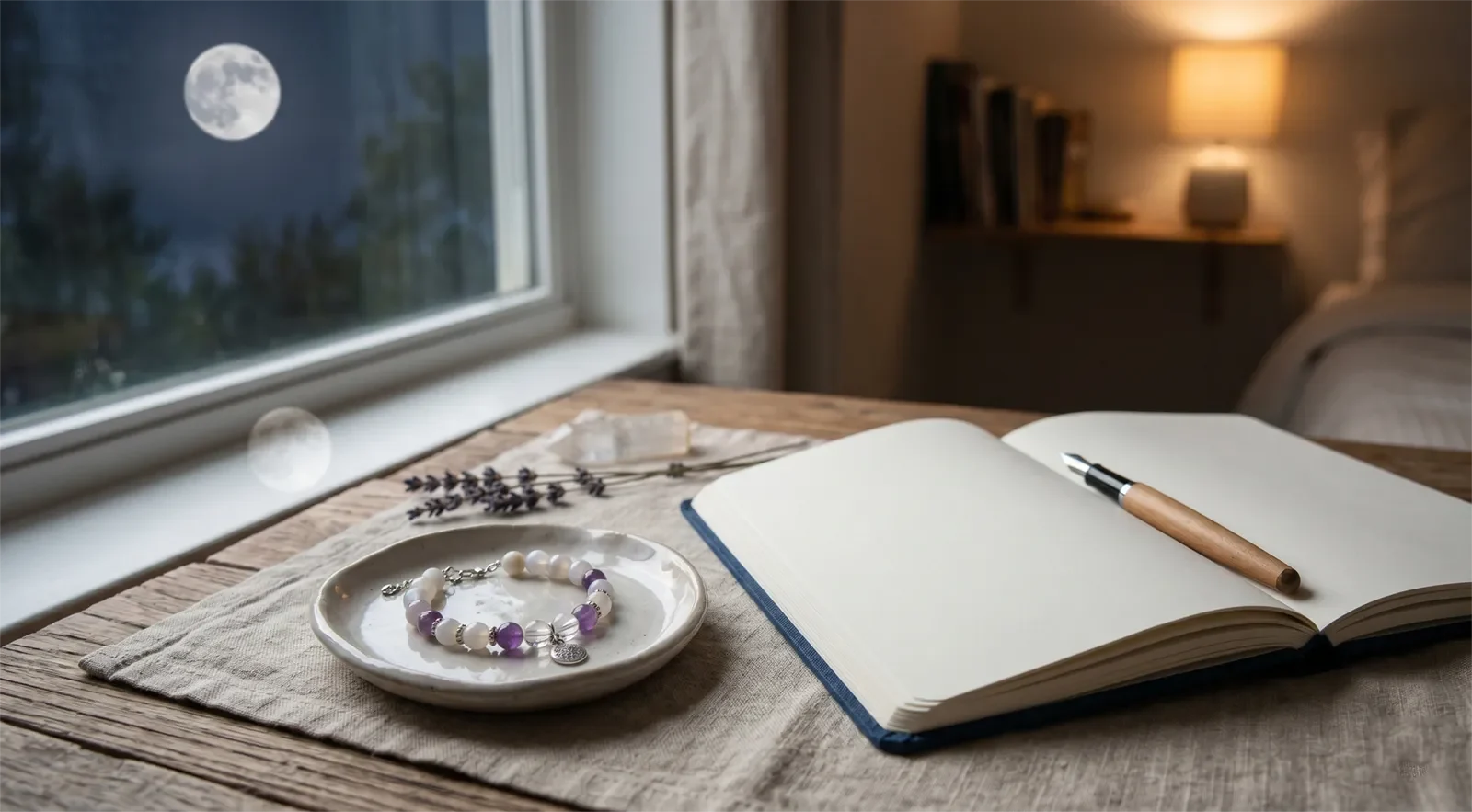
You only need a few simple items:
- one piece of jewelry or a small group of pieces;
- a clean, dry cloth, tray, dish, or surface;
- a quiet place to sit for a few minutes;
- a short release phrase or intention;
- a notebook or paper if you want to journal.
Candles, incense, sound bowls, crystals, and moonlight are optional. Use them only if they feel natural to your practice and safe for your space and jewelry materials.
The safest setup is often the simplest one: an indoor space, a dry surface, and a few quiet minutes of attention.
A simple full moon cleansing ritual
1. Choose one piece or a small group
Start with one piece if you are new to this practice. A bracelet, necklace, pendant, ring, or mala-style piece can all work. Choosing one piece often makes the ritual feel more personal and less performative.
You can also include a small group of pieces if they share a theme, such as protection, calm, grounding, self-love, or clarity.
2. Place the jewelry on a clean dry surface
Use a tray, cloth, dish, shelf, or table. Keep the setup dry and stable. If you want to place the jewelry near a window, you can, but direct moonlight is not required.
Before using outdoor placement, smoke, fragrance, water, salt, or direct light, check whether your stones, metals, cords, finishes, or elastic are sensitive. When unsure, keep the ritual indoors and dry.
3. Pause and breathe for a few moments
Sit near the jewelry and take a few slow breaths. Let this be a reset, not a performance. You do not need to force a special feeling.
You can ask yourself: What feels heavy right now? What am I ready to stop carrying? What do I want this piece to remind me to release?
4. Name what you want to release
Keep the wording simple. You can say the phrase silently, write it down, or speak it softly.
Examples:
- I release what feels heavy.
- I release what no longer fits this season of my life.
- I let go of the pressure to carry everything at once.
- I clear space for calmer thoughts and steadier choices.
- I let this piece remind me to return to clarity.
The phrase should feel honest. It does not need to sound mystical or formal.
5. Sit with the jewelry for a few minutes
You may hold the jewelry, place your hand near it, or simply sit beside it. Some people like silence. Others prefer soft music, journaling, or a short sound-cleansing practice.
If sound-based ritual feels more natural to you than moon-phase timing, read Sound Cleansing 101.
6. Close the ritual gently
When you feel complete, thank the moment in your own way. Then put the jewelry back in its usual place or prepare to wear it the next day.
A simple closing phrase can be:
I release what is no longer mine to carry. I return to what feels clear, steady, and true.
The closing step matters because it helps the ritual feel finished instead of vague.
Simple release phrases to use
If you are not sure what to say, choose one phrase and keep it short.
For stress
- I release the stress I do not need to carry forward.
- I allow my body and mind to soften.
- I return to steadiness, one breath at a time.
For emotional heaviness
- I let go of what feels heavy but no longer helps me.
- I give myself permission to move lighter.
- I release the story that keeps me stuck.
For boundaries
- I release what is not mine to hold.
- I protect my energy with clarity and kindness.
- I let this piece remind me where my boundary begins.
For clarity
- I release mental clutter and return to what matters.
- I make space for clear choices.
- I let go of noise and come back to my center.
Journaling prompts
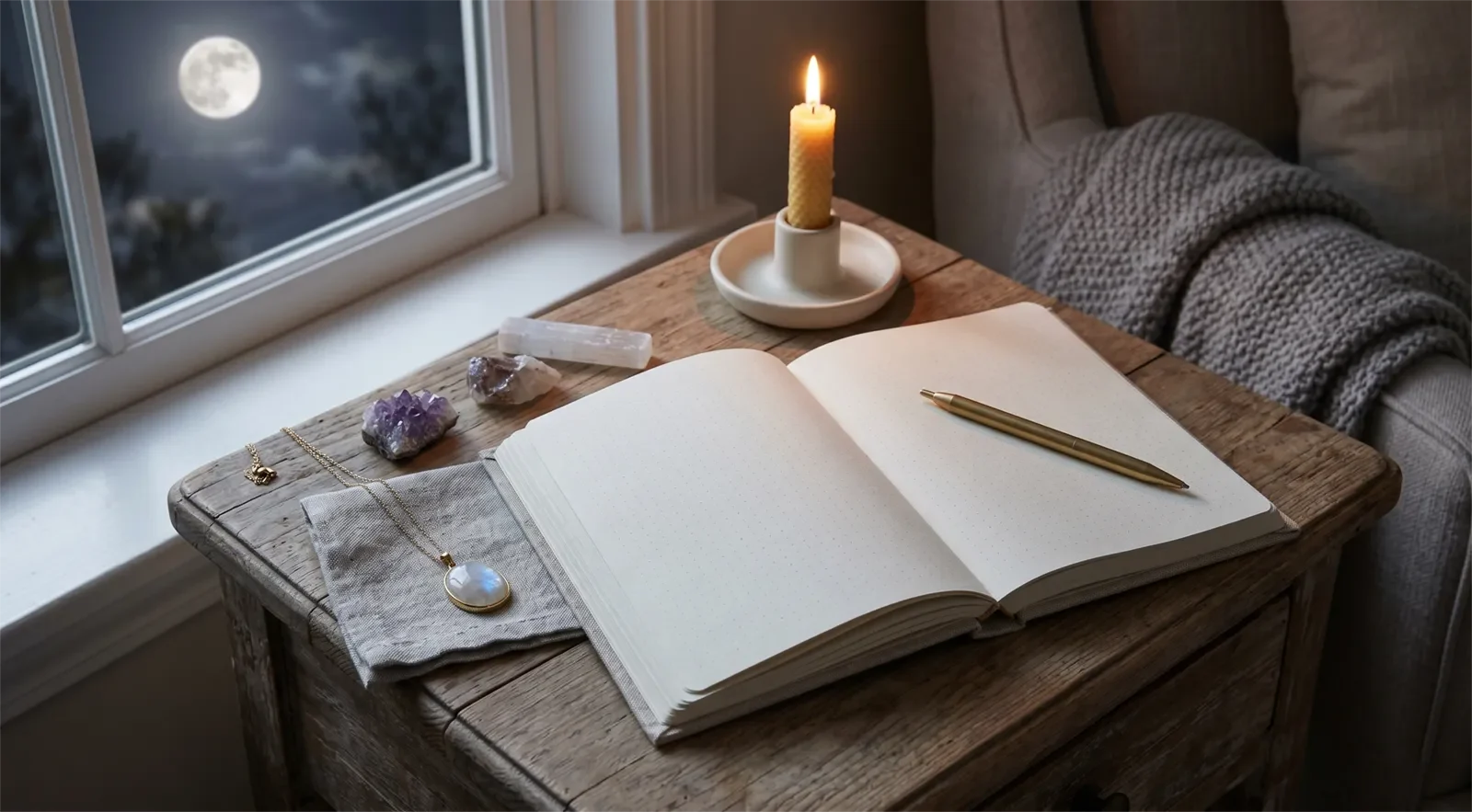
Journaling is optional, but it can help make the ritual more specific. One or two lines is enough.
- What feels heavy that I no longer want to carry?
- What part of my recent routine feels cluttered, drained, or out of alignment?
- What do I want this piece of jewelry to remind me to release?
- What feels complete, and what am I ready to close?
- What would a calmer next chapter look like?
- What am I ready to stop forcing?
- What boundary would make my life feel lighter?
You do not need to journal every full moon. Some rituals are written, some are spoken, and some are simply quiet. Choose the version you can actually return to.
Safe setup notes for jewelry
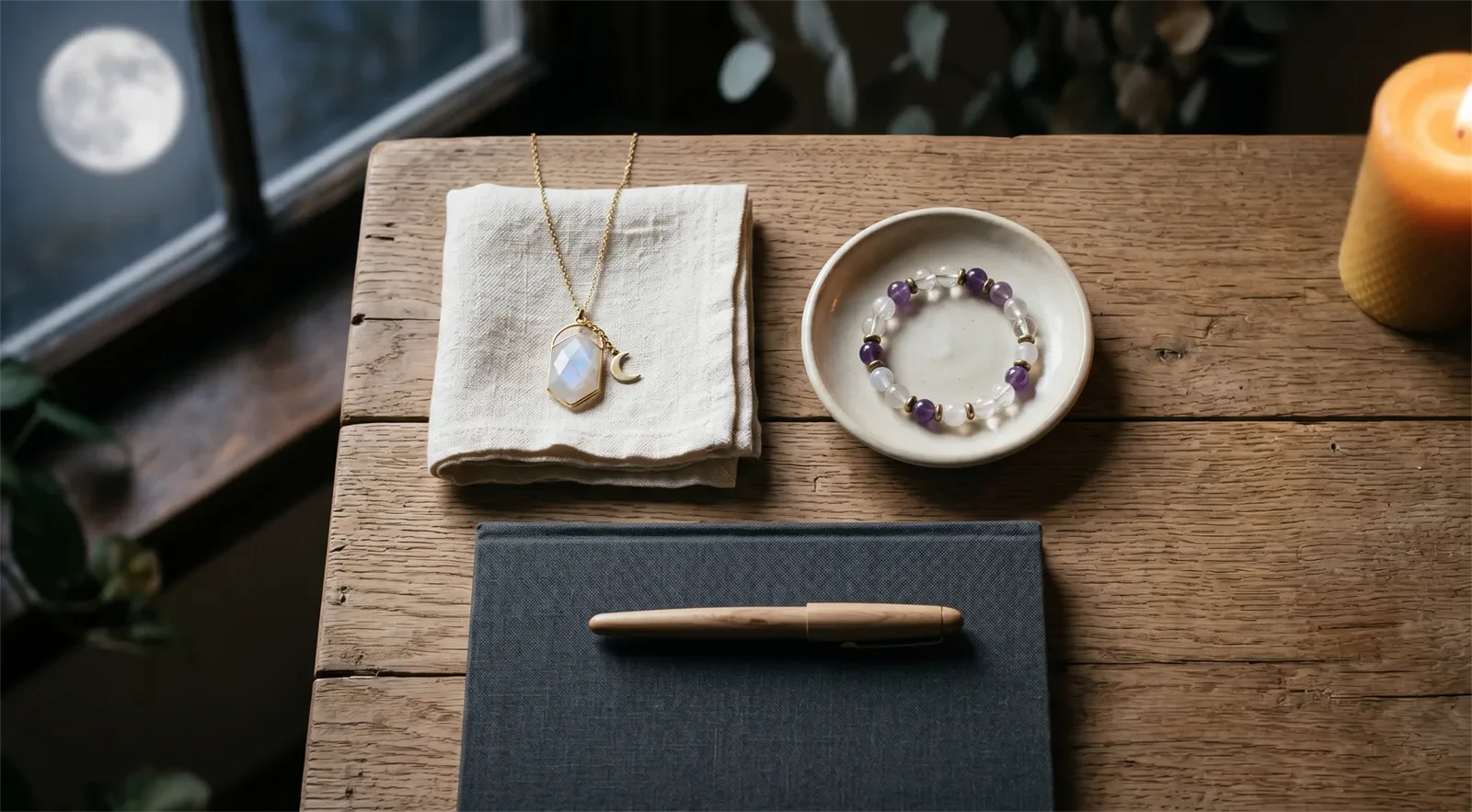
Because jewelry can include natural stones, plated metals, elastic cords, stringing materials, glue, finishes, and delicate details, keep the ritual gentle unless you know the piece can handle a specific method.
- Keep the surface dry. Avoid water, salt water, oils, or sprays unless you know the materials are safe for them.
- Do not assume all stones handle light the same way. Moonlight is gentler than sunlight, but material safety still matters.
- Avoid smoke residue on delicate pieces. If you use smoke, keep distance and ventilation in mind. For method-specific guidance, read Smoke Cleansing for Jewelry.
- Separate ritual from care. Symbolic cleansing is not the same as physical cleaning.
- Use indoor placement when unsure. A quiet indoor setup can be meaningful without exposing jewelry to weather, moisture, or direct outdoor conditions.
A full moon ritual can be powerful because of the attention you bring to it. It does not need risky materials, harsh methods, or complicated tools.
Common mistakes to avoid
Confusing symbolic cleansing with physical cleaning
If your jewelry is dirty, oily, dusty, or tarnished, it needs proper material-safe cleaning. A full moon ritual is symbolic and reflective.
Thinking direct moonlight is required
Direct moonlight is optional. You can place jewelry indoors on a dry surface and still have a meaningful ritual.
Using too many pieces at once
If you include every piece you own, the ritual may feel scattered. Start small. One meaningful piece is enough.
Making the ritual too dramatic
The ritual does not need to feel intense to be valid. A quiet reset can be more useful than an elaborate setup you rarely repeat.
Forgetting the aftercare
After the ritual, store the jewelry properly or wear it with intention. The closing step helps the ritual feel complete.
FAQs
Do I have to do this ritual on the exact full moon?
No. Many people prefer the full moon because of its symbolism, but you can do a release ritual whenever you need a reset. The timing is a helpful structure, not a strict rule.
Does the jewelry need to sit in direct moonlight?
No. Direct moonlight is optional. If you want to use moonlight exposure, make sure the jewelry materials can handle the setup and avoid moisture, outdoor conditions, or unsafe surfaces.
Can I do the ritual indoors?
Yes. An indoor ritual can be meaningful. The reflection, release phrase, and attention you bring to the piece matter more than the location.
Is full moon cleansing the same as charging jewelry?
Not exactly. Cleansing is usually associated with release or clearing. Charging is usually associated with refreshing or strengthening symbolic intention. In practice, people may combine them, but it helps to understand the difference.
Can I use sound instead of moonlight?
Yes. Sound is a popular symbolic method for people who prefer a non-light-based practice. Start with Sound Cleansing 101 if you want that approach.
Can I use smoke cleansing during a full moon ritual?
You can if smoke cleansing is part of your personal practice and safe for your space and jewelry. Keep the jewelry away from heavy residue and read Smoke Cleansing for Jewelry first.
Is this ritual religious?
Not necessarily. For some people, it is spiritual. For others, it is symbolic, reflective, or mindfulness-oriented. You can adapt the practice to your own beliefs.
Does full moon cleansing guarantee emotional healing?
No. A full moon cleansing ritual does not guarantee emotional, spiritual, medical, or mental-health results. It is a symbolic practice that may support reflection and intention, but it should not replace professional care when care is needed.
Related Posts
- How to Cleanse and Care for Healing Jewelry
- Moonlight vs. Sunlight Charging
- Sound Cleansing 101
- Smoke Cleansing for Jewelry
- How to Set an Intention with Healing Jewelry
- Moonstone Meaning
A full moon jewelry ritual works best when it stays calm, safe, and personal. Choose one piece, name what you are ready to release, keep the setup gentle, and let the jewelry become a quiet reminder of the reset you want to carry forward.