








Smoke cleansing for jewelry is optional, symbolic, and should always be done with safety first. If you choose to use smoke, keep the method brief, controlled, and well ventilated. You do not need heavy smoke, long rituals, or direct heat near the jewelry. If smoke does not fit your home, health comfort, pets, or space, sound cleansing, intention, rest, or indirect moonlight are easier beginner-friendly alternatives.
Who this guide is for: This guide is for readers who are curious about smoke cleansing for healing jewelry but want a safe, grounded, non-dogmatic explanation before using smoke, incense, herbs, resin, or wood-based methods.
How this guide was prepared: This article focuses only on smoke cleansing as an optional symbolic method. It puts fire safety, ventilation, indoor air comfort, pets, children, jewelry materials, and easy no-smoke alternatives before ritual performance. For the complete beginner care framework, read How to Cleanse & Care for Healing Jewelry.
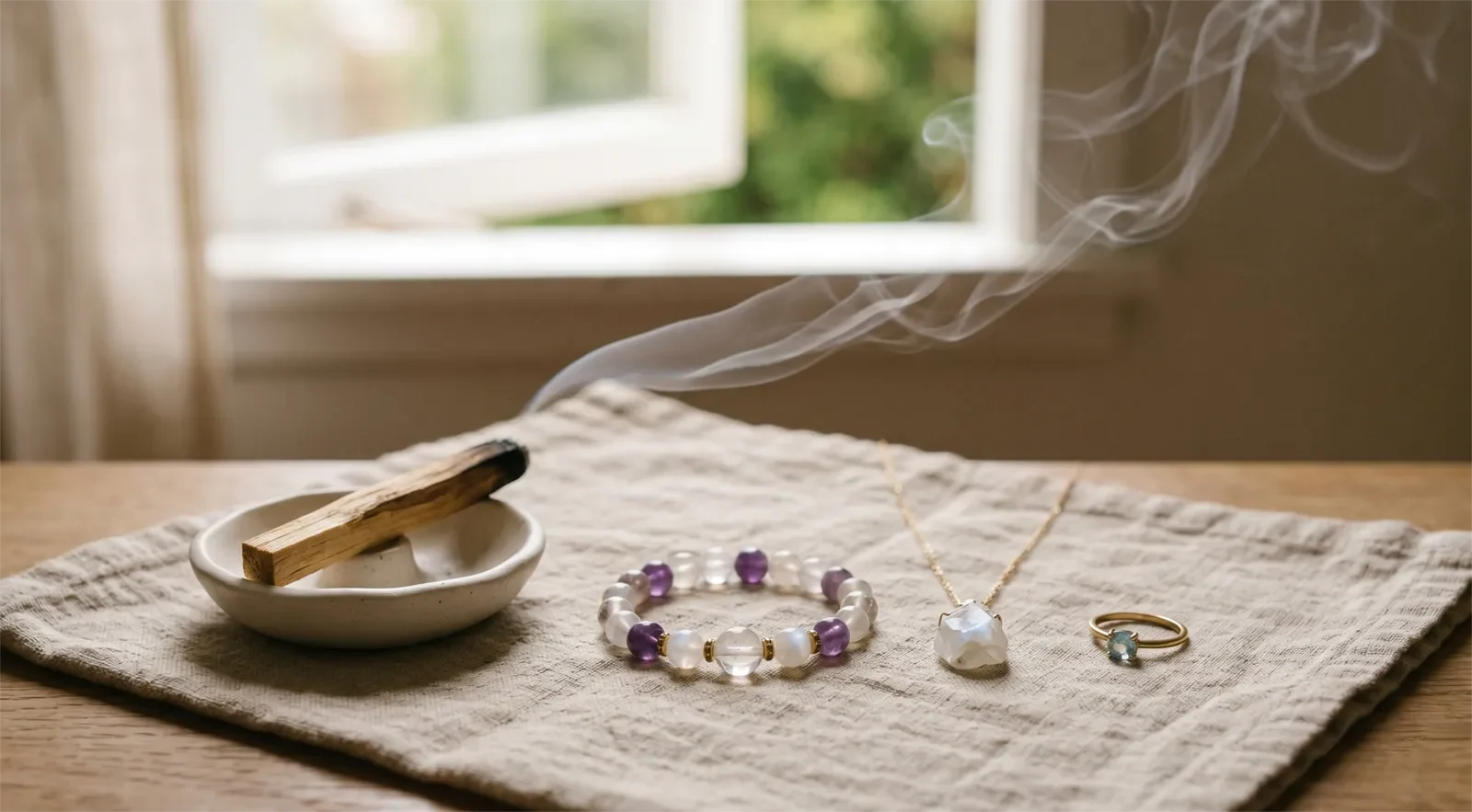
Smoke cleansing is often used as a personal reset practice. Some people use it after travel, before setting a new intention, after receiving a meaningful piece, or when they want a quiet moment of reflection with a bracelet, necklace, pendant, ring, or charm.
But smoke is not required. It is not the safest option for every home, every person, or every piece of jewelry. If you live in a small space, have pets, share air with children, dislike indoor smoke, have scent sensitivity, or simply do not want open flame, choose a no-smoke method instead.
This guide explains how to approach smoke cleansing safely and when to skip it. If you want a no-smoke method, start with Sound Cleansing 101. If you want a gentle light-based method, read Moonlight vs. Sunlight Charging.
Table of Contents
Quick Answer
Smoke cleansing is an optional symbolic practice for healing jewelry. If you choose to use it, keep the setup simple: use a small amount of smoke, open a window or choose a ventilated space, keep flame and embers away from the jewelry, pass the piece briefly near the smoke, and extinguish everything fully before leaving the area.
Do not hold jewelry over flame, cover it in soot, use thick smoke indoors, or treat smoke cleansing as mandatory. For many beginners, safer alternatives such as sound cleansing, intention, rest, or indirect moonlight are easier and more practical.
What Smoke Cleansing Means
Smoke cleansing is best understood as a symbolic reset. Many people use it to pause, mark a transition, reconnect with intention, or create a quiet moment around a meaningful piece of jewelry.
It should not be presented as a guaranteed purification method, medical treatment, or proof of measurable energy effects. In a grounded healing jewelry routine, smoke is simply one optional practice among many.
The value is not in how dramatic the smoke looks. The value is in the moment of attention. A short, calm, safe reset is better than a long indoor smoke session that creates discomfort or risk.
Safety Comes First
If you use smoke indoors, safety matters more than ritual style. Smoke cleansing involves flame, embers, scent, particles, and indoor air. That means you should treat it as a real safety decision, not only a symbolic one.
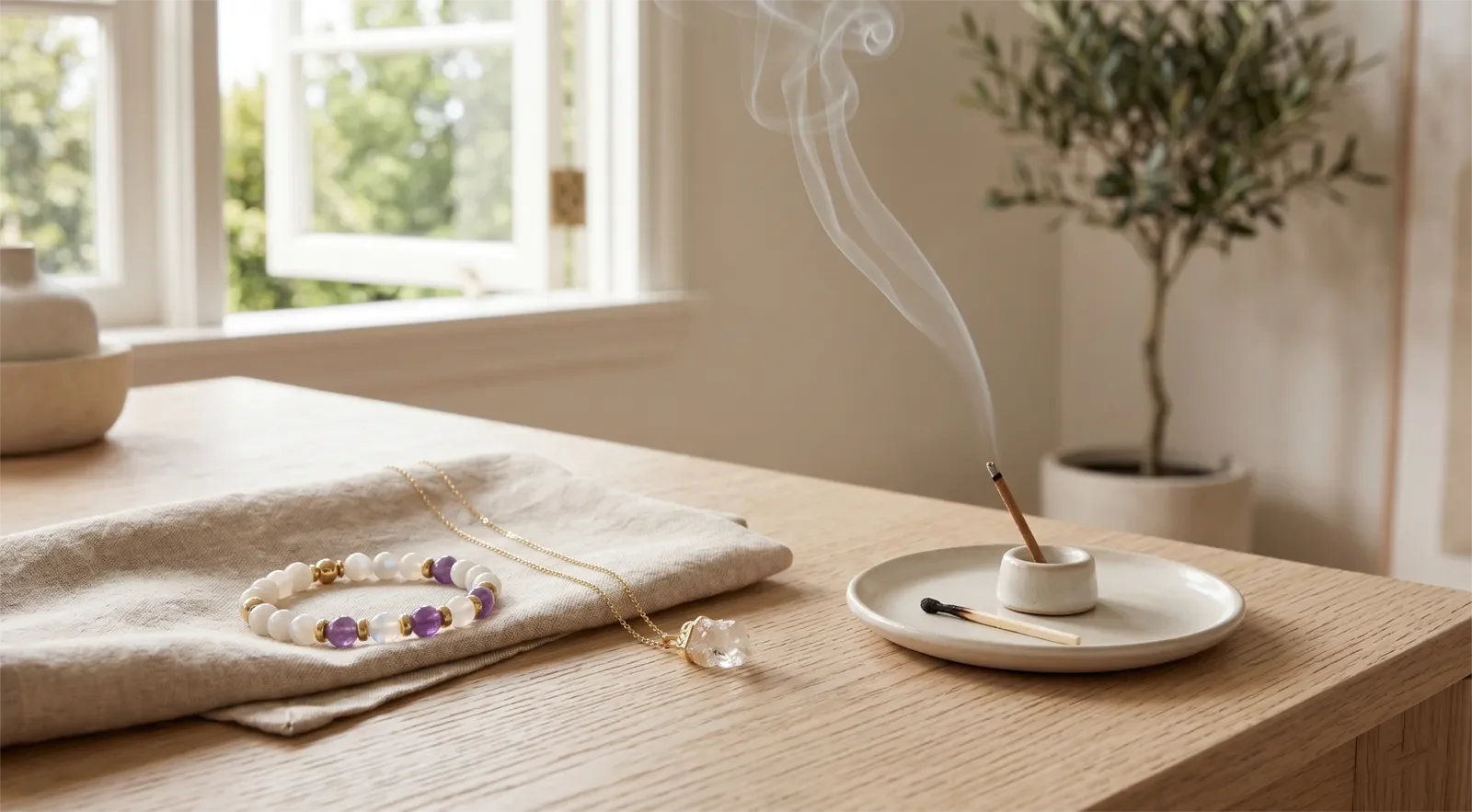
Use good ventilation
Open a window, use a ventilated room, or choose a space where smoke can clear easily. Avoid smoke cleansing in small, closed rooms where the scent or smoke lingers heavily.
Use a stable, heat-safe holder
Place incense, herbs, resin, or wood-based materials in a stable, heat-safe dish or holder. Keep the setup away from curtains, paper, bedding, clothing, towels, wood surfaces, and anything that can catch fire.
Never leave flame or embers unattended
Stay in the room while anything is burning or smoldering. Extinguish it fully before leaving, sleeping, or putting the materials away.
Keep smoke away from faces, pets, and children
Do not direct smoke toward people or animals. Pets, children, and smoke-sensitive people may be more affected by indoor smoke than you expect. If anyone in the home is uncomfortable, skip smoke and use a no-smoke method.
Use less than you think you need
A small amount of smoke is enough for symbolic use. Heavy smoke does not make the practice stronger; it only increases indoor air discomfort and cleanup.
A Simple Smoke Cleansing Method
If smoke cleansing fits your home and comfort level, keep the method brief and controlled.
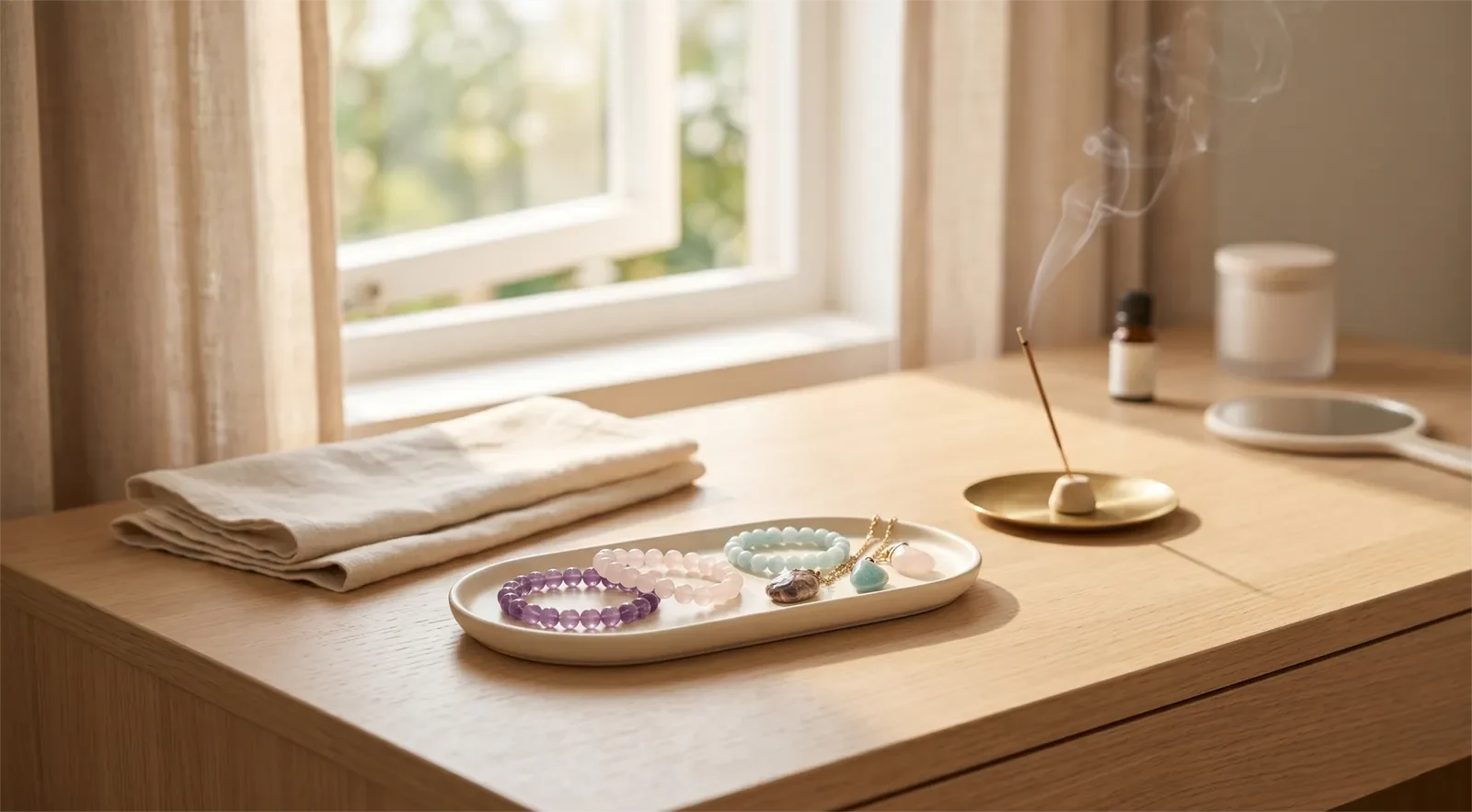
- Choose a ventilated space and open a window if possible.
- Place the jewelry on a clean, stable surface nearby.
- Use a heat-safe holder for the smoke source.
- Light the material carefully, then control or extinguish any open flame so only gentle smoke remains.
- Hold the jewelry near the smoke briefly, or pass it through the edge of the smoke once or a few times.
- Keep the jewelry away from direct flame, heat, ash, and heavy soot.
- Set a simple intention if that feels meaningful.
- Extinguish everything fully and let the space air out.
You do not need a long script. You can simply pause and say, silently or aloud, what the jewelry represents for you now: calm, focus, grounding, protection symbolism, self-love, clarity, or a fresh start.
What to Avoid
- Do not hold jewelry over open flame.
- Do not let ash fall onto the jewelry.
- Do not create thick indoor smoke.
- Do not use smoke in a room without ventilation.
- Do not leave burning materials unattended.
- Do not use smoke around anyone who is uncomfortable with it.
- Do not assume smoke is required for every bracelet, necklace, or stone.
- Do not use smoke to replace physical cleaning.
- Do not turn the method into a fear-based rule.
Smoke cleansing should feel calm and workable. If it feels stressful, messy, unsafe, or inconvenient, it is the wrong method for that moment.
Jewelry Material Safety
Smoke cleansing is usually more about the room environment than the jewelry material, but the jewelry still needs care. Keep the piece away from heat, flame, ash, soot, and residue.
Be careful with elastic bracelets
Elastic can weaken from heat, residue, moisture, and rough handling. Do not hold elastic bracelets close to flame or hot smoke sources.
Protect plated metal and delicate finishes
Plated metal, coated beads, dyed stones, and delicate finishes should not be exposed to heavy soot or residue. A brief symbolic pass near light smoke is different from repeated heavy exposure.
Watch for porous or unknown stones
If you do not know whether a stone is porous, dyed, coated, fracture-filled, or treated, use extra caution. Better yet, choose a no-contact method such as sound or intention. For material sensitivity, read Gemstone Treatments 101.
Smoke does not physically clean jewelry
Smoke cleansing is symbolic. It does not remove sweat, lotion, perfume, dust, or skin oil. If the jewelry is physically dirty, use gentle physical care from How to Cleanse & Care for Healing Jewelry.
A Note on Cultural Respect
Smoke-based practices exist in many cultures, spiritual traditions, and personal rituals. Some herbs, words, and ceremonial styles may carry specific cultural, Indigenous, religious, or community meaning.
If you are a beginner, keep your language respectful and avoid borrowing sacred terms, identities, or ritual claims you do not understand. You do not need to copy a ceremonial practice to have a meaningful personal reset. A simple smoke-based pause can stay personal, modest, and respectful.
If you are unsure, use general language such as “smoke cleansing” rather than claiming a tradition that is not yours.
Easy No-Smoke Alternatives
Smoke cleansing is optional. If smoke is not safe, comfortable, or practical, choose a gentler alternative.
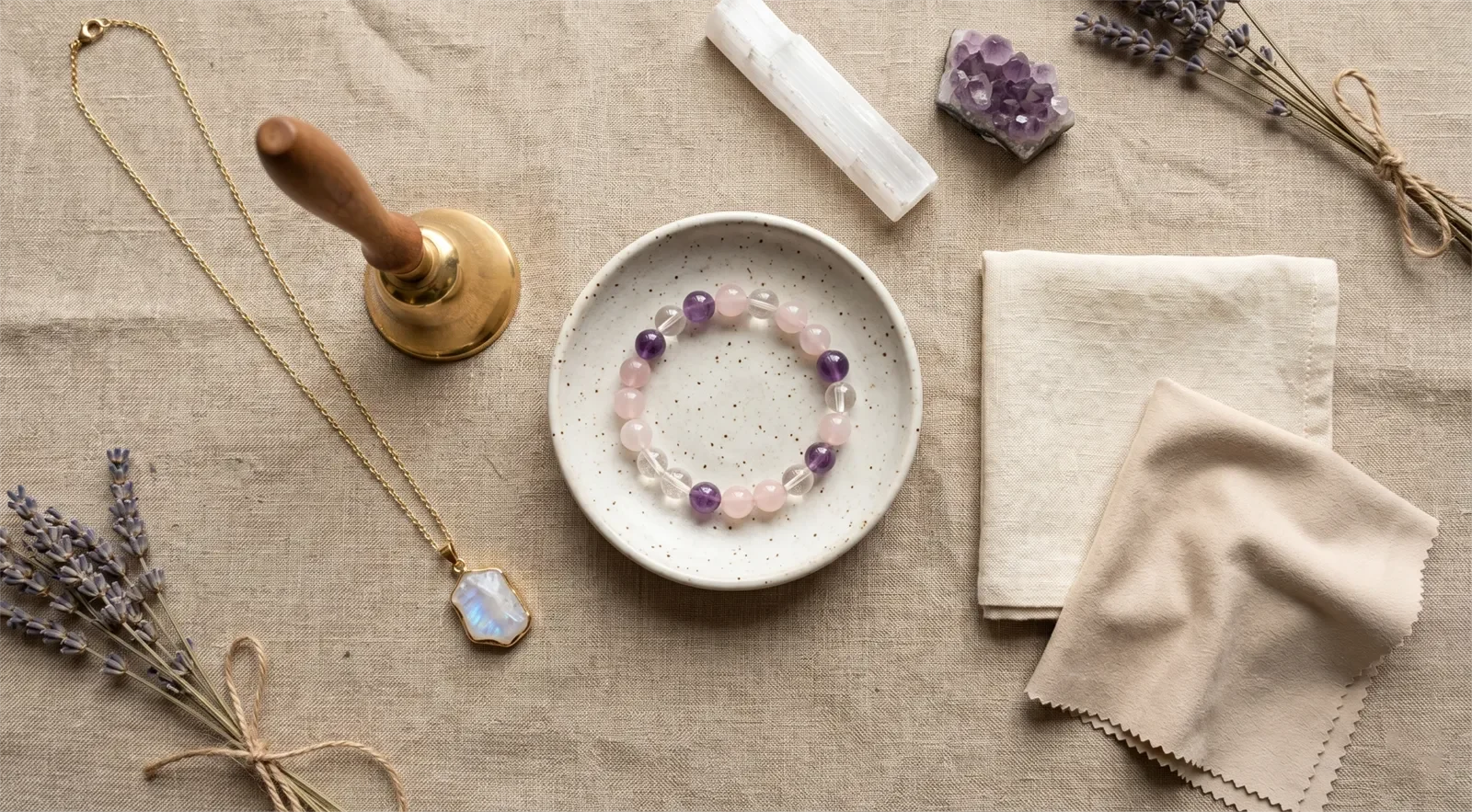
Sound cleansing
Sound is often the easiest no-smoke method. A bell, chime, singing bowl, or gentle recorded tone can create a symbolic reset without flame, smoke, salt, or water. Start with Sound Cleansing 101.
Intention reset
Hold the jewelry for a quiet moment and name what it represents for you now. This is one of the safest methods because it does not expose the piece to heat, moisture, smoke, salt, or chemicals.
Resting the jewelry
Place the jewelry on a clean cloth, tray, or dish overnight. This gives the piece a simple reset without physically stressing it.
Indirect moonlight
Indirect moonlight is another gentle symbolic option for many beginners. Keep jewelry protected from dew, rain, moisture, and outdoor exposure. For details, read Moonlight vs. Sunlight Charging.
Full moon ritual
If you want a more structured symbolic routine, use a ritual-specific guide rather than trying to make smoke do everything. Read Full Moon Cleansing Ritual for Jewelry.
When to Skip Smoke Cleansing
Skip smoke cleansing if the method does not fit the space, the people, the pets, or the jewelry.
- Skip it if the room has poor ventilation.
- Skip it if anyone nearby is sensitive to smoke or scent.
- Skip it around pets, children, or shared indoor air where smoke may bother others.
- Skip it if you are tired, distracted, or unable to monitor flame safely.
- Skip it if your building rules do not allow incense, flame, or smoke.
- Skip it if the jewelry is delicate and you are worried about heat, ash, or soot.
- Skip it if you simply do not enjoy smoke-based methods.
A safer alternative is not a weaker choice. It is often the better choice.
A Grounded Note on Meaning
Smoke cleansing can be meaningful, but it should stay grounded. It is not required, and it should not be treated as a guaranteed way to remove negativity, cure a condition, prevent bad luck, or create protection.
A trustworthy approach sounds like this: “I am using smoke as a short symbolic reset because it feels meaningful to me.” That is clearer and safer than turning smoke cleansing into a rule, fear, or promise.
If the real reason you are searching for smoke cleansing is that a bracelet broke, start with the practical causes first: wear, tension, weakened elastic, bead edges, impact, or age. Then, if you want the symbolic side, read What It May Mean When a Bracelet Breaks — and What to Do Next.
Frequently Asked Questions
Is smoke cleansing required for healing jewelry?
No. Smoke cleansing is optional. Many people never use smoke and still wear meaningful healing jewelry. Sound, intention, rest, and indirect moonlight are all easier alternatives.
Is smoke cleansing safe indoors?
Only if the setup is controlled and the space is well ventilated. Use a small amount of smoke, keep flame away from flammable items, never leave burning materials unattended, and stop if anyone in the space feels uncomfortable.
Can smoke damage jewelry?
A brief, careful symbolic pass near light smoke is different from heavy or repeated exposure. The bigger concerns are heat, flame, ash, soot, residue, and indoor smoke. Keep jewelry away from direct flame and avoid overdoing it.
Can I smoke cleanse crystal bracelets?
You can if the setup is safe, but be careful with elastic, plated parts, coated beads, glued charms, and unknown stones. Keep the bracelet away from flame, heat, ash, and heavy soot.
What can I use instead of smoke cleansing?
Sound cleansing, intention, rest, and indirect moonlight are the easiest beginner alternatives. Sound is especially useful because it avoids smoke, water, salt, and direct sunlight.
Do I need sage or a specific herb?
No. This guide does not treat any specific herb, wood, incense, or resin as required. If you use smoke, choose something safe, legal, appropriate for your space, and respectful of cultural context.
Is smoke cleansing the same as cleaning jewelry?
No. Smoke cleansing is symbolic. It does not remove sweat, oil, lotion, perfume, dust, or residue. Physical cleaning is a separate care step.
How often should I smoke cleanse jewelry?
There is no fixed schedule. Use smoke occasionally if it feels meaningful and safe. If you want timing guidance for bracelets, read How Often Should You Cleanse Your Bracelet?.
Should I use smoke after a bracelet breaks?
You can use a symbolic reset if it helps you feel closure, but first look at the practical cause of the break. Elastic wear, tension, impact, bead edges, and age are common reasons bracelets break.
Related Guides
- How to Cleanse & Care for Healing Jewelry
- Sound Cleansing 101
- Moonlight vs. Sunlight Charging
- How Often Should You Cleanse Your Bracelet?
- Full Moon Cleansing Ritual for Jewelry
- What It May Mean When a Bracelet Breaks — and What to Do Next
Next step: If smoke feels inconvenient, unsafe, or too fussy for your space, do not force it. Start with Sound Cleansing 101 for a simpler no-smoke method, or return to How to Cleanse & Care for Healing Jewelry for the full beginner care framework.