









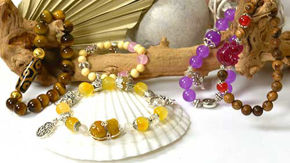
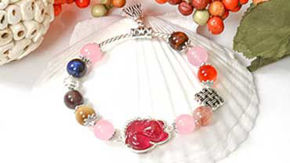


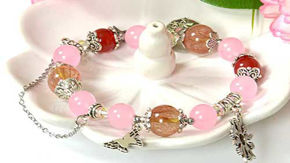

If you use “charging” as a symbolic practice for crystal or healing jewelry, moonlight is usually the safer beginner default than direct sunlight. Moonlight avoids the biggest physical risks of sun exposure: heat, fading, drying, and stress on dyed stones, coated beads, elastic, glue, plated metal, and delicate jewelry construction.
Who this guide is for: This guide is for readers who use moonlight or sunlight as a symbolic charging practice and want to protect bracelets, necklaces, pendants, rings, charms, and crystal jewelry from avoidable damage.
How this guide was prepared: This article treats charging as a symbolic, spiritual-wellness, or mindfulness-based practice. It focuses on jewelry safety first: light exposure, heat, fading, treatments, coatings, elastic, glue, plating, moisture, and beginner-safe alternatives.
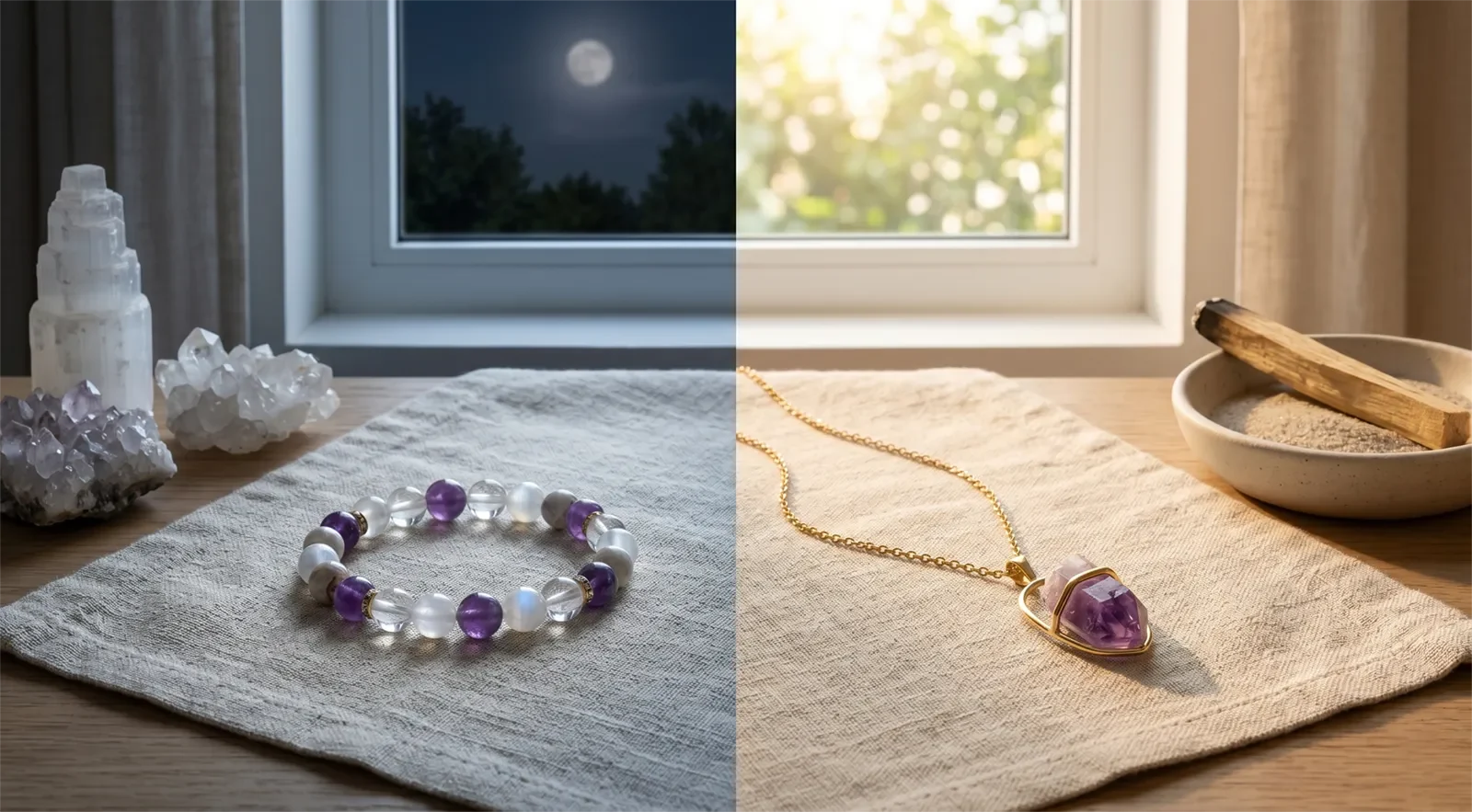
When people ask whether moonlight or sunlight is better for charging stones, they are usually asking two questions at once. One question is symbolic: which method feels meaningful? The other is practical: which method is safer for the jewelry?
This guide focuses on the practical safety question. If you want the broader beginner care framework, read How to Cleanse & Care for Healing Jewelry. If you are unsure whether your stone is dyed, coated, fracture-filled, heat-treated, or otherwise altered, read Gemstone Treatments 101 before using sunlight.
Table of Contents
- Quick Answer
- Moonlight vs. Sunlight at a Glance
- What “Charging” Means
- Why Moonlight Is Usually Safer
- Why Sunlight Needs More Caution
- Which Stones Need Extra Caution?
- Do Not Ignore Jewelry Construction
- A Safer Moonlight Method
- If You Still Want to Use Sunlight
- Safer Non-Light Alternatives
- A Grounded Note on Meaning
- Frequently Asked Questions
- Related Guides
Quick Answer
For most beginners, moonlight is safer than direct sunlight for symbolic crystal charging. It is cooler, gentler, and less likely to create fading, heat stress, or damage to jewelry materials. Sunlight can be risky for stones that are dyed, coated, treated, color-sensitive, porous, or set in jewelry with elastic, glue, plating, or delicate construction.
If you do not know exactly what stone, finish, treatment, or construction you have, choose indirect moonlight, sound cleansing, intention, or rest instead of direct sun.
Moonlight vs. Sunlight at a Glance
| Method | Best For | Main Advantage | Main Risk |
|---|---|---|---|
| Indirect moonlight | Most beginner symbolic charging routines | Cooler, gentler, and lower-risk than direct sun | Outdoor moisture, dew, rain, or forgetting the piece outside |
| Direct moonlight outdoors | Only if the piece is protected and conditions are dry | Feels meaningful for moon-based routines | Moisture, temperature changes, pets, theft, or environmental exposure |
| Short indirect daylight | Durable pieces when used carefully | Less intense than direct sunlight | Still may create heat or light exposure over time |
| Direct sunlight | Only for known durable materials, briefly, if desired | Appeals to some symbolic practices | Fading, heat, drying, glue stress, elastic wear, and damage to sensitive stones |
| No-light method | Unknown, delicate, dyed, coated, or treated jewelry | Lowest physical risk | May feel less ritual-like if you prefer light-based practice |
What “Charging” Means
In healing jewelry language, “charging” usually means a symbolic reset. Many people use moonlight, sunlight, sound, rest, or intention to reconnect with what a piece represents to them.
This guide does not treat charging as measurable energy science, medical treatment, or a guaranteed spiritual result. The safer and more useful question is: if you want to do a symbolic charging practice, which method is less likely to damage the jewelry?
That answer is usually moonlight or a non-light method, especially for beginners.
Why Moonlight Is Usually Safer
Moonlight is usually the safer default because it avoids the strongest risks of direct sunlight: heat buildup, intense light exposure, fading, and drying. It also makes it less likely that a beginner will leave a bracelet or pendant on a hot sunny windowsill for hours.
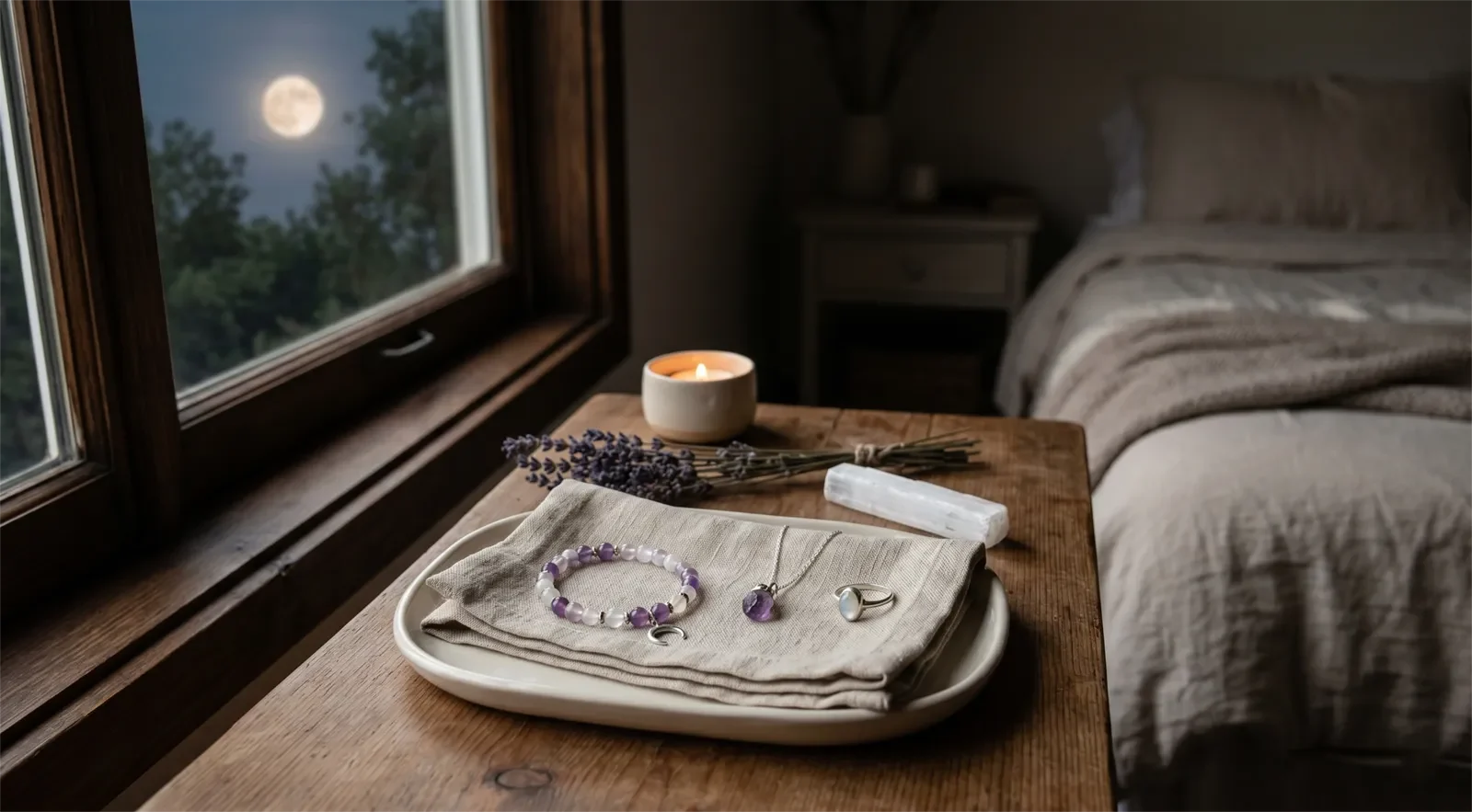
Moonlight is better when:
- You do not know whether the stone is treated, dyed, coated, or filled.
- The jewelry includes elastic, glue, plating, string, or mixed materials.
- The piece has soft, pale, dyed, or color-sensitive stones.
- You want a symbolic reset without heat or harsh light.
- You are unsure what care method is safe.
Moonlight is not required, and it is not magic by itself. It is simply a gentler symbolic option when you want a light-based practice with lower physical risk.
Why Sunlight Needs More Caution
Sunlight is not a safe universal charging method. Direct sun can expose jewelry to light, heat, dryness, and temperature changes. That can matter for both the stone and the jewelry construction.
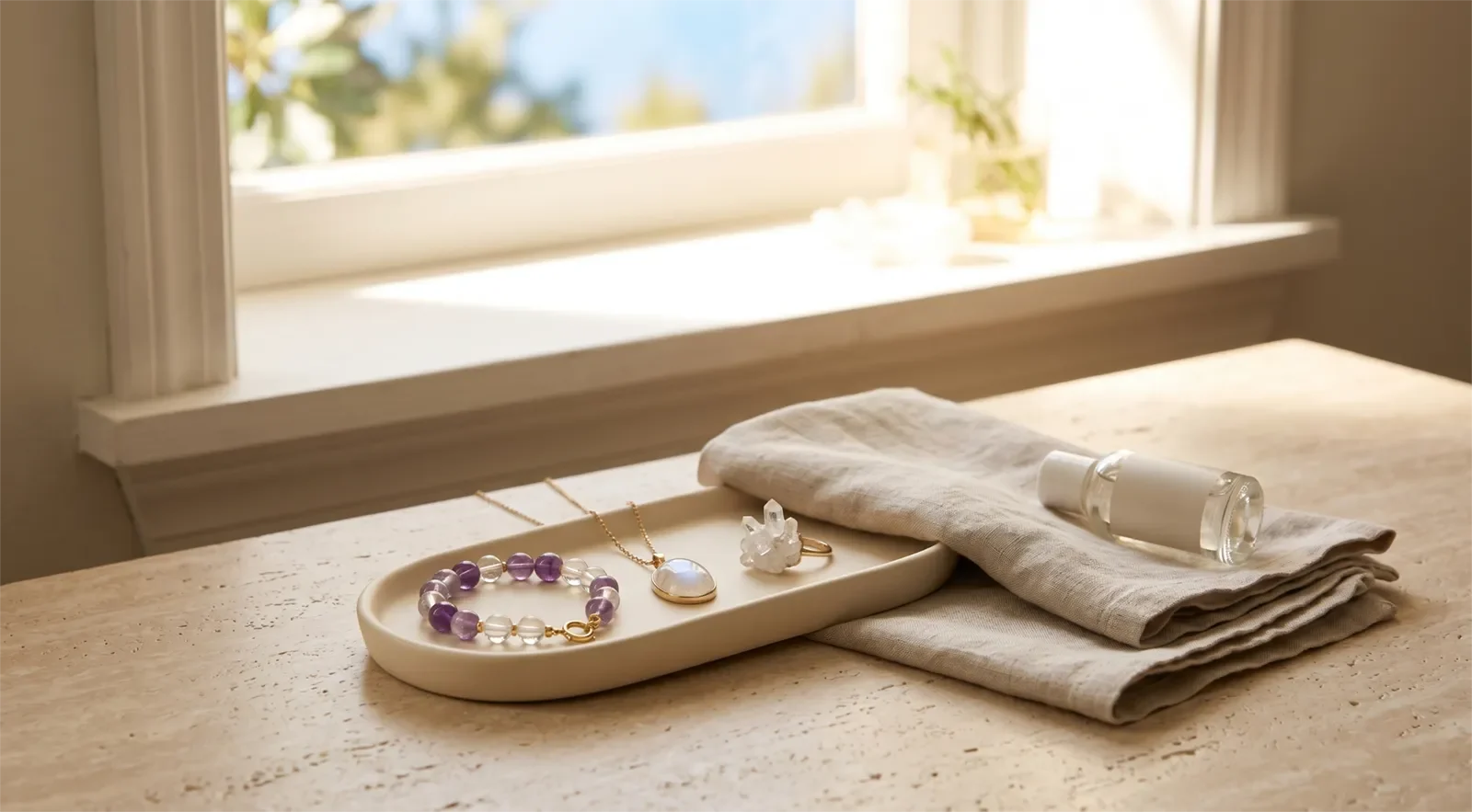
Direct sunlight may cause problems for:
- Dyed stones or dyed beads
- Coated or surface-enhanced stones
- Fracture-filled or treated stones
- Light-sensitive stones
- Porous materials
- Elastic bracelets
- Glued components
- Plated metal
- Pieces left on hot windowsills
The danger is not always one short moment of light. The bigger risk is repeated exposure, long sessions, direct heat, and the habit of leaving jewelry in the sun because it feels like a stronger ritual.
Which Stones Need Extra Caution?
This table is intentionally conservative. It is not a full gem encyclopedia, and it does not replace material-specific care instructions. When in doubt, choose moonlight or a no-light method.
| Stone or Material Type | Sunlight Caution | Safer Beginner Choice | Why |
|---|---|---|---|
| Amethyst | Use extra caution with direct sun | Moonlight, sound, or intention | Color-sensitive stones are often better kept away from repeated strong light |
| Rose quartz | Use extra caution with direct sun | Moonlight or rest | Pale stones may be more vulnerable to fading over time |
| Citrine and smoky quartz | Avoid long direct sun sessions | Moonlight or sound | Heat and light exposure are not ideal defaults for color-sensitive quartz varieties |
| Fluorite | Avoid direct sun as a default | Moonlight or no-light methods | Often treated as a more light-sensitive crystal in jewelry care |
| Kunzite | Avoid direct sun | Moonlight, intention, or rest | Known as a stone that deserves caution around strong light exposure |
| Moonstone and feldspar stones | Avoid heat and rough exposure | Moonlight or soft rest | Gentle handling is safer than strong sun, heat, or temperature changes |
| Opal and porous stones | Avoid heat and drying conditions | No-light methods or protected moonlight | Heat, dryness, and environmental exposure can be risky |
| Dyed, coated, or treated stones | Avoid direct sun unless confirmed safe | Sound, intention, rest, or indirect moonlight | Treatments and surface finishes can react differently from natural stone |
| Clear quartz, tiger’s eye, hematite, black tourmaline | Still avoid long heat exposure in jewelry form | Moonlight or brief indirect light if desired | The stone may be durable, but elastic, glue, plating, and settings may not be |
| Unknown stones | Do not use direct sun as the default | Sound, intention, rest, or indirect moonlight | You cannot judge safety by appearance alone |
Do Not Ignore Jewelry Construction
Even if a stone itself is fairly durable, the jewelry may not be. Many crystal jewelry pieces include elastic cord, thread, glue, plated metal, spacers, charms, coatings, bead holes, wire, clasps, or mixed materials.
That matters because sunlight and heat can affect more than the stone. A bracelet may have durable beads but weak elastic. A pendant may have a strong crystal but a glued cap. A necklace may include plated metal that reacts poorly to moisture, heat, sweat, or repeated friction.
When deciding between moonlight and sunlight, ask about the whole piece, not just the stone name.
A Safer Moonlight Method
If you want a beginner-friendly moonlight charging routine, keep it simple and protected.
- Wipe the jewelry gently with a soft dry cloth if needed.
- Place it on a clean cloth, tray, or dish indoors near a window.
- Keep it away from water, dew, rain, pets, children, and open windows.
- Set a simple intention if that feels meaningful.
- Leave it for a short, low-pressure window rather than treating all-night exposure as required.
- Store it safely afterward in a dry, shaded place.
Indoor indirect moonlight is often safer than placing jewelry outside. Outdoor placement can expose the piece to moisture, temperature changes, dirt, insects, pets, and the risk of forgetting it overnight.
If You Still Want to Use Sunlight
If sunlight is meaningful to your practice, treat it as a careful exception, not the default.
Use sunlight only when:
- You know the stone and construction are not highly light- or heat-sensitive.
- The jewelry is not dyed, coated, fracture-filled, glued, plated, or elastic-sensitive.
- The exposure is brief.
- The piece is not sitting on a hot windowsill or in a hot room.
- You are willing to skip sunlight if there is any doubt.
Short indirect daylight is usually more conservative than direct sun. A hot sunny ledge is one of the worst beginner habits because it combines light, heat, and long exposure.
Safer Non-Light Alternatives
You do not need moonlight or sunlight to symbolically reset jewelry. If the piece is delicate, unknown, treated, or meaningful enough that you do not want to risk damage, choose a no-light method.
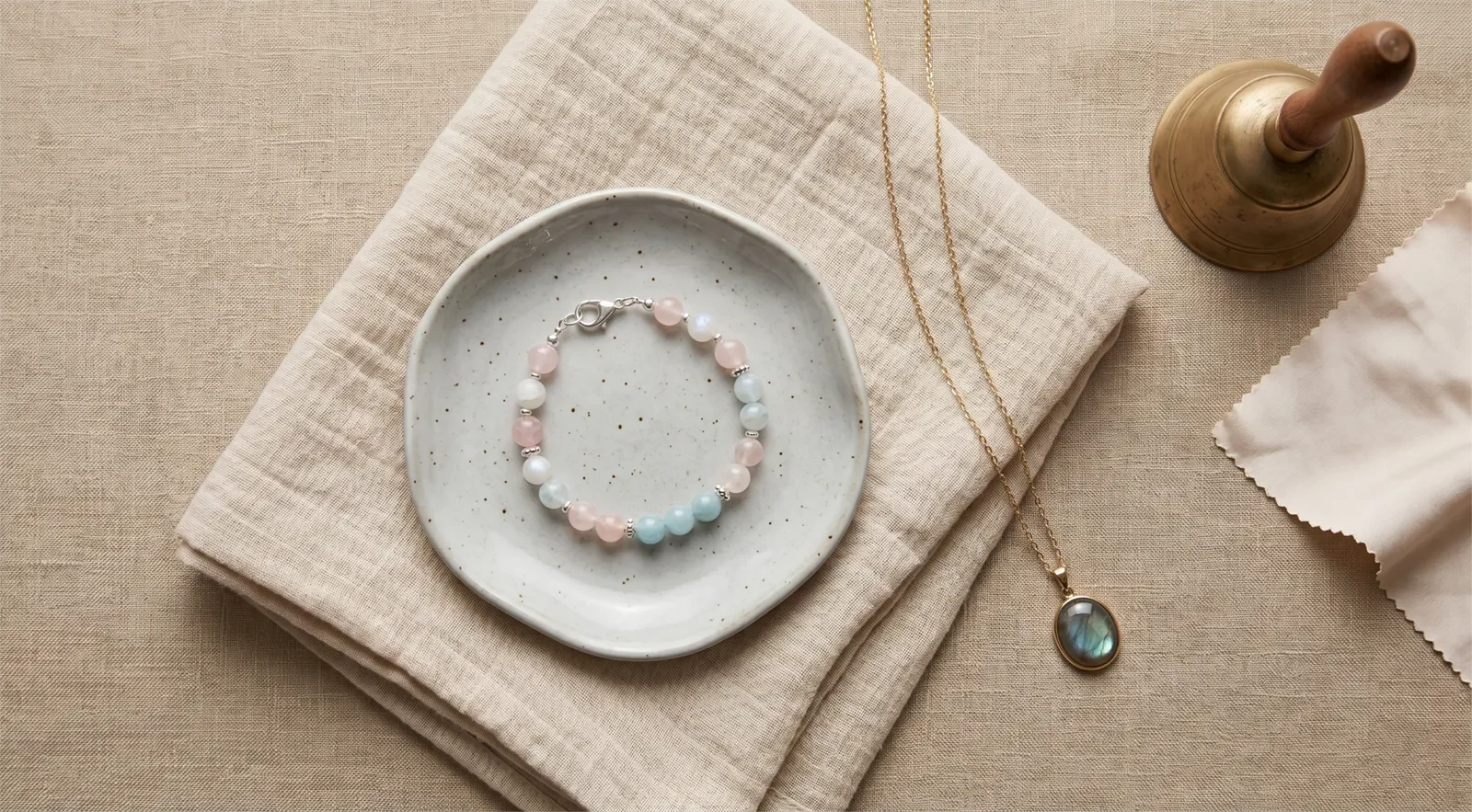
Sound cleansing
Sound is a low-contact method that avoids water, salt, smoke, and sunlight. A bell, chime, singing bowl, or gentle tone can create a simple reset. Read Sound Cleansing 101.
Intention
Hold the jewelry briefly and name what it represents for you now. This is one of the safest methods because it does not expose the piece to light, heat, smoke, salt, or water.
Rest
Place the jewelry on a clean cloth, tray, or dish overnight. This creates a symbolic pause without physically stressing the piece.
Smoke cleansing
Smoke cleansing is optional and requires ventilation and flame safety. It is not the easiest beginner default, but if you are considering it, read Smoke Cleansing for Jewelry.
A Grounded Note on Meaning
Moonlight and sunlight charging can feel meaningful, but the practice should stay grounded. Charging is symbolic. It should not be presented as a guaranteed way to heal, protect, purify, attract luck, or change a medical or emotional condition.
A safer approach is this: choose a method that helps you pause and reconnect with the piece without damaging it. If the method creates risk, pressure, or confusion, choose a gentler one.
Frequently Asked Questions
Is moonlight safer than sunlight for crystal jewelry?
Usually, yes. Moonlight is cooler and gentler than direct sunlight, making it the safer beginner default for most crystal jewelry, especially dyed, treated, delicate, elastic, glued, plated, or unknown pieces.
Can sunlight fade crystals?
Yes, some stones, dyes, coatings, and treatments can fade or change with repeated strong light exposure. Amethyst, rose quartz, fluorite, kunzite, and dyed or treated stones deserve extra caution around direct sunlight.
Can I put crystal jewelry on a windowsill?
A sunny windowsill is not a safe default because it can create long light exposure and heat buildup. If you use a window, indirect moonlight or protected low-light placement is usually safer than direct sun.
Which stones should not be charged in direct sunlight?
Use extra caution with amethyst, rose quartz, citrine, smoky quartz, fluorite, kunzite, moonstone, opal, dyed stones, coated stones, treated stones, and any jewelry with elastic, glue, plating, or unknown construction.
Is sunlight ever okay?
Brief indirect daylight may be acceptable for some durable, untreated pieces, but direct sun should not be treated as a universal method. If you are unsure, choose moonlight, sound, intention, or rest.
How long should moonlight charging last?
There is no fixed rule. Short, gentle, protected exposure is enough for most symbolic routines. All-night outdoor placement is not required and may expose jewelry to moisture or temperature changes.
Can I leave jewelry outside overnight?
It is usually safer to keep jewelry indoors near a window or in a protected place. Outdoor placement can expose the piece to dew, rain, dirt, pets, insects, temperature shifts, or loss.
Do I need to charge healing jewelry at all?
No. Charging is optional. Many people wear healing jewelry meaningfully without moonlight, sunlight, or any ritual. Good physical care matters more for preserving the piece.
What is the safest charging method for unknown stones?
For unknown stones, avoid direct sunlight. Use intention, rest, sound cleansing, or protected indirect moonlight instead.
Related Guides
- How to Cleanse & Care for Healing Jewelry
- Gemstone Treatments 101
- Sound Cleansing 101
- Smoke Cleansing for Jewelry
- Full Moon Cleansing Ritual for Jewelry
- New Moon Intention Ritual for Jewelry
Next step: If you are unsure what your jewelry can handle, choose the conservative route first. Read Gemstone Treatments 101 before using sunlight, water, salt, or stronger cleansing methods.