
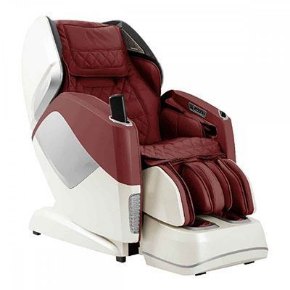




When you are choosing a massage chair for lower back discomfort, the most important question is not how many features the chair has. The better question is whether the chair actually supports your lower back in a way that feels comfortable, controlled, and realistic for daily home use.
For many people, a better lower-back experience comes from a combination of the right massage track, adjustable pressure, comfortable recline, gentle lumbar heat, and a chair size that fits the body well. One feature alone rarely solves the whole experience. A chair has to reach the right area, apply pressure at a level your body can tolerate, and let your lower back relax instead of brace against the massage.
Who this guide is for: People shopping for or already using a massage chair who want to understand which features matter most for lower back comfort.
How this guide was prepared: This guide was prepared from a practical home-use perspective, with a focus on comfort, body fit, feature usefulness, and safe expectations. It is not a medical diagnosis or treatment guide.
If your question is broader than lower back comfort, start with how massage chairs may help relieve back pain and muscle tension. If your symptoms feel unusual, are getting worse, or make you unsure whether you should use a massage chair at all, read the health and safety guide when using a massage chair first. If discomfort travels into the hip, buttock, or leg, the more relevant page is massage chairs for sciatica.
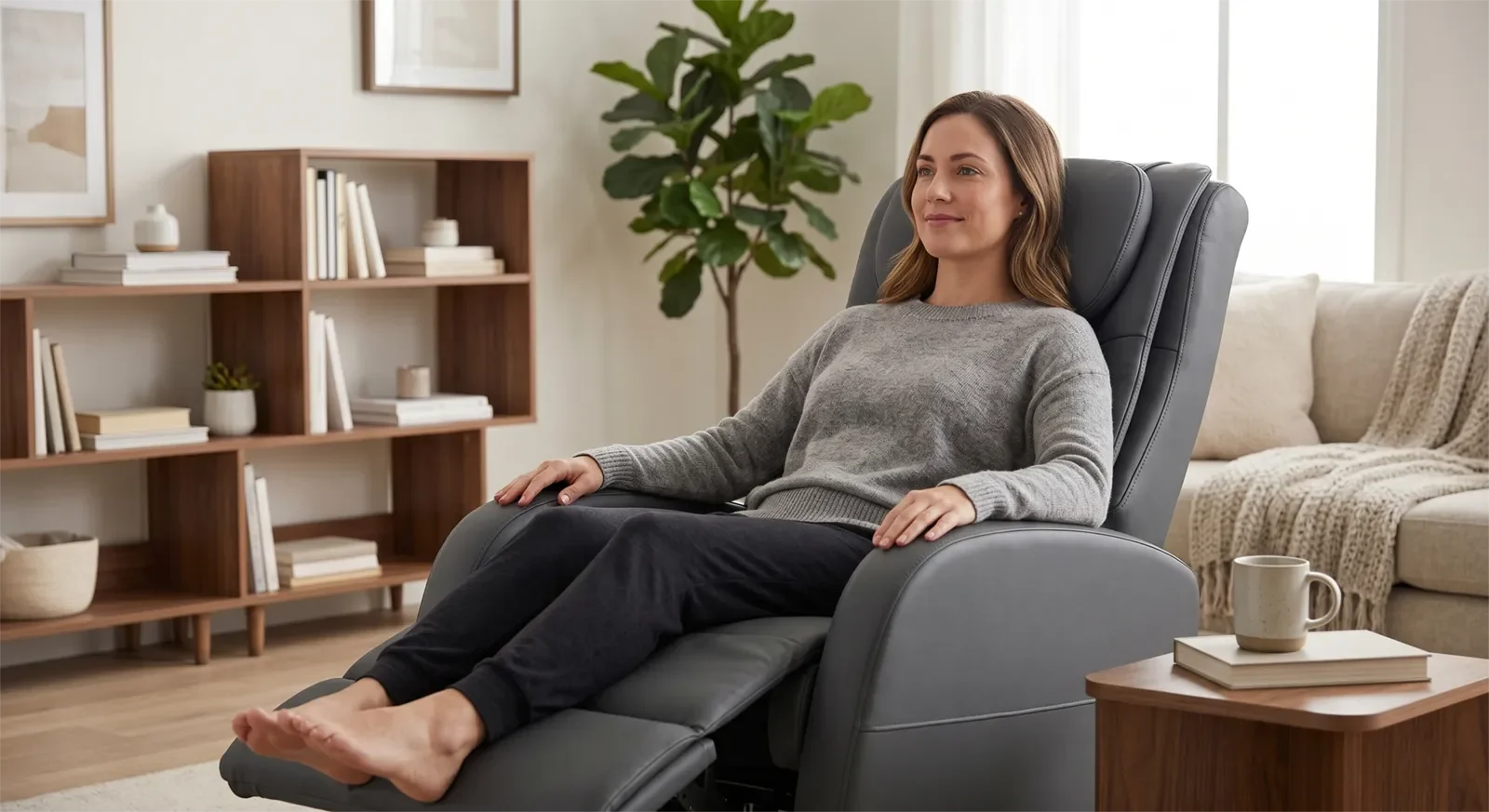
Table of Contents
- Quick answer
- Do not start with the number of features
- 1. Does the massage track reach the lower back?
- 2. Pressure depth and adjustability
- 3. Lumbar heat
- 4. Recline and body position
- 5. Stretch programs
- 6. Body fit
- Which features should you prioritize first?
- When to be more careful
- Frequently asked questions
- Related guides
Quick answer
When choosing a massage chair for lower back comfort, focus first on whether the massage track reaches the lumbar area, whether the pressure can be adjusted, whether the chair fits your body, and whether the recline helps your lower back relax. Lumbar heat, stretch programs, and preset routines can be helpful, but they matter less if the chair misses the right spot or feels too aggressive. A good lower-back massage chair should feel supportive, controlled, and easy to use without forcing your body to tense up.
Do not start with the number of features
Many shoppers see a long feature list and assume the chair must be better for lower back discomfort. In real use, that is not always true. A chair can have many programs, heat zones, airbags, and automatic modes, but still feel wrong if the rollers do not reach your lower back properly or the pressure cannot be adjusted to a comfortable level.
A more practical way to evaluate a chair is to ask how it feels when you sit in it. Does the lower back feel supported? Do the rollers reach the right area? Can you lower the intensity if the pressure feels too much? After a few minutes, does your back feel like it can relax, or do you find yourself bracing against the massage?
1. Does the massage track reach the lower back?
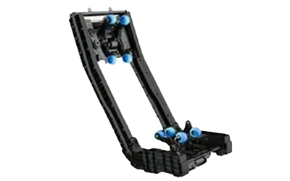
The massage track is the path the internal massage mechanism follows inside the chair. For lower back comfort, this matters because the track determines whether the rollers can actually reach the lumbar area. If the chair does not contact the area you care about, other features may not make up for it.
Do not judge the chair by track names alone. S-track, L-track, and SL-track designs can all feel different depending on the chair’s shape, roller placement, and how your body fits inside it. What matters most is whether the chair follows your body naturally and reaches the lower back without feeling awkward or misplaced. For a deeper feature comparison, read S-track, L-track, and SL-track massage chair differences.
When does the track matter most?
The track matters most when you have tried massage chairs before and felt that the rollers passed above or below the area you wanted to target. For lower back comfort, correct contact often matters more than having many preset programs.
2. Pressure depth and adjustability
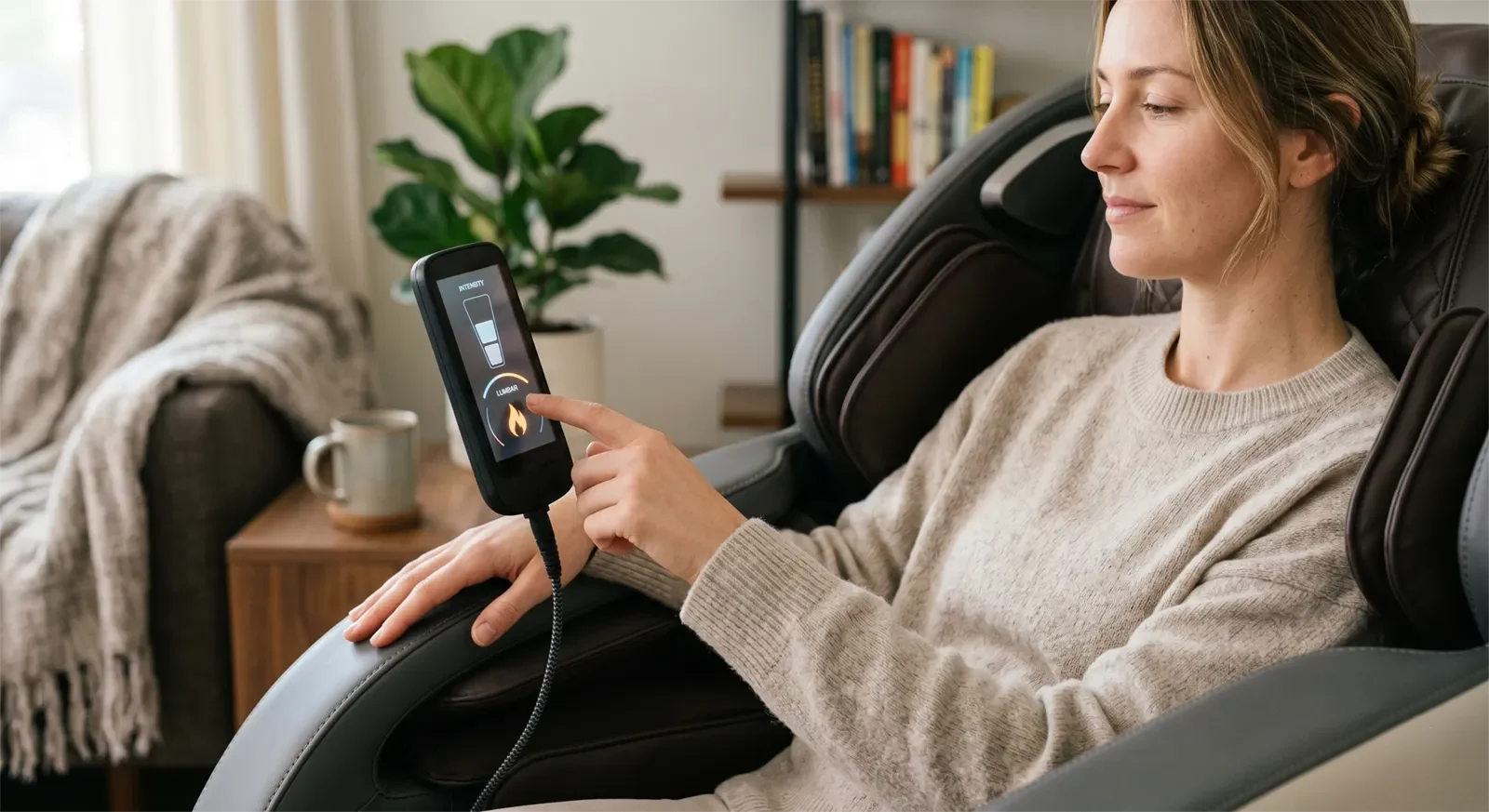
Lower back comfort does not always require the strongest pressure. For many people, the best feeling is clear enough to notice, but gentle enough that the body does not tighten up. That is why adjustable intensity is usually more useful than a chair simply being advertised as powerful.
If the massage is too light, it may feel like the chair is moving without doing much. If it is too strong and hard to reduce, the lower back may feel more irritated, especially for new users, sensitive users, or older adults.
Signs of a reasonable pressure level
A good pressure level should feel noticeable without sharp pain, excessive force, or the need to tense your body to tolerate it. If you want to shift away from the rollers after only a few minutes, the chair may not be a good fit even if the massage is described as deep.
3. Lumbar heat
Lumbar heat can make a massage chair feel more comfortable, especially for people who often feel stiff or tight in the lower back. Mild warmth may help the body settle before or during a massage session.
However, heat should be understood as a comfort feature, not as a promise to fix the cause of lower back discomfort. Some chairs use lumbar heat pads, while others use heated rollers, and the feel can be different. For a clearer comparison, read heated rollers vs. lumbar heat.
When is heat worth prioritizing?
Heat is worth considering if your lower back often feels stiff, cold, or slow to relax. But heat alone is rarely enough if the chair does not fit your body or the massage track does not reach the lumbar area well.
4. Recline and body position
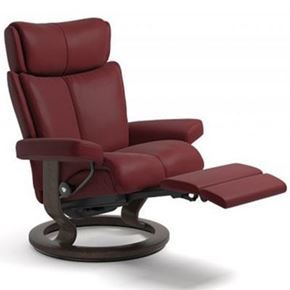
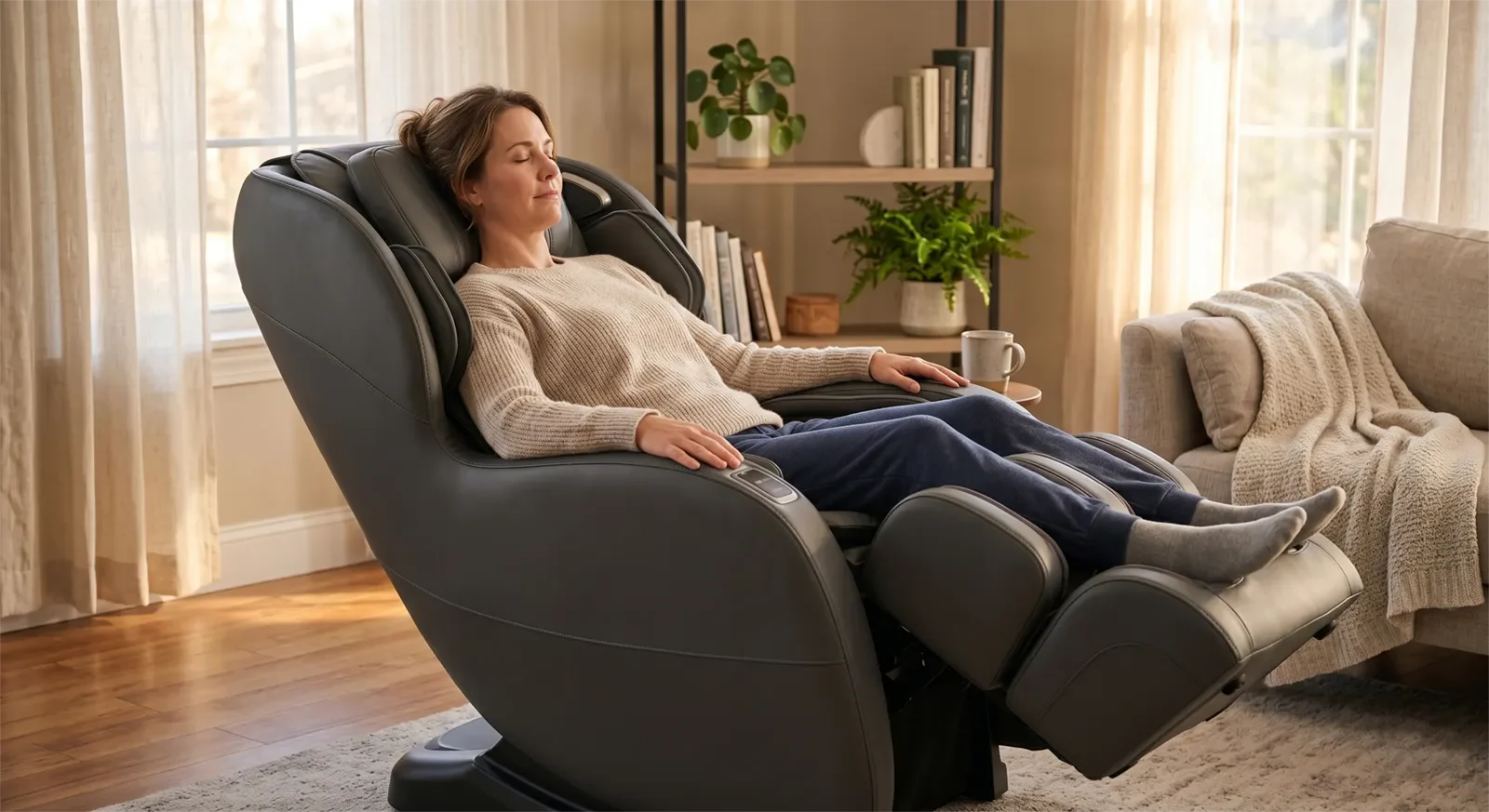
Body position can change the lower-back experience a lot. A comfortable recline may reduce the feeling of compression and make it easier for the lower back to relax. The same massage pressure can feel better in a supported reclined position than it does when you are sitting upright and tense.
This is one reason zero gravity is often mentioned in massage chair shopping. You do not need to choose a chair just because the feature name sounds advanced, but you should pay attention to whether the reclined position helps your lower back feel less compressed and more supported. You can learn more in what zero gravity means in a massage chair.
How recline may help the lower back
A good reclined position can help the body stop bracing, distribute pressure more comfortably, and make the lower back feel less directly loaded. For people who feel lower-back fatigue after long periods of sitting, this is worth testing in person when possible.
5. Stretch programs
Some massage chairs include stretch programs that combine recline, leg hold, shoulder hold, or airbag movement. For the right person, a gentle stretch program can feel helpful after long sitting. But not everyone needs it, and not everyone enjoys it.
If your body is sensitive, you have unusual pain, you recently had an injury, or you are unsure whether stretching is appropriate, be careful. Start light, keep the session short, and stop if it does not feel right. For many lower-back users, correct track reach, adjustable pressure, and comfortable recline are still more important than an impressive-sounding stretch mode.
6. Body fit
Fit affects the experience more than many shoppers realize. The same chair can feel excellent for one person and poorly aligned for another because people differ in height, torso length, shoulder width, hip position, and how they sit in the chair.
Lower back comfort is especially sensitive to positioning. If the rollers land slightly too high or too low, the experience can change completely. When comparing chairs, look at recommended height range, body scan, seat depth, roller position, and the way the chair feels during an actual session. If you are choosing for a household rather than one person, read how to choose the best massage chair for your home.
Which features should you prioritize first?
If your main concern is lower back comfort, start with the massage track, then pressure depth and adjustability, then lumbar heat, recline, stretch, and body fit. This order helps you avoid being distracted by secondary features before you know whether the chair gets the basics right.
A good massage chair for the lower back is not always the chair with the longest feature list. It is the chair that reaches the right area, allows pressure control, supports your body comfortably, and does not make you tense up while using it.
When to be more careful
If you have severe pain, pain that is getting worse quickly, pain after an injury, pain that travels into the hip or leg, numbness, weakness, loss of sensation, or symptoms that do not feel like ordinary muscle tightness, do not treat the decision as a feature comparison only. In those situations, safety and professional guidance may matter more than choosing a stronger chair.
If you are buying for a parent or older adult, look for comfort, easy controls, easy entry and exit, and pressure levels that are not too aggressive. A chair that is too strong or difficult to get in and out of may not be the right choice even if it has many advanced features. For that situation, see massage chairs for seniors.
Frequently asked questions
What feature matters most for lower back comfort?
The most important starting points are whether the massage track reaches the lower back, whether the pressure is adjustable, and whether the chair fits your body well. Heat, recline, and stretch features can help, but they work best when the basics are already right.
Is an L-track always better for the lower back?
Not always. An L-track can be helpful in some designs, but the real experience depends on roller placement, track shape, body fit, and how the chair supports your posture. Testing the chair is more useful than choosing by track name alone.
Is lumbar heat a must-have feature?
No. Lumbar heat can make the lower back feel more relaxed for some users, but it is not the only important factor. Track reach, pressure control, recline, and fit often matter more than heat alone.
Should I use this guide if I think I have sciatica?
Not by itself. If discomfort travels into the hip, buttock, or leg, especially with numbness, weakness, tingling, or sharp pain, read massage chairs for sciatica and use more caution before trying deeper pressure.
Should I choose the strongest massage chair for lower back discomfort?
No. Stronger pressure is not automatically better. For the lower back, controlled pressure, correct contact, and body fit are usually more important than maximum force.
Related guides
- How Massage Chairs Help Relieve Back Pain and Muscle Tension
- Massage Chairs for Sciatica: What Helps and What Does Not
- Health & Safety Guide When Using a Massage Chair
- How to Choose the Best Massage Chair for Your Home
Contact Tittac for help choosing a massage chair that fits your body, room, and daily home-use needs.