








S-Track, L-Track, and SL-Track do not tell you how strong or advanced a massage chair is by themselves. They mainly describe the path the rollers follow and how far the massage can travel along your body.
If you have been comparing massage chairs, you have probably seen track labels everywhere. The problem is that many product pages mention S-Track, L-Track, or SL-Track quickly without explaining what those terms actually change once you sit in the chair. This guide breaks them down in plain English, with a focus on reach, coverage, and real home-use feel.
Written by Toan Ho — Tittac editorial team.
Who this guide is for: Shoppers who keep seeing S-Track, L-Track, and SL-Track labels and want to know how each one changes coverage and overall massage feel.
How this guide was prepared: This article was prepared by reviewing how massage chair brands describe track shape and reach, then translating those definitions into practical home-use terms.
Table of Contents
- Quick Answer
- What a massage chair track actually is
- S-Track: shaped for the spine
- L-Track: longer reach through the lower body
- What SL-Track usually means
- What changes most in real use
- What track labels do not tell you
- Is L-Track or SL-Track always better than S-Track?
- Where this page stops
- Frequently Asked Questions
- Related Guides
Quick Answer
S-Track, L-Track, and SL-Track mainly describe the path the rollers follow and how far the massage can travel. An S-Track usually follows the natural curve of the spine and focuses on the back. An L-Track extends farther down past the lower back and into the seat area, so the massage coverage feels longer and more continuous. SL-Track usually refers to a design that combines the spinal curve-following feel of an S-Track with the extended reach of an L-Track.
In real use, the biggest difference is coverage and continuity, not whether the chair is automatically stronger or more premium. Track type affects where the massage goes and how connected it feels from the upper back toward the lower body.
What a massage chair track actually is
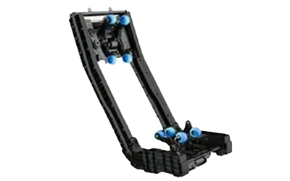
The track is the built-in rail system that guides the massage rollers. When brands talk about S-Track or L-Track, they are not talking about the rollers themselves. They are describing the shape and length of the route those rollers travel.
That matters because the route changes three practical things:
- how closely the rollers follow the back’s natural curve
- how far the massage reaches down the body
- whether the massage feels more back-focused or more continuous through the lower body
So track labels are really about coverage and feel, not a simple good-better-best ranking.
S-Track: shaped for the spine
An S-Track is designed to follow the natural S-shaped curve of the spine more closely. In plain English, that usually means the roller path is shaped to stay aligned with the upper and mid-back, then continue through the lower back in a way that feels more body-contoured than flat.
What an S-Track usually feels like
In real use, an S-Track often feels more focused on the back itself. The rollers tend to stay connected to the natural curve of the body, which can make the massage feel more targeted through the upper back, mid-back, and lower back. The massage usually feels more like it is working along the back rather than continuing well past it.
That does not mean an S-Track is limited. It simply means the experience is usually more back-centered and less extended through the seat area.
L-Track: longer reach through the lower body
An L-Track is built to extend the roller path farther down. Instead of stopping mainly around the lower back area, it usually continues through the seat and into the glute or upper hamstring area, depending on the chair design.
What an L-Track usually feels like
The biggest difference most people notice is longer, more continuous coverage. Instead of feeling like the massage ends around the lower back, an L-Track often makes the session feel like it keeps going farther through the lower body. That can make the overall massage feel more connected from the back down into the seat.
For many shoppers, the practical value of an L-Track is not that it changes the roller style by itself. It is that it changes where the massage can continue.
What SL-Track usually means
SL-Track usually means the chair is trying to combine the two main ideas above: the spine-following contour of an S-Track and the longer lower-body reach associated with an L-Track.
In plain terms, the label usually suggests a track that starts by following the shape of the back and then continues farther down through the seat area. That is why many shoppers see SL-Track as the combined version.
One important detail about SL-Track
Brand language is not always perfectly consistent. Some brands use SL-Track very specifically, while others use it more loosely as shorthand for a long, spine-shaped track design. So the most useful way to read the label is not as a strict engineering category, but as a clue that the chair is designed to combine contour-following back massage with extended lower-body travel.
What changes most in real use
1. Coverage
This is usually the clearest difference. S-Track tends to keep the massage more centered on the back. L-Track and SL-Track usually extend the massage farther below the lower back. If you care about whether the rollers continue into the seat area, that is where L-Track and SL-Track become easier to notice.
2. Continuity
Some shoppers describe S-Track massage as more back-focused and L-Track or SL-Track massage as more continuous. That is because the roller path often feels less like it ends at the lower back and more like it flows through a longer section of the body.
3. Massage feel in reclined use
Track design can also affect how the massage feels when the chair reclines. A longer track can make the session feel like it maintains contact through a bigger portion of the body. That is different from zero gravity recline, which is its own feature category, but the two can influence how a session feels together.
What track labels do not tell you
This is where many shoppers get tripped up. Track type is important, but it does not explain everything.
Track labels do not tell you:
- how deep the rollers can press
- how natural the roller rhythm feels
- how accurate the body scan is
- whether the chair is automatically a better buy
For example, roller depth and motion belong more to the 2D, 3D, and 4D discussion. If you want that part explained clearly, read our guide to 2D vs 3D vs 4D massage chairs.
Body fit is also a separate topic. A chair can have a long track and still feel different from person to person depending on how well it maps shoulders and back position. That is why body scan belongs to its own explainer: massage chair body scan technology explained.
Is L-Track or SL-Track always better than S-Track?
Not automatically. The better question is what kind of coverage you want.
If you want a massage that feels more centered on the back and closely follows the spine, S-Track can make a lot of sense. If you want the massage to continue farther through the seat area, L-Track or SL-Track usually has the advantage.
That does not turn track type into a universal ranking. Some shoppers care most about extended coverage. Others care more about roller feel, body fit, chair comfort, and long-term support. If you are comparing full purchase priorities instead of only track labels, see how to choose the best massage chair for your home.
Where this page stops
This page owns track taxonomy only. It is here to explain what S-Track, L-Track, and SL-Track change in coverage and feel.
That means it does not own lower-back feature matching, symptom-specific use, or commercial “best” rankings. Track type can help you understand where the rollers travel, but it should be compared alongside roller dimension, body scan accuracy, recline feel, comfort, and service support before you choose a chair.
Frequently Asked Questions
What is the main difference between S-Track and L-Track?
The main difference is reach. S-Track is usually more back-focused and follows the spine’s curve, while L-Track usually extends farther down into the seat area for longer coverage.
Is SL-Track the same as L-Track?
Not exactly. SL-Track usually refers to a design that combines spine-following contour with extended lower-body reach. In practice, it often overlaps with long-track designs, but the label is meant to suggest both shape and length together.
Does track type tell me how strong the massage will feel?
No. Track type mainly describes the roller path and coverage. Roller depth, pressure feel, and massage realism are more closely tied to other features, including the chair’s roller system and overall tuning.
Can I use track type alone to choose a chair for lower-back pain?
Not really. Track type can help explain coverage, but lower-back comfort depends on more than track shape alone, including fit, roller depth, body scan accuracy, recline angle, and how your body responds during a session.