
Muddy sound in karaoke means the mix feels blurred, thick, or smeared, making vocals and music harder to separate clearly. It is not just “bad sound,” and it is not always the same as too much bass. In home karaoke, muddy sound usually shows up when lyrics lose definition, vocal edges feel soft, and the backing track seems to crowd the singer instead of supporting the voice cleanly.
Who this guide is for: Home karaoke users who hear a blurred, cloudy, or unclear sound and want to name the problem more accurately before changing random settings.
How this guide was prepared: This guide was written by comparing how muddy sound is actually heard in home karaoke and how it differs from nearby tonal problems such as boxy sound, bass masking, harshness, and thinness.
“Muddy” is one of the most common words people use when karaoke sound feels wrong, but it is also one of the least clearly understood. Many users know the sound feels blurred, smeared, or harder to follow, yet they are not sure whether the real problem is too much bass, a dull speaker, a poor vocal setting, room reflections, or something else.
That uncertainty often leads to random adjustments. Someone turns the mic up, cuts bass, adds treble, or changes echo without first understanding what they are actually hearing. This guide keeps the focus narrow: what muddy sound means, what it sounds like at home, and how to separate it from other common karaoke sound problems. For broader plain-English technical context, see our Karaoke Technical Guides.

Table of Contents
Quick Answer
Muddy sound in karaoke usually means the mix feels blurred, thick, or smeared in a way that makes vocals and instruments harder to separate clearly. It is less about one obvious sharp flaw and more about a loss of definition. Lyrics may feel less readable, consonants may seem softened, and the whole presentation can feel clouded even if nothing sounds painfully harsh or obviously broken. Muddy sound is not exactly the same as boxy, bass-heavy, harsh, or thin. Those problems can overlap, but muddy usually points to one specific listening impression: too much blending and not enough clean separation.
What muddy sound actually means
Muddy sound usually means the mix does not separate itself cleanly. Instead of hearing the vocal, backing track, and tonal layers with reasonable definition, the sound seems to bunch together. The result is not always dramatic. It often feels more like a veil, a soft blur, or a loss of shape than a single obvious defect.
That is why people often describe muddy karaoke as unclear even when they cannot point to one broken part of the system. The issue is usually reduced definition. Vocal edges feel less distinct. Words feel less readable. Instruments feel like they are stacking on top of each other instead of staying organized.
In karaoke, this matters because the singer needs the mix to stay readable. If the vocal and music blend together too much, the singer may still be audible, but the words and phrasing become harder to follow. The system works, but the sound feels clouded.
Muddy sound is best understood as lost separation. The voice, music, and room energy are all present, but they are not staying cleanly organized.
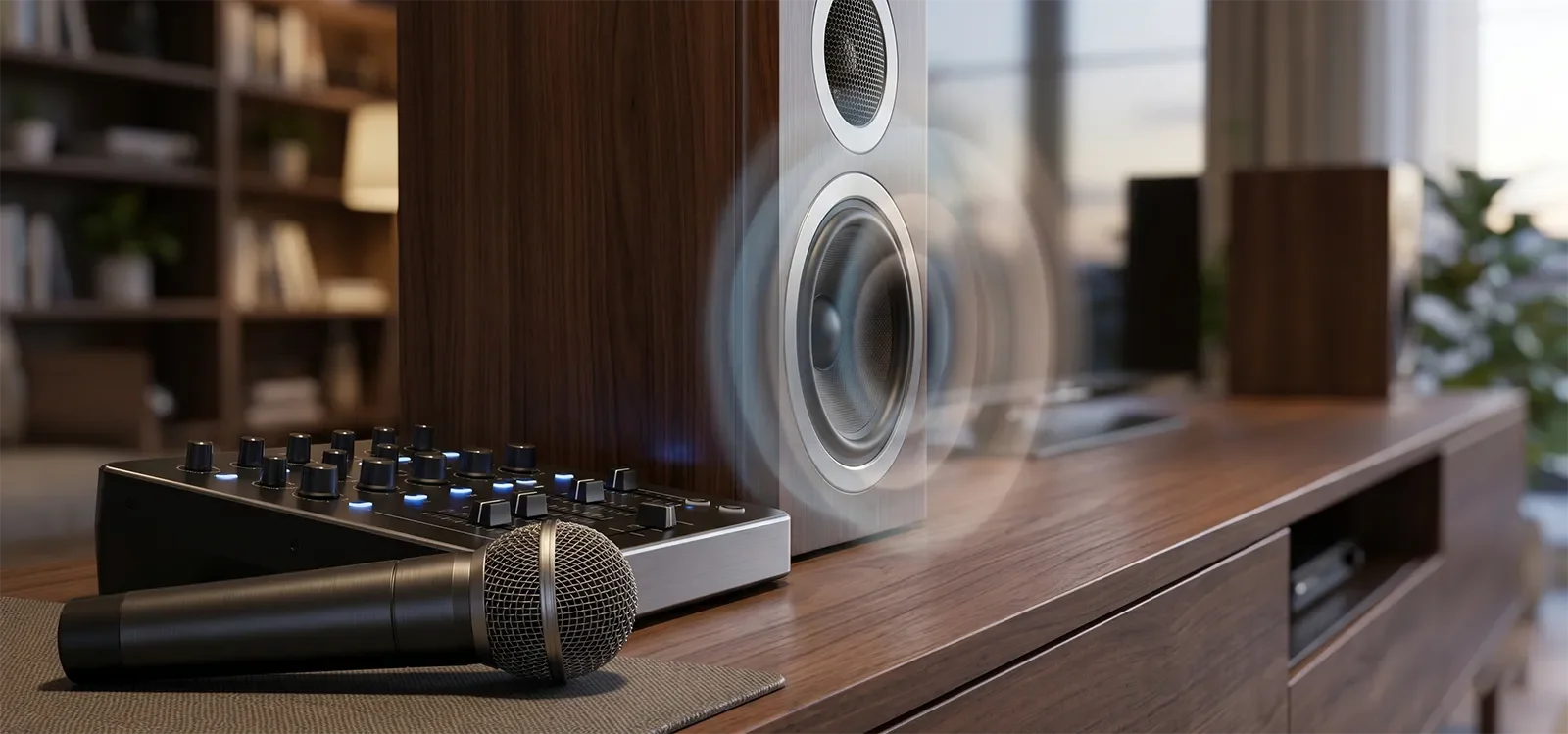
What muddy sound changes in the listening experience
When karaoke sound turns muddy, the first thing that usually changes is intelligibility. The singer may still be loud enough, but the vocal stops feeling easy to follow. Consonants lose edge. Phrases stop landing clearly. The backing track starts leaning into the same space as the voice instead of supporting it around the voice.
Muddy sound also changes how confident the system feels. A clean mix lets the singer lock onto lyrics, timing, and pitch cues more naturally. A muddy mix makes those cues less distinct. That does not always mean the system is too loud or obviously distorted. It simply means the sound is no longer presenting information in a clean, organized way.
This is why muddy sound can make karaoke feel tiring even when it is not harsh. The listener has to work harder to separate the singer from the track. The singer may also feel less supported because the vocal does not come forward with clean shape.
In a home room, muddy sound can become more noticeable because walls, floors, furniture, and speaker placement all affect how sound blends together. A system that seems acceptable at first can feel less clear after several songs if the mix keeps blurring.
What users actually hear at home
At home, muddy karaoke often sounds like the vocal is present but not cleanly outlined. The singer may feel slightly buried even when the microphone is technically loud enough. The track may not sound extremely bright or extremely boomy, yet the whole presentation still feels harder to read.
Users often describe this as “thick,” “cloudy,” “blurred,” or “not clear.” Those descriptions matter because they point to a loss of definition rather than one obvious failure. The system may still play normally. The microphones may work. The speakers may still produce volume. But the vocal and music do not separate cleanly enough.
This becomes especially noticeable when the lyrics are familiar but still harder to follow than expected. The sound does not stab or scrape the ear the way harshness does. It does not feel empty the way thin sound does. Instead, the detail seems to be there somewhere but does not arrive with enough clean separation.
That is why muddy is such an important listening word. It describes a real home-use problem that many users hear before they know how to name it.

Muddy sound vs boxy sound
Muddy and boxy sound can overlap, but they are not the same listening impression. Muddy sound feels blurred, thick, or smeared. Boxy sound feels more enclosed, hollow, or trapped in the midrange, almost like the vocal is coming from inside a small box.
The difference matters because the listening clues are different. Muddy sound is mainly about lost separation. Boxy sound is more about a closed-in tonal character. A karaoke system can be muddy without sounding strongly boxy, and it can sound boxy without the whole mix feeling deeply smeared.
If the main impression is that vocals or mids feel enclosed, cardboard-like, or trapped, read What Boxy Sound Means in Karaoke Systems. If the main impression is that everything blends together and lyrics lose definition, muddy is probably the better word.
The practical difference is simple: boxy sounds trapped; muddy sounds blurred.
Muddy sound vs too much bass
Muddy sound is also often confused with too much bass. Bass can absolutely contribute to muddiness, especially when low-end energy covers vocal clarity or makes the backing track feel too thick. But muddy sound is broader than bass alone.
A bass-heavy system may still have decent separation if the vocal remains clear and the track stays organized. A muddy system feels less readable. The voice, music, and tonal layers blend together in a way that makes the whole mix harder to follow.
This is why simply cutting bass does not always fix muddy karaoke. If the problem involves room reflections, poor vocal balance, excessive lower-mid buildup, speaker placement, or a crowded mix, the sound may remain unclear even after bass is reduced.
If the main issue is low-end weight covering the singer, see How to Hear When Bass Is Masking the Voice. If the issue is a broader loss of definition and separation, muddy is the more accurate listening label.
Common misunderstandings about muddy sound
The biggest misunderstanding is using “muddy” as a catch-all word for any bad sound. Muddy is more specific than that. If the sound feels sharp, biting, or tiring, that is closer to harshness. If it feels weak, lean, or lacking body, that is closer to thinness. If it feels enclosed and hollow in the mids, that is closer to boxy.
Another common mistake is assuming muddy sound always means the system has too much bass. Bass can be part of the problem, but muddiness is really about blurred separation. A mix can feel muddy because vocal edges soften and instruments blend together even when the low end is not the only issue.
People also misdiagnose muddy sound because nothing seems obviously broken. Since the system still works and no single frequency screams for attention, users often start chasing random fixes. But the better first move is to name the listening problem correctly.
Muddy is not just an insult for bad sound. Used carefully, it is a useful recognition word for a specific kind of blurred karaoke presentation.
A practical listening rule
The simplest rule is this: if the sound feels blurred more than sharp, thick more than open, and harder to separate more than obviously broken, “muddy” may be the right word.
The key clue is not just tonal weight. It is the loss of clean edges between the voice and the rest of the mix. If the vocal is present but does not feel clearly outlined, and the track seems to crowd the singer, the system may be sounding muddy.
This rule helps you avoid labeling everything as bass-heavy or boxy too quickly. Muddy should be used when the mix feels smeared and definition is slipping away, even if the problem is subtle.
In home karaoke, better listening words usually lead to better decisions. “Muddy” is one of those words when it is used carefully.
Conclusion
Muddy sound in karaoke usually means the mix has lost clarity through blur, thickness, or weak separation rather than through one dramatic flaw. The vocal may still be present, but it becomes harder to follow cleanly against the rest of the track.
That is why muddy should be understood as its own listening impression. It is not just boxy, not just bass-heavy, not just harsh, and not just thin. When you hear it accurately, you are already closer to making smarter decisions about the sound.
The practical takeaway is simple: listen for separation. If the voice and music are blending together in a way that makes lyrics, edges, and detail harder to read, muddy is probably the right word to start with.
Frequently Asked Questions
Is muddy sound the same as too much bass?
No. Too much bass can contribute to muddy sound, but muddy usually describes a broader loss of separation and clarity. A mix can feel muddy because vocal edges soften and instruments blend together, even when the main problem is not simply an oversized low end.
How is muddy different from boxy in karaoke?
Muddy sound feels blurred, smeared, or thick in a way that reduces separation. Boxy sound feels more enclosed, hollow, or trapped in the mids. They can overlap in real rooms, but they are not the same listening impression. Muddy is more about lost definition than an enclosed tonal shape.
Can muddy sound happen even if nothing sounds distorted?
Yes. Muddy sound often appears even when nothing sounds obviously broken, harsh, or distorted. The system may seem normal at first, but the vocal and backing track still fail to separate cleanly enough to feel clear and readable.
Why does muddy sound make karaoke harder to follow?
Karaoke depends on clear lyric edges, vocal definition, and enough separation between the singer and the track. When the mix becomes muddy, those cues blur together. The result is not always louder or uglier. It is often just less organized, which makes singing and listening feel less confident.
What should I listen for if I think my karaoke system sounds muddy?
Listen for whether the vocal is present but not clearly outlined, whether lyrics feel harder to follow than they should, and whether the music seems to crowd the singer. If the sound feels cloudy, thick, and poorly separated rather than sharply wrong, muddy is likely the right listening description.
Accurate listening words lead to better decisions.