
Speaker impedance tells you the electrical load a speaker presents to an amplifier. In home karaoke, it matters because the amplifier must be able to drive that load safely and realistically. Impedance does not tell you whether a speaker is automatically louder, better, or more karaoke-friendly. It is a compatibility number first, not a sound-quality score.
Who this guide is for: Home karaoke users who want a clearer, safer understanding of what 4-ohm and 8-ohm speaker ratings mean before assuming they explain loudness, power, or sound quality.
How this guide was prepared: This guide was written from a home-use perspective, focusing on how impedance affects amplifier load, safe speaker matching, and realistic expectations in karaoke systems.
Speaker impedance is one of those audio terms that appears everywhere and gets explained poorly. Home karaoke users often see 4 ohms or 8 ohms on a speaker or amplifier and assume the number tells them how powerful, loud, or good the system will be.
That usually leads to confusion. Impedance does matter, but not in the exaggerated way many people imagine. It helps define whether a speaker and amplifier are a safe, sensible match. It does not, by itself, prove that a system will sound better for singing. For broader plain-English technical context, see our Karaoke Technical Guides.
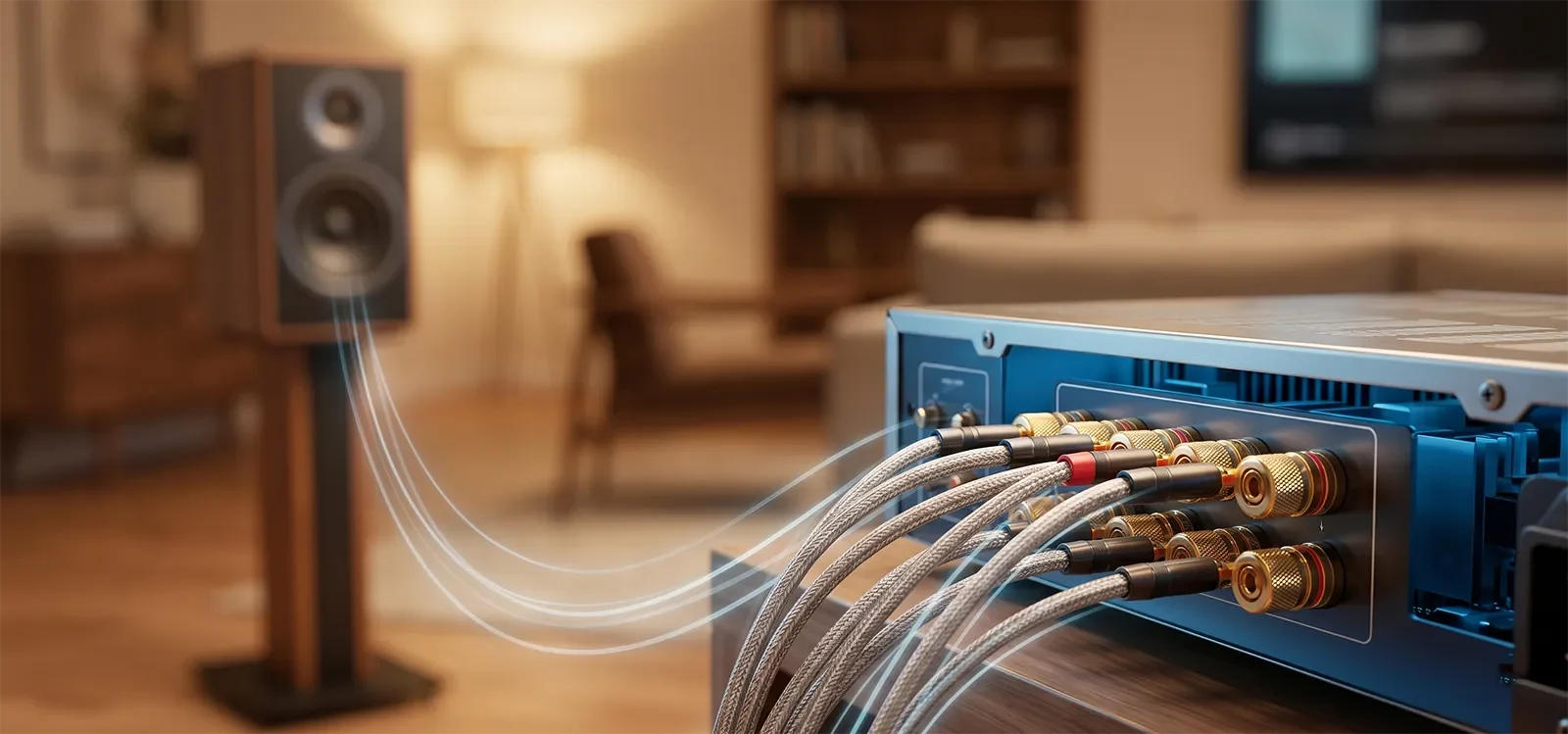
Table of Contents
- Quick Answer
- What speaker impedance actually means
- Why amplifier load matters
- 4 ohms vs 8 ohms in home karaoke
- What users actually notice at home
- Impedance vs loudness and power
- Common misunderstandings about speaker impedance
- A practical home-use rule
- Conclusion
- Frequently Asked Questions
- Related Posts
Quick Answer
Speaker impedance is the electrical load a speaker presents to an amplifier, usually shown as a number such as 4 ohms or 8 ohms. In home karaoke, that number matters because amplifiers are designed to work safely within certain impedance ranges. A lower impedance generally asks more from the amplifier, while a higher impedance is usually an easier load. What impedance does not tell you is whether a speaker will automatically sound better, play louder, or suit karaoke more naturally.
What speaker impedance actually means
In plain English, speaker impedance describes how difficult or easy a speaker is for an amplifier to drive from an electrical point of view. It is measured in ohms, but for home karaoke users the more useful idea is “load.”
A speaker with lower impedance usually places a heavier demand on the amplifier. A speaker with higher impedance is usually an easier load. That does not mean one is automatically better. It simply means the amplifier is being asked to work under different electrical conditions.
This is why amplifiers often list a supported impedance range. That label is not just a technical decoration. It tells you what kind of speaker load the amplifier is designed to handle safely and predictably.
Impedance is best understood as a matching concept. It helps answer whether a speaker and amplifier belong together in the same safe operating range.
Why amplifier load matters
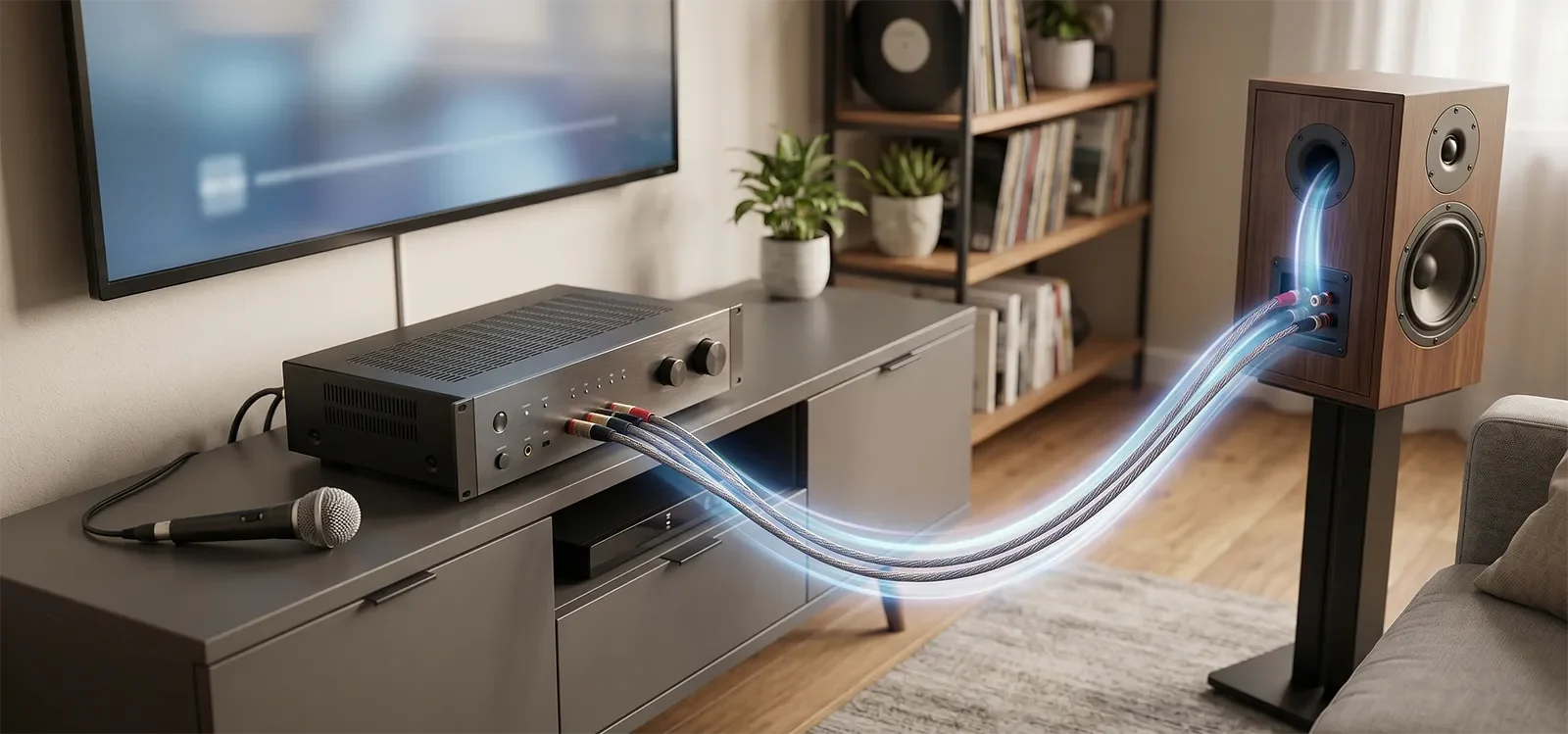
Amplifiers react differently depending on the load they are asked to drive. A lower-impedance speaker can require more current from the amplifier. If the amplifier is designed for that load, the system may operate normally. If it is not, the amplifier may run hotter, become unstable, or struggle to stay clean and controlled.
This is why impedance should never be separated from the amplifier’s stated limits. A speaker’s ohm rating only becomes meaningful when you compare it with what the amplifier is designed to support.
For example, a 4-ohm speaker is not automatically a problem. It becomes a problem if the amplifier is not designed to handle a 4-ohm load. An 8-ohm speaker is not automatically weak. It may simply be an easier load for many amplifiers.
In home karaoke, the goal is not to chase the lowest number. The goal is to keep the amplifier and speakers working together safely and realistically.
4 ohms vs 8 ohms in home karaoke
Many users see 4 ohms and 8 ohms and immediately try to rank them. That is the wrong way to read impedance. A 4-ohm speaker is not automatically more powerful or better. An 8-ohm speaker is not automatically less capable.
The better question is simple: can the amplifier safely drive the speaker load? If the amplifier supports 4-ohm speakers, then a 4-ohm match may be acceptable. If the amplifier only supports 8-ohm speakers, using a lower-impedance load can create risk.
For karaoke, this matters because systems are often used for long sessions, higher vocal levels, and family gatherings where the equipment may be pushed harder than casual music playback. A mismatch that seems fine for a short test may become less stable during extended use.
So the important difference between 4 ohms and 8 ohms is not prestige. It is amplifier demand and compatibility.
What users actually notice at home
Most home users do not notice impedance directly. They notice whether the system feels stable, controlled, and predictable. If the amplifier and speakers are matched sensibly, the system usually behaves normally and the user never thinks about ohms again. That is the best outcome.
If the match is not sensible, users may notice the amplifier running hot, shutting down, sounding strained, or behaving less confidently at higher levels. Those symptoms are not always caused by impedance alone, but impedance mismatch can be part of the problem.
Impedance is part of the foundation, not the whole house. A safe match helps the system operate properly, but it does not tell you how sensitive the speaker is, how easily it reaches a given loudness, or how natural the vocals will sound in the room.
That is why impedance should not be confused with speaker sensitivity for karaoke, which answers a different question.
Impedance vs loudness and power
One of the biggest mistakes is using impedance as a shortcut for loudness. A lower-ohm speaker may ask more from the amplifier, but that does not automatically mean it will sound louder in real use.
Loudness depends on several factors, including amplifier design, speaker sensitivity, power handling, room size, speaker placement, and listening distance. Impedance is only one part of the electrical relationship. It is not the same thing as acoustic output.
Power claims can also confuse the issue. A system may advertise different wattage at different impedance loads, but that does not mean every speaker match will produce a better karaoke experience. The amplifier still has to remain stable, clean, and appropriate for the speakers.
That is why this topic should stay separate from broader loudness concepts such as dB vs Watts: What Actually Matters. Impedance helps define the load. It does not replace real loudness judgment.
Common misunderstandings about speaker impedance
The most common misunderstanding is thinking that 4 ohms automatically means better, stronger, or louder. That is too simplistic. A 4-ohm speaker may place a heavier load on the amplifier, but that does not mean it will automatically outperform an 8-ohm speaker in a home karaoke room.
Another mistake is assuming impedance tells you how much power a speaker can handle. It does not. Power handling, sensitivity, efficiency, voicing, and sound character are separate ideas.
People also treat the printed ohm number as a perfect constant. In real audio behavior, impedance changes across frequency, but consumer labels simplify that behavior into a nominal value. For home users, the practical takeaway is not to obsess over the full curve. The useful lesson is to respect the nominal rating and match it to the amplifier’s supported range.
Impedance is important because it protects the system from bad assumptions. It is not important because it predicts everything about the final sound.
A practical home-use rule
The practical rule is simple: read impedance as a safe-matching number first, not as a bragging-rights number.
If your amplifier supports the speaker’s nominal impedance, that is the important starting point. If it does not, the mismatch matters more than any optimistic assumption about how powerful the system might seem on paper.
For home karaoke, the goal is not to chase the most impressive-looking ohm label. The goal is to avoid unsafe or unrealistic matching assumptions. Once the impedance match is sensible, you can judge the rest of the system by what users actually hear: vocal clarity, control, comfort, loudness, and room behavior.
That is the right mindset for this spec. It is foundational, useful, and worth understanding. It just should not be asked to answer more than it truly can.
Conclusion
Speaker impedance matters in home karaoke because it affects amplifier load and helps define what a safe speaker match looks like. It is a practical compatibility concept, not a score for loudness, quality, or automatic system superiority.
The best way to read impedance is calmly and narrowly. Let it guide safe matching and realistic expectations, then let other parts of the system explain the rest of the listening experience.
If the amplifier and speaker impedance are properly matched, the system has a stronger foundation. But the final karaoke result still depends on speaker sensitivity, amplifier quality, tuning, room behavior, and how clearly vocals sit in the mix.
Frequently Asked Questions
Does a lower-ohm speaker always sound louder in home karaoke?
No. A lower impedance can ask more from the amplifier, but that does not automatically mean the speaker will sound louder in real use. Loudness depends on more than impedance alone. Amplifier design, speaker sensitivity, power handling, room size, and overall system setup all matter.
Is 4 ohms better than 8 ohms for karaoke?
Not by itself. A 4-ohm speaker is not automatically better, and an 8-ohm speaker is not automatically weaker. The main issue is whether the amplifier is designed to handle that load safely and sensibly. Impedance is about matching and load, not a direct ranking of karaoke quality.
Can I judge speaker power handling from impedance alone?
No. Impedance does not tell you how much power a speaker can safely handle or how durable it is. It only helps describe the electrical load the speaker presents to the amplifier. Power handling, loudness expectations, and sound character each belong to different technical ideas.
Why is speaker impedance shown as one number if it changes with frequency?
Consumer labels usually use a nominal impedance value to simplify the speaker’s behavior into a practical category. That single number is not the full impedance curve, but it is the value most users need for basic amplifier matching. For home karaoke, that simplified number is usually the relevant starting point.
What happens if the amplifier does not support the speaker impedance?
The amplifier may run hotter, become unstable, shut down, distort more easily, or fail to control the speaker properly. The exact result depends on the amplifier design and how the system is used, but ignoring the supported impedance range is not a safe way to build a karaoke setup.
Impedance is easier to use when you keep it in the right lane.
Read how professionals tune karaoke systems for a more practical view of real system judgment