
Speaker voicing is the tonal personality of a speaker. In home karaoke, it helps explain why one system sounds smooth, natural, and easy to sing through, while another feels brighter, more forward, or more tiring even when the volume and specs look similar.
Written by Toan Ho — Tittac editorial team.
Who this guide is for: Home karaoke users who want to understand why different speakers can feel easier, sharper, smoother, or more aggressive before judging the system by specs alone.
How this guide was prepared: This guide was written by focusing on how speaker tuning, vocal clarity, room behavior, and long listening comfort affect real home karaoke use.
Home karaoke users often notice that two speaker systems can look similar on paper but feel very different once people start singing. One may sound relaxed and easy to enjoy. Another may sound more exciting at first, but sharper or more intense after a few songs.
That difference is often speaker voicing. In karaoke, voicing helps explain the tonal character a speaker brings into the room. It affects how vocals sit in the mix, how music supports the singer, and whether the overall sound feels natural, lively, soft, bright, or tiring over time. For a broader technical foundation, see our in-depth technical analysis of karaoke systems.
Quick Answer
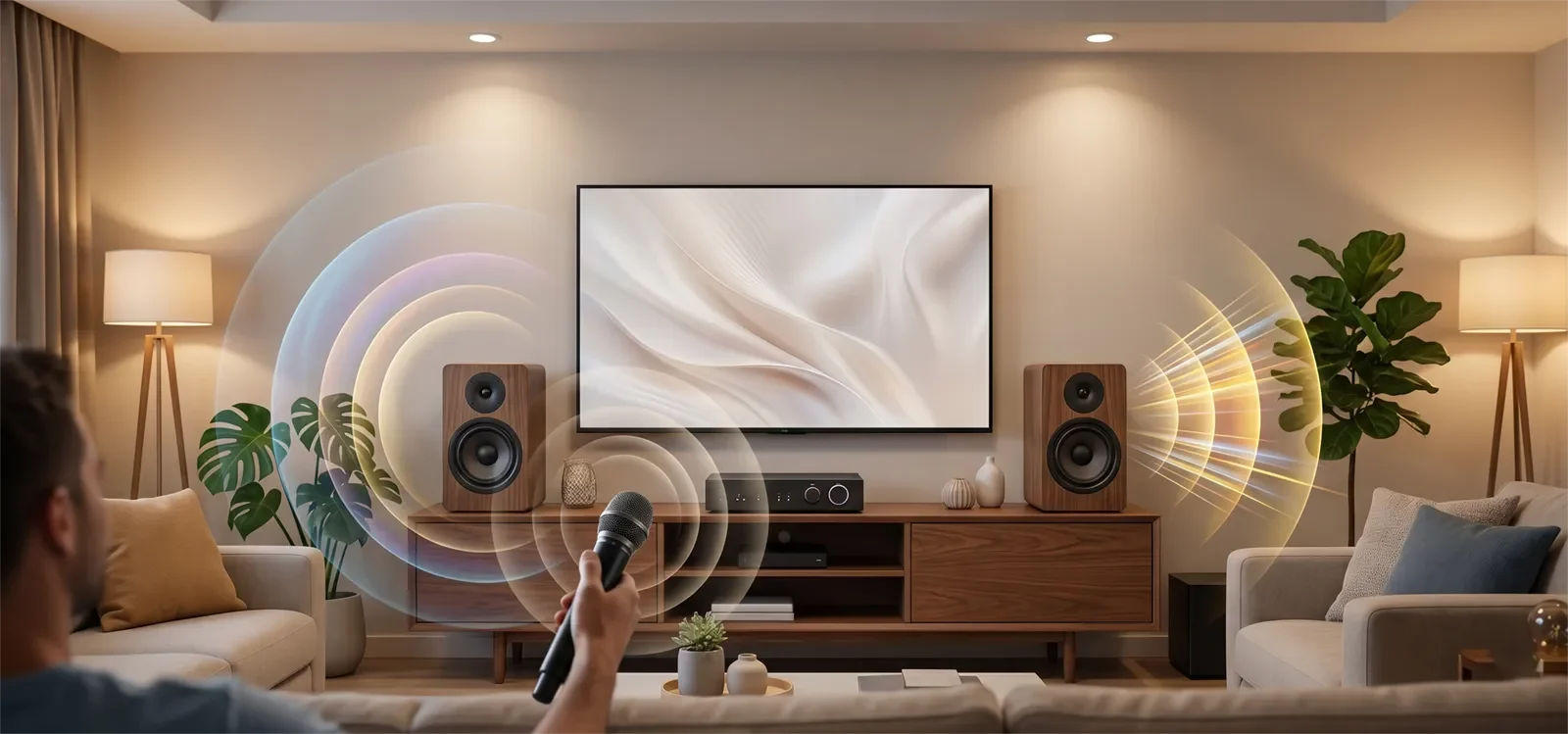
Speaker voicing means the overall tonal personality of a speaker. In home karaoke, it explains why one speaker may make vocals feel smooth, open, and comfortable while another sounds brighter, more forward, or more aggressive at the same listening level. Voicing is not the same as loudness, power, or quality by itself. It is the way a speaker is sonically shaped. This matters at home because karaoke is not only about getting loud. It is about keeping vocals clear, music balanced, and the room comfortable for real singing sessions.
Table of Contents
What speaker voicing actually means
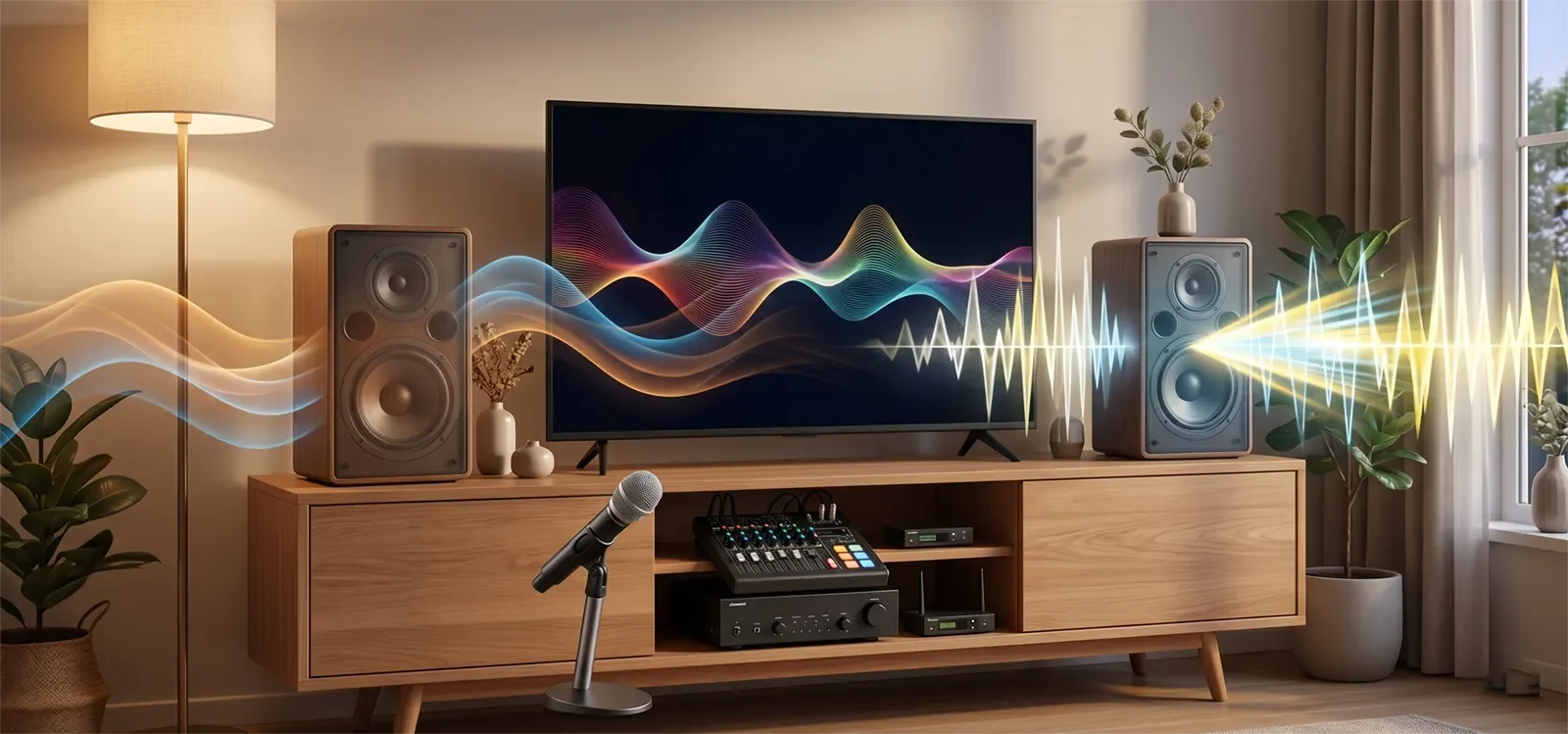
Speaker voicing is the tonal personality of a speaker as a whole. It is the reason one speaker feels smooth and natural while another feels brighter, more energetic, more direct, or more demanding. It is not one single knob or one simple number. It is the overall way the speaker presents sound.
In karaoke, voicing matters because the human voice sits in the part of the sound people notice most quickly. Small differences in tonal character can change whether a singer sounds supported, exposed, relaxed, thin, chesty, sharp, or slightly strained.
A speaker’s voicing includes how it handles vocal focus, upper detail, musical body, clarity, and comfort. Two speakers can both be usable for karaoke and still feel very different because each one pushes the listening experience in a different direction.
Why speaker voicing matters in home karaoke
Karaoke is different from casual background music. The system has to support live vocals, backing tracks, microphone tone, room reflections, and long listening sessions at the same time. That makes speaker voicing easier to notice.
A more forward voicing may make vocals feel immediate and exciting, but it can also become intense in a small or reflective room. A smoother voicing may feel less dramatic in the first few seconds, but easier to live with during a full family karaoke session.
Neither style is automatically good or bad. The point is that voicing changes how the system behaves in real use. It affects whether the vocal feels naturally placed in the mix or pushed too hard into the listener’s ear.
This is separate from the broader comparison between speaker categories. If you want that topic, see karaoke speakers vs. music speakers. This guide focuses only on the tonal personality a speaker brings to karaoke sound.
What users actually hear at home
At home, users often hear speaker voicing as the difference between “this sounds comfortable” and “this feels like too much.” One system may make vocals clear without making them edgy. Another may make consonants, treble detail, or upper vocal energy stand out more strongly.
That stronger sound can seem impressive in a short demo. But in a living room, where people sit closer to the speakers and walls may reflect sound, the same voicing can become tiring over time.
Music changes too. A smoother voicing may make the backing track feel connected and supportive. A more aggressive voicing may make the music feel exciting, but also busier, sharper, or less relaxed. This matters because karaoke should help the singer feel comfortable, not make the system feel like it is fighting the room.
Users may also notice that some systems make singing feel more natural. The voice seems to land where it should. Other systems make the singer feel slightly exposed, as if the vocal is being pushed forward too much. That is often a voicing difference, not simply a power difference.
Speaker voicing vs. speaker quality
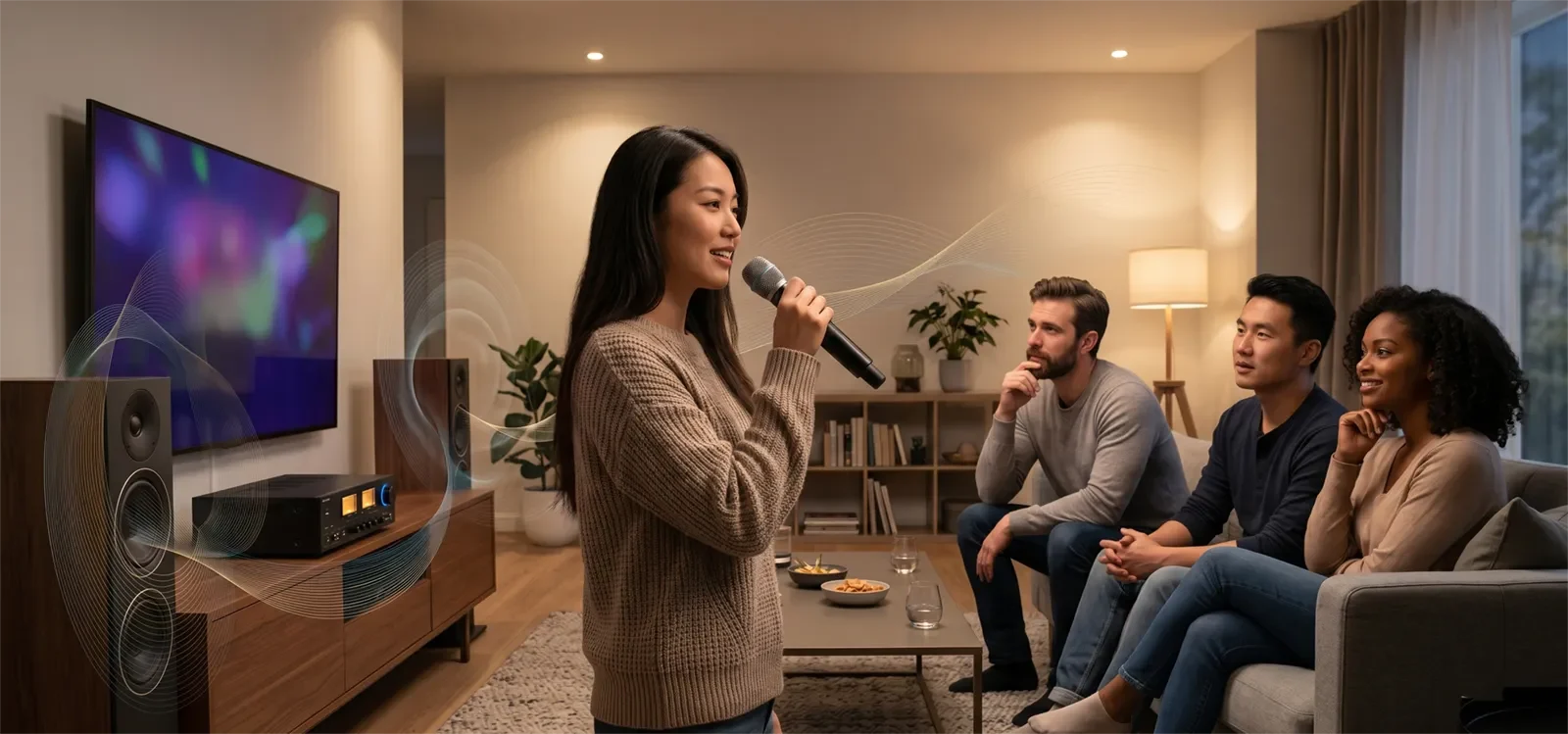
Speaker voicing is not the same as speaker quality. Quality is about how well a speaker is designed, built, controlled, and matched to the job. Voicing is about the tonal direction of the speaker.
A bright speaker is not automatically better because it sounds clearer at first. A smoother speaker is not automatically weaker because it feels less aggressive. A speaker can be well made but voiced in a way that is not ideal for a certain room, singer, or listening preference.
This is why specs alone do not tell the full story. Power rating, sensitivity, and size can describe parts of the speaker, but they do not fully describe whether the system will feel relaxed, forward, sharp, warm, clear, or easy to sing through at home.
What people often misunderstand
One common mistake is treating voicing as just another word for brightness. Brightness can be part of voicing, but voicing is broader. It includes whether the speaker feels smooth, full, forward, relaxed, thin, warm, lively, or aggressive.
Another mistake is assuming that a more exciting speaker is always better for karaoke. A speaker that grabs attention quickly may not always be the easiest speaker to enjoy for two hours in a home room. Karaoke comfort depends on vocal clarity, balance, and fatigue control, not only first impression.
People also confuse voicing with room problems. The room absolutely changes what you hear, but the speaker still brings its own tonal attitude into that room. A reflective room can make a bright or forward speaker feel even sharper. A crowded room can make a thick speaker feel heavier or more closed in.
If the sound is specifically sharp, biting, or tiring, that narrower issue belongs more directly to why some karaoke systems sound harsh at home. Speaker voicing is the broader concept behind those kinds of tonal differences.
A practical listening rule
A useful rule is this: speaker voicing is the reason a system can feel more natural or more forceful even when nothing obvious looks different on paper.
Listen over time, not only in the first few seconds. Does the vocal stay clear without becoming sharp? Does the music support the singer instead of competing with the voice? Does the system remain comfortable after several songs? Those answers often reveal more about voicing than raw specs do.
For home karaoke, good voicing should make the system easier to sing through and easier to enjoy in the actual room. It does not have to sound the most dramatic at first listen. It has to stay balanced, clear, and comfortable when people are really using it.
Conclusion
Speaker voicing in home karaoke means the tonal personality a speaker brings into the room. It helps explain why one system feels smooth, natural, and comfortable, while another feels brighter, more forward, or more intense even at a similar volume.
The key trade-off is simple: impressive sound at first listen is not always the same as comfortable sound in real home use. Once you understand speaker voicing, it becomes easier to judge why different speakers feel different with the same songs, the same room, and the same singer.
Frequently Asked Questions
Is speaker voicing the same as speaker quality?
No. Speaker voicing describes tonal personality, not total quality by itself. It explains why one speaker may feel smoother, brighter, more relaxed, or more forward than another. A good speaker can still have a voicing that may or may not fit your room and karaoke style.
Why does speaker voicing matter so much for karaoke?
Speaker voicing matters because karaoke depends on vocal comfort. A speaker that sounds exciting in a quick demo may become tiring during a longer singing session. A better home karaoke experience usually needs clear vocals, supportive music, and a sound character that stays comfortable over time.
Can speaker voicing affect how easy it feels to sing?
Yes. A speaker’s voicing can make vocals feel natural and supported, or exposed and intense. Since karaoke involves both listening and performing, tonal personality affects how comfortable the singer feels while using the system.
Is speaker voicing just another word for harshness?
No. Harshness is one possible result, but voicing is broader. Voicing includes the whole tonal character of the speaker, such as smoothness, brightness, warmth, forwardness, fullness, and energy. A speaker can have a clear voicing personality without sounding harsh.
Can EQ change speaker voicing?
EQ can adjust parts of the tonal balance, but it does not completely change the speaker’s natural character. A careful EQ adjustment may make a system more comfortable, but the speaker’s basic voicing, room behavior, and placement still matter.
If you want to move from concept-level understanding to smarter listening decisions, the next step is learning how experienced listeners judge system behavior calmly and practically.
Read how professionals tune karaoke systems for better home sound.