
If karaoke echo sounds too strong or too weak, the problem is usually not solved by turning one knob harder. Start by confirming whether the issue is really echo, bring extreme effect settings back to a moderate range, make the direct vocal clear, then adjust in small steps while singing real songs.
Who this guide is for: Home karaoke users who feel the vocal effect sounds wrong: too wet, too dry, too delayed, too messy, or uncomfortable to sing with even after adjusting echo up and down.
How this guide was prepared: This guide focuses on one setup problem only: karaoke echo balance. It is based on common home karaoke symptoms, showroom-style troubleshooting, and the order in which vocal problems should be checked before changing more settings.
Karaoke echo can make a normal home setup feel awkward even when the microphone, speakers, and music source are all working. Too much echo makes every phrase chase the next one. Too little echo can make the voice feel dry, exposed, and harder to sing with.
The key is to stop guessing. Many people blame echo when the real issue is weak microphone volume, music that is too loud, harsh room reflections, poor mic distance, or reverb blur. If you want the bigger setup picture before fixing this exact symptom, start with the Step-by-Step Home Karaoke Setup Guide.

Table of Contents
Quick Answer
To fix karaoke echo that sounds too strong or too weak, first decide whether the vocal problem is truly echo or whether it is weak direct vocal, loud music, reverb blur, room reflection, or feedback. Then reset extreme settings toward a moderate range, keep the singer’s direct voice clear, and adjust echo in small steps while singing a real song. The best home karaoke echo setting should make singing easier, not just make the voice sound bigger.
Confirm the Exact Symptom First
Before touching more controls, make sure the problem is really echo. In home karaoke, people often use the word “echo” for several different vocal problems.
Sometimes the vocal tail is clearly repeating too much. Sometimes the voice sounds washed out because of reverb or room reflections. Sometimes the microphone volume is too low, so the singer sounds buried behind the music and the effect gets blamed even though echo is not the root problem.
Do a simple listening test. Sing one familiar line at normal volume, then stop.
- If the vocal tail keeps bouncing back and distracts from the rhythm, echo is probably too strong.
- If the voice sounds spacious but not clearly repetitive, reverb or room reflection may be the issue.
- If the singer feels buried before the effect is even obvious, the problem is probably vocal balance.
- If the sound starts ringing or squealing, the issue may be closer to microphone feedback than echo.
This distinction matters because different symptoms need different fixes. Too much echo makes phrasing harder to control. Too little echo makes the voice feel stiff and uncomfortable. Weak direct vocals, overly loud music, and reflective rooms can all create similar complaints, but they should not be fixed the same way.
Test with a real song, not only a spoken phrase. A setting that sounds fine when saying “hello” into the microphone can feel completely wrong once music starts and the singer has to stay on time. Karaoke sound should be judged by how easy the whole mix feels to sing with.
Most Common Causes
Once you confirm the symptom, most karaoke echo problems fall into a few repeat patterns.
The Echo Level Is Too High
This is the most obvious cause. When the repeats become too noticeable, each phrase starts stepping on the next one. Fast songs feel messy. Slow songs may sound dramatic for a moment, but the vocal can quickly become tiring and unclear.
The Echo Has Been Turned Too Low
Many users react to a wet, messy vocal by dropping the effect too far. That can leave the voice dry, flat, and exposed. Casual singers often need some vocal space to feel comfortable. The goal is not zero effect. The goal is controlled support.
The Direct Vocal Is Not Clear Enough
If the singer’s dry voice is weak, thin, or buried under the music, the echo becomes harder to judge. A common mistake is adding more echo to make the voice feel bigger. That usually makes the vocal less clear instead of more present.
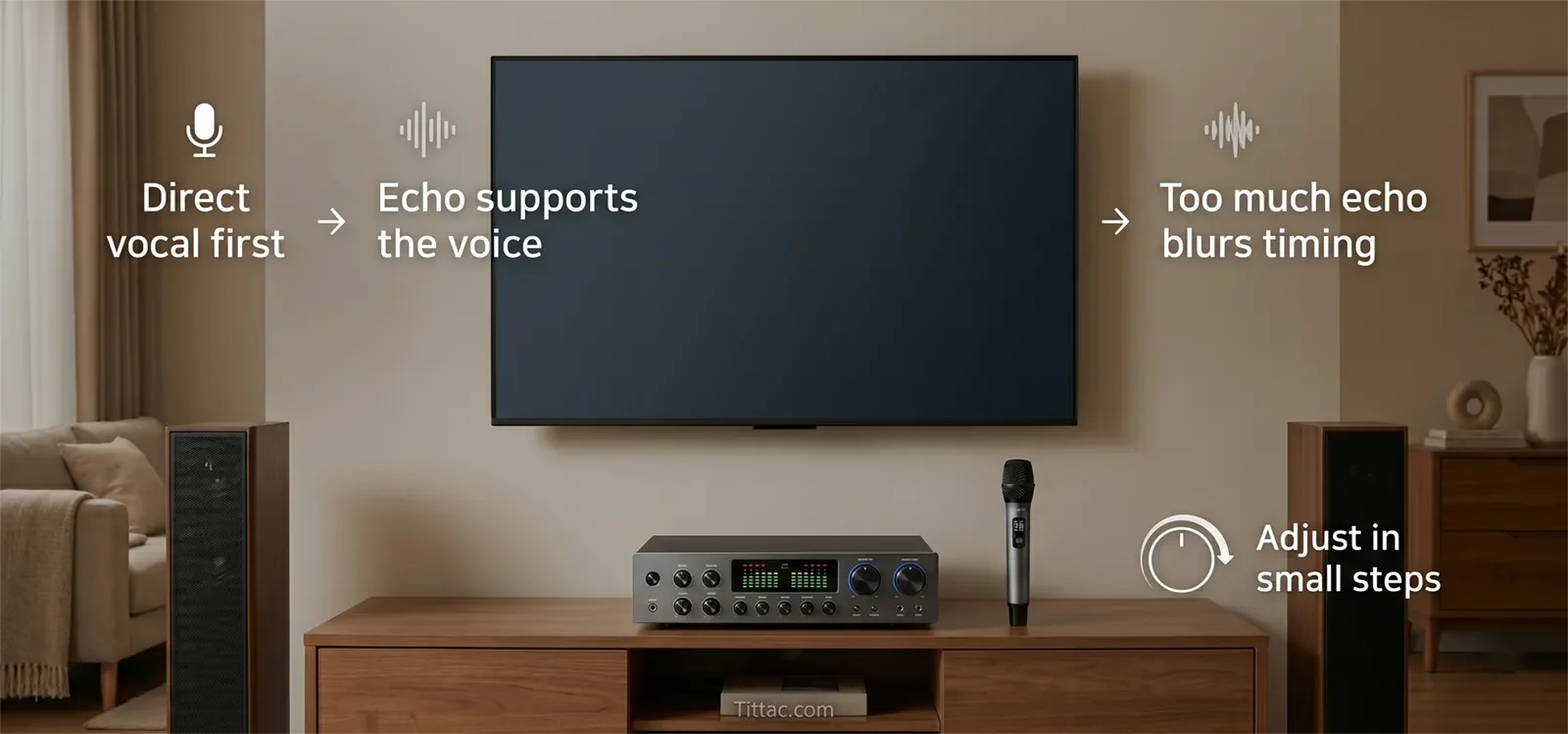
The Music Is Too Loud Compared With the Microphone
When the music dominates the mix, the singer may feel like the microphone is not helping enough. Increasing echo can make the voice seem larger for a few seconds, but it does not fix the real balance problem. In many homes, lowering the music slightly works better than adding more effect.
The Room Makes the Effect Sound Bigger
Hard walls, glass, tile floors, and open living rooms can exaggerate vocal tail. A moderate setting on the amplifier or mixer may still sound too wet once the room adds its own reflections.
Mic Technique Is Changing the Result
If the microphone is too far from the mouth, the direct voice gets weaker and the effect feels more dominant. If the singer is too close and pushing hard, even moderate echo can start to sound crowded. Different singers may need slightly different adjustments because their voices and mic habits are not the same.
The Problem Is Actually Feedback
If the sound rings, squeals, or builds up sharply when the microphone faces the speaker, the issue is not normal echo balance. Review how to stop microphone feedback before continuing to push the effect section.
The useful pattern is simple: echo problems are rarely solved by one blind adjustment. They are usually solved by rebuilding a cleaner starting point, making the direct vocal easier to hear, and using echo to support the voice instead of covering up a weak mix.
Step-by-Step Fix Order
The fastest way to fix karaoke echo is to work in a repeatable order. This keeps the system stable and helps you hear what each change is actually doing.
1. Reset Extreme Settings Toward the Middle
If the echo is obviously huge or almost gone, bring it back toward a moderate starting point. You do not need the perfect setting yet. You only need to get out of the extremes so the vocal becomes easier to judge.
2. Listen to the Direct Vocal First
Before adding more effect, make sure the singer’s core voice is reasonably clear. If the direct vocal already sounds buried, weak, or awkward, echo will be difficult to balance correctly.
3. Lower the Music Slightly If the Vocal Feels Lost
Many home users try to fix buried vocals with more echo. A smarter first move is often reducing the music just enough for the singer’s voice to sit naturally in front of the track.
4. Sing a Real Song
Do not make the final decision from a quick test word. Echo settings behave differently once real phrasing, timing, and music energy are involved. Sing a familiar verse and chorus before deciding whether the setting is right.
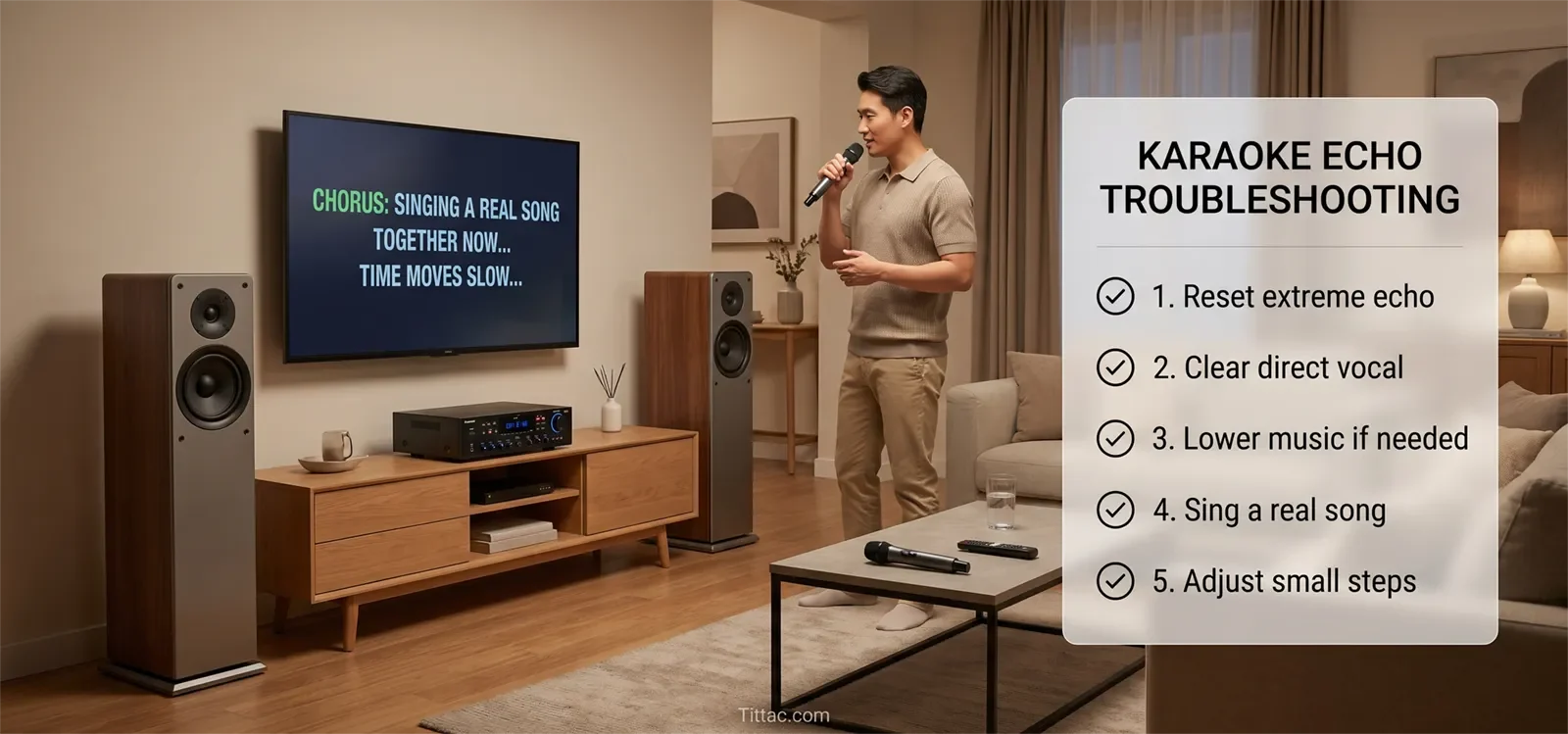
5. Adjust in Small Steps
Echo is easy to overcorrect. Make one small change, sing again, then stop when the voice feels easier to control. If you keep turning past the comfortable point, the vocal can quickly become messy.
6. Avoid the “Bigger but Worse” Trap
Heavy echo can sound impressive for a few seconds because the room feels fuller. But if the vocal tail crowds the next line, hides pronunciation, or makes timing harder, the setting has gone too far.
7. Recheck Mic Distance
If one singer sounds fine and another suddenly makes the echo feel wrong, do not assume the system changed. The singer may be holding the microphone too far away, too close, or at an inconsistent angle.
8. Stop Adjusting Echo If the Real Problem Is Microphone Volume
If the singer still feels buried even with moderate echo, the next step is usually not more effect. The better next step is to improve how the direct vocal sits in the mix. In that case, review Fixing Low Microphone Volume before continuing to chase echo settings.
This order works because it follows the way the singer experiences sound: direct voice first, effect around the voice second, then balance against the music. That makes the setup easier to repeat and less likely to drift into new problems.
When the Problem Is Actually Somewhere Else
Not every bad vocal feel is truly an echo problem. Echo often gets blamed because it is easy to hear, but the root issue may start earlier in the karaoke chain.
One common example is poor vocal balance. If the music is too dominant or the microphone level is too low, the user may keep increasing echo because it makes the vocal seem larger for a moment. But the voice is still not sitting clearly in front of the track.
Another example is room behavior. A reflective room can make a normal effect setting feel excessive. The amplifier or mixer may not be set too high, but the room adds extra bounce that makes the vocal sound less controlled.
There are also times when the complaint is really about comfort, not effect amount. A singer may say, “The echo feels wrong,” when the real problem is that the voice sounds too exposed, too buried, too sharp, or unstable. That is why the best fix is not always “more” or “less.” Sometimes it is a clearer direct vocal, quieter music, better mic position, or less feedback risk.
If your karaoke system sounds harsh, strained, or overloaded rather than simply too wet or too dry, review Why Your Karaoke System Sounds Distorted. Distortion and echo problems can happen at the same time, but they are not the same issue.
Best Home Starting Point
For most home karaoke systems, the best starting point is a clear direct vocal with enough echo to make singing comfortable, but not enough to make timing messy.
A good home setting usually has these qualities:
- The singer’s main voice stays clear in front of the music.
- The echo supports the voice without becoming the loudest part of the vocal.
- Words remain easy to understand.
- Fast songs do not feel crowded.
- Slow songs feel smooth without turning blurry.
- Different singers can use the system without constant major changes.
If the vocal feels dry and uncomfortable, add a little effect. If the vocal feels cloudy, delayed, or hard to time, reduce the effect. If the singer still feels buried after that, fix the microphone and music balance before changing echo again.
The right echo setting is not the one that sounds most dramatic by itself. It is the one that lets people sing longer, stay on time, hear themselves clearly, and enjoy the song without fighting the system.
Conclusion
Fixing karaoke echo becomes easier once you stop treating it like a single magic setting. In most homes, the best result comes from confirming whether the issue is really echo, resetting extreme effect levels, keeping the direct vocal clear, and making small adjustments during real songs.
The right setting should make singing feel easier, not just bigger. For most households, that means enough vocal space to feel comfortable, but not so much tail that timing, clarity, or stability fall apart. If the voice still feels wrong after moderate echo adjustments, the problem is often larger than echo alone.
If you want to rebuild your whole vocal setup in the right order, use the full setup guide below.
See the Step-by-Step Home Karaoke Setup Guide
Frequently Asked Questions
Why does my karaoke echo sound fine when I test the mic but bad during songs?
Because the full mix changes how the vocal effect feels. Once music is playing, the direct voice may become harder to hear and the echo may start crowding the timing. Testing with real songs is more reliable than judging echo from a short spoken phrase.
Should I remove almost all echo if the vocal sounds messy?
Not always. If the setting is clearly too wet, reduce it, but do not assume a nearly dry vocal is automatically better. Many casual singers feel more comfortable with some support around the voice. The goal is controlled echo, not no echo.
Can room acoustics make normal echo sound too strong?
Yes. Reflective rooms can make a moderate echo setting feel larger because the room adds its own bounce and spaciousness. This is why the same system can sound smooth in one home and too wet in another.
Why do different singers want different echo levels?
Different voices, singing styles, and microphone habits change how echo feels. A strong singer may want less support because the direct vocal is already clear. A softer singer may feel more comfortable with slightly more space around the voice.
Is echo the same as reverb?
No. Echo usually creates a more noticeable repeat or tail after the voice. Reverb creates a smoother sense of space. Many karaoke users call both “echo,” but they affect vocal clarity differently.
What should I check if echo adjustments do not fix the problem?
Check microphone volume, music volume, speaker position, room reflection, mic distance, and feedback risk. If the singer still sounds buried or unstable, the root problem is probably not echo alone.