
The best outdoor karaoke setup is usually a compact, controlled layout near power, with protected equipment, one clear singing zone, and speakers aimed toward the people actually listening. For most backyards and patios, a simple portable-friendly setup works better than trying to recreate a full indoor karaoke room outside.
Who this guide is for: Home users planning karaoke in a backyard, patio, deck, or casual outdoor party area who want the setup to feel fun, clear, and manageable.
How this guide was prepared: This article was rebuilt as an outdoor karaoke setup guide. It focuses on practical layout, power access, weather protection, speaker direction, wireless microphone behavior, and guest flow instead of turning the topic into a buying guide or a deep technical article.
Outdoor karaoke can be more relaxed than indoor karaoke because people have room to move, talk, and gather casually. But outside, the setup has less help from walls, nearby outlets, fixed furniture, and familiar speaker positions. Sound spreads differently. Cables become more visible. Weather becomes part of the plan.
The goal is not to make the whole yard loud. The goal is to create one comfortable karaoke zone where singers can see the lyrics, guests can hear clearly, and the equipment stays easy to manage. If you want the broader full-system setup order first, start with the Step-by-Step Home Karaoke Setup Guide.
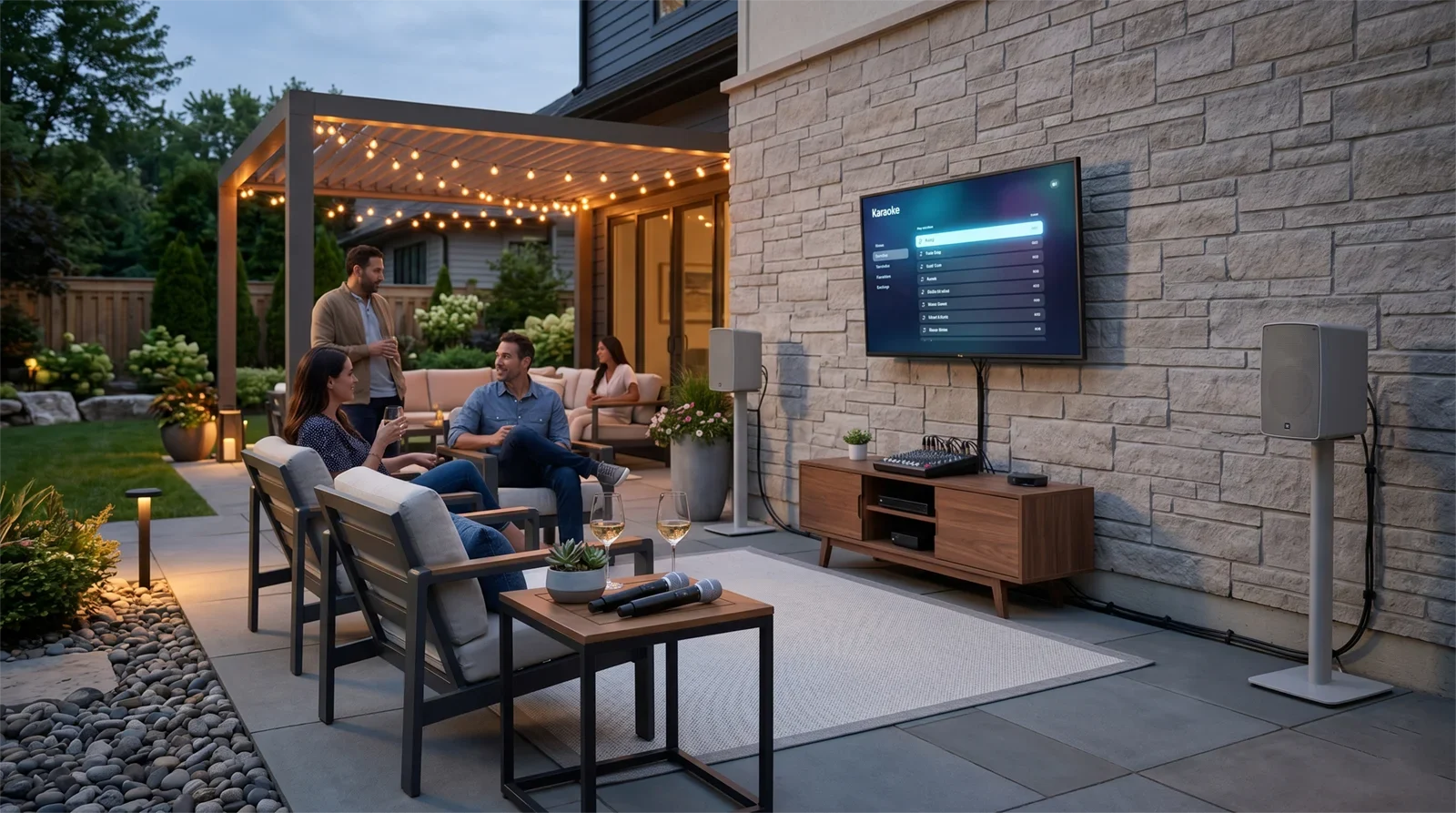
Table of Contents
Quick outdoor setup rule
For most outdoor karaoke nights, keep the system close to the house, aim the sound at one defined guest area, and avoid spreading the setup across the yard. A smaller, controlled karaoke zone usually works better than a wide, messy layout that is harder to power, protect, and troubleshoot.
A good outdoor karaoke setup usually has four clear parts:
- One screen area: where singers can see lyrics without squinting or turning awkwardly.
- One singing zone: where one or two people can sing comfortably.
- One listening zone: where guests can sit, hear clearly, and still feel part of the performance.
- One control area: where the main system, power, and cables stay organized and protected.
This structure keeps the event simple. Guests know where to watch. Singers know where to stand. The host can adjust the system without walking across the yard every few minutes.
Real constraints of outdoor karaoke
Outdoor karaoke feels easy because there is more space, but that space can also work against you. Indoors, walls help contain the sound. Outdoors, the sound spreads out quickly. A system that sounded strong in the living room may feel smaller outside, especially if the speakers are aimed into open space instead of toward the guests.
The first constraint is coverage. Many people try to solve outdoor sound by turning everything louder. That often creates harsher sound without making the karaoke area more comfortable. A better approach is to choose the listening area first, then aim the speakers toward that area.
The second constraint is power. Outdoor karaoke becomes harder when the system is far from safe power access. Long cables across walkways create tripping hazards and make the setup feel temporary in the wrong way. Staying near the house, patio, or covered deck usually makes the night easier.
The third constraint is weather. Even when there is no rain, outdoor equipment may face direct sun, wind, dust, evening moisture, or sudden temperature changes. The setup should be easy to cover, move, or shut down if conditions change.
The fourth constraint is guest behavior. Outside, people move more. They walk away from the screen, talk between songs, pass microphones around, and treat the event more casually. That is part of the fun, but it also means the karaoke zone must be obvious enough for people to follow naturally.
Outdoor karaoke works best when you think of it as a temporary event zone, not a permanent karaoke room. The setup should sound clear, stay safe, and remain easy to manage from the first song to cleanup.
Best layout for backyards and patios
The best outdoor karaoke layout usually starts near the house, not in the middle of the yard. A covered patio edge, deck wall, garage-side area, or firm hard-surface corner often works better than an open lawn because it gives the setup a natural anchor.
That anchor matters. It keeps power closer, gives the screen a more stable location, reduces cable mess, and makes the whole event feel organized. Even in a large backyard, a compact layout often feels better than a spread-out setup.
For most homes, use this layout pattern:
- Place the screen and main controls near a stable wall, table, or covered area.
- Create a small singing zone directly in front of the screen.
- Place guest seating facing the same general direction.
- Aim speakers toward the seating area, not into the open yard.
- Keep cables away from walking paths whenever possible.
This kind of layout also makes setup and cleanup faster. You are not dragging equipment across the lawn, running long cables, or chasing sound problems from multiple corners of the yard.
If you are deciding whether the outdoor event should stay portable or become more built-out, compare the trade-offs in Portable vs Full-Size Karaoke Systems. Outdoors, carry weight, setup time, and practical coverage matter more than many people expect.
Speaker, screen, and microphone placement
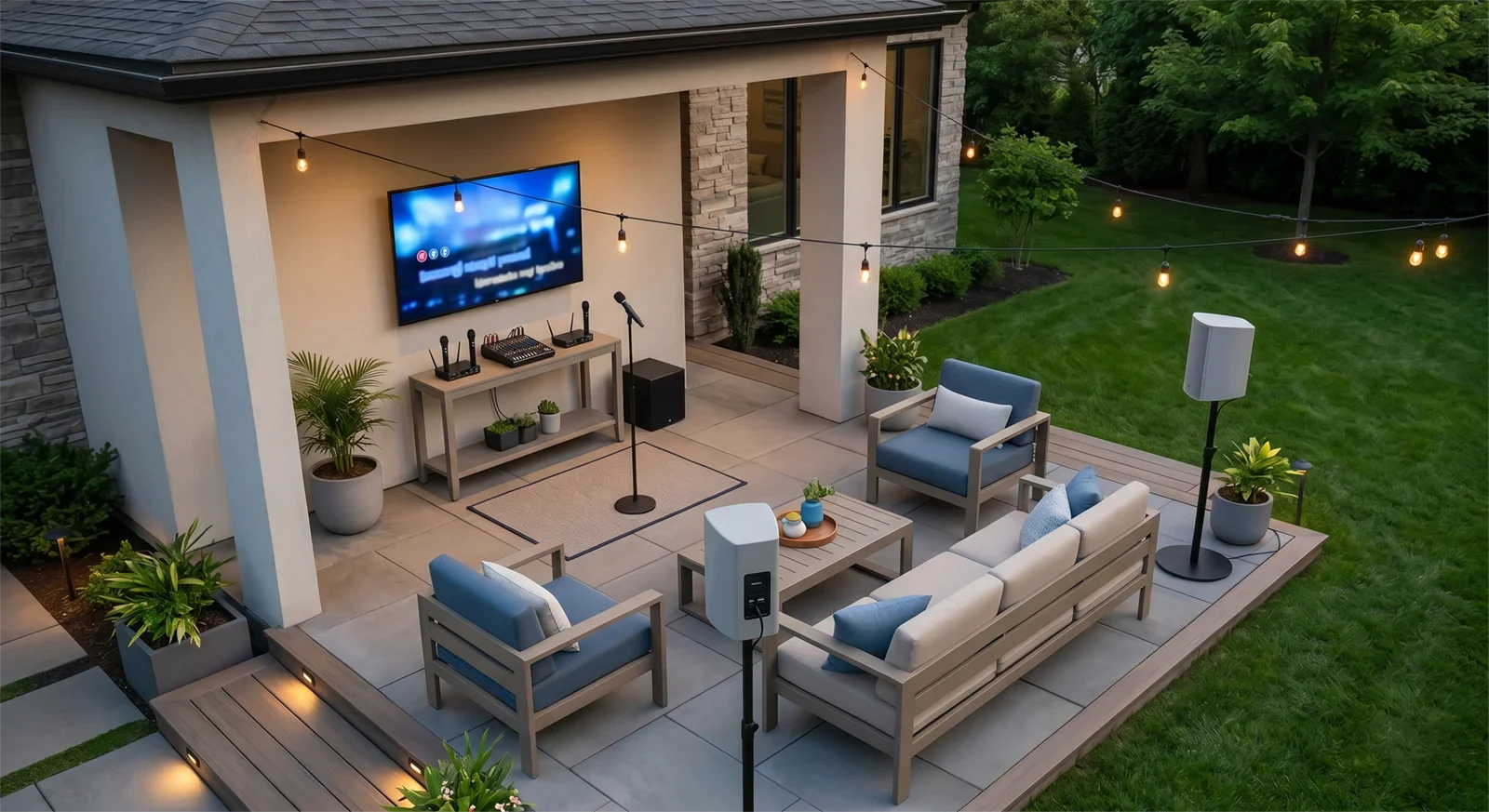
Outdoor karaoke becomes much easier when the screen, speakers, and microphones all support the same simple layout. Do not treat each piece separately. The singer needs to see lyrics, hear the music, hold the microphone comfortably, and stay within the area where the system sounds balanced.
Screen placement
Place the screen where singers can read lyrics without turning away from the audience. Avoid glare, long viewing distance, and awkward angles. If the screen is too far away or too small, singers naturally drift closer, and the performance zone starts to collapse.
Speaker placement
Aim the speakers toward the main guest area instead of trying to cover the entire backyard. A defined audience zone usually sounds clearer than wide speaker placement aimed into open space.
Keep speakers stable, slightly elevated when possible, and away from areas where guests may bump into them. If you need more help with placement logic, use How to Position Speakers for Karaoke as the next setup guide.
Wireless microphone placement
Wireless microphones are often more practical outdoors because singers move naturally in open spaces. But freedom still needs boundaries. Give singers a clear area to stand, keep the receiver or main system close enough for reliable use, and avoid letting microphones wander too far from the screen and speakers.
If you are still choosing microphones for outdoor use, How to Choose Wireless Microphones for Karaoke is the better next step. For outdoor parties, battery readiness and easy handling matter just as much as sound quality.
Guest flow
Outdoor karaoke works best when the event center is obvious. One area is for singing. One area is for guests. One area is for controls. When those zones feel natural, people usually follow them without the host needing to explain everything.
A good outdoor setup should feel social, not scattered. The more clearly you define the center of the event, the easier it is to keep sound, screen viewing, microphone use, and guest attention under control.
When portable or simpler gear makes more sense
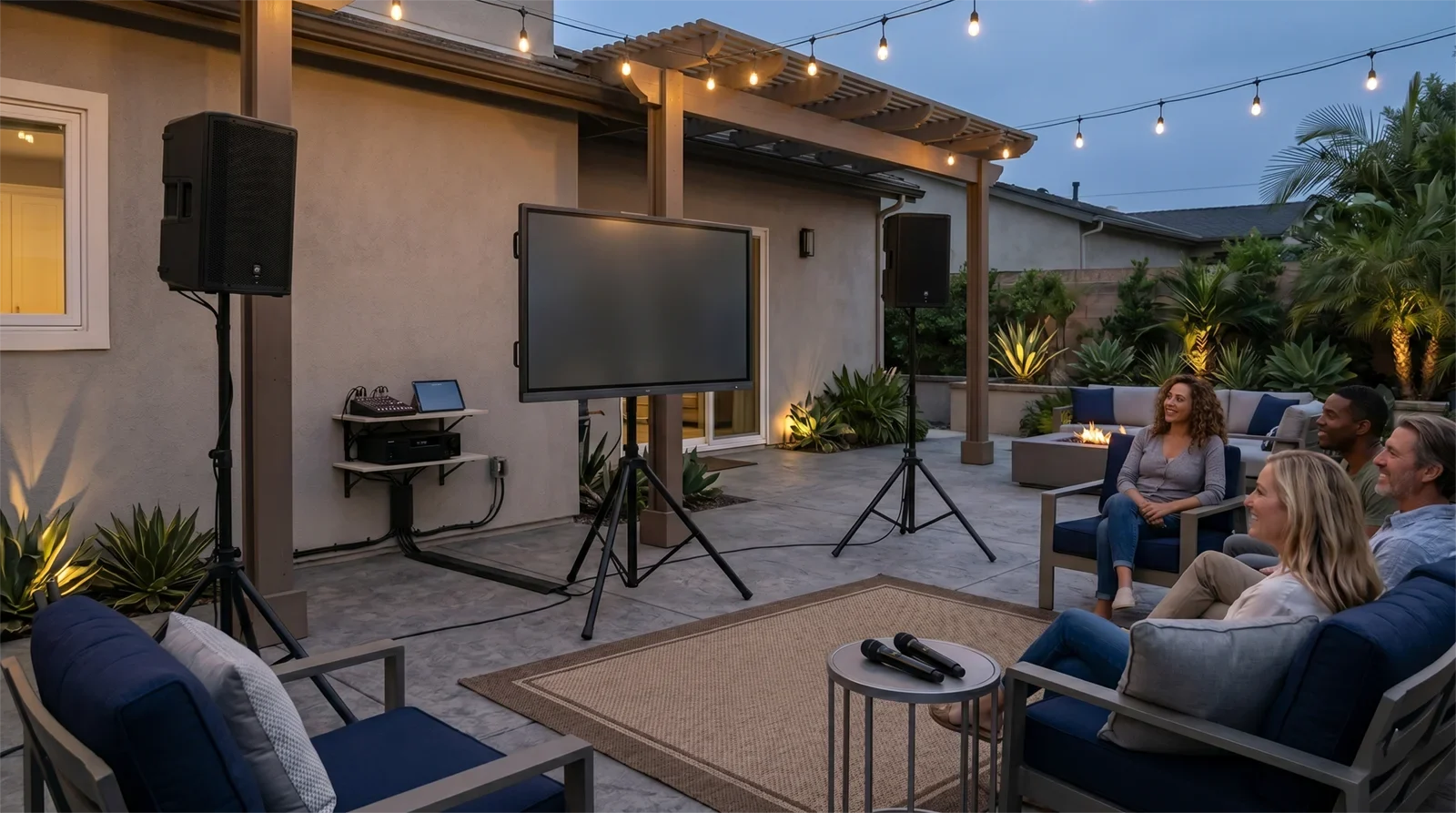
Not every outdoor karaoke event needs a full-size system. In many homes, a portable or simplified setup is the better choice.
Portable gear often makes more sense when the karaoke is occasional, the guest count is moderate, the session is part of a larger party, or the host wants a setup that can be carried out, started quickly, and put away without stress.
Simpler gear also helps when weather is uncertain. If you may need to move the setup quickly, cover equipment, shorten the session, or bring everything back inside, portability becomes a real advantage.
A compact setup is also better for many patios and smaller backyards. Outdoor spaces can feel large when empty, but once you add tables, chairs, food, kids, and guest movement, the usable karaoke area may be much smaller than expected.
Choose simpler gear when:
- Karaoke is only one part of the gathering.
- You want fast setup and cleanup.
- You do not want long cable runs outdoors.
- The event is casual, social, or family-focused.
- You need the option to move the system quickly.
A larger setup can still make sense for bigger gatherings, frequent outdoor entertaining, or homes with a very clear patio zone and strong power access. But for most families, the best outdoor karaoke setup is the one that balances fun with manageability.
Outside, portability is not a compromise. It is often what keeps the night comfortable.
Frequently Asked Questions
Is outdoor karaoke better than indoor karaoke?
Outdoor karaoke is often better for backyard parties, birthdays, and casual gatherings because it gives people more room and a relaxed atmosphere. Indoor karaoke is usually easier for regular use because power, weather, screen placement, and sound control are simpler.
Do I need a much louder karaoke system outdoors?
Not always. Outdoor spaces need better coverage planning, but that does not automatically mean you need the loudest system possible. For most homes, clear sound in one defined listening area is better than trying to fill the whole yard.
Are wireless microphones good for outdoor karaoke?
Yes. Wireless microphones are often practical outdoors because singers move more naturally. The key is to keep a clear singing zone, use fresh or fully charged batteries, and avoid letting microphones drift too far from the main system.
Where should I place speakers for outdoor karaoke?
Place speakers so they face the main guest area, not the open yard. Keep them stable, protected, and positioned to support the singing zone and seating area together.
What is the easiest outdoor karaoke layout?
The easiest layout keeps the screen and main gear near the house, creates a small singing zone in front of the display, and places guests facing that same direction. This usually works better than spreading equipment across the yard.
If your outdoor karaoke night is part of a real gathering, the next step is planning the flow of songs, guests, and hosting details so the party feels natural once people arrive.
Read the Home Karaoke Party Guide