












Black tourmaline is one of the easiest dark stones to understand in healing jewelry because its symbolism is direct: grounding, steadiness, protection symbolism, and personal boundaries. Its black color also makes it practical for everyday wear, especially for people who want meaningful jewelry that feels strong without looking ornate.
Who this guide is for
This guide is for readers who are specifically interested in black tourmaline and want a clear, practical explanation of what it traditionally symbolizes in jewelry use. It is also helpful if you want a darker stone that feels grounded, neutral, and easy to wear daily.
How this guide was prepared
This article was prepared as Tittac’s dedicated black tourmaline profile page. It keeps the focus on black tourmaline only, uses careful symbolic language, and links to broader guides for protective stones, root-chakra symbolism, intention-based choosing, and jewelry care where those topics need their own space.
Quick Answer
Black tourmaline is traditionally associated with grounding, protection symbolism, steadiness, and personal boundaries. In healing jewelry, it is often chosen by people who want a stone that feels solid, centered, and easy to style. A simple way to understand black tourmaline is this: it is a strong everyday stone for people who want symbolic grounding without bright color, delicate styling, or complicated meaning.
This article discusses black tourmaline in a symbolic, spiritual, and mindfulness-oriented context. It does not make medical claims and should not replace diagnosis, treatment, therapy, medication, or professional care.
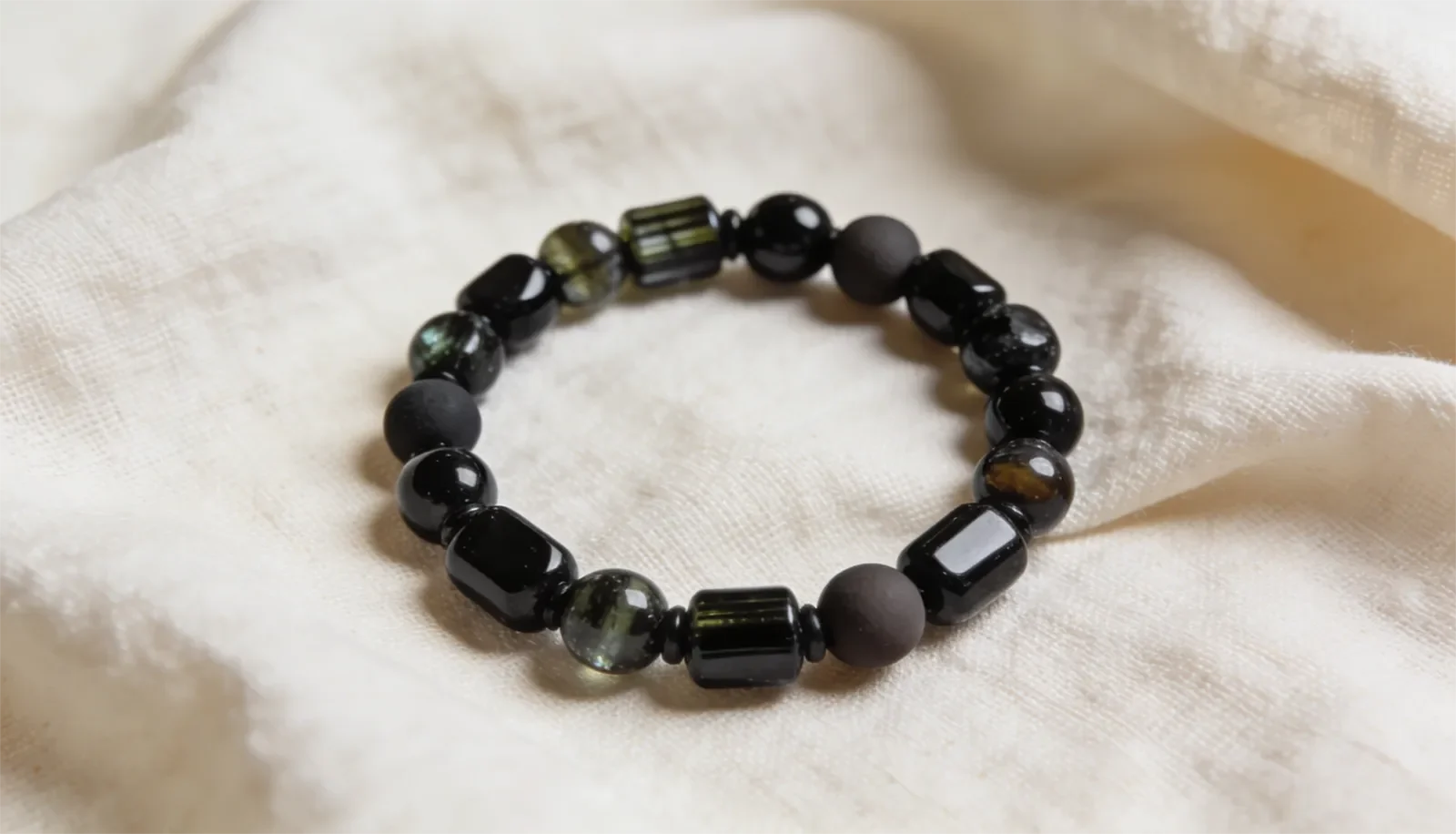
Table of Contents
What black tourmaline traditionally symbolizes
Black tourmaline is traditionally associated with grounding, protection symbolism, steadiness, and stronger personal boundaries. Many people choose it as a symbolic reminder to stay centered, feel more anchored, and move through the day with a clearer sense of personal space.
Its black color plays a major role in how people interpret the stone. Dark stones are often associated with stability, seriousness, depth, and protection-oriented meaning. In jewelry, that gives black tourmaline a direct presence without needing bright color or decorative detail.
Black tourmaline is often discussed alongside root-chakra symbolism because both are connected with grounding themes in spiritual and mindfulness-oriented language. For that broader framework, read Root Chakra Guide. For a wider index of stone meanings, visit Healing Stones & Crystal Meanings.
Why people choose black tourmaline
People often choose black tourmaline because the meaning feels clear and the look is easy to live with. It is commonly linked with protection symbolism and grounding in a way that feels practical rather than delicate or romantic.
Visually, black tourmaline is also simple to style. It works with casual clothing, work outfits, neutral wardrobes, and darker color palettes without demanding much adjustment. That makes it appealing for people who want healing jewelry they can wear often, not just on special occasions.
For many wearers, black tourmaline becomes a personal reminder of steadiness. It may represent staying grounded, keeping healthy boundaries, or feeling less scattered in daily life. That meaning is symbolic and personal, not scientific or guaranteed, but it can still make the piece feel useful and intentional.
If you are deciding between black tourmaline, obsidian, and hematite, read Protective Stones Compared. This page stays focused on black tourmaline itself.
How to wear black tourmaline jewelry
Black tourmaline works especially well in everyday jewelry because the color is neutral and the symbolism is straightforward. It can feel strong without being flashy, which makes it a practical choice for daily wear.
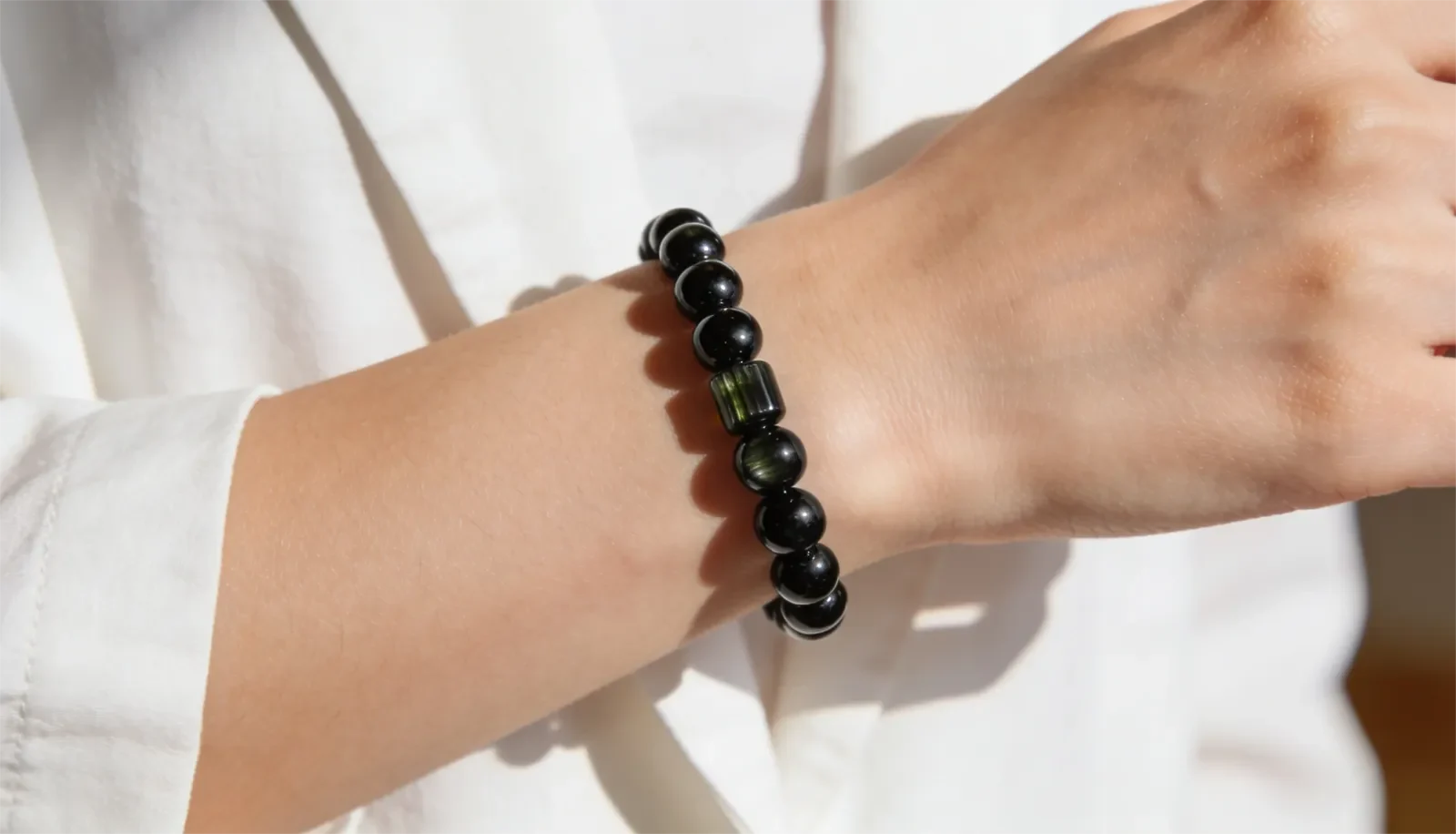
- Bracelet: A simple daily option when you want the stone visible and easy to wear.
- Pendant: A good choice when you want black tourmaline to feel more central and symbolic.
- Accent stone: Useful when you want grounding symbolism without making the entire piece dark.
- Minimal design: Best when you want the stone to feel steady, clean, and uncluttered.
If you want black tourmaline to feel understated, choose smaller beads, smooth shapes, or simple metal settings. If you want a stronger visual effect, larger beads or a chunkier focal stone can give the piece more presence.
The best black tourmaline piece is the one that fits your real routine. Symbolism matters, but comfort, scale, weight, and whether the design works with your daily wardrobe matter just as much.
Styling and pairing notes
Black tourmaline pairs easily with silver-toned metals when you want a clean, modern look. Silver, stainless-steel tones, and white-toned settings usually create a crisp contrast with the dark stone.
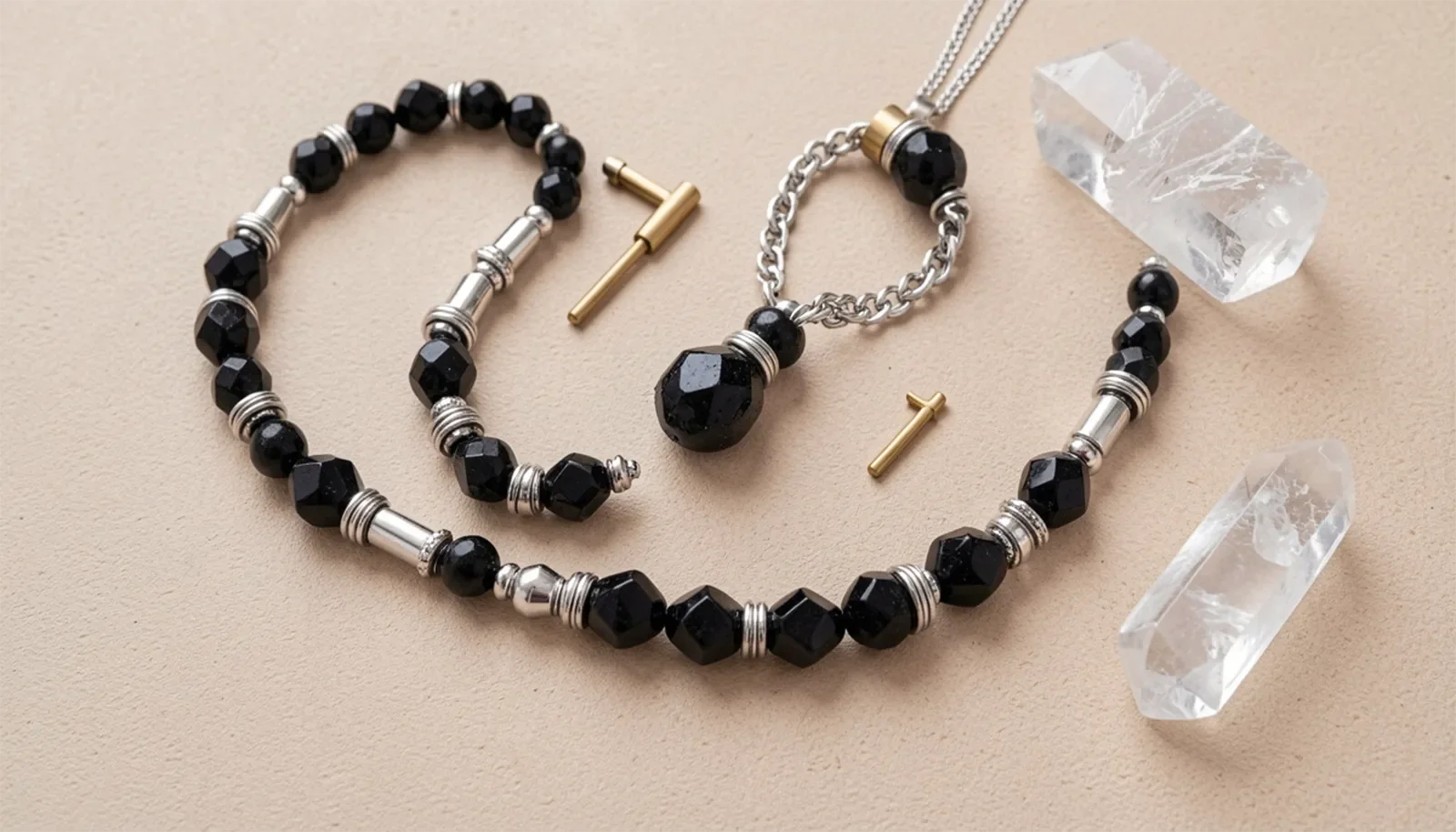
If you prefer a warmer or slightly dressier look, yellow gold or brass-toned details can soften black tourmaline and make the piece feel more elevated. The right metal depends on whether you want the jewelry to feel modern, earthy, understated, or bold.
In clothing, black tourmaline works with almost everything because black is so adaptable. It looks especially natural with white, gray, charcoal, beige, denim, olive, navy, brown, and other grounded tones.
You can mix black tourmaline with other stones, but the best combinations usually stay intentional. Too many competing stones can make the meaning and design feel less clear. If your real question is which protection-symbolism stone fits you best, use Protective Stones Compared.
Care and shopping notes
Black tourmaline jewelry should be treated like jewelry first. Avoid unnecessary impact, store it thoughtfully, and pay attention to how often the piece will be worn. A stone can feel strong symbolically while still needing practical care.
Shopping clarity matters too. Look for clear naming, believable photos, and material disclosure that does not rely on inflated promises. A meaningful black tourmaline piece does not need to claim that it scientifically blocks negative energy, guarantees protection, or changes your life to be worth wearing.
For broader cleaning, storage, and symbolic care guidance, read How to Cleanse & Care for Healing Jewelry. If you are curious about symbolic charging practices and light exposure questions, read Moonlight vs. Sunlight Charging.
Bottom line: Black tourmaline is a strong choice for readers who want healing jewelry that feels grounded, visually neutral, protective in symbolism, and easy to wear without needing a complicated styling system.
FAQ
What is black tourmaline associated with?
Black tourmaline is traditionally associated with grounding, protection symbolism, steadiness, and personal boundaries. Many people choose it as a symbolic reminder to stay centered and feel more anchored.
Is black tourmaline a good beginner stone?
Yes. Black tourmaline can be beginner-friendly because its symbolism is straightforward and its dark neutral color is easy to wear with everyday clothing.
Can I wear black tourmaline every day?
Many people can wear black tourmaline jewelry daily, depending on the design and setting. The practical question is whether the piece fits your style, comfort, scale preferences, and routine.
How is black tourmaline different from obsidian?
Black tourmaline and obsidian are both dark stones often linked with grounding or protection symbolism, but they are different materials and should not be treated as interchangeable. For a fuller comparison, read Protective Stones Compared.
What metal pairs well with black tourmaline?
Silver-toned metals often create the cleanest contrast with black tourmaline. Yellow gold or brass-toned details can also work well if you want the piece to feel warmer or slightly dressier.
Does black tourmaline scientifically block negative energy?
No. Protection language around black tourmaline should be understood symbolically, spiritually, or personally. It should not be treated as a scientific claim or guaranteed outcome.
Is black tourmaline connected to the root chakra?
Many people connect black tourmaline with root-chakra symbolism because both are associated with grounding themes. For a broader explanation, read the Root Chakra Guide.
Can black tourmaline be mixed with other stones?
Yes, but it usually works best when the combination stays simple and intentional. If the goal is grounding, choose stones and colors that support that feeling instead of creating a busy or confusing design.
Need help choosing black tourmaline jewelry?
If black tourmaline feels like the right stone, keep the choice practical: look for a piece that feels comfortable, grounded, and easy to wear often. Tittac can help you compare style, size, color, and meaning so the piece feels personal without becoming overcomplicated.