







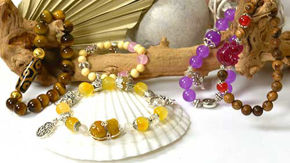
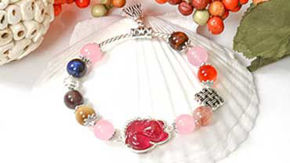


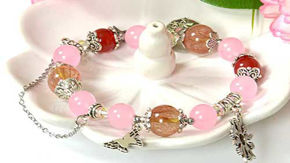
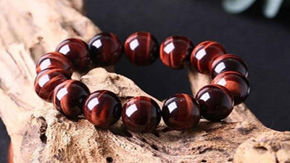

It is better not to shower or swim with crystal jewelry unless you know the entire piece can handle water, soap, chlorine, salt, heat, and repeated moisture. The stone is only one part of the jewelry. Elastic, glue, plated metal, coatings, bead holes, stringing material, and gemstone treatments can all be damaged faster by regular water exposure.
Who this guide is for: This guide is for readers wondering whether crystal bracelets, necklaces, pendants, rings, or charms can be worn in the shower, pool, ocean, bath, sauna, or during everyday water exposure.
How this guide was prepared: This article focuses only on water exposure and jewelry safety. It does not cover every cleansing method, ritual practice, or gemstone meaning. For the full beginner care framework, read How to Cleanse & Care for Healing Jewelry.
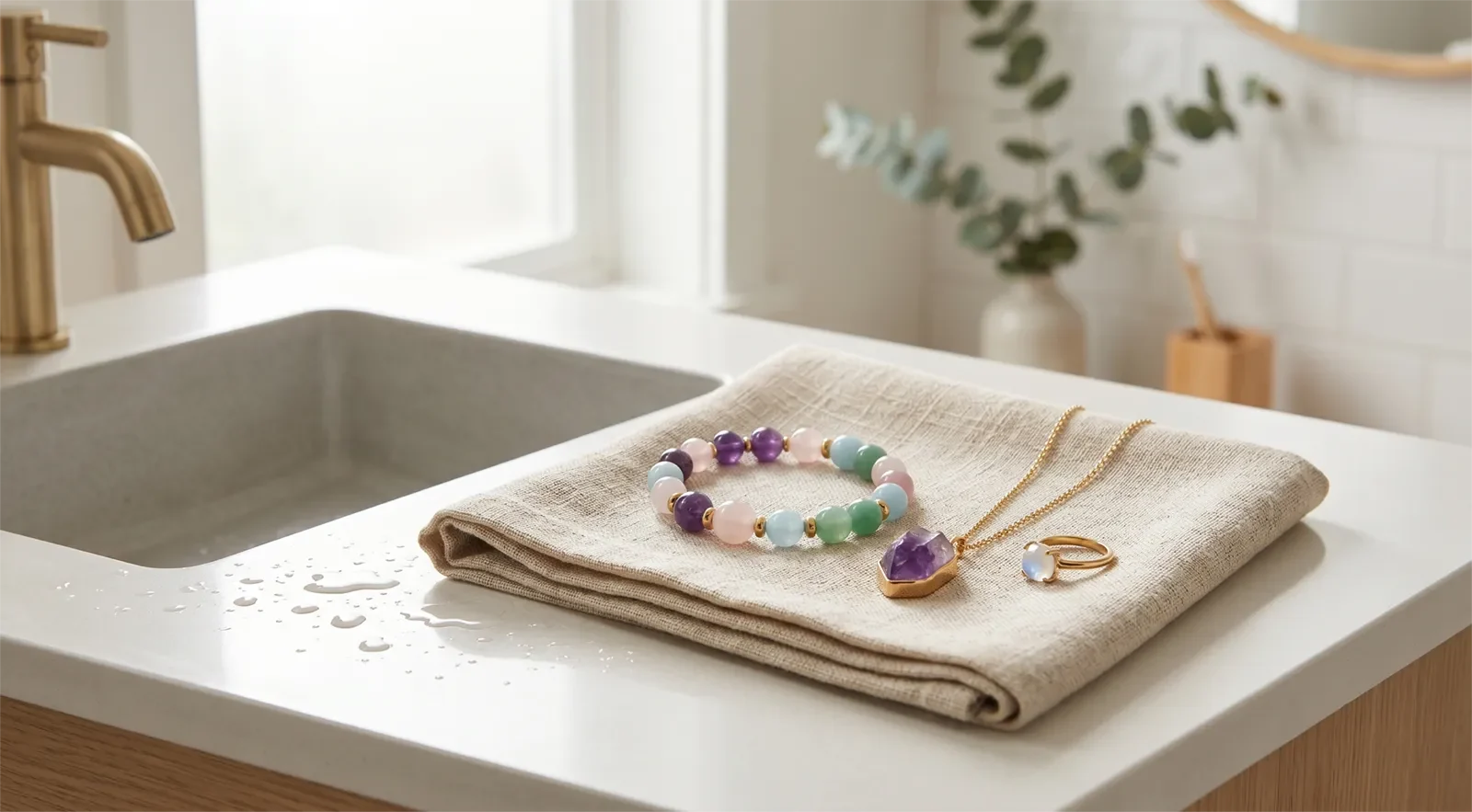
The safest beginner answer is simple: remove crystal jewelry before showering or swimming when possible. A quick accidental splash is different from making water exposure part of your routine. Repeated showers, pool water, ocean water, soap, shampoo, conditioner, sunscreen, and heat can all wear down jewelry faster than people expect.
This matters because crystal jewelry is not just a stone. It is a finished piece made from multiple materials. Even if the crystal itself seems durable, the bracelet elastic, necklace chain, plating, clasp, glue, coating, or treatment may not be.
If you are unsure whether your stone has been dyed, coated, fracture-filled, heat-treated, or otherwise altered, read Gemstone Treatments 101. If your question is about symbolic charging rather than water safety, read Moonlight vs. Sunlight Charging.
Table of Contents
- Quick Answer
- Shower vs. Pool vs. Ocean at a Glance
- Why Water Can Damage Crystal Jewelry
- Can You Shower with Crystal Jewelry?
- Can You Swim in a Pool with Crystal Jewelry?
- Can You Swim in the Ocean with Crystal Jewelry?
- Stones and Materials That Need Extra Caution
- Why Jewelry Construction Matters
- What to Do If Crystal Jewelry Gets Wet
- Water Exposure Mistakes to Avoid
- A Safer Daily Routine
- A Grounded Note on Cleansing and Water
- Frequently Asked Questions
- Related Guides
Quick Answer
You should usually remove crystal jewelry before showering, swimming in a pool, or going into the ocean. Some durable stones may tolerate brief fresh-water contact, but jewelry is more than the stone. Water can affect elastic, cord, glue, plated metal, clasps, coatings, dyed beads, bead holes, and treated gemstones.
Fresh water is usually less harsh than pool or ocean water. Shower water adds soap, shampoo, conditioner, body wash, heat, and repeated moisture. Pool water adds chlorine and chemicals. Ocean water adds salt, sand, sun, residue, and drying cycles. If you do not know exactly what your jewelry can handle, the safer choice is to take it off first.
Shower vs. Pool vs. Ocean at a Glance
| Water Exposure | Risk Level | Main Concern | Best Practice |
|---|---|---|---|
| Brief fresh-water splash | Lower risk | Moisture around bead holes, metal, cord, or elastic | Dry gently with a soft cloth |
| Regular showering | Moderate to high risk over time | Soap, shampoo, conditioner, heat, repeated moisture | Remove jewelry before showering |
| Bath or soaking | High risk | Long water contact, soap, bath products, heat | Avoid soaking crystal jewelry |
| Pool swimming | High risk | Chlorine, chemicals, repeated wet-dry cycles | Remove jewelry before swimming |
| Ocean swimming | High risk | Salt, sand, sun, residue, drying, abrasion | Remove jewelry before entering the ocean |
| Sauna or hot tub | High risk | Heat, moisture, chemicals, elastic and glue stress | Do not wear crystal jewelry |
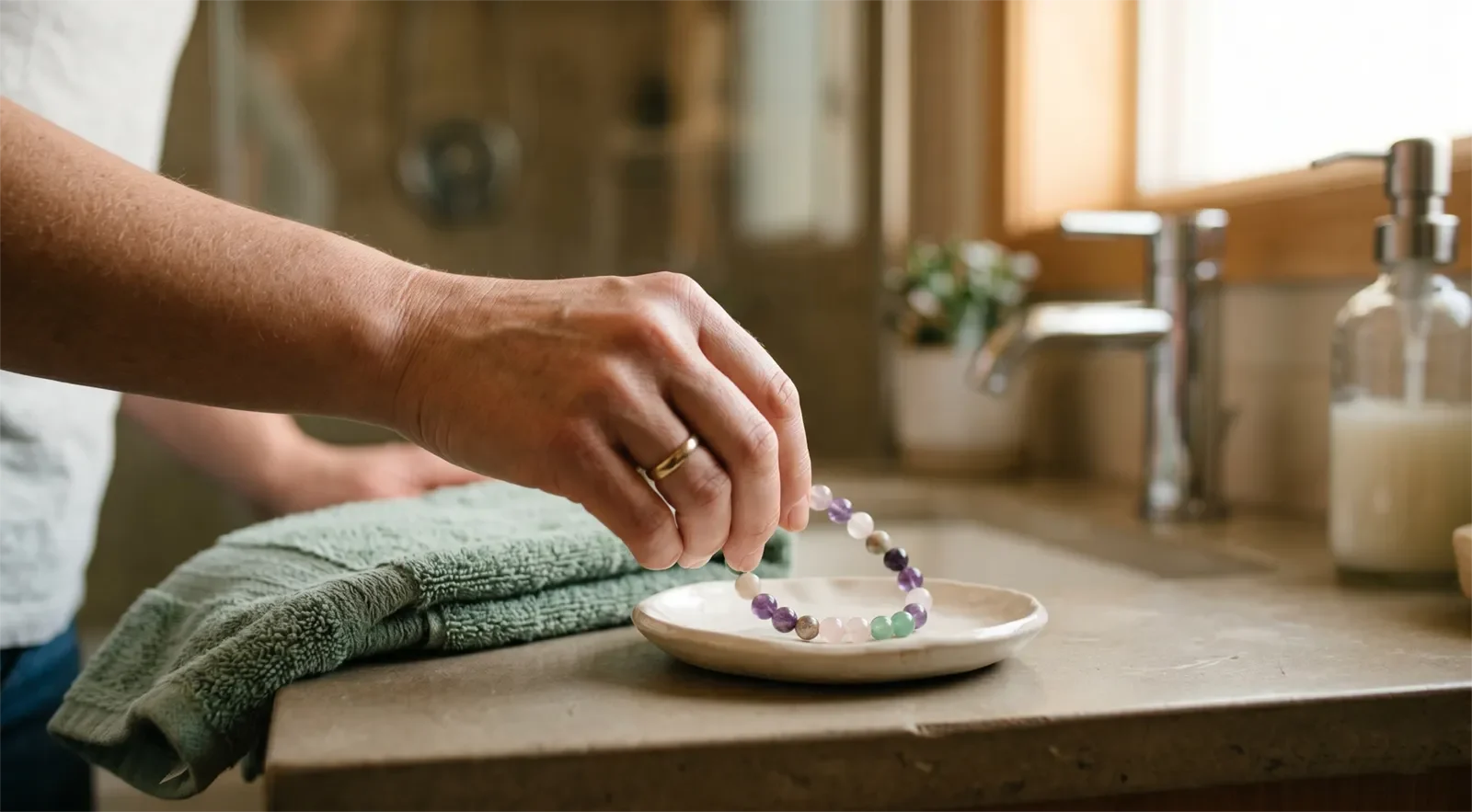
Why Water Can Damage Crystal Jewelry
Many people assume crystals are water-safe because stones come from nature. That is too simple. Crystal jewelry is not a raw stone sitting by itself. It is a wearable object that may include elastic, cord, metal, plating, glue, dye, coating, polish, treatments, clasps, bead liners, or decorative spacers.
Water can create problems in several ways:
- Moisture can weaken elastic and cord over time.
- Soap and shampoo can leave residue on stones and metal.
- Chlorine can be harsh on finishes, plating, and stringing material.
- Salt water can dry, dull, or leave residue on jewelry.
- Heat can stress glue, elastic, coatings, and some stones.
- Repeated wet-dry cycles can age a bracelet faster.
- Water can sit inside bead holes or around settings longer than expected.
The question is not only whether the crystal can get wet once. The better question is whether the full jewelry piece can handle repeated water exposure without wearing down faster.
Can You Shower with Crystal Jewelry?
It is better to remove crystal jewelry before showering. One accidental shower is usually not the same as long-term damage, but regular showering is not a good habit for most crystal bracelets, necklaces, rings, or pendants.
A shower exposes jewelry to more than water. It also exposes the piece to:
- Soap
- Shampoo
- Conditioner
- Body wash
- Hot water
- Steam
- Skin oils
- Hair products
- Repeated wet-dry cycles
This can dull the surface, weaken elastic, affect plated metal, loosen glue, or build up residue around bead holes and settings. If you wear crystal jewelry daily, make it a habit to remove it before showering and store it somewhere dry.
Can You Swim in a Pool with Crystal Jewelry?
You should usually remove crystal jewelry before swimming in a pool. Pool water is generally harder on jewelry than regular fresh water because it contains chlorine and other chemicals.
Even if a bracelet or necklace looks fine after one swim, repeated pool exposure can wear down finishes, plating, elastic, cord, glue, and treated surfaces. Pool water can also dry on the jewelry and leave residue behind.
Pool swimming is especially risky for:
- Elastic bracelets
- Plated metal parts
- Dyed stones
- Coated stones
- Glued pendants or caps
- Wire-wrapped pieces
- Unknown or mixed-material jewelry
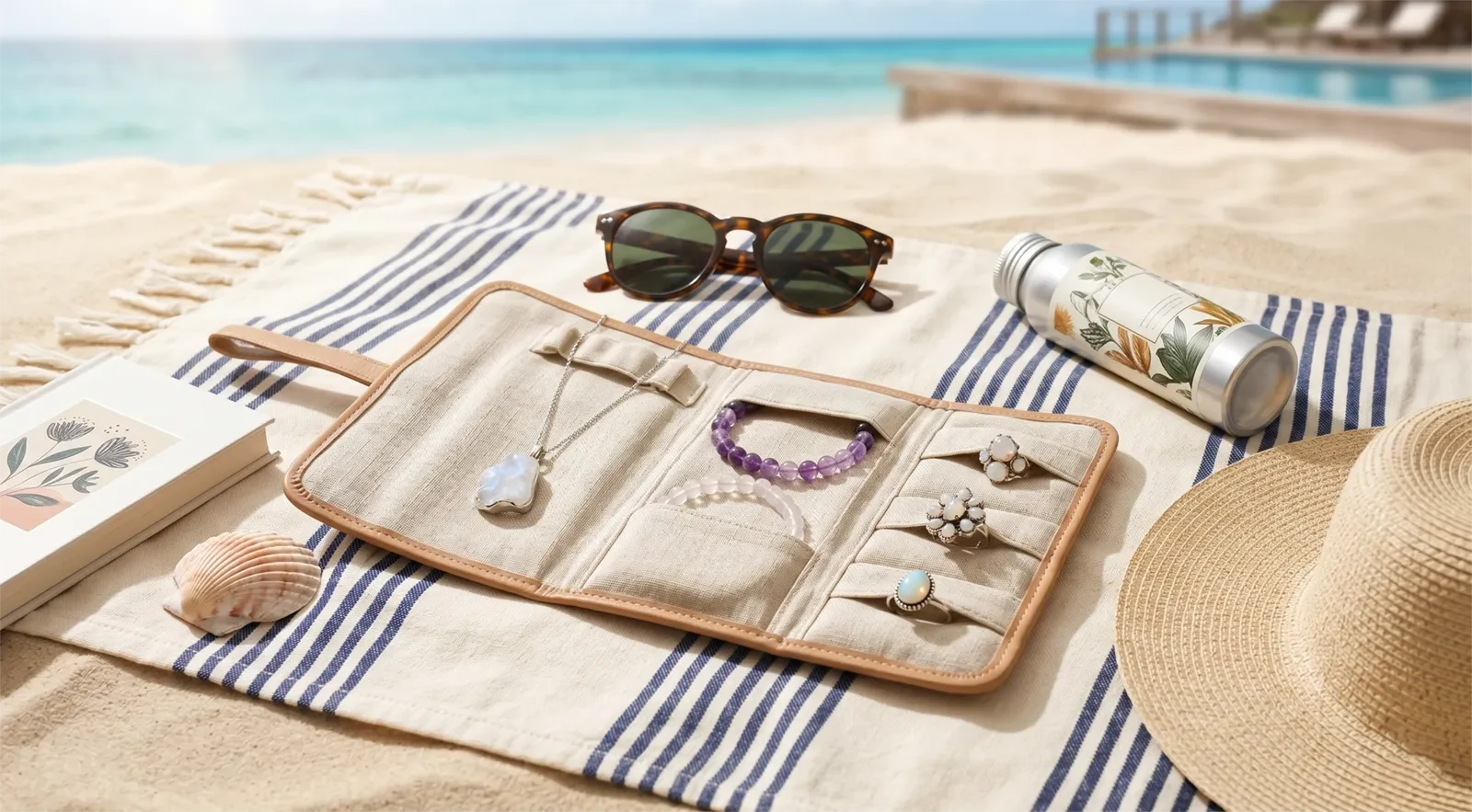
If you plan to swim, take the jewelry off first and store it in a dry pouch or case away from sunscreen, towels, and pool chemicals.
Can You Swim in the Ocean with Crystal Jewelry?
You should usually remove crystal jewelry before swimming in the ocean. Ocean exposure is one of the harsher everyday environments for jewelry because it combines salt, sand, sun, residue, moisture, and drying cycles.
Salt water can leave residue. Sand can scratch polished surfaces. Sun exposure can create heat and light stress. The repeated cycle of wet, salty, sandy, sunny, and dry can be hard on elastic, metal, finishes, and delicate stones.
Ocean water is not just “natural water.” For jewelry care, it is a more abrasive and chemically active environment than people often assume. If a piece is meaningful, delicate, expensive, or difficult to replace, do not wear it into the ocean.
Stones and Materials That Need Extra Caution
If you do not know what your jewelry is made of, choose caution. Some stones and jewelry materials are more sensitive to water, heat, chemicals, salt, or repeated exposure.
| Material or Jewelry Type | Water Caution | Why |
|---|---|---|
| Dyed stones or dyed beads | Avoid repeated water exposure | Color may fade, bleed, dull, or change over time |
| Coated or surface-treated stones | Avoid shower, pool, and ocean wear | Coatings may react poorly to soap, chemicals, rubbing, or heat |
| Fracture-filled stones | Use extra caution | Fillers can make care more sensitive than the stone name suggests |
| Porous stones and organic materials | Avoid soaking and repeated moisture | May absorb moisture, residue, oils, or chemicals |
| Elastic bracelets | Remove before water exposure | Elastic can weaken from water, soap, heat, chlorine, and drying cycles |
| Plated metal | Avoid shower, pool, and ocean wear | Moisture, salt, chlorine, and rubbing can wear plating faster |
| Glued components | Avoid soaking and heat | Water and heat can stress adhesives |
| Unknown stones or unknown construction | Use the conservative rule | You cannot judge water safety by appearance alone |
Popular stones are not all identical in jewelry form. A clear quartz bead bracelet, a moonstone pendant, a rose quartz stretch bracelet, and a black tourmaline charm may all respond differently because construction matters as much as the stone name.
Why Jewelry Construction Matters
Most water damage problems in crystal jewelry come from the full construction, not just the crystal. A stone may be durable, but the rest of the piece may not be.
Elastic and cord
Elastic bracelets are convenient, but water, soap, heat, and drying cycles can weaken the stretch material. Cord can also hold moisture longer than the surface suggests.
Plated metal
Plated parts deserve extra caution. Repeated exposure to moisture, chlorine, salt, body wash, perfume, sunscreen, and rubbing can make plating wear down faster.
Glue and caps
Some pendants, charms, and bead designs use glue or caps. Water and heat can stress adhesives, especially when exposure happens repeatedly.
Bead holes and spacers
Water can sit around bead holes, spacers, knots, or metal parts. If moisture stays trapped, the bracelet may age faster even if the beads look dry on the outside.
What to Do If Crystal Jewelry Gets Wet
If your crystal jewelry gets wet once, do not panic. Handle it gently and dry it properly.
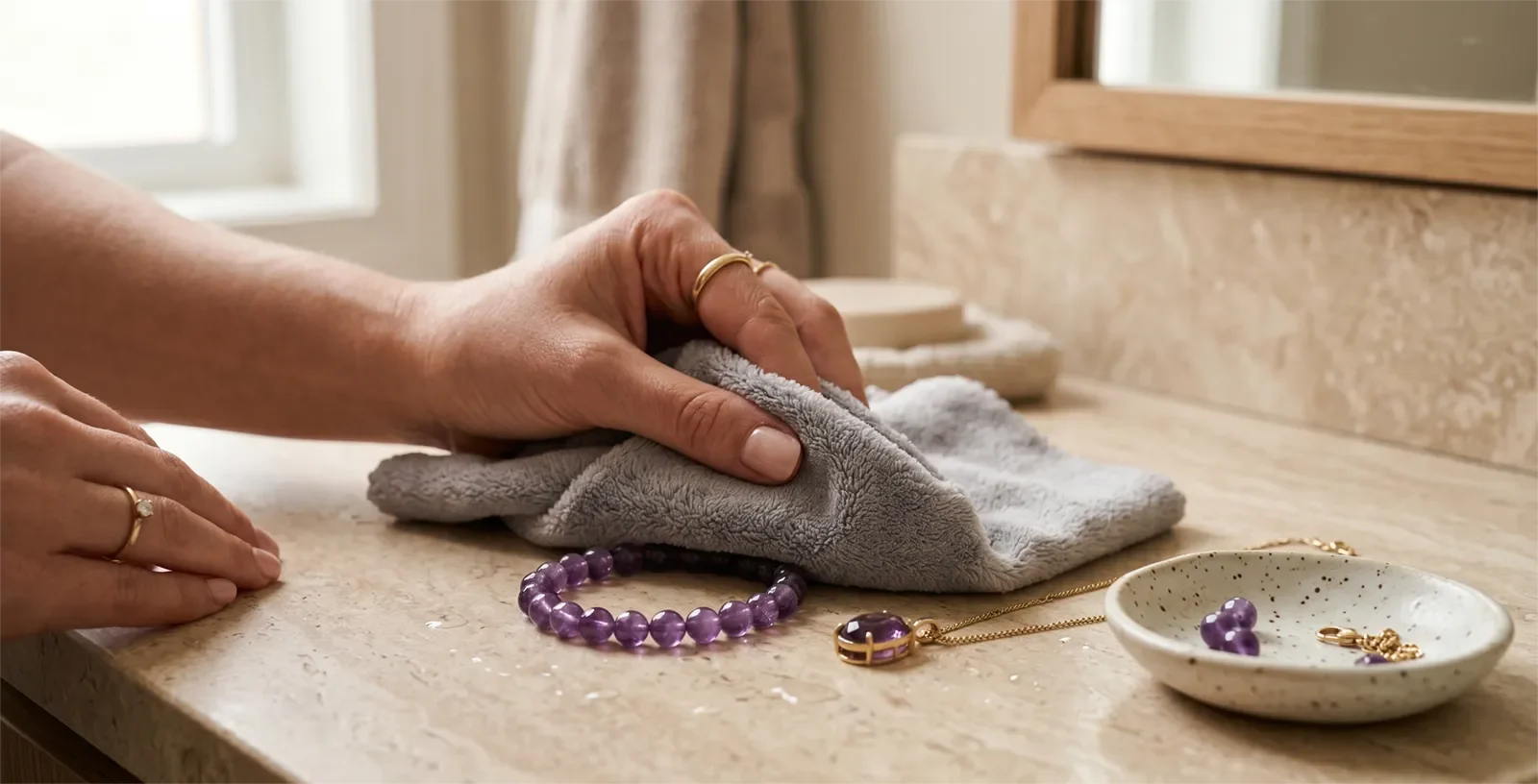
- Remove the jewelry as soon as practical.
- Pat it dry with a soft, clean cloth.
- Pay attention to bead holes, clasps, spacers, chains, and settings.
- Let the piece air-dry in a shaded, dry place.
- Do not use a hair dryer, heater, hot window, or direct sun to speed drying.
- Do not store it in a pouch or box until hidden moisture has dried.
- Check for loosened elastic, discoloration, residue, dullness, or loose components.
If the piece was exposed to chlorine or salt water, dry it carefully and avoid repeating the exposure. If you are unsure how to clean it afterward, return to How to Cleanse & Care for Healing Jewelry and choose the gentlest physical care method first.
Water Exposure Mistakes to Avoid
- Do not assume all crystals are safe in water.
- Do not assume a durable stone means the whole jewelry piece is water-safe.
- Do not shower daily with elastic crystal bracelets.
- Do not swim with plated, glued, dyed, coated, or unknown jewelry.
- Do not wear crystal jewelry in hot tubs, saunas, or steam rooms.
- Do not use salt water as a default cleansing method.
- Do not dry wet jewelry in direct sunlight or with heat.
- Do not store damp jewelry in a pouch, drawer, or jewelry box.
- Do not let sunscreen, perfume, lotion, or hair products sit on the piece.
A Safer Daily Routine
A simple routine protects crystal jewelry better than trying to rescue it after repeated water exposure.
- Put jewelry on after lotion, perfume, sunscreen, and hair products have dried.
- Remove jewelry before showering, swimming, exercising heavily, or using cleaning products.
- Wipe the piece gently after wear if it has touched sweat, oil, or products.
- Store it dry, separated, and shaded.
- Use symbolic cleansing methods that do not require water if the piece is delicate or unknown.
For storage help, read How to Store Crystal Jewelry at Home and While Traveling. For no-water symbolic methods, read Sound Cleansing 101 or Smoke Cleansing for Jewelry.
A Grounded Note on Cleansing and Water
Water is sometimes used symbolically, but it is not a safe universal cleansing method for crystal jewelry. A practice can feel meaningful and still be physically risky for a particular piece.
If the jewelry is delicate, unknown, treated, dyed, coated, plated, elastic, glued, or mixed-material, choose a gentler symbolic method instead. Intention, rest, sound, and indirect moonlight are usually safer beginner options than soaking or wearing jewelry into water.
Frequently Asked Questions
Can you shower with crystal jewelry?
It is better not to shower with crystal jewelry unless you know the entire piece is safe for repeated water, soap, heat, and moisture exposure. For most beginners, removing jewelry before showering is the safer habit.
Can you swim with crystal jewelry?
You should usually remove crystal jewelry before swimming. Pool water adds chlorine and chemicals, while ocean water adds salt, sand, sun, residue, and drying cycles. Both can be hard on jewelry over time.
Is fresh water safe for crystal jewelry?
Fresh water is usually less harsh than pool or ocean water, but it is not automatically safe for every piece. Stone type, treatment, metal, glue, elastic, cord, and construction all matter.
Is pool water bad for crystal jewelry?
Pool water can be bad for crystal jewelry because chlorine and other chemicals may affect plating, elastic, cord, finishes, treated stones, and glued components over time.
Is ocean water bad for crystal jewelry?
Ocean water can be hard on crystal jewelry because salt, sand, sun, residue, and drying cycles can dull, scratch, dry, or stress different parts of the piece.
What should I do if my crystal bracelet gets wet?
Remove it, pat it dry with a soft cloth, let hidden moisture dry fully in a shaded place, and avoid storing it until it is completely dry. Do not use heat or direct sun to dry it quickly.
Can I wear crystal jewelry in a hot tub or sauna?
It is better not to. Hot tubs, saunas, and steam rooms add heat, moisture, chemicals, and temperature stress that can affect elastic, glue, metal, finishes, and some stones.
Can water ruin crystal bracelets?
Repeated water exposure can weaken elastic, affect metal, loosen glued parts, leave residue, or damage sensitive finishes. A single accidental splash may not ruin a bracelet, but regular water exposure is not a good habit.
What is the safest cleansing method if water is risky?
Use a non-water method such as intention, rest, sound cleansing, or protected indirect moonlight. These methods are usually safer for delicate, treated, plated, glued, or unknown jewelry.
Related Guides
- How to Cleanse & Care for Healing Jewelry
- Gemstone Treatments 101
- How to Store Crystal Jewelry at Home and While Traveling
- Moonlight vs. Sunlight Charging
- Sound Cleansing 101
- Smoke Cleansing for Jewelry
Next step: If you are unsure whether your crystal jewelry is dyed, coated, fracture-filled, plated, glued, elastic, or otherwise water-sensitive, choose the conservative route. Start with Gemstone Treatments 101 before using water, salt, sunlight, or stronger cleansing methods.