






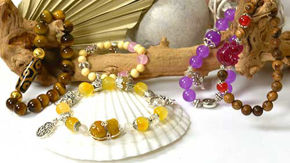
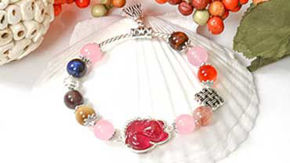


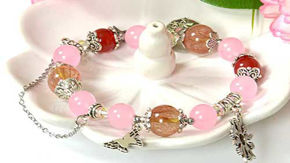
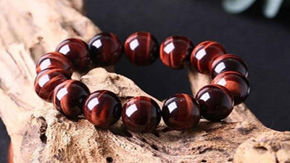

The safest way to store crystal jewelry is to keep each piece clean, dry, cool, and separated. At home, use a soft pouch, lined box, divided tray, or dedicated jewelry drawer. While traveling, pack fewer pieces and protect each one from pressure, moisture, tangling, and rubbing against harder items.
Who this guide is for: This guide is for readers who want to protect crystal jewelry from scratches, tangles, fading, stretched elastic, chain damage, and travel-related wear.
How this guide was prepared: This article focuses only on storage. It separates home storage from travel storage and keeps the advice practical, material-safe, and beginner-friendly. For full cleaning and symbolic cleansing, use the main care guide instead.
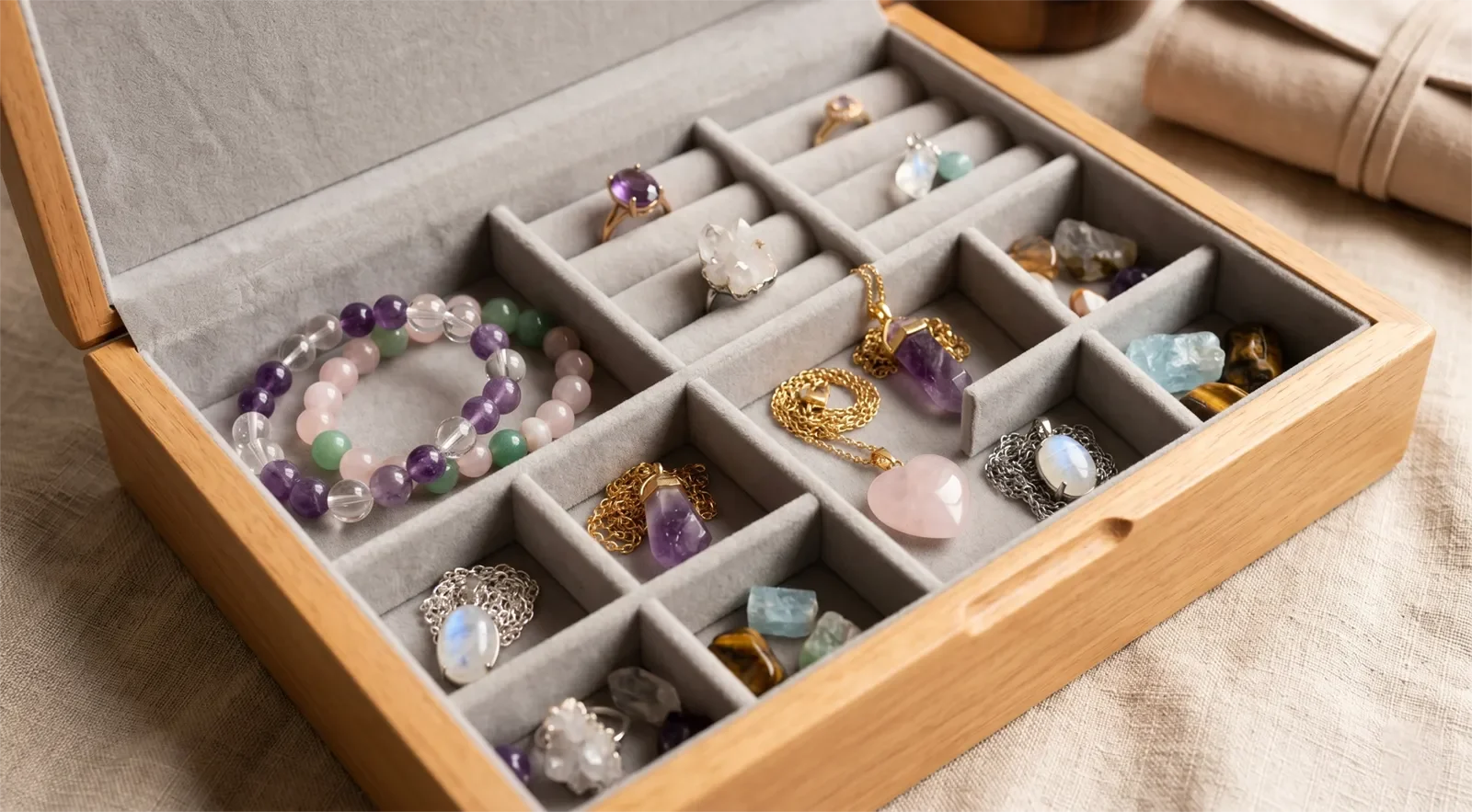
Crystal jewelry can be damaged even when you are not wearing it. A bracelet can stretch in a drawer. A pendant can scratch against a harder stone. A chain can tangle in a travel pouch. A dyed, coated, plated, or glued piece can wear faster if it is stored in heat, humidity, or direct sunlight.
This guide explains how to store crystal jewelry at home and while traveling so your bracelets, necklaces, pendants, rings, and charms last longer. For the broader care framework, read How to Cleanse & Care for Healing Jewelry. If your concern is water exposure, go to Can You Shower with Crystal Jewelry?. If you are unsure whether a stone is dyed, coated, filled, or treated, read Gemstone Treatments 101.
Table of Contents
- Quick Answer
- Crystal Jewelry Storage at a Glance
- How to Store Crystal Jewelry at Home
- How to Store Crystal Bracelets
- How to Store Crystal Necklaces and Pendants
- How to Store Rings, Earrings, and Charms
- How to Store Crystal Jewelry While Traveling
- Storage Mistakes to Avoid
- Why Dry, Cool, and Shaded Storage Matters
- Quick Storage Checklist
- Frequently Asked Questions
- Related Guides
Quick Answer
Store crystal jewelry in a soft, dry, shaded place where pieces do not rub, tangle, stretch, or sit under pressure. At home, use a lined box, divided tray, soft pouch, or dedicated drawer space. For travel, pack fewer pieces and keep each item in its own pouch, wrap, or compartment. Avoid bathrooms, sunny windowsills, hot cars, crowded bags, and loose storage with keys, coins, cosmetics, chargers, or harder jewelry.
If you do not know whether a crystal is dyed, coated, fracture-filled, plated, glued, or strung on delicate elastic, use the more protective storage method.
Crystal Jewelry Storage at a Glance
| Storage Situation | Best Method | Why It Helps | What to Avoid |
|---|---|---|---|
| Daily bracelet storage | Soft pouch, tray, or bracelet slot | Reduces rubbing, stretching, and random placement | Bathroom counters, sunny ledges, crowded bowls |
| Necklaces and pendants | Separate pouch, hanging space, or chain slot | Prevents tangling and pendant scratches | Loose packing with other chains |
| Rings and small charms | Small box, ring row, mini pouch, or divided tray | Keeps small pieces visible and protected | Open counters where they can roll away |
| Travel | Individual pouches, soft wraps, or compact travel case | Reduces pressure, tangles, and movement damage | Throwing jewelry loose into a makeup bag or purse |
| Delicate or unknown pieces | Separate soft storage in a dry, shaded place | Protects finishes, elastic, glue, coatings, and treatments | Heat, humidity, salt, water, direct sun, and heavy contact |
How to Store Crystal Jewelry at Home
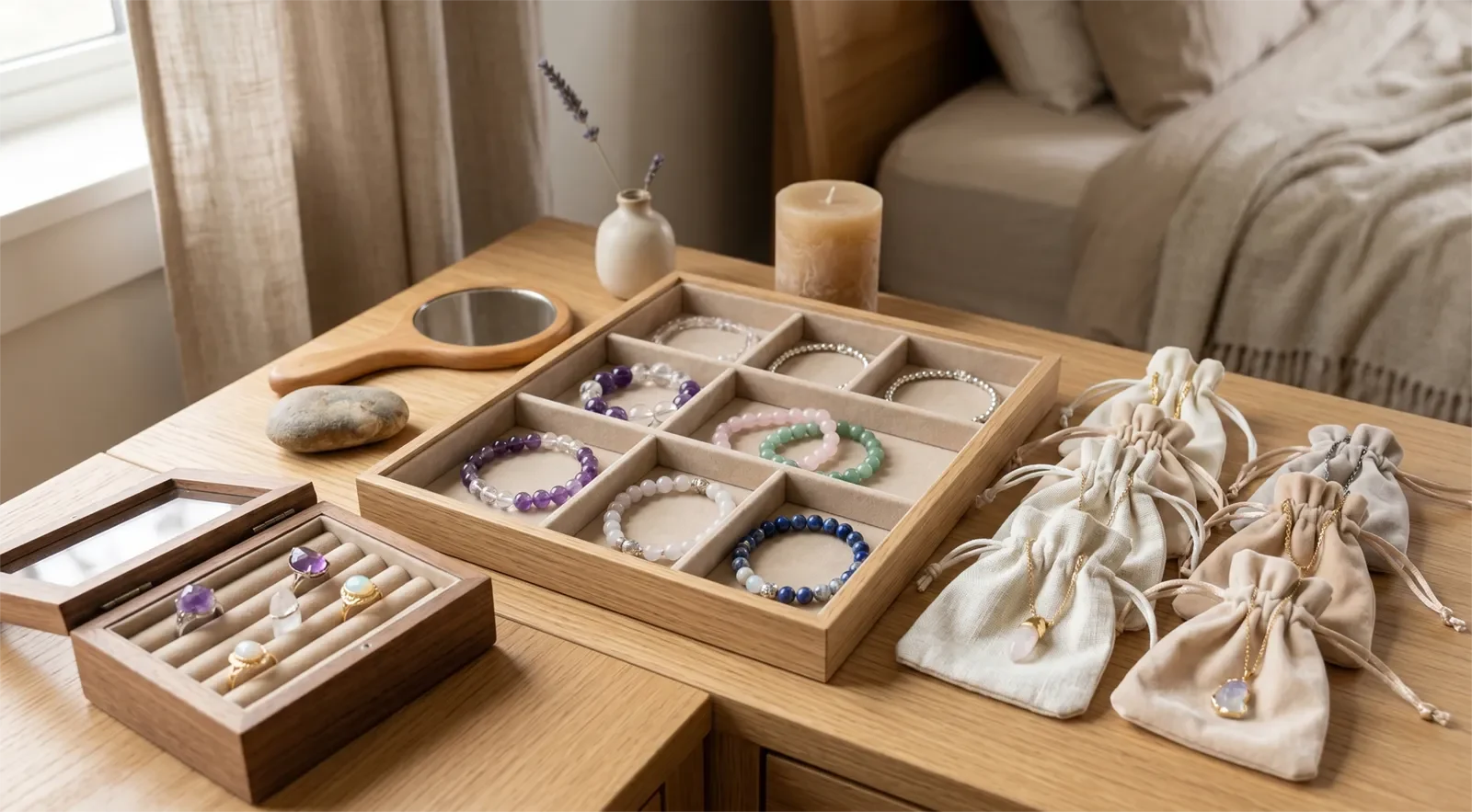
Give each piece a consistent place
The best storage system is one you will actually use. If putting jewelry away feels inconvenient, it usually ends up on a sink, windowsill, nightstand, kitchen counter, or random drawer. That is where scratches, tangles, moisture exposure, and avoidable wear begin.
Choose one reliable place for daily pieces. A small tray on a dresser, a lined jewelry box, a soft pouch, or a divided drawer section is enough for most people.
Separate pieces when possible
Crystal jewelry should not be piled together by default. Beads, chains, metal spacers, clasps, and charms can rub against each other. Harder stones may scratch softer surfaces. Chains can knot. Metal findings can catch elastic or cord.
Separation matters most for:
- Polished crystal beads
- Soft or porous stones
- Dyed or coated beads
- Plated metal parts
- Elastic bracelets
- Fine chains
- Wire-wrapped pendants
- Charms with sharp edges or corners
Keep jewelry dry before putting it away
Do not store crystal jewelry while it is damp from water, sweat, lotion, perfume, or humidity. Moisture can affect metal, cord, elastic, glue, bead holes, and certain finishes. Wipe the piece gently with a soft cloth before putting it away.
Avoid bathroom storage
Bathrooms are convenient, but they are usually not the best place for crystal jewelry. Steam, humidity, water splashes, skincare products, hair products, and cleaning sprays can all create unnecessary exposure. A bedroom drawer, dresser, closet shelf, or lined jewelry box is usually safer.
How to Store Crystal Bracelets
Crystal bracelets need storage that protects both the beads and the stringing material. Many people focus only on the stone, but the elastic, cord, knots, spacers, and bead holes matter too.
Lay bracelets flat
Elastic bracelets should usually be laid flat instead of hanging under tension. Hanging may stretch the elastic over time, especially with heavier beads.
Keep beaded bracelets from rubbing
Store beaded bracelets separately or with soft dividers. This helps reduce surface wear, especially when the bracelet includes polished stones, plated spacers, charms, or softer beads.
Do not leave bracelets in pockets or bags
A bracelet tossed into a bag can be pressed, stretched, scratched, or caught on keys and zippers. If you remove a bracelet during the day, place it in a small pouch instead of loose storage.
If your bracelet has already snapped, stretched, or weakened, read What It May Mean When a Bracelet Breaks — and What to Do Next.
How to Store Crystal Necklaces and Pendants
Necklaces and pendants need storage that prevents tangling, chain stress, and pendant scratches.
Store chains separately
Fine chains can tangle quickly when stored together. Use separate pouches, chain slots, small bags, hooks, or a jewelry organizer with divided sections.
Protect the pendant surface
Crystal pendants can scratch or chip if they knock against metal pieces, harder stones, or other pendants. Wrap the pendant gently or place it in a soft pouch if the surface is polished, pointed, carved, or wire-wrapped.
Watch the clasp and chain connection
Do not force a necklace into a tight pouch if the chain bends sharply. Repeated pressure near the clasp, bail, or pendant connection can weaken the piece over time.
How to Store Rings, Earrings, and Charms
Small pieces are easy to misplace, so visibility matters as much as protection. Use a ring row, mini box, divided tray, small pouch, or dedicated section for rings, earrings, and charms.
Keep pairs together
For earrings, use a storage system that keeps pairs matched. This prevents lost pieces and reduces the habit of tossing earrings into a shared dish.
Protect settings and posts
Rings and earrings may include small settings, posts, prongs, or glued parts. Avoid pressure, bending, and crowded storage where small components can catch or loosen.
Separate sharp or angular pieces
Charms, points, raw crystal shapes, and metal edges can scratch softer stones or polished beads. Store them separately from smooth pieces.
How to Store Crystal Jewelry While Traveling
Pack fewer pieces
The easiest way to protect jewelry while traveling is to bring fewer pieces. A small, intentional selection is usually safer than packing every bracelet, necklace, or ring you might want “just in case.”
Use individual pouches or soft wraps
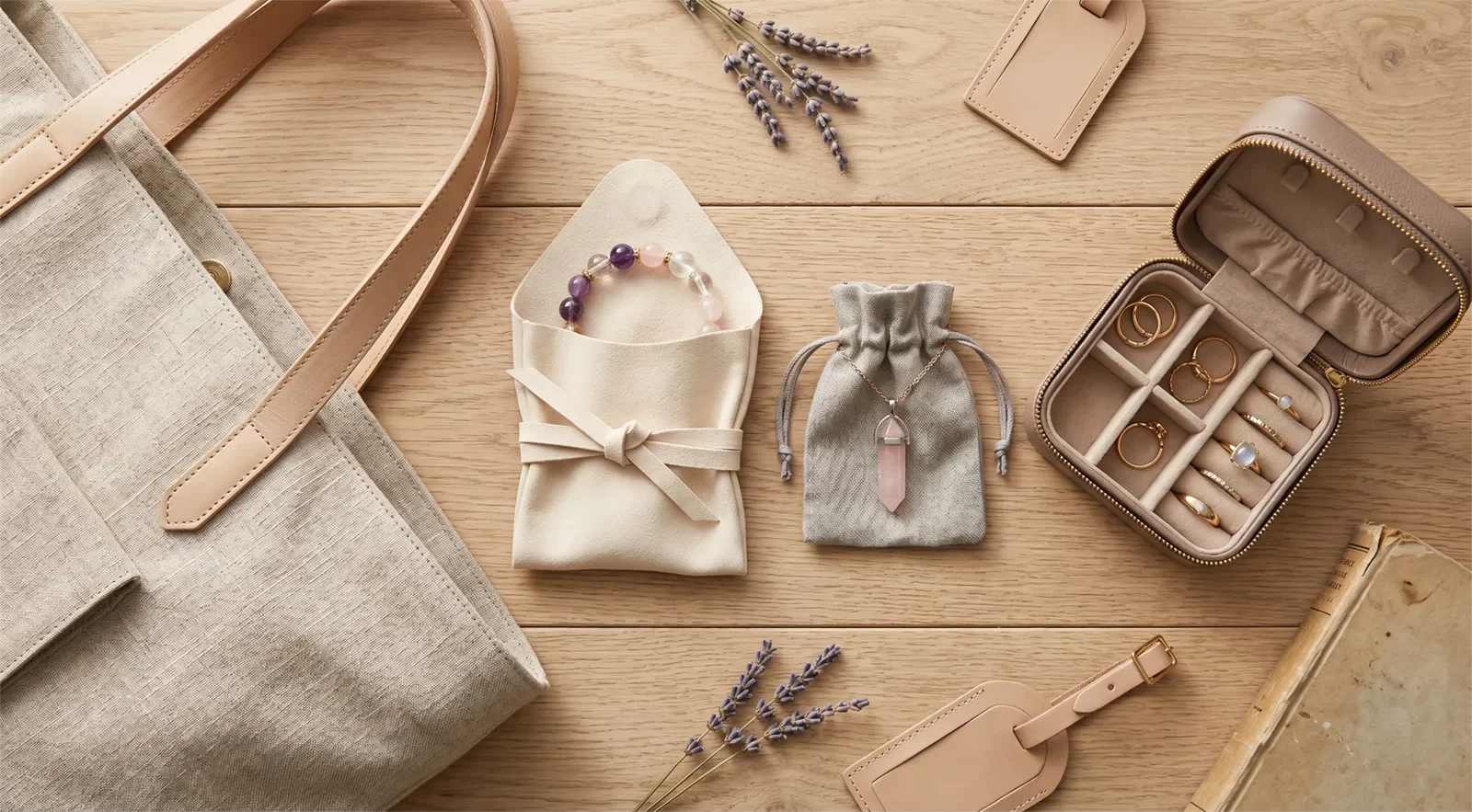
Each piece should ideally have its own pouch, wrap, compartment, or section. This reduces rubbing, tangling, and impact. If you only have one pouch, wrap pieces separately in soft cloth before placing them together.
Keep jewelry away from bag clutter
Do not pack crystal jewelry loose with keys, coins, chargers, makeup, perfume, skincare, pens, or hair tools. These can scratch, stain, tangle, or press into delicate pieces.
Avoid heat and humidity during travel
Do not leave crystal jewelry in a hot car, damp hotel bathroom, sunny windowsill, or humid travel pouch. Heat and moisture can be hard on elastic, glue, finishes, plating, and treated stones.
Have a temporary storage habit
When you remove jewelry while traveling, place it in the same pouch or case every time. Do not leave rings near hotel sinks, bracelets on nightstands, or necklaces loose in a suitcase pocket.
Storage Mistakes to Avoid
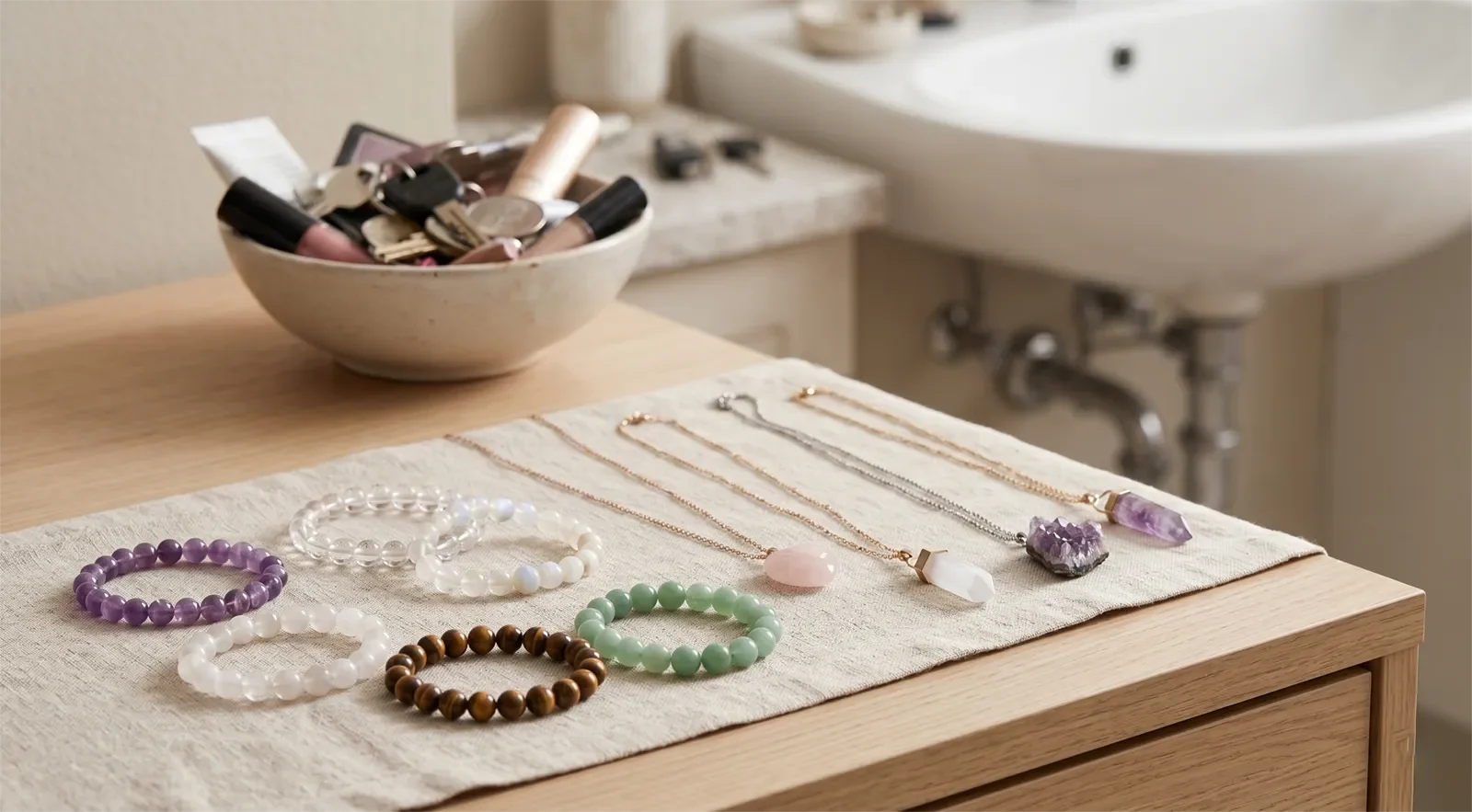
- Storing all crystal jewelry in one crowded bowl
- Leaving jewelry on bathroom counters
- Keeping pieces on a sunny windowsill
- Packing bracelets loose in a purse or makeup bag
- Letting chains tangle with other chains
- Hanging heavy elastic bracelets
- Putting damp jewelry away without drying it
- Storing plated or delicate pieces where they rub against harder items
- Keeping jewelry near perfume, lotion, cleaning products, or hair products
- Assuming all stones and finishes can handle the same conditions
Why Dry, Cool, and Shaded Storage Matters
Dry, cool, shaded storage is the safest default because crystal jewelry is often made from more than one material. The stone may be durable, but the chain, elastic, clasp, glue, coating, plating, or dye may be more sensitive.
Direct sunlight can add heat and light exposure. Humidity can affect metal and stringing materials. Crowded storage can create repeated rubbing. Over time, these small problems can make jewelry look dull, stretched, scratched, tangled, or worn.
If your question is specifically about sunlight, moonlight, and symbolic charging, read Moonlight vs. Sunlight Charging. If your question is about water exposure, read Can You Shower with Crystal Jewelry?.
Quick Storage Checklist
- Store crystal jewelry clean and dry.
- Keep pieces separated when possible.
- Use soft pouches, lined boxes, divided trays, or dedicated drawers.
- Lay elastic bracelets flat instead of hanging them under tension.
- Separate necklaces to prevent tangling.
- Keep rings, earrings, and charms in small compartments.
- Avoid bathrooms, hot cars, sunny windowsills, and damp spaces.
- Pack fewer pieces when traveling.
- Keep jewelry away from keys, coins, cosmetics, perfume, and chargers.
- Use extra caution with dyed, coated, treated, plated, glued, or unknown pieces.
Frequently Asked Questions
What is the best way to store crystal jewelry?
The best way to store crystal jewelry is in a clean, dry, cool, shaded place where each piece is separated or protected from rubbing. A soft pouch, lined box, divided tray, or dedicated drawer section works well for most pieces.
Can I store all my crystal jewelry together?
It is better not to store everything together if you want long-term protection. Crowded storage increases tangling, rubbing, scratches, stretched elastic, and contact between harder and softer materials.
Should crystal jewelry be stored in sunlight?
No. Direct sunlight is not a good default storage choice. It can add unnecessary heat and light exposure, especially for dyed, coated, treated, plated, or delicate pieces.
Is it okay to store crystal jewelry in the bathroom?
Bathroom storage is not ideal because steam, humidity, water splashes, skincare products, and cleaning sprays can affect jewelry over time. A dry bedroom or closet storage area is usually safer.
Are soft pouches enough for storage?
Soft pouches are often enough for many pieces, especially if each piece has its own pouch. For necklaces, divided storage or chain-specific organizers can help prevent tangling.
How should I pack crystal jewelry for travel?
Pack fewer pieces, keep each item separated, and use soft pouches, wraps, or a compact travel jewelry case. Keep jewelry away from keys, coins, cosmetics, chargers, and anything that can press into or scratch it.
How do I store crystal bracelets?
Lay crystal bracelets flat in a soft pouch, tray, or bracelet slot. Avoid hanging heavy elastic bracelets, leaving them in pockets, or storing them where beads and metal parts rub constantly.
How do I store crystal necklaces?
Store crystal necklaces separately to prevent tangling. Use individual pouches, hooks, chain slots, or divided compartments. Protect the pendant surface from harder stones, metal parts, and sharp edges.
What if I do not know what stone or treatment I have?
Use the safest storage method: dry, shaded, separated, and protected. Avoid heat, moisture, sunlight, salt, chemicals, and crowded storage until you know more about the stone, finish, and construction.
Related Guides
- How to Cleanse & Care for Healing Jewelry
- Can You Shower with Crystal Jewelry?
- Moonlight vs. Sunlight Charging
- Gemstone Treatments 101
- What It May Mean When a Bracelet Breaks — and What to Do Next
Next step: If you want the complete beginner-safe care framework, return to How to Cleanse & Care for Healing Jewelry. That guide covers physical cleaning, symbolic cleansing, storage, water safety, sunlight, moonlight, and safer care habits.