
For most home karaoke rooms, 12-inch speakers are the safest middle choice. They usually give more vocal body and music fullness than 10-inch speakers while staying easier to control than 15-inch speakers in a normal living room. Choose 10-inch speakers for compact rooms and easier placement. Choose 15-inch speakers only when the room is large enough and the system needs more coverage.
Definition: In this guide, karaoke speaker size refers to the main woofer size, usually 10-inch, 12-inch, or 15-inch. Bigger size can affect fullness and coverage, but it does not automatically mean better vocals or a better fit for your room.
Who this guide is for: This guide is for home karaoke buyers trying to choose the right speaker size for a bedroom, condo, living room, family room, or larger entertainment area.
How this guide was prepared: This guide comes from the speaker-matching conversations Tittac runs with customers every week — room size, vocal clarity, amplifier control, microphone feedback risk, placement limits, and how the family actually sings. A few of the exchanges and returns we've handled changed how we now advise people up front, and those are included below.
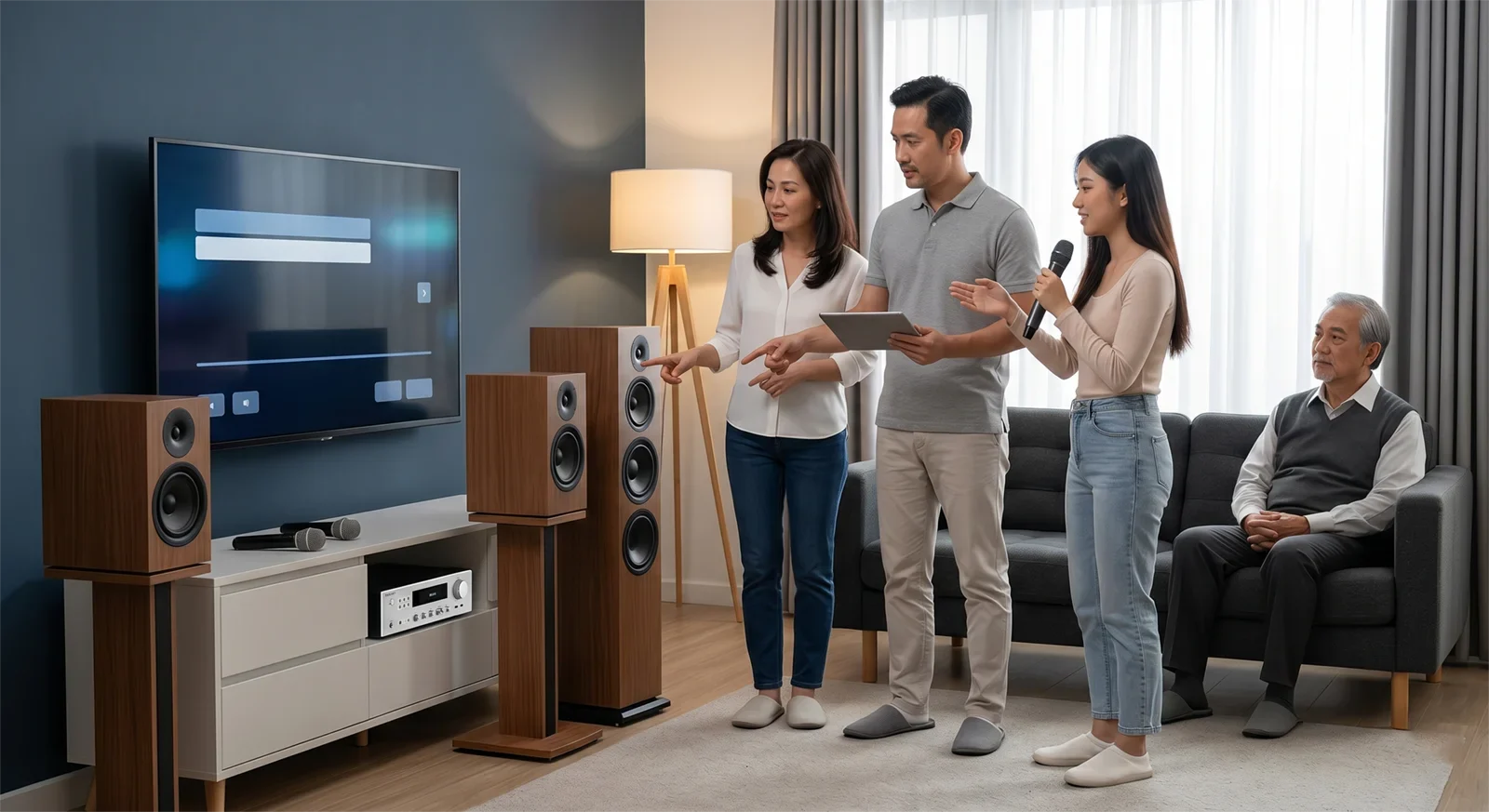
Table of Contents
- What Speaker Size Really Means for Karaoke
- What Actually Changes Between 10, 12, and 15 Inches
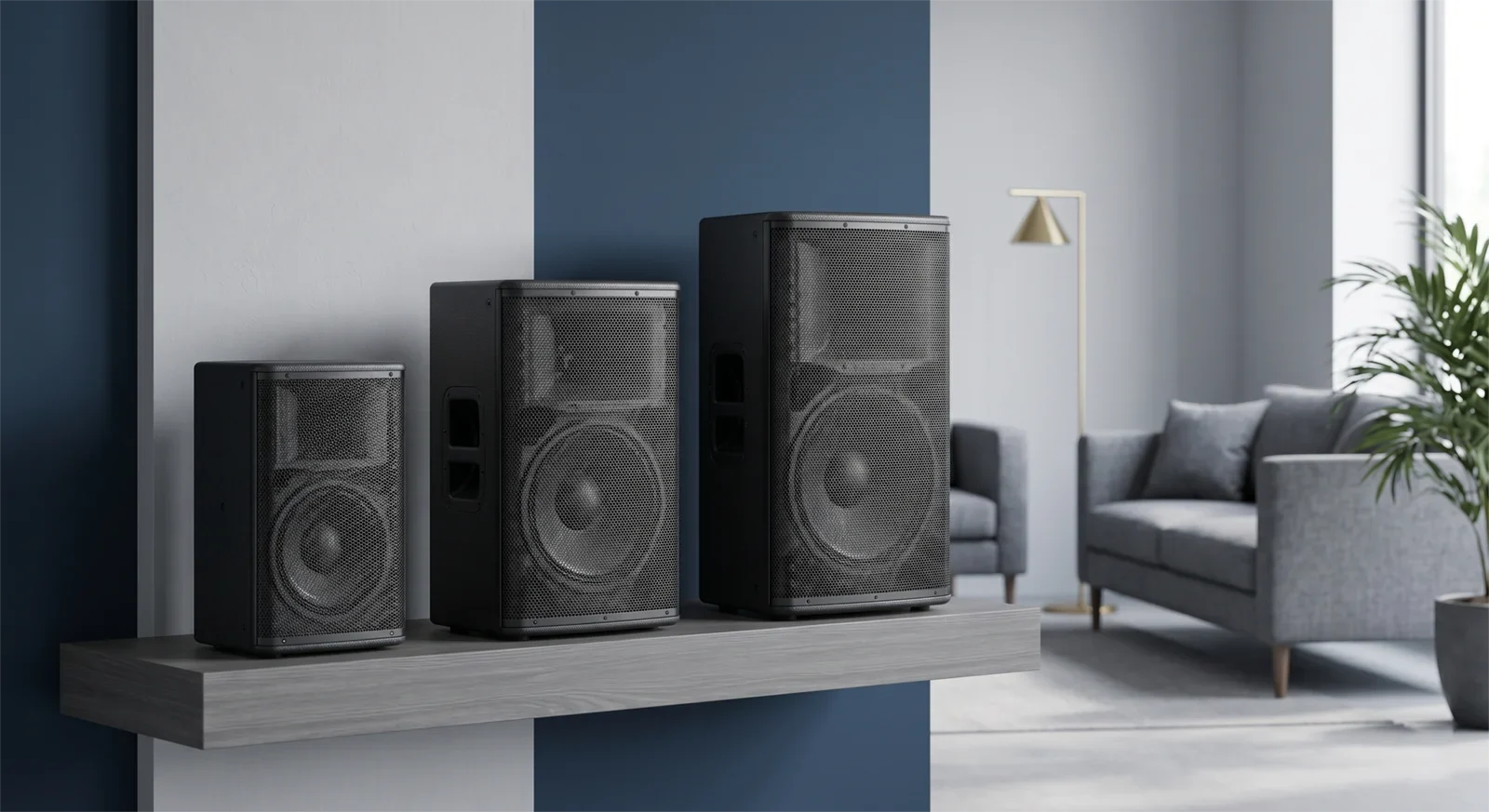
- 10-Inch vs. 12-Inch vs. 15-Inch Comparison
- Choose 10-Inch Speakers If...
- Choose 12-Inch Speakers If...
- Choose 15-Inch Speakers If...
- If Your Room Is Somewhere in the Middle
- Common Buying Mistakes
- How to Choose in 60 Seconds
- Frequently Asked Questions
- Final Recommendation
What Speaker Size Really Means for Karaoke
Speaker size affects how full the music feels, how much air the speaker moves, and how comfortable the vocal sounds in the room. But speaker size is only one part of the system. The room, amplifier, microphone setup, and speaker placement can matter just as much.
A bigger speaker may feel stronger, but it can also overwhelm a compact room. A smaller speaker may be easier to place, but it may feel limited in a larger or more open space.
What Actually Changes Between 10, 12, and 15 Inches
Coverage and fullness
Smaller rooms usually do not need extreme output to feel full. In fact, too much speaker can make the room sound crowded or boomy. Larger rooms expose the opposite problem: a speaker that sounded fine in a compact room may start to feel thin or less confident once the space opens up.
Vocal comfort
For karaoke, the voice matters first. A speaker should help the singer feel supported without making the microphone harsh or unstable. The right size keeps vocals clear at normal family volume.
Placement and control
Small rooms reward easy placement and simple control. Large rooms may need more coverage and headroom. The best speaker size is the one that fits the way the room behaves, not just the one that looks more powerful. We've set up 15-inch speakers for a customer's roughly 12x14 ft condo living room because they wanted "the biggest sound possible" — within a week they were back asking to exchange for 12-inch speakers because the room felt overwhelming at any volume above a whisper, and the neighbors noticed too. The room hadn't changed; the size just didn't match it.
10-Inch vs. 12-Inch vs. 15-Inch Comparison
| Speaker size | Best fit | Main strength | Main risk |
|---|---|---|---|
| 10-inch | Bedrooms, condos, compact rooms | Easy placement and control | May feel limited in larger rooms |
| 12-inch | Most family living rooms | Balanced vocals, fullness, and control | Still needs proper amplifier matching |
| 15-inch | Larger rooms, open spaces, party use | More coverage and physical fullness | Can overpower small rooms |
Choose 10-Inch Speakers If...
Best for: Bedrooms, condos, apartments, smaller living rooms, and homes where karaoke should sound full without dominating the space.
What usually works best: A compact or balanced home karaoke setup with clear vocals, stable microphones, and simple volume control.
Why this fit makes sense: Small rooms do not need excessive speaker size to feel lively. A good 10-inch setup can be easier to place, easier to control, and more comfortable for casual family singing.
Choose 12-Inch Speakers If...
Best for: Typical family living rooms, regular karaoke nights, mixed music styles, YouTube karaoke, duets, and multi-generation family use.
What usually works best: A balanced home karaoke system with enough vocal body and music fullness without becoming difficult to control.
Why this fit makes sense: For many homes, 12-inch speakers are the practical middle ground. They usually feel fuller than 10-inch speakers but are easier to manage than 15-inch speakers in a normal room. This is also the size we default to recommending when a customer isn't sure which category their room falls into — it's the choice that's rarely wrong.

Choose 15-Inch Speakers If...
Best for: Larger family rooms, open-concept spaces, larger entertainment areas, or homes where karaoke is used for louder gatherings.
What usually works best: A fuller-size karaoke system with enough amplifier control, speaker placement, and microphone management to keep the room comfortable.
Why this fit makes sense: Large rooms need more coverage. A 15-inch speaker can make sense when the space is large enough, but it should not be chosen only because it looks stronger — the condo example above is the pattern we see most often with this size.
If Your Room Is Somewhere in the Middle
A practical tie-breaker: enclosed room vs. open space
Imagine two rooms with a similar floor area. One is enclosed, furnished, and has seating close to the speakers; the other connects to a kitchen or hallway and has listeners farther away. The enclosed room may reward easier control, while the open layout may make coverage and headroom more important. When the choice is close, judge the listening area, openings, and seating distance — not floor area alone.
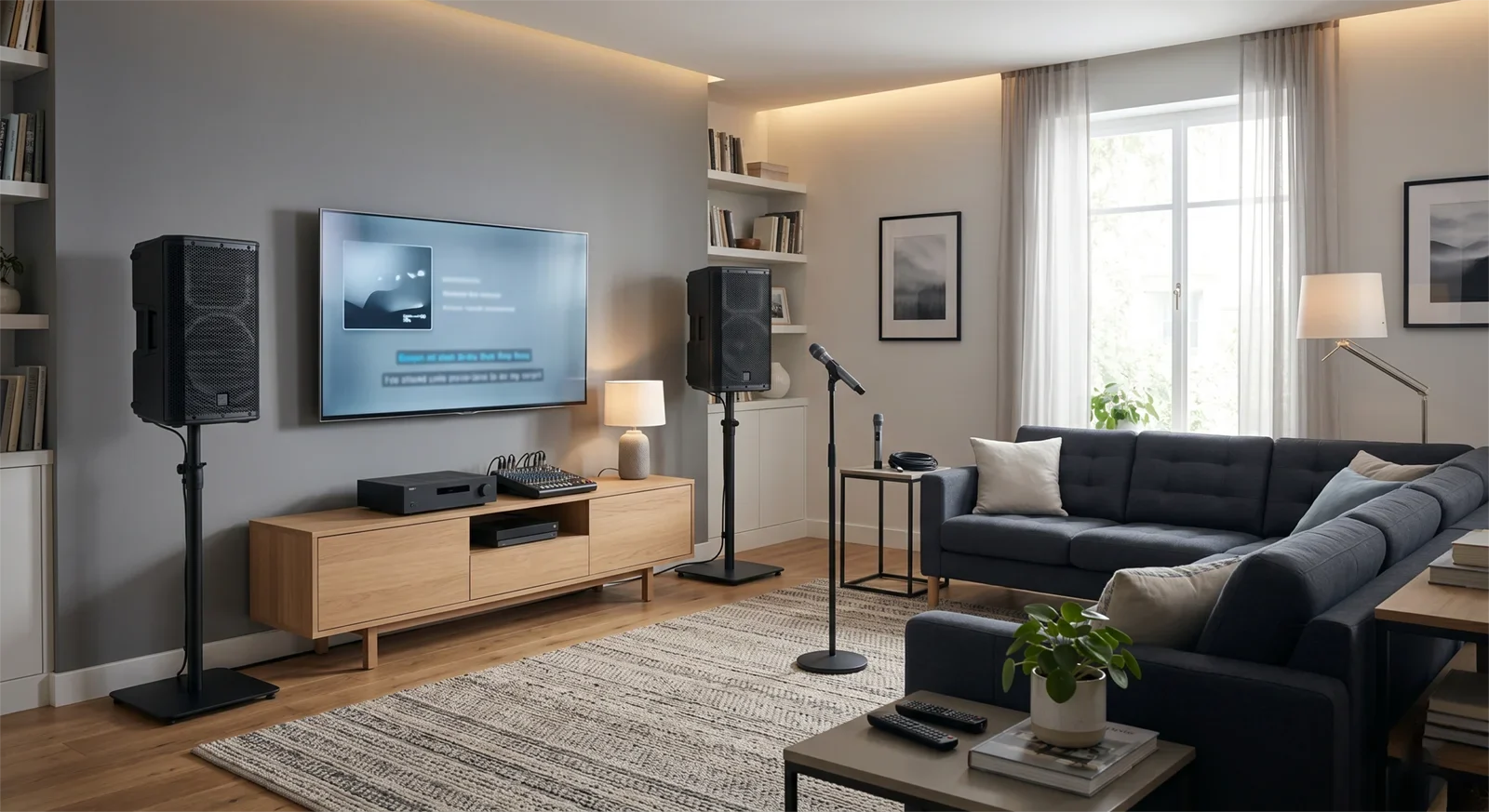
Most homes are not extreme cases. If your room is somewhere between small and large, start with how often your family sings, how loud you normally play music, and whether you care more about easy control or more room confidence.
In many medium-size rooms, the right answer is a balanced 12-inch setup. Buy for normal use first. Do not let a rare once-a-year party decide the whole purchase.
Common Buying Mistakes
What "match the amplifier" means
Before buying, check the specific speaker's nominal impedance and continuous-power guidance, then confirm that the amplifier supports the resulting load and provides suitable clean headroom. If more than one speaker will share an amplifier channel, the wiring arrangement can change the total load. Verify the complete configuration in the speaker and amplifier documentation rather than comparing peak-watt figures alone. In plain terms: don't just compare the watt number printed on the box. We've had a system come back for service after a customer wired two speakers to one amplifier channel without checking the combined load — the amplifier ran hot and eventually protected itself by cutting out mid-party. The speakers were fine; the wiring plan wasn't.
Buying the biggest speaker by default
Bigger does not automatically mean better. In small rooms, oversized speakers can make the system feel too loud, boomy, or tiring faster than expected.
Buying only by wattage
Wattage does not tell the whole story. Room fit, amplifier matching, microphone setup, and speaker placement all affect the final karaoke experience.
Ignoring feedback risk
Speaker size does not cause feedback by itself, but poor placement and high volume can make feedback more likely. If feedback is a concern, review how to stop microphone feedback.
How to Choose in 60 Seconds
- Choose 10-inch speakers if your room is compact and easy control matters most.
- Choose 12-inch speakers if you want the safest balance for a normal living room.
- Choose 15-inch speakers if the space is large, open, or used for louder gatherings.
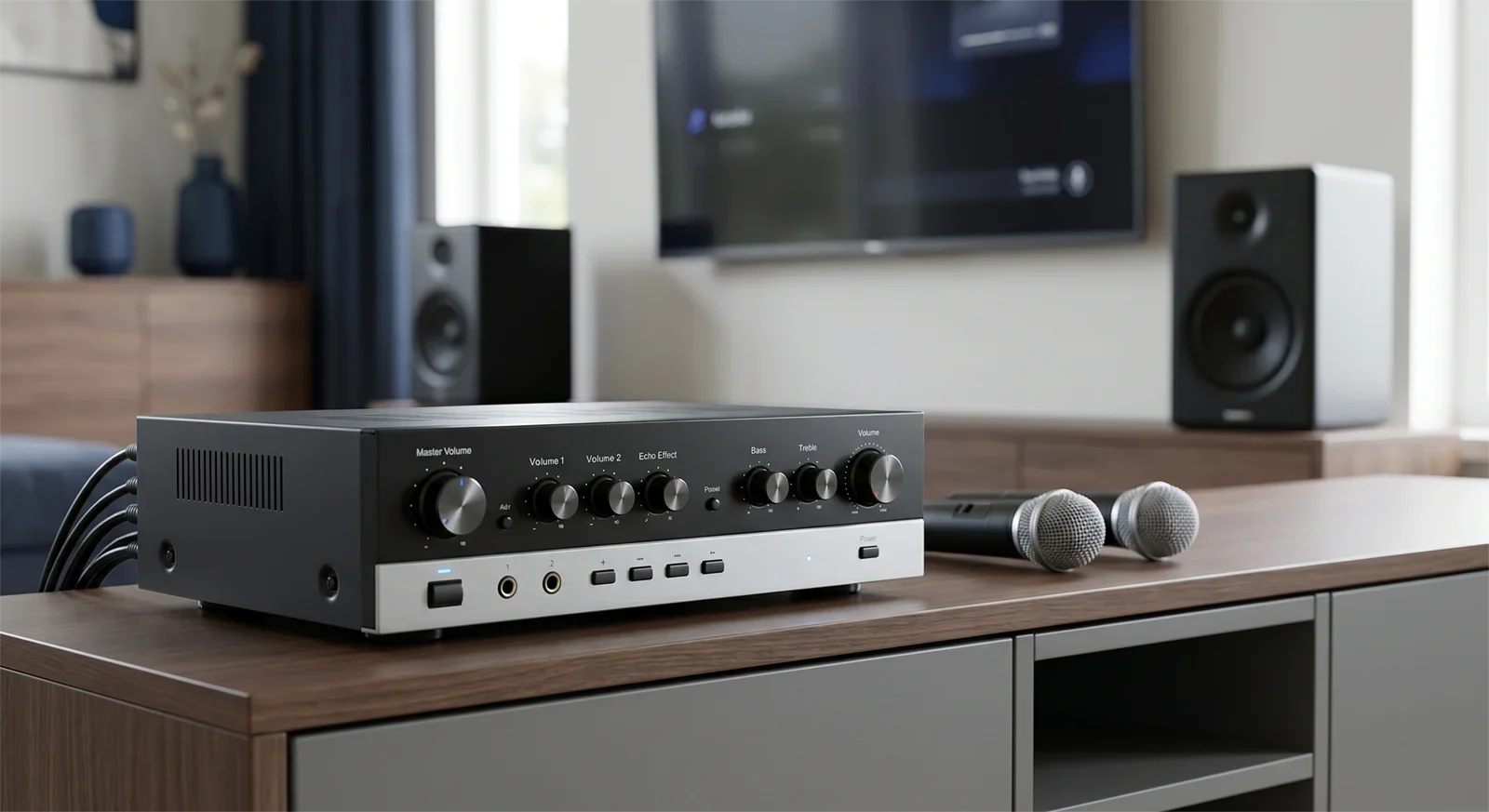
- Match the speaker size with the right amplifier, not just the room.
- Place the speakers where they do not aim directly into the microphones.
If you only remember one thing, remember this: most homes do not need the biggest speaker. They need the right speaker for the room.
Frequently Asked Questions
Are 15-inch speakers better than 12-inch speakers for karaoke?
Not always. A 15-inch speaker can sound bigger, but a 12-inch speaker may be easier to control and clearer in a normal home room.
Are 10-inch speakers enough for home karaoke?
Yes, 10-inch speakers can be enough for small rooms, condos, apartments, and casual singing. They may feel limited in larger spaces or louder party setups.
What speaker size is best for a living room karaoke system?
For many living rooms, 12-inch speakers are the best balance because they offer fuller sound than 10-inch speakers without becoming as difficult to manage as 15-inch speakers.
Does bigger speaker size mean better vocals?
No. Vocal clarity depends on speaker quality, microphone setup, amplifier control, tuning, and placement. Bigger size alone does not guarantee better singing.
Final Recommendation
If your karaoke room is compact, choose 10-inch speakers for easier control. If your room is a normal family living room, start with 12-inch speakers. If your space is large or open, 15-inch speakers may make sense, but only when the room and amplifier can support them.
The real choice is not small speaker vs. big speaker. It is properly matched speaker vs. mismatched speaker — and the mismatches, more often than not, come from sizing up rather than down.
Want to narrow it down by your actual room?
Compare Tittac's karaoke speakers, then match them with the right karaoke mixing amplifier.
Not Sure Whether You Need 10-Inch, 12-Inch, or 15-Inch Speakers?
Send Tittac your room size, speaker placement photo, and how your family usually sings. We can help you choose a speaker size that fits your room, amplifier, microphone setup, and comfort level.
Contact Tittac for help choosing the right karaoke speaker size