



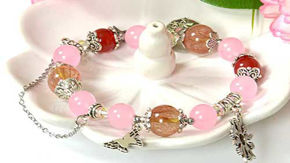
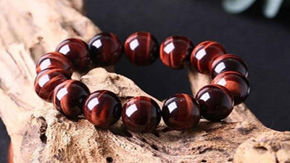

The history of healing jewelry is not the story of one single tradition. It is the story of many cultures using body-worn objects — amulets, jade ornaments, prayer beads, talismans, pendants, medals, and protective charms — to carry meaning close to the body. Across time, jewelry has been used for beauty, devotion, identity, protection, remembrance, status, ritual, and hope. Modern healing jewelry grows from that long human pattern, but it should not be treated as proof that jewelry can diagnose, treat, cure, or guarantee outcomes.
Who this guide is for: This guide is for readers who want a broad, trustworthy introduction to how meaningful jewelry developed across cultures and how that history connects to modern healing jewelry today.
Cultural Respect Note
This guide discusses cultural symbolism with respect and caution. Meanings can vary by family, region, tradition, and personal belief. Tittac presents these pieces as meaningful jewelry and cultural objects, not as guaranteed sources of protection, luck, wealth, or spiritual power.
Important historical note: Earlier cultures did not usually use the modern phrase “healing jewelry.” They used more specific objects and terms: amulets, talismans, prayer beads, jade ornaments, medals, relic containers, protective charms, and ritual adornments. In this article, “healing jewelry” is used as a modern umbrella term for meaningful body-worn objects connected to protection, devotion, identity, reflection, and well-being.
The key is to read the history with care. It is fair to say that people have worn meaningful objects close to the body for thousands of years. It is not fair to claim that every ancient ornament was “healing jewelry” in the modern sense, or that historical use proves a modern bracelet has guaranteed effects.
Historical Scope & Source Basis
This article uses “healing jewelry” as a modern umbrella term. Earlier cultures often used more specific categories such as amulets, talismans, prayer beads, jade ornaments, devotional medals, protective charms, and ritual adornments. The goal is to explain the long history of meaningful jewelry without pretending every ancient object fits today’s wellness language.
The article was reviewed to keep historical claims broad, culturally respectful, and claim-safe. Historical use is not presented as proof that modern jewelry can diagnose, treat, cure, protect, or guarantee specific outcomes.
Table of Contents
- Quick answer
- A modern term with ancient roots
- Ancient amulets and protective objects
- Jade, ritual value, and cultural meaning
- Prayer beads, malas, and devotional jewelry
- Medieval and early modern continuities
- The modern metaphysical revival
- Crystal and chakra jewelry today
- How to read this history responsibly
- FAQs
Quick answer
Healing jewelry is a modern umbrella term for many older traditions of meaningful body-worn objects. Across history, people have worn amulets, jade ornaments, talismans, prayer beads, medals, pendants, and protective charms for reasons connected to protection, blessing, devotion, remembrance, identity, ritual, status, and personal meaning.
Modern crystal and chakra jewelry continues part of that pattern, but it also reflects newer metaphysical, spiritual-wellness, and retail language. History shows that jewelry has long carried symbolic and spiritual meaning. It does not prove that jewelry produces guaranteed medical, emotional, or life-changing results.
A modern term with ancient roots
The phrase “healing jewelry” is modern. Ancient and traditional cultures did not all group their meaningful objects under one global category. A protective amulet, a jade pendant, a devotional bead strand, and a religious medal could all be worn on the body, but each belonged to its own cultural and spiritual context.
That is why the history should be understood as a wide pattern rather than a single straight line. People across cultures have long placed meaning into objects worn near the body. Sometimes the meaning was protective. Sometimes it was religious. Sometimes it marked status, family, memory, identity, or a connection to the sacred.
Modern healing jewelry brings many of these older patterns into one accessible category. That can be useful for today’s readers, but it can also oversimplify. A responsible view honors the shared human pattern without erasing the differences between traditions.
If you want the basic definition before the history, start with What Is Healing Jewelry?.
Ancient amulets and protective objects
Amulets are one of the clearest historical examples of meaningful jewelry. In many ancient cultures, small objects worn on the body were believed to offer protection, blessing, identity, or spiritual support. Their meaning often came from shape, material, color, inscription, symbol, ritual use, or the belief system surrounding them.
In ancient Egypt, for example, amulets were closely connected with protection, religion, and afterlife belief. They were worn by the living and also placed with the dead, showing how deeply ornament, ritual, and spiritual meaning could overlap.
Other cultures also used protective objects, charms, beads, pendants, and inscribed items in daily life. These objects were not all the same, and they did not all carry the same meaning. But they show a recurring pattern: people have often used wearable objects to make invisible hopes, fears, prayers, or identities visible and close.
This is one reason healing jewelry still feels familiar today. Even when modern language changes, the desire to wear meaning on the body is very old.
Jade, ritual value, and cultural meaning
Jade is one of the most important materials in the long history of meaningful jewelry, especially in Chinese and broader East Asian cultural contexts. Its value was never only about beauty. Jade has been associated with durability, refinement, ritual status, virtue, protection, and cultural identity across different periods.
Early jade objects were often tied to ceremony, rank, and symbolic value. Over time, jade also became more widely used in personal adornment, including pendants, beads, bangles, and carved objects. This long cultural life helps explain why jade still carries emotional and symbolic weight today.
Jade is a useful reminder that “meaning” in jewelry is not always simple. One material can move through ritual, status, family tradition, personal belief, gift-giving, and fashion without losing its deeper cultural resonance.
For a more focused discussion, read Jade in East Asian Culture.
Prayer beads, malas, and devotional jewelry
Another major thread in the history of meaningful jewelry is the use of beads for prayer, mantra, meditation, and devotional repetition. Bead strands appear in multiple religious and spiritual traditions, where they may help count prayers, structure meditation, support discipline, or mark identity.
Mala beads are one familiar example. In many contexts, malas are used as counting beads for mantra, prayer, or meditation. They may also be worn, but their meaning is deeper than styling. They belong to practice-based and tradition-based contexts that deserve respect.
This matters because modern wellness culture often blends prayer beads, crystal meanings, chakra language, and fashion into one broad category. Some overlap can be meaningful, but it should not erase the original context of devotional objects.
If you want the practical guide, see Mala Beads 101. For origins and deeper context, continue to Mala Beads History.
Medieval and early modern continuities
The habit of wearing meaningful objects did not disappear after the ancient world. Through medieval and early modern periods, people continued to wear amulets, charms, devotional medals, inscribed rings, relic containers, protective pendants, and other spiritually or culturally significant objects.
Some objects were connected to religion. Some were associated with protection. Some were tied to folk practice, family memory, social identity, or the medical beliefs of the time. In many cases, the boundaries between religion, protection, medicine, and daily life were not drawn the same way they are today.
This period is important because it keeps the history from becoming too simple. Meaningful jewelry was not only an ancient practice and not only a modern crystal trend. It continued through many forms of devotion, protection, status, and personal belief across changing societies.
It also reminds us to avoid a common mistake: turning every historic charm or religious object into “ancient crystal healing.” That may sound marketable, but it flattens the history. The better view is more careful: people have long worn objects that carried protection, blessing, identity, memory, or hope, but those meanings were specific to their time and culture.
The modern metaphysical revival
The language around healing jewelry changed strongly in the 19th and 20th centuries. Older traditions continued, but many ideas were reinterpreted through metaphysical, occult, spiritualist, New Age, and holistic-wellness movements.
This shift helps explain why modern readers often think of healing jewelry through crystals, chakras, energy, intention-setting, and personal transformation. These ideas do not come from one ancient source. They are part of a modern blend shaped by spiritual publishing, retail, global borrowing, wellness culture, and personal practice.
That does not make modern healing jewelry meaningless. It simply means the modern category is a synthesis. Some meanings draw from older traditions. Some are adapted. Some are newly packaged for contemporary spiritual and lifestyle use.
This is why a modern crystal bracelet can feel both old and new at the same time. It may use ancient materials, borrow symbolic language from multiple traditions, and still belong to a very modern marketplace.
Crystal and chakra jewelry today
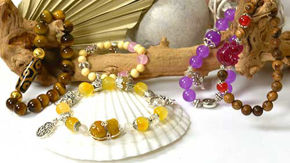
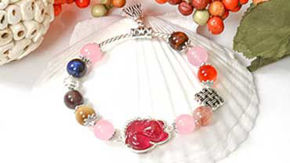
Today, healing jewelry is often seen through crystal bracelets, gemstone necklaces, chakra jewelry, intention bracelets, protection stones, birthstone pieces, and symbolic pendants. Many shoppers choose jewelry based on meanings such as calm, grounding, love, confidence, focus, clarity, or protection.
Chakra jewelry is especially common in modern spiritual-wellness spaces. These pieces often combine color symbolism, gemstone associations, intention-setting, and body-energy language into accessible jewelry designs. For many wearers, the value is not a guaranteed effect, but a personal reminder: a way to return to a theme they care about.
Modern healing jewelry also lives in a different environment from ancient amulets or traditional devotional objects. It is shaped by online shopping, social media, yoga culture, metaphysical stores, influencer trends, personal branding, and global design inspiration. That makes it more available, but also easier to misunderstand.
The safest way to approach healing jewelry today is to treat it as symbolic, personal, and culturally informed. Choose pieces for meaning, comfort, craftsmanship, and honest intention — not because a product description promises a guaranteed life result.
For practical material meanings, read Common Materials in Healing Jewelry & Their Meanings. For a focused guide to Tibetan-style symbolic beads, see Dzi Beads Guide.
How to read this history responsibly
A responsible history of healing jewelry has to hold two truths at once.
First, the human pattern is real and old. Across cultures, people have long worn meaningful objects to carry protection, devotion, memory, hope, identity, status, or spiritual connection close to the body. This history includes amulets, jade, prayer beads, talismans, medals, pendants, carved stones, and other forms of symbolic adornment.
Second, history does not prove guaranteed effects. The fact that a culture used a stone, charm, or amulet meaningfully does not prove that a modern jewelry piece can treat illness, change fate, or produce a specific outcome.
The strongest conclusion is more honest and more useful: healing jewelry belongs to a long human tradition of wearing meaning. Its power today is best understood through symbolism, reflection, identity, intention, cultural memory, beauty, and personal connection — not inflated promises.
Simple Timeline: Meaningful Jewelry Across Time
| Period | Common forms | How to understand it responsibly |
|---|---|---|
| Ancient world | Amulets, carved stones, protective pendants, ritual objects | Often tied to protection, identity, belief, status, devotion, or cultural practice within specific societies. |
| Classical and imperial traditions | Jade ornaments, seals, talismans, symbolic jewelry | Meaning depended on material, culture, class, ritual role, family context, and period. |
| Religious and devotional use | Prayer beads, malas, medals, pendants, relic containers | These objects often supported prayer, remembrance, devotion, repetition, or spiritual focus. |
| Modern wellness era | Crystal bracelets, chakra jewelry, intention jewelry, symbolic gifts | Best understood as symbolic, spiritual-wellness, cultural, or mindfulness-oriented jewelry rather than medical treatment. |
FAQs
Is healing jewelry an ancient concept?
The modern phrase “healing jewelry” is recent, but the broader practice is ancient. People have worn meaningful, protective, devotional, and symbolic objects for thousands of years. What is modern is grouping many different traditions under one consumer-facing term.
Did ancient cultures use the phrase healing jewelry?
No. Earlier cultures usually used more specific objects and meanings, such as amulets, talismans, jade ornaments, prayer beads, medals, charms, or ritual adornments. “Healing jewelry” is a modern umbrella phrase.
Were all ancient jewelry pieces used for healing?
No. Some pieces were protective, some ceremonial, some devotional, some political, some ornamental, and some tied to status or identity. A careful history does not assume every ancient ornament had the same purpose.
Why are amulets important in this history?
Amulets are important because they show one of the clearest historical examples of body-worn objects connected to protection, blessing, and spiritual meaning. They help explain why wearable symbolism has remained so persistent across cultures.
Why does jade matter in healing jewelry history?
Jade matters because it has carried deep ritual, symbolic, cultural, and personal value in Chinese and East Asian contexts. Its long history shows how one material can move through ceremony, status, family tradition, and adornment.
Are prayer beads and malas the same as modern healing jewelry?
Not exactly. They can overlap in a broad discussion of meaningful jewelry, but malas and prayer beads belong to specific devotional and spiritual traditions. They should not be reduced to generic wellness accessories.
What changed in modern times?
Modern healing jewelry became more connected with crystal meanings, chakra language, intention-setting, metaphysical publishing, online retail, and personal wellness culture. This created a modern category that blends older symbols with newer spiritual and lifestyle frameworks.
Does history prove that healing jewelry works?
No. History can show that jewelry has carried deep symbolic, spiritual, cultural, and emotional meaning. It does not prove that jewelry guarantees medical, emotional, financial, or spiritual results.
How should I choose healing jewelry today?
Choose a piece for honest meaning, comfort, material quality, cultural respect, and realistic daily wear. Avoid buying based only on exaggerated claims. A meaningful piece should support reflection, not promise to solve your life.
Related Posts
- What Is Healing Jewelry?
- Types of Healing Jewelry Explained
- Common Materials in Healing Jewelry & Their Meanings
- Jade in East Asian Culture
- Mala Beads History
- Dzi Beads Guide
The history of healing jewelry is meaningful because it reveals something lasting about human beings: we have always used objects to carry what cannot be easily held in words. A pendant, bead, charm, or bracelet can become a way to remember, protect, pray, honor, begin again, or stay connected to what matters.