
An AI massage chair is not a chair that diagnoses your health. In most massage chairs, “AI” means the chair uses body scanning, sensors, smart programs, or tension-detection logic to make the massage more personalized and easier to start. The most useful AI features help the chair find your shoulders, adjust roller position, recommend a program, or focus on areas of tension, but comfort still depends on body fit, intensity level, and how the chair feels when you try it.
Who this guide is for
This guide is for shoppers who have heard the phrase “AI massage chair” on a product page, in an ad, or from a salesperson and want a simple explanation before choosing a chair. It is especially useful if you are buying for your home, your parents, or an older family member and you want to know whether AI is genuinely helpful or just marketing language.
How this guide was prepared
This guide explains AI massage chair features in plain English based on how shoppers compare massage chairs in real buying situations: body scanning, shoulder detection, smart programs, tension-detection features, comfort settings, and safety expectations. It is written as a beginner definition page, not a medical guide and not a deep technical breakdown.
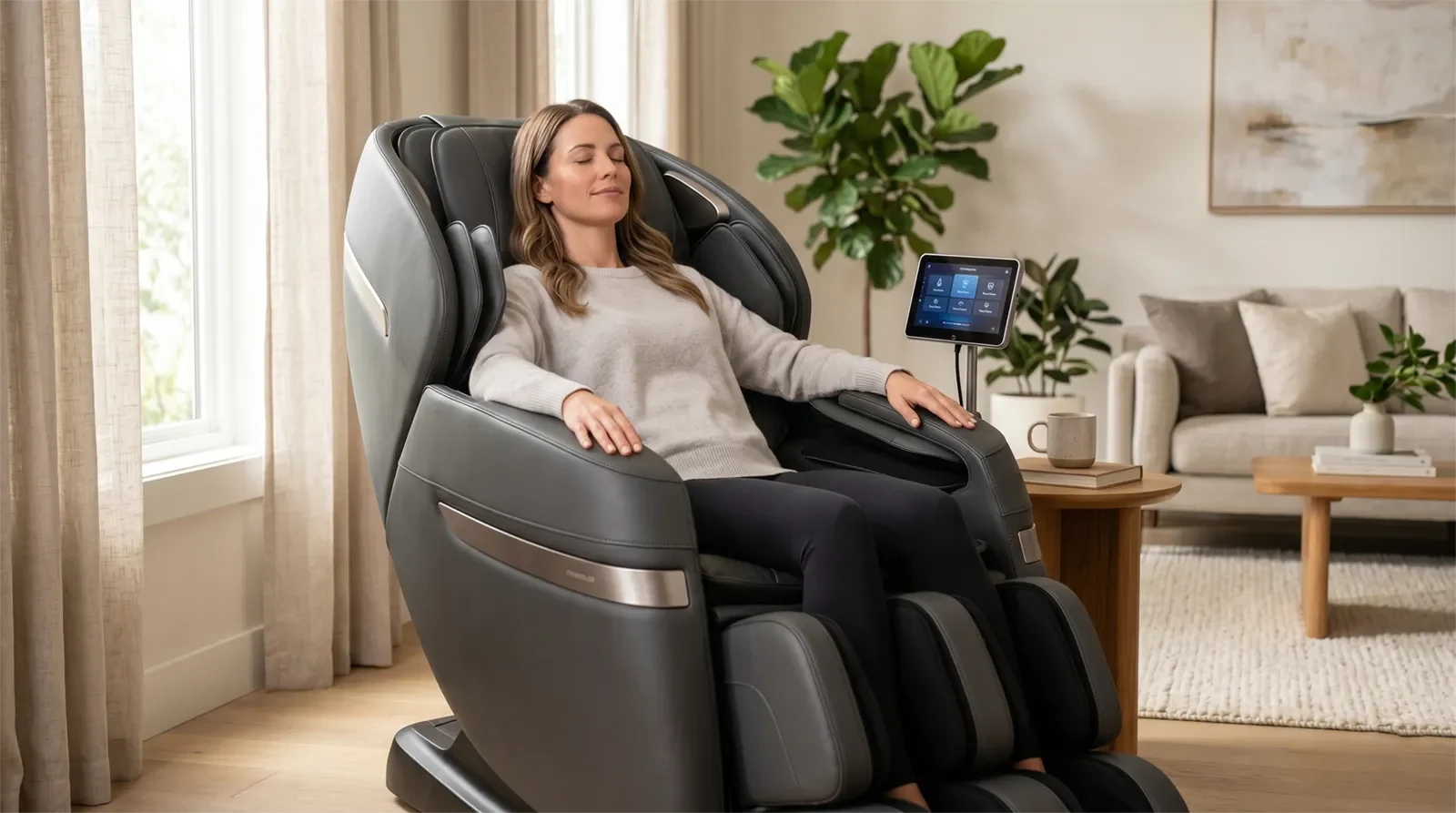
Table of Contents
- Quick answer: what is an AI massage chair?
- What the AI function usually does
- What AI does not mean
- Common AI features shoppers see
- How AI helps first-time users and older parents
- Examples from Kaze Duo, OP-Master, and AI Xrest
- How to judge AI without getting fooled by marketing
- When AI is worth paying attention to
- When AI should not be the main reason to buy
- Safety note
- Frequently Asked Questions
- Related Guides
Quick answer: what is an AI massage chair?
An AI massage chair is a massage chair that uses smart features to make the massage easier to personalize. In real use, this usually means the chair can scan your body, locate your shoulder area, adjust the roller path, suggest a massage program, or respond to certain body-tension readings depending on the model.
The important thing to understand is this: AI in a massage chair is not the same as medical artificial intelligence. The chair is not diagnosing back pain, checking your health condition, or replacing professional care. It is using built-in sensors and programmed logic to help the massage feel more customized.
AI should make a massage chair easier to use and better fitted to your body; it should not be treated as a medical diagnosis feature.
If you want the deeper technical explanation of body scan, auto programs, preset logic, and real AI versus branding language, read our full guide: AI Massage Chairs Explained: What Body Scan and Auto Programs Actually Do.
What the AI function usually does
In most premium massage chairs, AI is mainly about personalization. The chair tries to understand where your body sits in the chair and how the rollers should move for a better starting point.
Depending on the model, AI may help with:
- Shoulder detection: helping the chair find where your shoulders are before the massage begins.
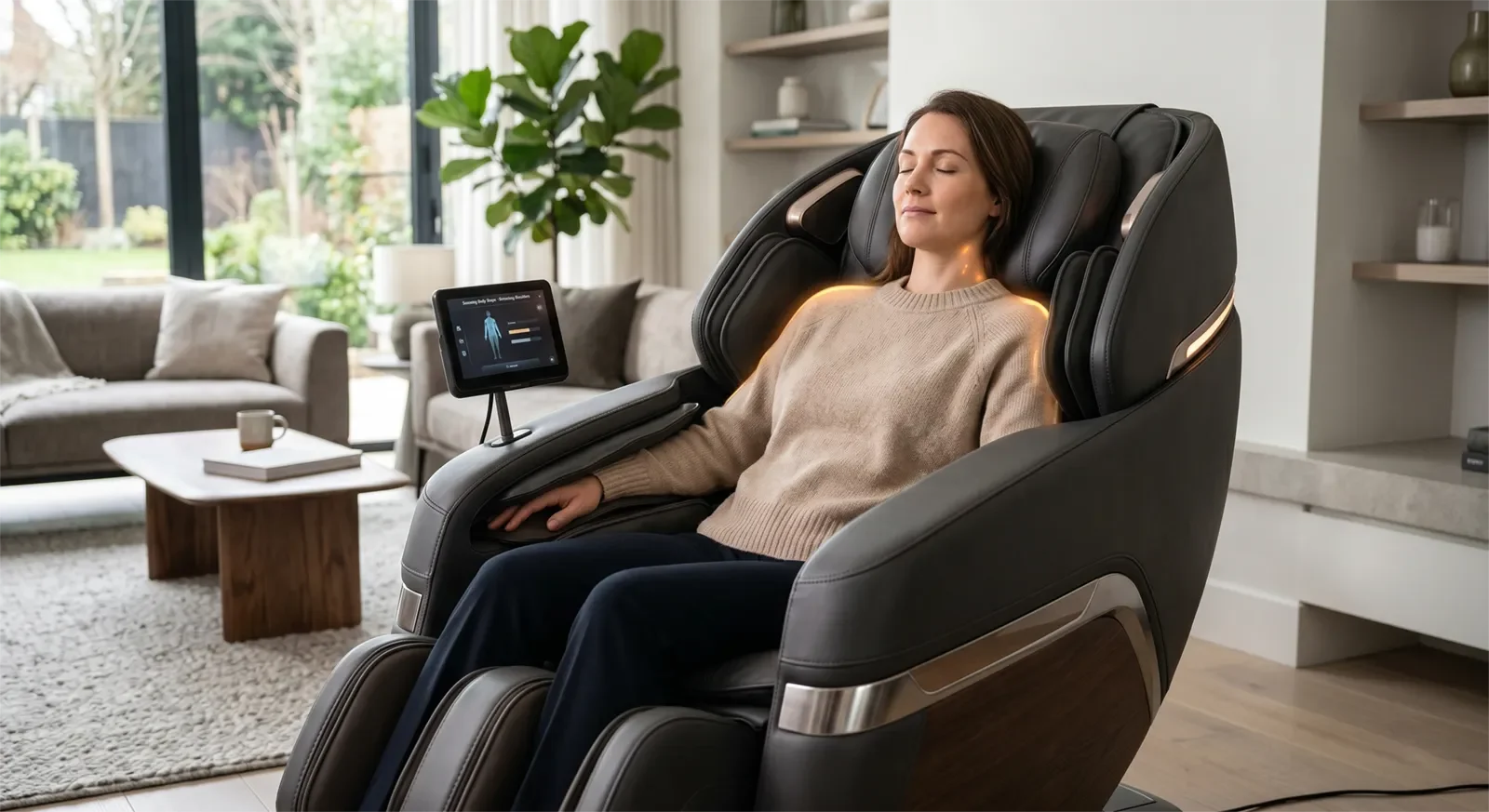
- Body scanning: mapping your height, back position, or shoulder area so the roller path feels more accurate.
- Smart program selection: recommending or adjusting a massage mode based on the chair’s built-in logic.
- Tension-detection features: using sensors or programmed readings to suggest where the chair should focus more attention.
- Automatic adjustments: reducing the need for the user to manually change every setting before starting.
For a first-time user, the biggest benefit is simple: AI can make the chair easier to start. Instead of guessing which program, roller position, or shoulder setting to use, the chair gives you a more guided starting point.
What AI does not mean
AI does not mean the chair understands your health the way a doctor, physical therapist, or licensed massage professional would. A massage chair may detect certain body-position signals or use tension-related logic, but it does not know the medical reason for your pain.
AI also does not automatically make one chair better than another. A chair with strong AI language can still feel too intense, too narrow, too soft, or poorly matched to your body. A simpler chair can sometimes feel better if the roller design, track shape, pressure, and body fit are right for you.
When shopping, do not judge the chair only by the word “AI.” Judge whether the AI feature makes the chair more comfortable, easier to use, and better fitted to your body.
Common AI features shoppers see
When you compare AI massage chairs, you may see several feature names. The wording changes by brand, but many of them fall into a few practical categories.
Body scan
The chair scans your body position and tries to align the rollers with your shoulders and back. Learn more in our guide to massage chair body scan technology.
Automatic shoulder adjustment
The chair detects or estimates your shoulder area so the massage does not start too high or too low.
Smart massage programs
The chair uses preset program logic to guide the session instead of making you adjust every setting manually.
Muscle tension detection
The chair uses sensor-based or program-based logic to identify areas where it may focus more attention. This should be understood as a comfort feature, not a medical test.
Voice control
Some chairs allow simple voice commands so users can start, stop, or change settings without reaching for the remote.
Personalized recommendations
Some high-end chairs may recommend programs based on scanning or sensor feedback, giving the user a more guided experience.
How AI helps first-time users and older parents
AI is most helpful when it makes the chair less confusing. Many shoppers are not worried about technology itself; they are worried that the chair will be too complicated for daily use.
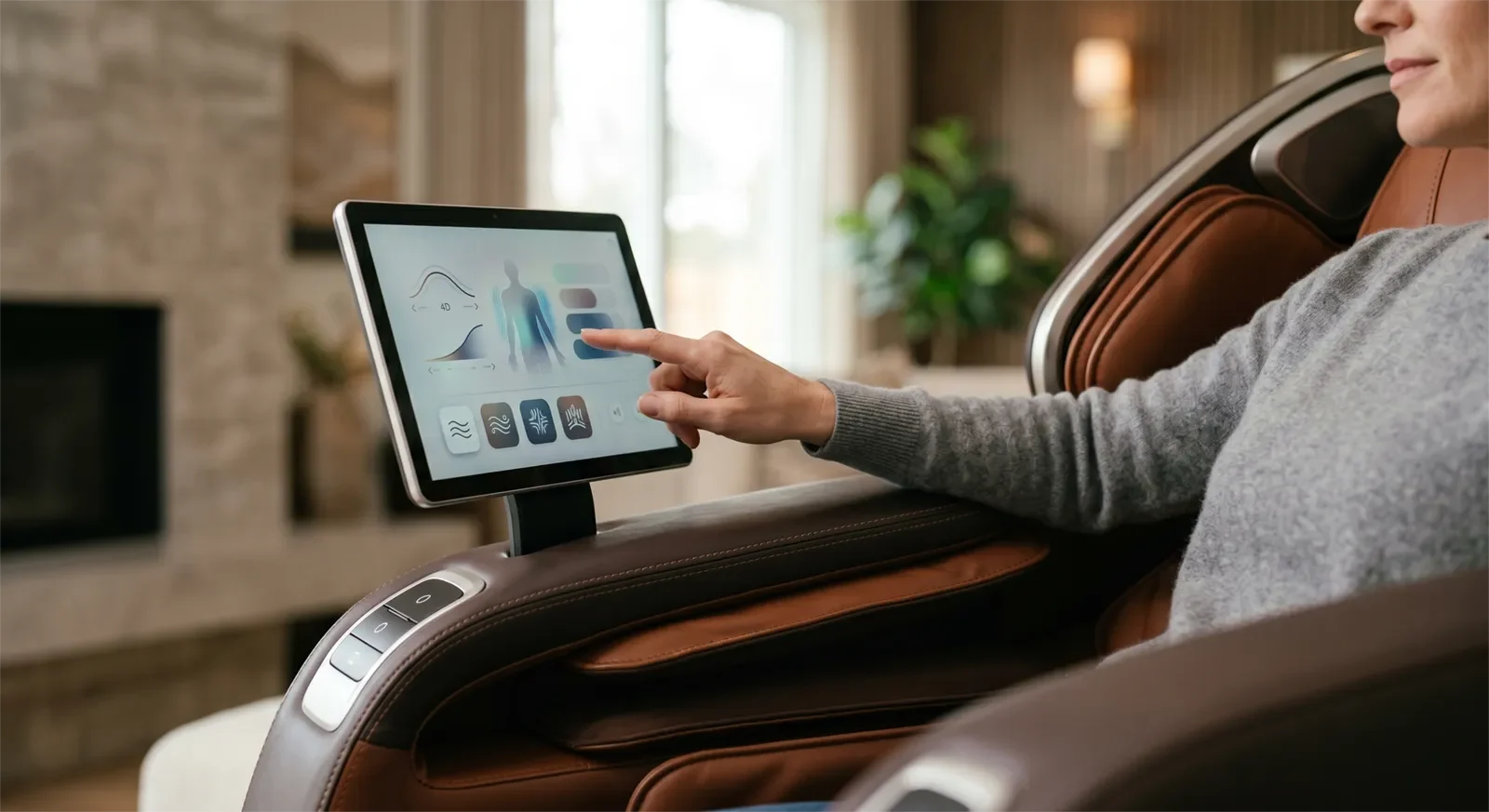
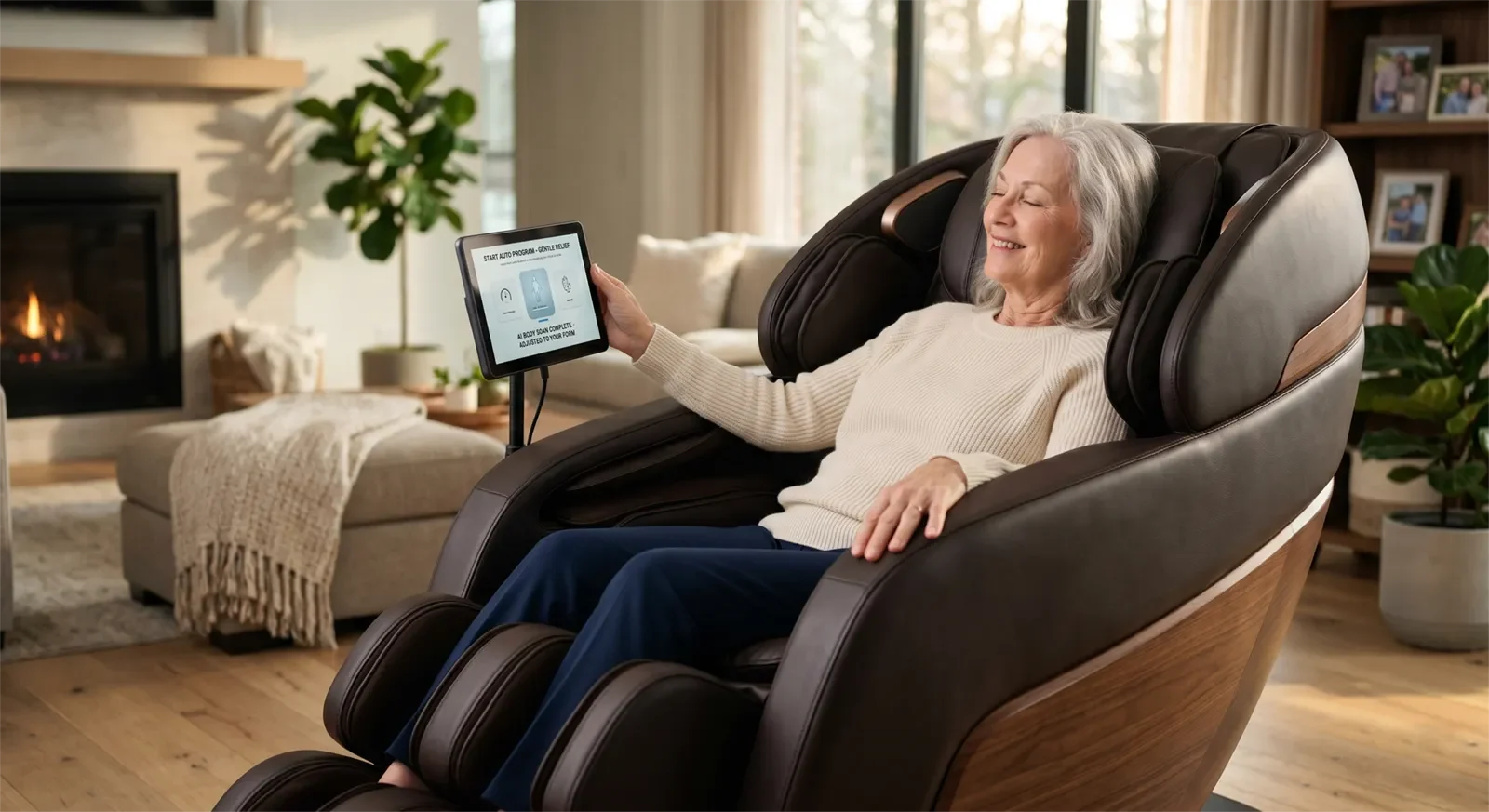
For older parents, the best AI features are the ones that reduce steps. A good scan, automatic shoulder positioning, smart program selection, or voice control can make the chair easier to use without asking the user to adjust many buttons.
This matters because many massage chairs have advanced settings, but not every family member wants to learn every feature. If AI helps someone sit down, start a comfortable session, and make small adjustments easily, it has real value.
Still, AI should support comfort, not replace comfort. The chair should still fit the user’s height, shoulder width, pressure preference, and room space.
Examples from Kaze Duo, OP-Master, and AI Xrest
Different massage chairs use AI in different ways. These examples can help you understand how the term appears across real premium models at Tittac.
JPMedics Kaze Duo
Kaze Duo is the best example for shoppers who want a high-end AI-assisted Japanese/JPMedics flagship-style experience. Its Chair Doctor Powered by AI feature, real-time biometric data, personalized massage recommendation, and 4D+3D dual mechanism are designed for shoppers who want a more advanced, guided premium chair experience.
Osaki OP-Master
OP-Master is a good example of a premium value Osaki chair using body scan and muscle tension detection. It is a practical choice for shoppers who want strong 4D massage performance, smart scanning support, and a feature-rich chair without making the AI label the only reason to buy.
Osaki Platinum AI Xrest
AI Xrest is a good example for shoppers who want more intensity adjustment and a stronger “AI” positioning within Osaki’s Platinum line. Features such as Muscle Tension Detection, automatic shoulder adjustment, smart voice control, and multiple speed and intensity levels make it appealing for users who want more control over the massage feel.
The right choice depends on what you care about most: Japanese/JPMedics flagship-style experience, premium value, more adjustment control, body fit, or massage intensity.
How to judge AI without getting fooled by marketing
The word “AI” can sound impressive, but the real question is whether the feature improves the massage experience. Before paying more for an AI massage chair, ask what the AI actually does.
- Does it help the chair find your shoulders more accurately?
- Does it make the massage easier to start?
- Does it recommend a useful program or just rename preset programs?
- Can you still manually adjust intensity, roller position, speed, and air pressure?
- Does the chair feel good on your body after the scan is complete?
- Is the AI feature clearly explained, or is it only used as a sales word?
A strong AI feature should be easy to explain. If nobody can explain what it does in plain English, be careful.
When AI is worth paying attention to
AI is worth paying attention to when it solves a real problem for the user. For example, if you are buying for parents who do not want to adjust many settings, automatic scanning and guided programs can be useful. If different family members will use the same chair, body scanning and automatic shoulder adjustment can help the chair adapt more easily from one person to another.
AI is also helpful when the chair combines smart features with a strong massage mechanism. A good AI system is more valuable when the rollers, track design, intensity range, and adjustment controls are already strong. For more context on massage mechanisms, see our guide to 2D vs 3D vs 4D massage chairs.
When AI should not be the main reason to buy
AI should not be the main reason to buy if the chair does not fit your body, feels uncomfortable, or has the wrong intensity level for your needs. A chair can have advanced AI language and still be a poor match for a petite user, a tall user, someone sensitive to pressure, or someone who prefers a gentler massage.
AI also should not distract from practical ownership questions: room size, delivery path, warranty, service support, remote help, and whether the chair is easy for the whole family to use.
If you are still early in the buying process, start with the bigger decision guide first: How to Choose the Best Massage Chair for Your Home.
Safety note
An AI massage chair should be used as a comfort and wellness product, not as a medical device. Do not use AI scanning, muscle tension detection, or program recommendations as a diagnosis. If you have a medical condition, recent surgery, injury, blood clot risk, pregnancy concerns, osteoporosis, severe pain, or any condition that may make massage unsafe, ask a qualified healthcare professional before using a massage chair.
For general massage safety information, the National Center for Complementary and Integrative Health advises people not to use massage therapy to postpone seeing a healthcare provider about a medical problem. You can read more here: Massage Therapy: What You Need To Know.
You can also read Tittac’s Health & Safety Guide When Using a Massage Chair before starting regular sessions.
Frequently Asked Questions
Does an AI massage chair diagnose health problems?
No. An AI massage chair does not diagnose disease, identify the medical cause of pain, or replace a healthcare professional. AI features are mainly used to personalize comfort, scanning, program selection, and roller positioning.
Is AI the same as body scan?
Not exactly. Body scan is one common AI-related feature, but AI can also refer to smart programs, tension-detection logic, automatic shoulder adjustment, voice control, or personalized recommendations.
Is an AI massage chair better than a regular massage chair?
It depends. AI can make a chair easier to use and more personalized, but the chair still needs to fit your body and match your preferred massage intensity. A well-fitted chair with simpler controls may feel better than an AI chair that does not fit you well.
Is AI useful for older parents?
Yes, it can be useful if it reduces confusion. Automatic scanning, simple programs, and voice control can make the chair easier for older users, especially if they do not want to adjust many settings manually.
Should I pay more just because a chair says AI?
Not automatically. Pay attention to what the AI actually does. If it improves shoulder detection, comfort, program selection, or ease of use, it may be valuable. If the term is not clearly explained, treat it carefully.
Which AI massage chair should I compare first?
If you want a high-end Japanese/JPMedics flagship-style experience, compare Kaze Duo. If you want premium value with body scan and muscle tension detection, compare OP-Master. If you want more intensity adjustment and stronger Platinum AI positioning, compare AI Xrest.
Need help comparing AI massage chairs?
If you are comparing AI massage chairs, contact Tittac and we can explain which AI features are actually useful, which ones are mostly marketing language, and which chair feels right for your body.