
A good massage chair is not the one with the most features. It is the one with the right features for the areas your body actually needs: neck and shoulders, lower back, legs, feet, overall relaxation, or easier use for parents. Heat, 4D rollers, AI body scan, air compression, foot rollers, calf massage, Zero Gravity, and Duo mechanisms all do different jobs. The key is knowing which function matches your real discomfort before you buy.
Who this guide is for
This guide is for shoppers who look at massage chair product pages and feel overwhelmed by the feature list. You may be asking, "Which feature helps my neck and shoulders?" "What helps lower back stiffness?" "Do I need foot rollers?" "Is AI useful?" or "What should I look for if I am buying for my parents?"
This article explains massage chair features in plain English, using the way customers actually describe their discomfort: tight neck and shoulders, stiff lower back, tired legs, sore feet, difficulty relaxing, or trouble using complicated controls.
How this guide was prepared
This guide was prepared from Tittac's massage chair showroom experience, common customer questions, product feature comparisons, and general safety references from reputable health sources. It does not claim that a massage chair diagnoses, treats, or cures medical conditions. The goal is to help you match the right chair features to the right comfort needs. A few showroom moments didn't go the way shoppers expected going in, and those are included below because they changed what we now ask before recommending a chair.
Table of Contents
- Quick answer: which feature helps which problem?
- Heat: best for stiffness, warmth, and relaxation
- 4D massage: best for adjustable pressure and deeper back work
- AI / body scan: best for easier setup and better personalization
- Shoulder massage nodes: best for neck and shoulder tension
- SL-Track / L-Track: best for coverage from neck to glutes
- Duo mechanism: best for fuller upper/lower body coverage at the same time
- Air compression: best for arms, shoulders, calves, feet, and full-body squeeze
- Foot rollers: best for tired feet and standing-all-day customers
- Calf rollers / calf kneading: best for tired legs and calf tightness
- Zero Gravity: best for pressure relief and deeper relaxation posture
- Quiet technology: best for evening use, seniors, and shared living rooms
- Voice control / touchscreen / side panel: best for older parents and easy use
- Memory programs: best for families with multiple users
- Feature-to-need table
- Which features matter most for common customer problems
- What features should not be overvalued
- Safety note
- Frequently Asked Questions
- Related Guides
Quick answer: which feature helps which problem?
If your neck and shoulders feel tight, look for shoulder massage nodes, accurate body scan, adjustable 4D pressure, and strong upper-back coverage. If your lower back feels stiff, look for lumbar heat, an SL-Track or L-Track, 4D massage, and Zero Gravity recline. If your legs and feet feel tired, look for calf rollers, foot rollers, air compression, and heat in the lower body area.
If you are buying for older parents, the most useful features are often not the flashiest ones. AI body scan, automatic programs, voice control, touchscreen control, a simple side panel, and memory programs can make the chair easier to start and easier to repeat every day.
Choose massage chair features by body need first, not by feature count.
Heat: best for stiffness, warmth, and relaxation
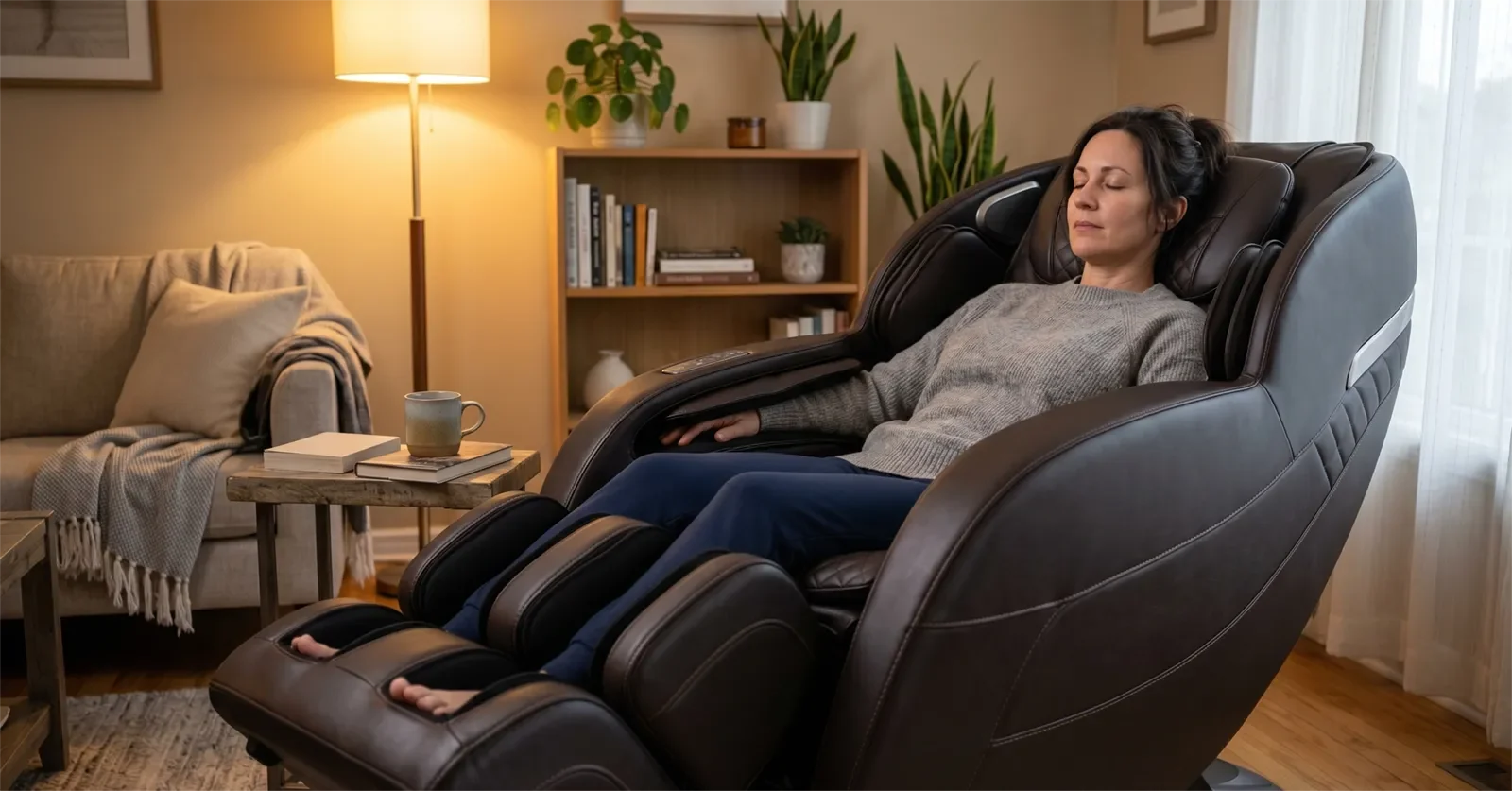
Heat does more than make the chair feel warm. Warmth can help tight muscles relax and may support better blood flow to the warmed area, which is why many people like heat for lower back stiffness, cold feet, tired calves, and evening relaxation.
In massage chairs, heat may appear as lumbar heat, heated rollers, calf heat, foot heat, or multiple heated zones. For example, JPMedics Kaze Duo includes three heated zones, while Osaki OP-Master includes lumbar and feet heat. Osaki JP-Nexus 4D includes lumbar heat, and Osaki OS-Pro Maestro LE 2.0 uses heated rollers.
For shoppers, the practical question is not just "Does the chair have heat?" The better question is: Where is the heat placed? Lower back heat, foot heat, calf heat, and heated rollers feel different because they warm different areas of the body.
For a deeper comparison, read Heated Rollers vs Lumbar Heat.
4D massage: best for adjustable pressure and deeper back work
4D massage is one of the most important features for shoppers who care about pressure control. A 4D mechanism can usually adjust the depth or intensity of the roller movement more than a basic 2D or 3D system, helping the massage feel softer or stronger depending on the setting.
This matters for two types of customers. Some people want a deeper, stronger massage through the upper back and lower back. Others need the ability to reduce intensity because they are sensitive to pressure. A good 4D chair should give you more control, not just more strength.
Examples include OP-Master with a 4D mechanism, JP-Nexus 4D with a 4D mechanism, AI Xrest with 4D and multiple speed/intensity levels, and Maestro LE 2.0 with upgraded 4D and eight levels of 4D adjustment.
To understand the difference between massage mechanisms, read 2D vs 3D vs 4D Massage Chairs.
AI / body scan: best for easier setup and better personalization
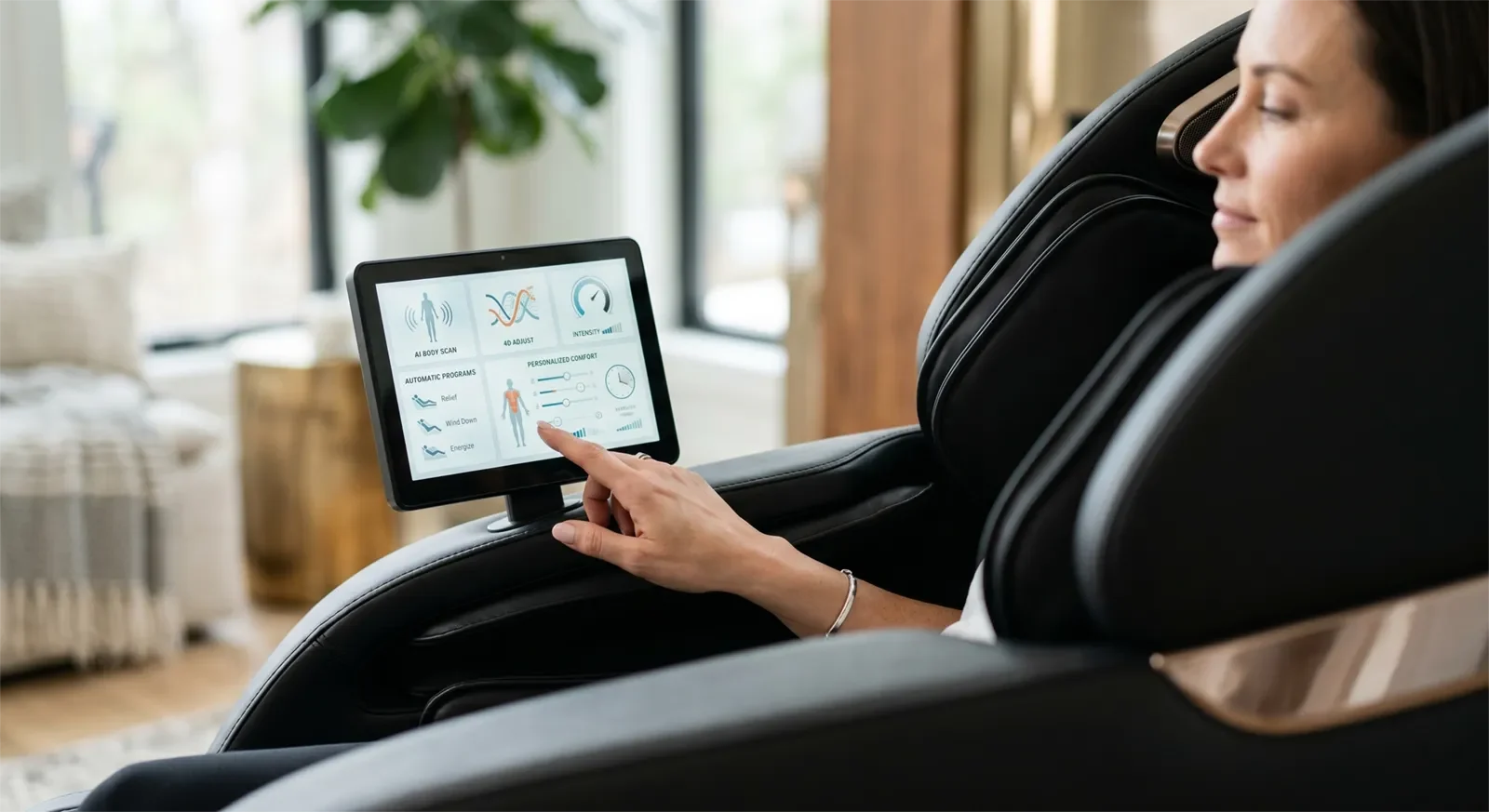
AI is most useful when it helps the chair set up faster and fit the person better. For older parents or first-time users, the best AI function is not "magic." It is less guessing, less manual adjustment, and a better starting point.
AI and body scan features may help the chair find your shoulders, adjust roller position, recommend a program, or detect areas where the chair should focus more attention. These features should improve comfort and ease of use, but they should not be treated as medical diagnosis tools.
Kaze Duo includes Chair Doctor Powered by AI, automatic back scan, real-time biometric data, personalized massage recommendation, and 25 auto programs. OP-Master includes automatic body scan, Health Pro scanning, muscle tension detection, and automatic shoulder adjustment. AI Xrest includes Muscle Tension Detection, automatic shoulder adjustment, smart voice control, and multiple speed/intensity settings.
For the beginner definition, read What Is an AI Massage Chair?. For the deeper guide, read AI Massage Chairs Explained and Massage Chair Body Scan Technology Explained.
Shoulder massage nodes: best for neck and shoulder tension
Shoulder massage nodes are useful for customers who always say, "My neck and shoulders are tight." They do not diagnose neck problems, but they can help the chair focus more directly around the shoulder pad area instead of only rolling up and down the back.
This feature is especially useful for people who carry tension in the upper body, work at a desk, drive long hours, or feel tight across the trap and shoulder area. The best result usually comes when shoulder nodes work together with accurate body scan, adjustable 4D rollers, and a good upper-back program.
OP-Master is a strong example because it includes shoulder massage nodes, automatic shoulder adjustment, muscle tension detection, and a 4D mechanism. For shoppers who complain mainly about neck and shoulder tightness, these features are more relevant than simply counting how many total programs the chair has. We've had shoppers arrive having already decided on a chair from online specs alone, only to sit down and find the headrest sat too far forward and covered the shoulder area the nodes were supposed to reach — a five-minute sit-down test caught what no spec sheet would have shown.
SL-Track / L-Track: best for coverage from neck to glutes
The massage track controls where the rollers can travel. A basic back-only track may stop around the lower back. An L-Track or SL-Track usually extends the roller path farther down toward the glutes or upper hamstring area, depending on the chair design.
This matters for shoppers who want more than a short back massage. If your lower back, hips, or glute area often feels stiff, the track design can matter as much as the roller type.
Kaze Duo includes a 1.35-meter L-Track. OP-Master and JP-Nexus 4D include SL-Track coverage. The practical benefit is simple: better track coverage gives the chair more area to work on, while 4D or Duo mechanisms determine how the massage feels within that coverage.
Duo mechanism: best for fuller upper/lower body coverage at the same time
A Duo massage chair uses two massage mechanisms instead of one. The goal is fuller coverage, often allowing the chair to work on upper and lower body areas more efficiently during the same session.
This can be helpful for shoppers who want a more complete chair experience, especially when they do not want the rollers to spend too much time moving from one area to another. Duo mechanisms can also make the massage feel more active and layered.
Kaze Duo uses a 4D+3D dual mechanism. Osaki Platinum Solis Duo 4D+, OS-Pro 4D DuoMax, and Osaki Flagship Duo are examples of Osaki Duo-style chairs with different combinations of dual mechanisms, air compression, calf/foot features, heat, and convenience features.
For a deeper explanation, read Duo Massage Chairs Explained.
Air compression: best for arms, shoulders, calves, feet, and full-body squeeze
Air compression uses airbags that inflate and deflate around different parts of the body. This creates a squeezing sensation that can feel calming, supportive, and relaxing, especially around the arms, shoulders, calves, and feet.
Air compression is not the same as roller massage. Rollers knead and move along the body, while airbags squeeze and release. Many customers like air compression because it makes the session feel more full-body, even in areas where rollers cannot reach.
OP-Master includes air compression with 46 air cells. JP-Nexus 4D also includes air compression. Solis Duo includes 57-cell air massage, while DuoMax and Flagship Duo also use air compression as part of their full-body massage design.
For more detail, read Foot Rollers, Calf Massage, and Air Compression Explained.
Foot rollers: best for tired feet and standing-all-day customers
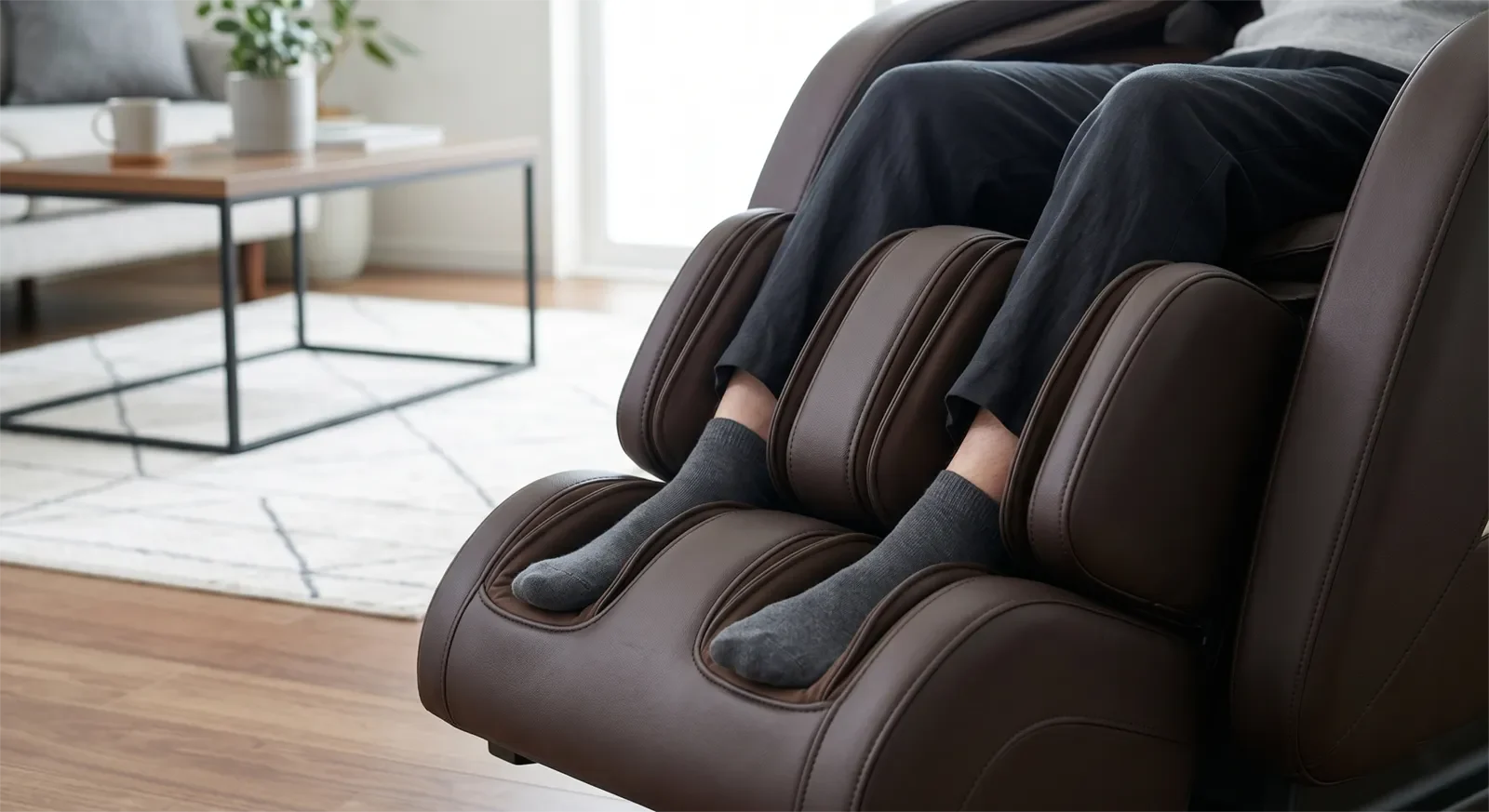
Foot rollers matter most for people who stand, walk, cook, work retail, do nails, work in a salon, or feel tired feet at the end of the day. They focus on the soles and arches, where many people feel daily pressure and fatigue.
Air compression around the feet can add a squeezing feeling, but foot rollers create more direct pressure under the foot. Some customers love this feeling immediately. Others need to lower the intensity or wear socks at first because foot rollers can feel strong.
OP-Master includes foot rollers. JP-Nexus 4D includes specialized foot rollers. DuoMax includes foot rollers with calf/foot air massage, while Solis Duo and Flagship Duo also include lower-body comfort features for shoppers who care about legs and feet.
Calf rollers / calf kneading: best for tired legs and calf tightness
Calf massage is important for customers who say their legs feel heavy, tight, or tired after a long day. Calf rollers, calf kneading, calf airbags, and calf heat can make the lower-body massage feel more complete.
This feature is especially relevant for people who stand for work, walk a lot, cook for long periods, travel often, or want stronger lower-leg attention than air compression alone can provide.
DuoMax is a good example because it includes calf rollers, deep calf kneading, foot rollers, and air massage for the calf and foot area. Solis Duo also includes calf/foot rollers, 57-cell air massage, and heat in the lumbar, waist, and calf areas.
It's worth keeping an open mind here even if your main complaint is your back. We've had customers who were focused entirely on lower-back features when shopping, then came back a week after delivery saying the calf and foot section was actually the part they used the most. The body part you notice most while standing in a showroom isn't always the one you end up leaning on daily.
Zero Gravity: best for pressure relief and deeper relaxation posture
Zero Gravity recline positions the body in a more laid-back posture so the user feels more supported by the chair. Many customers describe this as a more relaxed position because the body feels less upright and the back settles more naturally into the rollers.
Zero Gravity can also make the massage feel deeper because your body weight rests more into the chair. This is why some shoppers like Zero Gravity for lower back stiffness, full-body relaxation, and evening use.
Zero Gravity is not a cure for back pain, but it can be an important comfort feature when paired with good roller design, heat, and adjustable pressure. Learn more in Zero Gravity Massage Chair Explained.
Quiet technology: best for evening use, seniors, and shared living rooms
Quiet operation is easy to overlook until the chair is inside your home. If the chair will be used in a living room, bedroom, apartment, or shared family space, noise level matters.
Quiet technology is especially important for evening relaxation, seniors who nap or rest while using the chair, and families who do not want the massage chair to disturb TV time or conversation.
JP-Nexus 4D includes Quiet Technology, making it a useful example for shoppers who care about a calmer massage environment, not just stronger roller pressure.
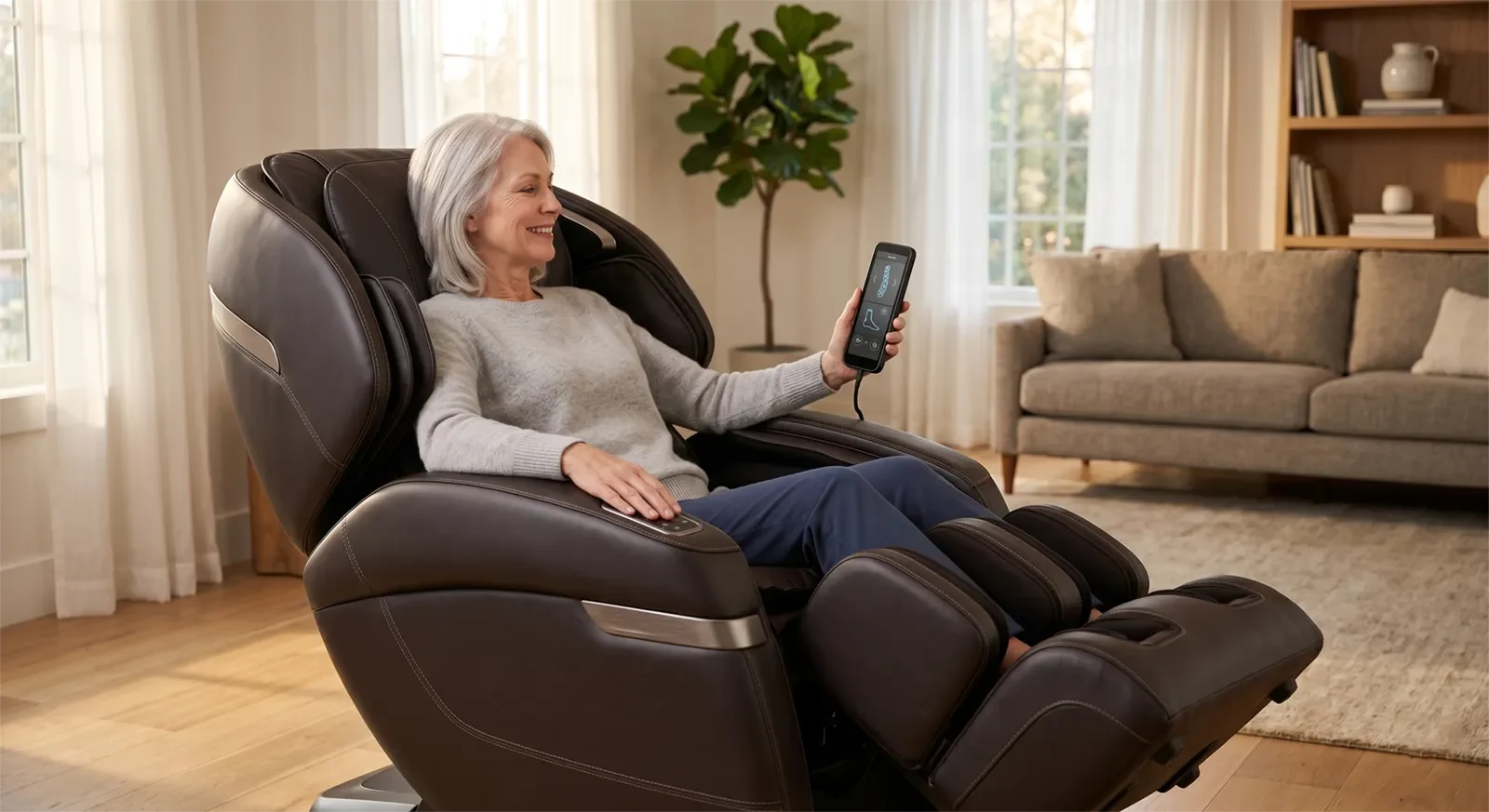
Voice control / touchscreen / side panel: best for older parents and easy use
A powerful massage chair is less useful if the person using it feels confused by the controls. For older parents, simple control features can matter just as much as roller strength.
Voice control, touchscreen control, side panels, app control, and clear auto programs can make the chair easier to start, pause, adjust, and repeat. This is important when the chair is shared by multiple family members with different comfort levels.
AI Xrest includes smart voice control. Maestro LE 2.0 includes app and tablet controls. Kaze Duo includes Vietnamese language support, which can be especially helpful for Vietnamese-speaking families who want a premium chair that feels easier to understand.
App control sounds like a clear upgrade on paper, but it doesn't always play out that way at home. We've seen adult children buy their parents a chair with full app control as the main selling point, only to find out weeks later that the parent never opened the app and only ever used the one button built into the armrest. Now, when someone is buying for a parent, we ask upfront whether that parent is comfortable using a phone app day to day — it changes which chair actually makes sense as the "easy to use" pick.
Memory programs: best for families with multiple users
Memory programs are useful when more than one person uses the same chair. Instead of adjusting the massage from the beginning every time, memory settings can help repeat a preferred setup more easily.
This is helpful for families where one person likes a stronger back massage, another prefers a lighter program, and an older parent wants a familiar routine that does not require too many button presses.
Kaze Duo includes memory programs, which adds convenience for households that want a more personalized premium chair experience.
Feature-to-need table
Use this table as a quick way to match common customer concerns with the features that usually matter most.
| Customer concern | Features to look for | Why it may help |
|---|---|---|
| Neck and shoulder tension | Shoulder massage nodes, 4D rollers, body scan, removable headrest | Helps the chair target the upper back and shoulder area more accurately and adjust pressure more comfortably. |
| Lower back stiffness | Lumbar heat, SL/L-track, 4D massage, Zero Gravity | Warmth and reclining posture may help the lower back relax while rollers work through stiffness. |
| Tired legs or calves | Calf rollers, calf airbags, heat, automatic footrest extension | Helps squeeze, knead, and warm the lower legs after long standing or walking days. |
| Sore feet | Foot rollers, air compression, heated footrest | Targets the soles and arches where many people feel daily pressure and fatigue. |
| Hard to use / buying for parents | AI scan, auto programs, voice control, touchscreen, side panel | Makes it easier to start a session without manually adjusting every setting. |
| Whole-body relaxation | Zero Gravity, air compression, heat, Bluetooth, quiet operation | Helps the body settle into a more relaxed posture and makes the session feel calmer. |
Which features matter most for common customer problems
If your neck and shoulders are tight
Look for shoulder massage nodes, accurate body scan, adjustable 4D pressure, and strong upper-back coverage. OP-Master is a useful example because it combines shoulder massage nodes, automatic shoulder adjustment, muscle tension detection, and a 4D mechanism.
If your lower back feels stiff
Look for lumbar heat, SL-Track or L-Track coverage, Zero Gravity, and adjustable roller intensity. Heat and reclining posture may help the lower back feel more relaxed, while rollers work through the back muscles.
If your legs feel heavy or tired
Look for calf rollers, calf airbags, calf heat, and an automatic footrest that fits your leg length well. DuoMax and Solis Duo are examples of chairs that place more attention on the calf and foot area.
If your feet hurt after standing all day
Look for foot rollers, foot airbags, and foot heat. Foot rollers are especially important for customers who stand, walk, cook, work retail, or work in salons.
If you are buying for older parents
Look for simple controls, automatic programs, body scan, voice control, memory programs, and language support when available. The best chair for parents is not always the most complicated chair. It is the chair they can use comfortably and confidently.
If you want a premium full-body experience
Look for a strong massage mechanism, good track coverage, heat, air compression, foot/calf massage, Zero Gravity, and easy controls. For higher-end shoppers, Kaze Duo, OP-Master, JP-Nexus 4D, Maestro LE 2.0, Solis Duo, DuoMax, and Flagship Duo each offer different combinations of these features.
What features should not be overvalued
Do not buy a massage chair only because it has the longest feature list. More features do not help if the chair does not fit your body, feels too strong, feels too weak, or is difficult for your family to use.
Be careful with vague feature names that sound impressive but are hard to explain. AI, smart scan, tension detection, health scan, and auto programs can be useful, but they should be judged by what they actually do during the session.
Also be careful with features that solve the wrong problem. If your main concern is tired feet, a chair with strong foot rollers may matter more than extra Bluetooth features. If your main concern is older parents using the chair easily, simple controls and good automatic programs may matter more than extreme intensity.
A massage chair should be chosen by fit, comfort, pressure control, and the right features for your body — not by feature count alone.
Safety note
Massage chairs are comfort and wellness products. They should not be used to diagnose, treat, or cure medical conditions. Features such as AI scan, muscle tension detection, heat, Zero Gravity, and foot/calf massage should be understood as comfort-support features, not medical treatment.
General massage therapy research suggests massage may help with relaxation, stress, muscle tightness, and soreness for some people, but results can vary. Mayo Clinic notes that massage may help reduce stress, lessen pain and muscle tightness, and increase relaxation. Mayo Clinic Health System also lists physical benefits often associated with massage, including improved circulation and decreased muscle stiffness.
Heat should also be used carefully. Cleveland Clinic explains that heat may increase blood flow and help relax tight muscles, but strong heat is not right for everyone. If you have diabetes, circulation problems, reduced heat sensitivity, nerve issues, recent injury, pregnancy concerns, blood clot risk, osteoporosis, recent surgery, severe pain, or any serious health condition, ask a qualified healthcare professional before using a massage chair.
The National Center for Complementary and Integrative Health also advises that massage therapy should not be used to postpone seeing a healthcare provider about a medical problem. For more safety context, read Tittac's Health & Safety Guide When Using a Massage Chair.
Helpful outside references:
Frequently Asked Questions
Which massage chair feature is best for neck and shoulder tension?
Look for shoulder massage nodes, accurate body scan, adjustable 4D massage, and an upper-back program that can focus around the neck and shoulder area. These features may help reduce everyday tension, but they do not diagnose or treat medical neck conditions.
Does heat in a massage chair improve circulation?
Heat can increase blood flow to the warmed area and help tight muscles relax, which is why many people like lumbar heat, heated rollers, or calf/foot heat. If you have circulation problems, diabetes, nerve issues, or reduced heat sensitivity, ask a healthcare professional before using strong heat.
Is AI actually useful in a massage chair?
AI is useful when it helps the chair scan your body, find your shoulders, recommend a program, or reduce manual setup. It should make the chair easier to use and better fitted to your body, not act like a medical diagnosis tool.
Are foot rollers worth it?
Foot rollers are worth considering if you stand, walk, cook, work retail, do nails, or feel tired feet at the end of the day. They focus on the soles and arches, while air compression can add a squeezing sensation around the feet.
Should I buy the chair with the most features?
Not always. The best massage chair is the one that fits your body, gives the right pressure, is easy to control, and has the features that match your real discomfort. More features do not help if the chair does not feel right when you sit in it.
Which features matter most for older parents?
For older parents, focus on easy-use features: automatic body scan, auto programs, voice control, touchscreen or side panel controls, memory programs, and comfortable pressure adjustment. A chair that is easy to start every day is usually better than a chair with complicated controls.
What feature matters most for lower back stiffness?
For lower back stiffness, look for lumbar heat, adjustable 4D rollers, SL-Track or L-Track coverage, and Zero Gravity recline. These features may help the lower back feel warmer, more supported, and easier to relax.
Need help choosing the right massage chair features?
If you are not sure which massage chair features actually matter for your body, contact Tittac. We can help you compare heat, AI, 4D, shoulder massage, foot rollers, calf massage, and Duo mechanisms based on how you actually feel when you sit in the chair.