
Karaoke Technical Guides
February 26, 2026
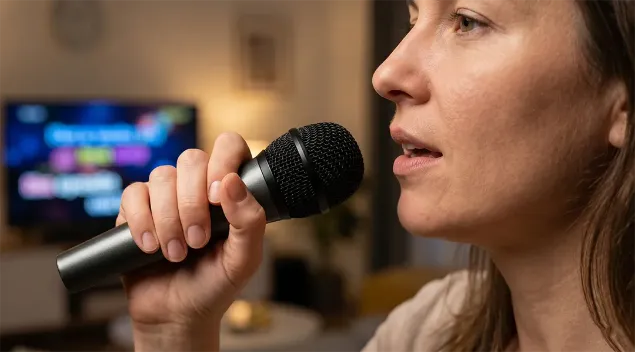
Learn the best starting distance and angle for home karaoke, how small position changes affect clarity and harshness, and what wrong mic placement sounds like.

February 25, 2026
Learn simple microphone handling habits that keep karaoke vocals steadier from line to line, with better control, less drift, and fewer accidental tone changes.

March 03, 2026
Learn why stronger bass can make karaoke feel heavier, less clear, and harder to sing through, even when the system still sounds powerful.

March 03, 2026
Learn what vocal presence really means in karaoke and why better intelligibility comes from balance, masking control, and smarter tuning—not just more mic volume.
March 11, 2026
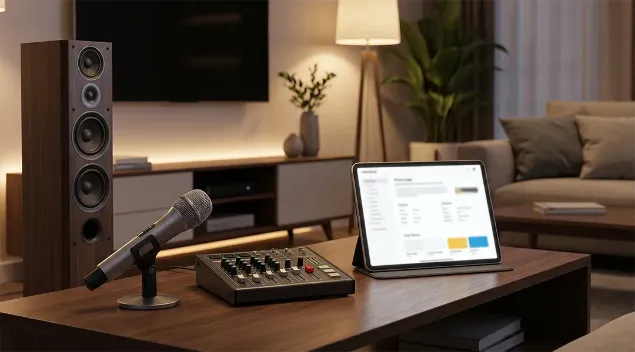
Learn what a frequency-response spec can really tell you, what it cannot, and why similar-looking claims can still lead to different karaoke results.

March 12, 2026
Learn what phase problems can sound like in home karaoke, why they feel subtle, and how to recognize the pattern before chasing random fixes.
March 12, 2026
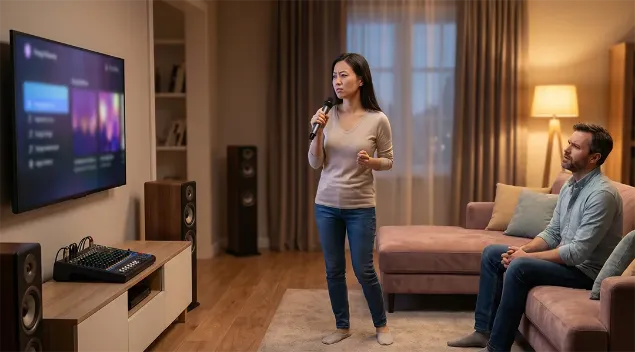
Learn what muddy sound usually means in karaoke, how to hear it more accurately, and how it differs from boxy, harsh, thin, or bass-heavy sound.
March 12, 2026
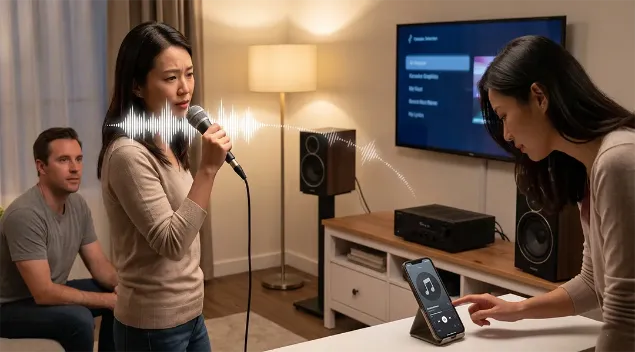
Learn why Bluetooth audio can feel fine for music playback yet still seem delayed, disconnected, and frustrating for real-time karaoke singing at home.
March 11, 2026
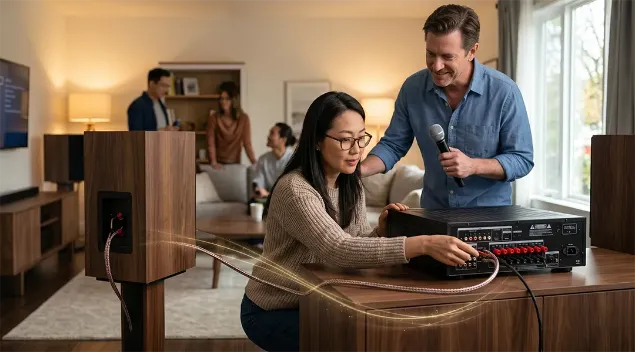
Learn what speaker impedance means in plain English, why amplifiers care about ohms, and how to read this number without hype or confusion.

March 11, 2026
Learn why wider stereo can sound impressive for music but still make karaoke vocals feel less stable, less centered, and less useful at home.
March 11, 2026
Learn how to tell when treble is adding useful detail versus harshness in karaoke, so clearer sound does not become sharper or more tiring.
March 11, 2026
Learn how to hear when bass is masking the voice in karaoke, and why full sound can still reduce vocal clarity and lyric intelligibility.